China Academy of Art
University · Hangzhou
Language courses · Bachelor's Degree · Master's Degree
浙江财经大学

Zhejiang University of Finance and Economics accepts international students on programmes in the following fields: business, engineering, medicine, economics. Choose the level and programme that suit your goals.
Chinese language study at the university — from a few weeks to a year or longer. Suitable for those starting from scratch or preparing for the HSK before entering a main programme.
scholarship-funded · language programme
Cost: 11 900 ¥/year
Foundation programme: language and core subjects before a bachelor's degree. It helps you strengthen your knowledge and get used to studying in China before the main programme begins.
self-funded · language programme
Cost: 17 000 ¥/year
The first level of higher education: usually four years of study, specialised subjects, internships and a graduation thesis. It opens the way to working in your field and to a master's degree.
scholarship-funded
Cost: up to 19 000 ¥/year
Advanced study after a bachelor's degree: research, applied projects and internships. It helps you become an expert in your chosen field and broaden your career opportunities.
scholarship-funded
Cost: up to 22 000 ¥/year
Zhejiang University of Finance and Economics is located in Hangzhou. Nihao Study consultants keep track of the deadlines and admission requirements of this university, and you can always check the most accurate and up-to-date information on its official website. In the ranking of Chinese universities, it is ranked 187.
Come for a face-to-face meeting: together we will go through the requirements, deadlines, documents and study options that suit you.

At the meeting we will look at your situation, tell you which documents to prepare and by when, talk about possible programmes and help you decide on the next step.
Zhejiang University of Finance and Economics (ZUFE, 浙江财经大学, Zhèjiāng Cáijīng Dàxué) is a public comprehensive university in Hangzhou whose main fields are finance, economics and management. Russian-language queries also contain variants such as "Zhejiang Financial and Economic University" and "University of Finance and Economics of Zhejiang". In China itself the university is known by the short name 浙财 (Zhècái). For documents, correspondence with the university and searching in rankings, it is best to use the official English name Zhejiang University of Finance and Economics and the abbreviation ZUFE.
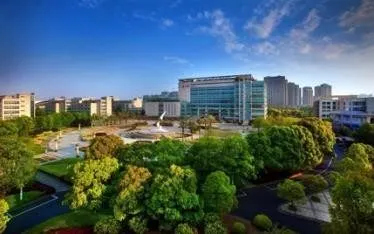
ZUFE's main campus is located in the Xiasha university town in Qiantang District. The full address is 18 Xueyuan Street, Xiasha Higher Education Park, Hangzhou, Zhejiang, China, 310018. It is important not to confuse ZUFE with two other Hangzhou universities: the large research-led Zhejiang University and Zhejiang Gongshang University, which also specialises in economics.
Below you will find ZUFE's status and rankings, history, programmes, accommodation, scholarships, HSK requirements, documents and the admission procedure. Any other questions can be discussed in a consultation with Nihao Study.

| Item | Data |
|---|---|
| Year founded | 1974 |
| Full-time students | Over 22,000 (excluding the independent college) |
| Staff and faculty | Over 1,800 staff; over 1,400 full-time faculty |
| Campuses | 4 campuses, about 133 hectares |
| Programmes | 45 bachelor's programmes |
| Main campus address | 18 Xueyuan Street, Hangzhou, 310018 |
According to the university itself, ZUFE consists of 19 colleges, one teaching unit, an independent college and two research institutes. It has over 880 full-time faculty members with doctoral degrees. Teaching covers four doctoral and ten master's first-level disciplines.
Its history dates back to 1974, when the Zhejiang College of Public Finance and Banking opened to train specialists for the finance sector. From 1987 the institution was called Zhejiang College of Finance and Economics. It gained the right to award bachelor's degrees in 1991 and began training master's students in 2003.
The university has borne its current name, 浙江财经大学, since 2013. Further milestones: 2014 — a postdoctoral research station; 2017 — status as a key university of Zhejiang province; 2018 — the right to award doctoral degrees. In 2023 ZUFE joined the provincial programme for building high-level universities. Step by step, a specialised finance school turned into a university where you can earn degrees at every level, from bachelor's to doctorate.
| Ranking | Position |
|---|---|
| THE World University Rankings 2026 | 1201–1500 worldwide |
| THE Business and Economics 2026 | 601–800 in the world |
| CWUR 2026 | 1928th worldwide, 352nd in China |
| EduRank 2026 | 2993rd worldwide, 242nd in China |
| EduRank, Economics 2026 | 926th worldwide, 89th in China |
In the overall THE 2026 world ranking, ZUFE is in the 1201–1500 band, while in the Business and Economics subject table it rises to the 601–800 band. According to CWUR 2026, the university ranks 1928th in the world — the top 9.1% — and 1857th for research. EduRank 2026 places ZUFE 242nd among universities in China and 89th in the country for economics.
ZUFE is not part of Project 211, nor is it on the Double First-Class (双一流) list. Of the universities in Zhejiang province, the Ministry of Education's official list names Zhejiang University, China Academy of Art and Ningbo University — ZUFE is not among them. Its status is most accurately described as a key provincial university with a finance and economics profile. It should not be credited with positions in ESI or U.S. News without a verified, up-to-date source.
ZUFE is strongest in applied economics, statistics, finance, taxation, accounting and public administration. The university reports that in international trade, industrial economics, finance and public finance you can complete the full path — bachelor's, master's and doctoral programmes. The School of Economics had 85 full-time faculty, 68 of them with doctoral degrees, and 1880 students.
ZUFE's profile is broader than traditional finance subjects. The university has a School of Information Management and Artificial Intelligence offering programmes in artificial intelligence, software engineering, information management and information systems, and e-commerce. This means a finance education can be complemented with data analysis, e-commerce and digital business models.
ZUFE's partner network includes 147 universities from 34 countries and regions. There are four joint educational projects, with partners from the UK, Canada, New Zealand and the USA. Hangzhou is known for its digital economy, online commerce and fintech, so an economist has plenty of opportunities to apply their knowledge here. The list of internships and exchanges changes from year to year, so it is worth checking before applying.
ZUFE suits those for whom a consistent path in economics matters more than a big-name university and a ranking position. You can first learn Chinese, then enter a bachelor's programme in finance or international trade, and later choose management, analytics or a master's degree. Several specialised schools let you add related disciplines without moving away from the core finance and economics specialisation.
Before applying, answer three questions for yourself. First, what language do you want to study in: does it have to be English, or are you ready for Chinese? Second, what share of mathematics, statistics and data work in the programme suits you? Third, where do you plan to work: in China, in international trade, or with your degree in another market? The answers determine not only your programme but also the required HSK level, whether a language year makes sense, and your choice of electives. They are a more reliable guide than the university's overall position: in individual subjects ZUFE looks noticeably stronger than in the aggregate world ranking.
Finance and accounting. The core of ZUFE is public finance and taxation, accounting, finance, auditing, asset appraisal, insurance, investment and financial engineering. The School of Finance takes students from bachelor's to doctoral level and runs a joint finance programme with Bangor University.
Economics and management. This block includes economics, international economics and trade, business administration, marketing, human resource management, logistics management, public administration and international business. The master's in business administration covers corporate finance, business statistics, strategic management and data analysis.
Law, languages and social sciences. This includes law, social work, Chinese language and literature, English, Japanese, business English and translation. The School of Foreign Languages offers 2+2 and 3+1 programmes and, according to the school, international short-term programmes as well.
Data, technology and design. The classic profile is complemented by artificial intelligence, software engineering, e-commerce, statistics, data science and environmental design. In total ZUFE offers 45 bachelor's programmes; whether a particular programme is open to international students and in which language it is taught should be checked before applying.
| Room type | In the room |
|---|---|
| Double | Furniture, private bathroom, air conditioning and fridge |
| Triple | Furniture, private bathroom, air conditioning and fridge |
| Quadruple | Terms as per the university's current guide |
The university offers rooms for two, three and four people; check the cost of each option on ZUFE's official website. Rooms have beds, desks, wardrobes, a private bathroom, air conditioning, a washing machine, hot water and a fridge, and the building has drinking water and a shared kitchen. Places are limited, and in the first year of study the university assigns rooms itself.
The main Xiasha campus is in Qiantang District; it is not the central West Lake (Xihu) district. In addition, ZUFE has the Wenhua, Cuiyuan and Chang’an campuses, so where you study depends on your programme. When travelling to the main campus, use the address with postcode 310018.
Applications for the university scholarship are usually considered from March to July. For the provincial scholarship you will need proof of language level, good grades, a medical form and a police clearance certificate, and master's and doctoral applicants also need two recommendation letters. Scholarships are awarded competitively within the quota.
The ZUFE library holds five thematic collections, including ones devoted to government regulation, the Sun Yefang Prize and the Nobel Prize in Economics. The university counts these collections as part of its academic infrastructure. For an economist they offer more than just the size of the book stock: the materials relate to the history of economic thought and Chinese public policy.
Cultural and career events are held regularly on campus, and the international college runs programmes introducing students to Zhejiang province. The college opened in 2013; in 2025 its Silk Road College project received provincial-level recognition. When choosing language courses in Hangzhou, look not only at how intensive the classes are, but also at whether you will be able to use Chinese in your specialist subjects and in everyday city life.
| University | Status | Main specialism |
|---|---|---|
| Zhejiang University of Finance and Economics, 浙江财经大学 | Provincial-level university | Finance, economics, accounting, management |
| Zhejiang University, 浙江大学 | National-level research university | Many research fields, including engineering and medicine |
| Zhejiang Gongshang University, 浙江工商大学 | Provincial-level university | Business, economics, management, food science |
The easiest way to tell the universities apart is by their Chinese names. ZUFE's name contains 财经 ("finance and economics"), Zhejiang University is 浙江大学, and the name of Zhejiang Gongshang University contains the characters 工商. ZUFE is not part of Zhejiang University. Other Hangzhou universities can be compared with one another using the same criteria — name, status and profile.
Video footage from the campus helps you gauge its size, the teaching buildings, student spaces and what an ordinary day at the university looks like. It is useful to compare the footage with the official description of the dormitory: this makes it clearer how the rooms are laid out and how far the residential buildings are from the teaching ones. Such an overview complements the figures — especially when you have to choose between ZUFE and another finance and economics university in Hangzhou.
This text treats the direct Russian translation of "Zhejiang University of Finance and Economics" as the main Russian form. Misspellings of the province name and a truncated ending are typos that show up in search results, and a variant copying the English word order is a calque. The official international name is Zhejiang University of Finance and Economics, and the generally accepted abbreviation is ZUFE. The full official Chinese name is 浙江财经大学 (Zhèjiāng Cáijīng Dàxué), and the short form is 浙财 (Zhècái).
It is the abbreviation of the English name Zhejiang University of Finance and Economics. The university is in Hangzhou, trains bachelor's, master's and doctoral students, and its main profile is economics, finance and management.
Yes. Traditionally, ZUFE has taught international trade, finance, accounting, marketing, e-commerce and management in English. Which English-taught programmes are open in the current intake should be checked before applying.
To enter a Chinese-taught degree programme directly, the university requires HSK 4. If your result is lower, you will first be offered language preparation. Some programmes may set a higher bar.
No. ZUFE is a key provincial university, but it is not on the official Double First-Class list.
The price depends on the room type — for two, three or four people. The university itself publishes current rates, so check its official website before moving in.
You can apply for the ZUFE University Scholarship or the Zhejiang Provincial Government Scholarship, but selection is competitive. The availability of the CSC scholarship needs to be checked separately for each intake year.
The university takes HSK results into account for admission and scholarship selection. The test venue itself is chosen in the official Chinese Test system.
The main campus address is: 18 Xueyuan Street, Xiasha Higher Education Park, Hangzhou, Zhejiang, 310018. It is best to plan your route after receiving your admission letter, once it is clear which campus you will be studying at.
The required minimum is a passport, an educational certificate, a transcript of grades, a language certificate and a medical form. Applicants for the provincial scholarship also need a police clearance certificate, proof of language level and sometimes two recommendation letters.
Hangzhou (杭州) is the capital of Zhejiang Province and home to Alibaba's headquarters. The city is famous for West Lake and renowned for its beauty, and here a long history sits alongside modern technology.
Hangzhou has strong universities — Zhejiang University ranks in the country's top 5 — and its developed IT industry offers internship opportunities. Students can look forward to a good environment, picturesque nature for relaxing, 10 metro lines and a modern 'smart' city where cashless payment is the norm. Parents should bear in mind the high level of safety and quality of life, modern healthcare, the international airport and the proximity of Shanghai — 45 minutes by train. The campuses are well organised, with security and support services for international students.
You work with Nihao Study specialists. They will help you put together a portfolio and a set of documents, draw up a study plan and choose a university or college and a specialty that genuinely interest you.
We take care of every stage of admission, from choosing to enrolment
We will gather, prepare, certify and send your documents to the institution
We will show the admissions committee your strengths
We run training sessions and courses so you can prepare with more confidence
We will help you settle in at the start of your studies and keep moving forward
Nihao Study specialists select universities and colleges that match the applicant's goals and means. We make sure the teachers are practitioners and that the knowledge will be useful in your profession.
We examine curricula, talk to students and teachers and look at which specialties employers need, and use this information to select options for the applicant.
Advisers guide the applicant from the first consultation to enrolment, help build a plan and spot mistakes in time that could get in the way.
The cost of our support depends on the programme and the partner university; you'll get an exact quote after a free consultation.
Get a quoteA free 15-minute consultation: together we will choose a university or college and a programme that suit your goals and budget.
Apply with peace of mind: we handle the documents, deadlines and correspondence with admissions committees, and you save time and energy.
Don't want to wait for a call? Message us in the chat.
Message us in chat University · Hangzhou
Language courses · Bachelor's Degree · Master's Degree