China Academy of Art
University · Hangzhou
Language courses · Bachelor's Degree · Master's Degree
ZSTU · 浙江理工大学
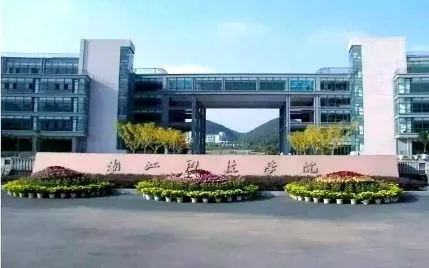
Zhejiang Sci-Tech University accepts international students on programmes in the following fields: engineering, arts. Choose the level and programme that suit your goals.
Chinese language study at the university — from a few weeks to a year or longer. Suitable for those starting from scratch or preparing for the HSK before entering a main programme.
scholarship-funded · language programme
Cost: 7 000–14 000 ¥/year
self-funded · language programme
Cost: 14 000 ¥/year
self-funded · language programme
Cost: 7 000 ¥/semester
The first level of higher education: usually four years of study, specialised subjects, internships and a graduation thesis. It opens the way to working in your field and to a master's degree.
scholarship-funded
Cost: 7 000–22 000 ¥/year
Advanced study after a bachelor's degree: research, applied projects and internships. It helps you become an expert in your chosen field and broaden your career opportunities.
scholarship-funded
Cost: 9 000–22 000 ¥/year
self-funded
Cost: 25 000 ¥/year
Zhejiang Sci-Tech University is located in Hangzhou. Nihao Study consultants keep track of the deadlines and admission requirements of this university, and you can always check the most accurate and up-to-date information on its official website. In university rankings, it is ranked 108 in China and 1070 worldwide.
Come for a face-to-face meeting: together we will go through the requirements, deadlines, documents and study options that suit you.

At the meeting we will look at your situation, tell you which documents to prepare and by when, talk about possible programmes and help you decide on the next step.
Zhejiang Sci-Tech University (ZSTU, 浙江理工大学, Zhèjiāng lǐgōng dàxué), known in Russian as the "Zhejiang Scientific and Technical University", is a public university in Zhejiang Province, located in its capital, Hangzhou. Russian-speaking applicants sometimes use a transliteration of the English name, "Zhejiang Sci-Tech University"; Chinese students shorten the name to 浙理工 (Zhèlǐgōng) in conversation, and in international rankings the university appears as ZSTU. The standard Russian form remains the one meaning "Zhejiang Scientific and Technical University".
The university traces its history back to 1897. It is jointly administered by the Zhejiang Provincial Government and the Ministry of Education of the PRC, and is categorised as a key provincial university. It is strongest in engineering, materials science, fashion design and textiles, and three of ZSTU's research fields are in the top 1% by ESI citations.
In this overview Nihao Study has gathered, for a 2026 applicant, up-to-date figures, ranking positions, accommodation conditions, scholarships, a step-by-step admission procedure and the Hangzhou universities with similar names.
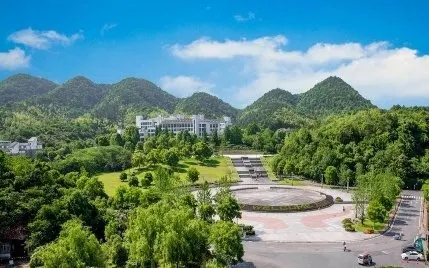
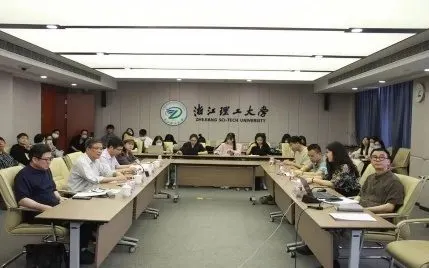
First, the university's key parameters. The information in the table is taken from data provided by the university itself and from international databases.
| Item | Data |
|---|---|
| Year founded | 1897 (Sericulture Academy) |
| Status | Key provincial university, public |
| Location | Hangzhou, Zhejiang Province |
| Campuses | Xiasha and Wenyi; about 1,500 mu |
| Students | About 27,000 |
| Teaching staff | About 1,800 |
| Schools and faculties | 16 |
| Bachelor's programmes | 45 |
| ESI top 1% fields | Materials science, chemistry, engineering |
In the national standings, EduRank places the university 144th among Chinese universities. ZSTU's research base amounts to tens of thousands of publications and hundreds of thousands of citations.
The university's history begins with the Sericulture Academy (蚕学馆), opened in 1897; it was one of China's first modern educational institutions. Its silk heritage largely shaped the university's profile: for decades to come, textiles and materials science became its hallmark.
The university developed step by step. Bachelor's admissions began in 1959, postgraduate studies appeared in 1979, and in 1983 the university gained the right to award master's degrees. In 1995 doctoral programmes were launched jointly with Zhejiang University; that same year the university admitted international students for the first time.
Its name changed too. In April 1999 the Zhejiang Institute of Silk Textiles was renamed Zhejiang Institute of Science and Technology. The current name, Zhejiang Sci-Tech University, was adopted in May 2004, and in 2006 the university gained the right to award doctoral degrees. ZSTU's history also has a German chapter: it was set up as one of the first Chinese universities to work systematically with German partners on training engineers.
Today ZSTU covers about 1,500 mu on two campuses, Wenyi and Xiasha, and comprises 16 schools and faculties. Over more than a century, the university has acquired laboratories recognised at the level of Zhejiang Province and the Ministry of Education, engineering and research centres, and a network of key provincial disciplines. Thanks to this base, the university holds a firm position in textile science, materials science and chemistry, although its places in overall world tables are modest.
ZSTU does not have a single high position in global top lists, but taken across different rankings, it is consistently in the top half of Chinese universities. Below are the agencies' current figures.
| Ranking | Position | Notes |
|---|---|---|
| EduRank 2026 | 1928th worldwide, 144th in China | In the top 50% for 116 research topics |
| ARWU (Shanghai) 2025 | Global 501–600 band | Good results in chemical engineering and textiles |
| U.S. News | 390th in Asia, 124th in China | In the main Best Global Universities ranking |
| THE (Asia) | About 301st in Asia | Included in the Asia table |
| QS by Subject 2026 | 601–700 band | Reputation in engineering and design noted |
ZSTU's main asset is subject-specific research rather than overall tables. ESI places the university's engineering, chemistry and materials science in the world's top 1% most-cited fields, and EduRank, based on publication and citation volume, places it in the top 50% in as many as 116 disciplines. The practical conclusion: besides its line in the overall ranking, look at subject indicators — in its own fields ZSTU is noticeably stronger than its overall position suggests.
If you look past the overall rankings and ask why international students come to study at ZSTU, three areas that the university has developed for decades come to the fore.
Textile science and engineering remain the university's historical foundation. The tradition of the Sericulture Academy is continued by the Silk Institute and specialised laboratories, and this field enjoys a high reputation nationally. The university works with almost the entire industry chain: new fibres, smart fabrics, industrial textile design; and partnerships with Zhejiang companies give students real projects and internships.
In China, ZSTU's School of Fashion Design and Engineering is regularly counted among the notable centres for training designers, and its graduates are sought after in the fashion industry and in textile manufacturing. Its programmes combine a creative design school with engineering training, and graduates work equally comfortably in fashion studios and at high-tech light-industry companies.
According to ESI, three fields — engineering, chemistry and materials science — are in the world's top 1% most-cited. This is an example of how a modest place in the overall ranking hides a genuinely strong research base. High citation rates mean that ZSTU researchers' work is relied on worldwide; for master's and doctoral students, this is an opportunity to join active research groups.
ZSTU has 16 schools and faculties covering law, economics, the humanities, natural sciences and engineering. Besides the specialised Silk and Materials Institute, the structure includes: the College of Foreign Languages; the School of Law and Politics; the School of Economics and Management; the School of Art and Design; the College of Life Sciences and Medicine; the School of Civil Engineering and Architecture; the Faculty of Mechanical Engineering and Automation; the School of Information Science and Technology; and the School of Fashion Design and Engineering. There are 45 bachelor's programmes, and some disciplines also offer master's and doctoral programmes. So an international student can choose either a narrow engineering track or neighbouring fields — economics, languages, design; the specialised schools have modern laboratories and opportunities for placements at companies in the province.
International students are housed right on campus, in a secure area. Each room has its own bathroom, air conditioning, furniture, internet (ADSL), a fridge and a TV; a shared kitchen and laundry are provided on each floor.
| Room type | Note |
|---|---|
| Double | Electricity is paid separately |
| Single | Electricity is paid separately |
On moving in, students pay a refundable damage deposit, which is returned on moving out if the equipment is undamaged. Students on long-term programmes pay for accommodation each semester, while short-term students pay for the whole period at once. Living on campus makes the first year much easier: there is no need to rent a flat in the city, and teaching buildings and canteens are within walking distance.
ZSTU participates in China's main scholarship programmes. The Chinese Government Scholarship (CSC) can fully cover tuition and accommodation, and also includes a monthly stipend and medical insurance; the university is on the official list of institutions that accept CSC scholarship holders. The Zhejiang Provincial Government Scholarship covers costs partially — it is available to bachelor's, master's and doctoral students. In addition, the university awards its own grants for high academic performance. Many international students combine several sources, so the actual burden on the family is often lower than the nominal one. A practical tip: it is better to apply for a scholarship at the same time as submitting your main documents — scholarship programmes have their own deadlines, which often fall earlier than regular admissions.
Hangzhou is a wealthy, technologically advanced Chinese city: it is home to the headquarters of Alibaba Group, which gives ZSTU students a chance at internships and careers in major corporations. The city is known for its high quality of life, extensive metro and West Lake, which is on the UNESCO list. The campus has laboratories, canteens, a library and sports facilities, and both campuses — Xiasha and Wenyi — are connected to the centre by public transport. Hangzhou is considered a comfortable city to live in: the metro, plenty of parks and food and transport prices that are moderate by local standards make student expenses predictable. A dedicated office helps international students with adaptation, visa extensions and everyday matters; in addition, there are sports clubs and student societies on campus.
Admission is competitive, based on documents and language certificates. In general terms, the process looks like this:
Applications are usually accepted in spring and summer, before the academic year begins, so it is best to prepare your documents and language exam several months in advance. If any requirement is unclear, check it with the admissions office before submitting your application — that way you will not waste time redoing paperwork.
Hangzhou has several universities whose Russian and English names sound alike, so they are often confused. The most reliable way to tell them apart is by their original Chinese name.
| University (Chinese name) | Profile | How it differs from ZSTU |
|---|---|---|
| Zhejiang Sci-Tech University, ZSTU (浙江理工大学) — the subject of this page | Textiles, design and engineering | Traces its history back to the Sericulture Academy of 1897 |
| Zhejiang University of Science and Technology, ZUST (浙江科技大学) | Engineering and applied sciences | A separate university; its English name is almost identical |
| Zhejiang University of Technology, ZJUT (浙江工业大学) | A large polytechnic university | Broader engineering profile, ranks higher in overall rankings |
| Zhejiang University, ZJU (浙江大学) | A Project 985 and 双一流 (Double First-Class) university | The widely known Zhejiang University is not ZSTU |
An easy way to remember: 浙江理工大学 means textiles and design; 浙江科技大学 and 浙江工业大学 are entirely different institutions, and 浙江大学 is one of the strongest universities in China. If you are torn between ZSTU and its neighbours, it is worth comparing it with Zhejiang University of Technology.
Videos filmed on the university grounds in Hangzhou help you get an idea of the ZSTU campus in advance. While watching, pay attention to the campus itself, the dormitory rooms, the teaching buildings and the infrastructure around the campus. This makes it easier to judge whether the atmosphere at ZSTU suits you — especially if you have not yet decided between it and neighbouring Hangzhou universities.
There are seven variants in circulation. The standard Russian form is a translation meaning "Zhejiang Scientific and Technical University", used in documents and on Wikipedia; misspelt variants of it are simply typos and best avoided. A phonetic rendering of "Sci-Tech" has spread online, but it is formally incorrect. The official international name is Zhejiang Sci-Tech University, and the abbreviation used in rankings and correspondence is ZSTU. Students in China call it 浙理工 (Zhèlǐgōng), and the full original name is 浙江理工大学 (Zhèjiāng lǐgōng dàxué).
It is a public, provincial-level key university in Hangzhou, the capital of Zhejiang province. It was founded in 1897; its strengths are textiles, design, materials science and engineering.
Some bachelor's, master's and doctoral programmes are taught in English, while the rest are in Chinese; there is no teaching in Russian. English-taught programmes require IELTS or TOEFL.
As a rule, Chinese-taught bachelor's programmes ask for HSK 4 and master's programmes for HSK 5. Check exam session dates well in advance.
No: ZSTU is a provincial key university and is not part of 双一流 (Double First-Class) or Project 211. However, three of its fields — engineering, chemistry and materials science — are in the top 1% by ESI citations, so it is stronger in research than its overall rankings might suggest.
The price depends on the room type — double or single; electricity is paid separately. The university publishes current terms on its official website.
Yes. ZSTU takes part in awarding the Chinese Government Scholarship (CSC); a full scholarship covers accommodation and tuition fees and includes a monthly stipend. In addition, there is a Zhejiang provincial scholarship.
First and foremost silk and textiles and fashion design, as well as engineering, chemistry and materials science, which are in the ESI top 1%. This specialisation historically goes back to the Sericulture Academy.
These are three separate universities in Hangzhou. ZSTU is 浙江理工大学 (textiles and design), ZUST is 浙江科技大学, and ZJUT is 浙江工业大学, a large polytechnic university. Go by the Chinese name.
You will need a passport, a school-leaving certificate with transcript, a language certificate (HSK, IELTS or TOEFL), recommendation letters and a personal statement. A registration fee is also paid when applying.
The university is in Hangzhou and has two campuses — Xiasha and Wenyi. The campuses are surrounded by a well-developed urban environment and the metro. Hangzhou is also home to West Lake and the headquarters of Alibaba.
Hangzhou (杭州) is the capital of Zhejiang Province and home to Alibaba's headquarters. The city is famous for West Lake and renowned for its beauty, and here a long history sits alongside modern technology.
Hangzhou has strong universities — Zhejiang University ranks in the country's top 5 — and its developed IT industry offers internship opportunities. Students can look forward to a good environment, picturesque nature for relaxing, 10 metro lines and a modern 'smart' city where cashless payment is the norm. Parents should bear in mind the high level of safety and quality of life, modern healthcare, the international airport and the proximity of Shanghai — 45 minutes by train. The campuses are well organised, with security and support services for international students.
You work with Nihao Study specialists. They will help you put together a portfolio and a set of documents, draw up a study plan and choose a university or college and a specialty that genuinely interest you.
We take care of every stage of admission, from choosing to enrolment
We will gather, prepare, certify and send your documents to the institution
We will show the admissions committee your strengths
We run training sessions and courses so you can prepare with more confidence
We will help you settle in at the start of your studies and keep moving forward
Nihao Study specialists select universities and colleges that match the applicant's goals and means. We make sure the teachers are practitioners and that the knowledge will be useful in your profession.
We examine curricula, talk to students and teachers and look at which specialties employers need, and use this information to select options for the applicant.
Advisers guide the applicant from the first consultation to enrolment, help build a plan and spot mistakes in time that could get in the way.
The cost of our support depends on the programme and the partner university; you'll get an exact quote after a free consultation.
Get a quoteA free 15-minute consultation: together we will choose a university or college and a programme that suit your goals and budget.
Apply with peace of mind: we handle the documents, deadlines and correspondence with admissions committees, and you save time and energy.
Don't want to wait for a call? Message us in the chat.
Message us in chat University · Hangzhou
Language courses · Bachelor's Degree · Master's Degree