China Academy of Art
University · Hangzhou
Language courses · Bachelor's Degree · Master's Degree
浙江师范大学
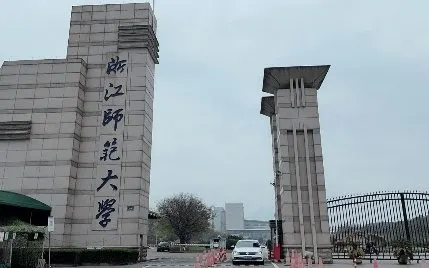
Zhejiang Normal University accepts international students on programmes in the following fields: business, engineering, medicine, education, economics. Choose the level and programme that suit your goals.
Chinese language study at the university — from a few weeks to a year or longer. Suitable for those starting from scratch or preparing for the HSK before entering a main programme.
self-funded · language programme
The first level of higher education: usually four years of study, specialised subjects, internships and a graduation thesis. It opens the way to working in your field and to a master's degree.
self-funded
Advanced study after a bachelor's degree: research, applied projects and internships. It helps you become an expert in your chosen field and broaden your career opportunities.
self-funded
Zhejiang Normal University is located in Jinhua. Nihao Study consultants keep track of the deadlines and admission requirements of this university, and you can always check the most accurate and up-to-date information on its official website. In university rankings, it is ranked 104 in China and 1100 worldwide.
Come for a face-to-face meeting: together we will go through the requirements, deadlines, documents and study options that suit you.

At the meeting we will look at your situation, tell you which documents to prepare and by when, talk about possible programmes and help you decide on the next step.
Zhejiang Normal University (official abbreviation ZJNU, Chinese 浙江师范大学, pinyin Zhèjiāng Shīfàn Dàxué) is a public university in Jinhua, Zhejiang Province. In Russian it is called "Zhejiang Pedagogical University". Search variants include an alternative Russian spelling of "Zhejiang", the phrase "Zhejiang pedagogical university" and the reverse calque "Pedagogical University of Zhejiang"; the abbreviations ZNU and ZJNU and the short Chinese name 浙师大 (Zhèshīdà) are also used. The university's charter officially establishes the English abbreviation ZJNU and the Chinese forms 浙师, 浙师大 and 浙江师大.
In terms of status, ZJNU is a comprehensive key university at provincial level, known for its strong school of education. As early as 2015 it joined the first group of key universities developed by the province, and it now also takes part in the provincial programme for high-level universities. So "leading provincial university" works as a short description, but it should not be confused with national statuses: ZJNU is not on the official 211 list, does not belong to 985, and is also absent from the list for the second round of Double First-Class (双一流) issued by the Ministry of Education.
Below, Nihao Study has gathered what matters to a 2026 applicant: status, programmes, HSK and CSCA requirements, scholarships, accommodation, rankings and the application procedure. If deadlines differ between sources, the official guide for the specific intake takes priority.
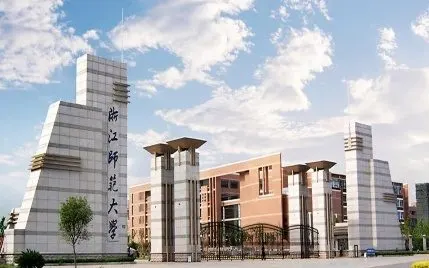
The figures are as of September 2025. They cover the whole university including its independent college, so the student numbers given in questionnaires for ranking agencies are sometimes lower.
| Item | Data |
|---|---|
| Year founded | 1956; its teacher-training tradition dates back to a school founded in 1906 |
| Campuses | 4 — Jinhua, Hangzhou, Xihu and Lanxi |
| Students | Over 42,000: more than 31,000 bachelor's students and about 11,000 master's and doctoral students |
| International students | Over 1,400 (overall statistics as of September 2025) |
| Staff | Over 3,200, including more than 420 full professors |
| Academic structure | 26 colleges and 69 bachelor's programmes |
| Research levels | First-level disciplines: 15 doctoral and 29 master's; 11 postdoctoral stations |
| ESI | 10 disciplines in the global top 1% |
| Main address | 688 Yingbin Avenue, Wucheng District, Jinhua, Zhejiang, 321004 |
Officially, the history of today's university dates from 16 April 1956, when Hangzhou Teachers College was approved by the Ministry of Education. In 1958 it became Hangzhou Normal College, and in 1962, after merging with Zhejiang Education College and Zhejiang Physical Education College, it was renamed Zhejiang Teachers College. The order of events matters here: it is often said that the university was founded directly in 1906, but that is a simplification. The year 1906 is associated with Quanzhe Normal School, to which the university traces its teacher-training tradition.
In 1965 the college moved from Hangzhou to Jinhua, and its current name, Zhejiang Normal University, was adopted in 1985. Later the university expanded through mergers: in 2000, 2001 and 2004 it was joined by Zhejiang Financial School, Zhejiang School of Preschool Teacher Education and Jinhua Railway Driver School. As a result, the teacher-training institution became a comprehensive university with sites in Jinhua, Hangzhou and Lanxi.
The word 'Normal' in the English name refers to the university's historical profile — teacher training — and says nothing about its level. Today ZJNU is also prominent in the natural sciences, engineering, computer science and social sciences. It makes sense to compare rankings within a single cycle, bearing in mind that agencies use different methodologies.
| Ranking | Position and edition | Comment |
|---|---|---|
| U.S. News Best Global Universities | 360th worldwide and 50th in mainland China, 2025/26 cycle | Reflects research visibility; figures published by the university itself |
| THE World University Rankings | 601–800 band, 2026 edition | Engineering — 301–400, education — 401–500 |
| ARWU | 601–700 band, 2025 edition | Depends heavily on the number of research publications and their citations |
| CWUR | 726th worldwide, 211th in Asia, 130th in China; 2025 edition | This is the top 3.4% of all universities assessed by CWUR |
| EduRank | 1621st worldwide, 421st in Asia, 117th in China; 2026 update | Independent bibliometric model; useful for comparing research topics |
One subject result deserves a separate mention: according to ShanghaiRanking (Best Chinese Subjects Ranking, 2025), regional and country studies ranks 2nd in the country. This is an assessment of a single subject, not the university's overall world position.
Teacher education is still at the core of ZJNU. The university reports almost 400,000 graduates, about 210,000 of whom work in education. In addition, almost half of the province's principals of first-category key schools and its current special-rank teachers are graduates of the university. For an international student, this opens access to educational psychology, teaching methodology, and preschool, special and international education.
At ZJNU, training Chinese language teachers is closely linked with area studies. The university takes part in China–Africa educational cooperation mechanisms; it runs four Confucius Institutes, one independent Confucius Classroom and three overseas Chinese learning centres. Its partner network brings together over 280 universities and organisations from more than 60 countries and regions. This area is especially useful for those choosing international education, area studies, Chinese language teaching or Africa-related business.
ZJNU's disciplines in the ESI top 1% are: physics, psychiatry and psychology, general social sciences, plant and animal science, computer science, environment and ecology, materials science, engineering, chemistry and mathematics. In the THE 2026 edition, the university's engineering subjects were placed in the global 301–400 band and computer science in the 501–600 band. So the university is worth considering not only for those who plan to become teachers.
The university covers 11 major fields of knowledge — from philosophy, economics and law to education, literature and history, as well as management, engineering, natural sciences, art and interdisciplinary fields. It is easier for applicants to find their way if the schools are grouped by study track.
In total, the university has 4 national experimental teaching centres, 50 national courses and 34 national first-class bachelor's programmes. When choosing, it is better to focus not on the name of a large college but on the specific programme, language of instruction, campus and the requirements of the current catalogue.
For the 2026 intake, the university announced 38 Chinese-taught and 8 English-taught bachelor's programmes. Bachelor's studies last from 4 to 5 years. The list of programmes changes every year.
| Level and sample fields | Language and duration | Main requirements |
|---|---|---|
| Bachelor's (e.g. environmental engineering, intelligent manufacturing, international economics, business, education) | Chinese or English; usually 4–5 years | School certificate, CSCA, language certificate and a full set of documents |
| Master's (e.g. physics, mathematics, computer science, art, economics, education) | Chinese or English; usually 2–3 years | Bachelor's degree, recommendation letters, proficiency in the programme's language |
| Doctoral (education, humanities and natural sciences) | Chinese or English; usually 4 years | Master's degree, research plan, recommendation letters, language level |
| Chinese language courses in Jinhua | One semester or a full academic year | School certificate; age usually 18–50 |
The required HSK level depends on the programme. For example, in the 2025 catalogue, Chinese-taught Business Administration requires HSK 4, Higher Education requires HSK 5, and Chinese literature and history require HSK 6. For English-taught programmes, applicants from countries where English is not the native language submit TOEFL, IELTS or Duolingo English Test results. There is no single minimum HSK level for all fields.
The official deadline for the autumn 2026 intake of language courses is 15 July 2026; applications for the spring intake were accepted until 15 December 2025. These dates apply only to the stated intake cycle.
ZJNU is an active HSK and HSKK test centre. In the first quarter of 2025 it held HSK exams at levels 3 to 6 and all three HSKK levels — for 368 candidates in total. The university also published a separate HSK and HSKK registration for 11 April 2026. There is no confirmed current BCT schedule for this centre in public sources.
The base rates for self-funded international students depend on the level and language of the programme and may change after approval by the regulator. Besides tuition, your budget should include the application fee, insurance, textbooks, visa costs, a medical examination and food. Check the current amounts on the university's official website or in your admission letter from ZJNU.
International students are housed in Qiming Dormitory and International Exchange Student Dormitory. The rooms have furniture, air conditioning and a private bathroom. Each floor has shared kitchens — with fridges, microwaves and induction hobs — and laundries.
| Cost item | Conditions |
|---|---|
| Utilities | Paid according to actual consumption; details are provided at check-in |
Students whose accommodation is covered by a CSC scholarship, an International Chinese Language Teachers Scholarship or MOFCOM are usually not allowed by the university to live off campus. Self-funded students should check the building, room type, booking deadlines, deposit amount and which utilities are included in advance.
Grants are awarded competitively. A high GPA, a close match between your profile and the programme, early submission and a convincing study or research plan all improve your chances.
The campus has a university hospital, a library, supermarkets, sports halls and laboratories. The grounds include extensive green areas, a stadium, teaching buildings and a separate residential area with dormitories. This is not a campus in the centre of a megacity but a separate university town in northern Jinhua.
Jinhua and Yiwu belong to the same metropolitan area, but administratively they are two different cities: Jinhua is not a district of Yiwu, nor is it the capital of Zhejiang Province — that is Hangzhou. By high-speed train it takes about 40 minutes to Hangzhou and about 100 minutes to Shanghai. According to a more recent transport guide, the journey from Shanghai Hongqiao to Jinhua takes about 2 hours, and from there you can take a taxi to the university's south-east gate.
There is no other major university with the same English name in Jinhua. Confusion usually arises from abbreviations and the similar names of other universities in Zhejiang Province.
| University (Chinese name) | City and status | How it differs |
|---|---|---|
| Zhejiang Normal University, 浙江师范大学 | Jinhua; provincial-level public university | The subject of this page; official abbreviation ZJNU; education combined with multidisciplinary research |
| Zhejiang University, 浙江大学 | Hangzhou; national research university | Abbreviation ZJU; part of 985, 211 and Double First-Class |
| Zhejiang University of Technology, 浙江工业大学 | Hangzhou; provincial technology university | Abbreviation ZJUT; focus on engineering and technology |
| Hangzhou Normal University, 杭州师范大学 | Hangzhou; provincial teacher-training university | Abbreviation HZNU; a different university in a different city |
In correspondence with the university, write ZJNU: the abbreviation ZNU appears in catalogues but is not the university's official English abbreviation.
Photos help you form a first impression of ZJNU's campus and dormitory. It is best to check the current room layout and building name with the university.
The main Russian form translates as 'Zhejiang Pedagogical University'; the university's official name and its location in Jinhua are confirmed by English-language Wikipedia. Other Russian spellings are search variants or typos, and a reversed calque of the name is understandable but not considered the main Russian form. The official international name is Zhejiang Normal University, and the official English abbreviation is ZJNU. ZNU is an internal abbreviation used by some catalogues. 浙师大 (Zhèshīdà) is the short Chinese name, and 浙江师范大学 (Zhèjiāng Shīfàn Dàxué) is the full original.
Both stand for Zhejiang Normal University. The university has officially adopted ZJNU, while ZNU appears in catalogues and search queries. Do not confuse them with ZJU, the abbreviation for Zhejiang University in Hangzhou.
No. It is a strong key, high-level university of provincial importance, but it is not on the official 211 list, does not belong to 985 and is not included in the second-round Double First-Class list. The status it received in 2015 is linked to a Zhejiang Province programme, not to national projects.
Yes. For 2026, 8 English-taught bachelor's programmes have been announced; English-taught options are also available at master's and doctoral level. Applicants whose native language is not English must take TOEFL, IELTS or Duolingo, depending on the requirements of the chosen programme.
There is no general threshold: depending on the major, HSK 4, HSK 5 or HSK 6 is required. Sometimes a basic HSK level is also required for an English-taught programme. Check the requirements of your specific programme.
Tuition depends on the level and language of the programme, and the dormitory fee on the room type; insurance, food, textbooks, the visa and the medical examination should be budgeted separately. Current terms are published on the university's official website.
Yes: ZJNU accepts applications under the CSC High Level Postgraduate Program. The scholarship covers tuition, on-campus accommodation, a monthly stipend and insurance, but selection is competitive and the final decision rests with the selection committee.
Yes. ZJNU is an official HSK and HSKK test centre. Several sessions were held here in 2025, and a separate registration was opened for April 2026.
The main campus address is 688 Yingbin Avenue, Wucheng District, Jinhua, Zhejiang, 321004. The university says it is a short taxi ride from Jinhua station to the gate, and the high-speed train from Shanghai Hongqiao takes about 2 hours.
You will need your passport, photo, notarised school certificate or certificate of expected graduation, full transcript, CSCA result, language certificate, medical form, police clearance certificate, bank statement and a study plan of at least 1,000 words. The minimum account balance is stated in the university's requirements.
ZJNU is based mainly in Jinhua and combines a teacher-training profile with multidisciplinary research. Zhejiang University (ZJU) is a national research university in Hangzhou, and Hangzhou Normal University (HZNU) is another teacher-training university in Hangzhou. All three are independent of one another.
Jinhua (金华) is located in the very centre of Zhejiang Province. The city is known worldwide for its cured ham, and also because it includes Yiwu, the so-called 'world's small commodities factory'.
Jinhua is a good fit for those studying e-commerce and international trade. The city is small and cosy, and the beautiful Shuanglong karst caves are nearby. Its university (Zhejiang Normal University) is renowned for its beautiful campus. For parents, it matters that the atmosphere here is safe and businesslike, there are good opportunities to start a career in trade, Hangzhou and Shanghai are close (by high-speed train), and life is inexpensive.
You work with Nihao Study specialists. They will help you put together a portfolio and a set of documents, draw up a study plan and choose a university or college and a specialty that genuinely interest you.
We take care of every stage of admission, from choosing to enrolment
We will gather, prepare, certify and send your documents to the institution
We will show the admissions committee your strengths
We run training sessions and courses so you can prepare with more confidence
We will help you settle in at the start of your studies and keep moving forward
Nihao Study specialists select universities and colleges that match the applicant's goals and means. We make sure the teachers are practitioners and that the knowledge will be useful in your profession.
We examine curricula, talk to students and teachers and look at which specialties employers need, and use this information to select options for the applicant.
Advisers guide the applicant from the first consultation to enrolment, help build a plan and spot mistakes in time that could get in the way.
The cost of our support depends on the programme and the partner university; you'll get an exact quote after a free consultation.
Get a quoteA free 15-minute consultation: together we will choose a university or college and a programme that suit your goals and budget.
Apply with peace of mind: we handle the documents, deadlines and correspondence with admissions committees, and you save time and energy.
Don't want to wait for a call? Message us in the chat.
Message us in chat University · Hangzhou
Language courses · Bachelor's Degree · Master's Degree