- Language courses
- English, Chinese
- Bachelor's Degree
- English, Chinese
- Master's Degree
- English, Chinese
- Doctoral (PhD) Programmes
- English, Chinese
- Accommodation from 7 200 ¥/year
XJTLU · 西交利物浦大学

Xi'an Jiaotong-Liverpool University accepts international students on programmes in the following fields: business, engineering, medicine, education, economics. Choose the level and programme that suit your goals.
Chinese language study at the university — from a few weeks to a year or longer. Suitable for those starting from scratch or preparing for the HSK before entering a main programme.
Check upcoming application deadlines for this level with your Nihao Study adviser.
All programmes at this level →Xi'an Jiaotong-Liverpool University is located in Suzhou. Nihao Study consultants keep track of the deadlines and admission requirements of this university, and you can always check the most accurate and up-to-date information on its official website.
Come for a face-to-face meeting: together we will go through the requirements, deadlines, documents and study options that suit you.

At the meeting we will look at your situation, tell you which documents to prepare and by when, talk about possible programmes and help you decide on the next step.
Xi'an Jiaotong-Liverpool University (XJTLU, 西交利物浦大学, Xī Jiāo Lìwùpǔ Dàxué) is a joint British-Chinese university. It was founded by China's Xi'an Jiaotong University and the UK's University of Liverpool. The main misconception is best cleared up straight away: although its name contains ‘Xi'an’, the university itself is not there but in Suzhou (Jiangsu Province), about 100 km west of Shanghai. ‘Xi'an’ in the name refers only to the parent university.
Besides the standard Russian form of the name, a few less common variants are also used. Chinese students call the university 西浦 (Xipu) for short, and in international rankings it appears as XJTLU. It is considered the largest Sino-foreign joint-venture university (中外合作大学) with independent legal status approved by the Ministry of Education of China. Teaching here is 100% in English, and on completing a bachelor's degree, graduates receive two degrees at once: a British degree from the University of Liverpool and a Chinese degree from XJTLU.
Next come the university's rankings, how the dual degree and the 2+2 model work, IELTS requirements, how XJTLU differs from its parent Xi'an Jiaotong University, and the application procedure.
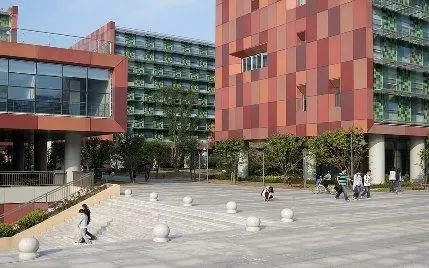

The joint university is young, but in terms of size it long ago outgrew the scope of an experimental project. The key facts about XJTLU are summarised in the table.
| Item | Data |
|---|---|
| Founded | in 2006 (the founding agreement was signed in 2004) |
| Founders | Xi'an Jiaotong University (西安交通大学) and the University of Liverpool |
| Location | Suzhou Industrial Park, Suzhou, Jiangsu province |
| Language of instruction | English on all programmes (100%) |
| Type of institution | Sino-foreign joint venture (中外合作), non-profit private |
| Students | over 21,000, including about 968 international students from 93 countries |
| Teaching staff | about 1,300, more than a third of them from abroad |
| Study programmes | over 100, in science, engineering, business and design |
| Diploma | two degrees: from XJTLU and from the University of Liverpool |
| Official website | xjtlu.edu.cn |
XJTLU dates its history from September 2004. That was when the two partners, the University of Liverpool and Xi'an Jiaotong University, signed an agreement to establish a joint university and received permission to do so from the Ministry of Education of the PRC. XJTLU was officially established in May 2006, and its first 164 students arrived in September of that year. By the standards of Chinese higher education the format was largely a pilot: a full university teaching in English under the British system and awarding foreign degrees to its graduates.
Development was rapid. By 2008 Professor Youmin Xi had become Executive President, and student numbers had passed one thousand. In 2010 the university held its first graduation ceremony and gained the right to award University of Liverpool degrees at master's level. In summer 2016, marking its tenth anniversary, XJTLU opened the first phase of its South Campus.
The next chapter of the story is linked to Taicang. In 2018 the university and the city's municipal government signed a framework agreement on an Entrepreneur College, built on the university's own model, syntegrative education. Its essence is learning embedded in real industry projects and in solving entrepreneurial problems. In 2021, for XJTLU's fifteenth anniversary, the Academy of Future Education was launched. In September 2022 the award-winning Taicang campus was formally opened. In 2024 the partners celebrated twenty years since signing the agreement on which the whole project rests.
The university's standing should be assessed soberly. XJTLU is a young joint university, so it is not part of Projects 985 and 211 or the "Double First-Class" programme (双一流): these statuses were created for Chinese public universities, not for joint ventures. On the other hand, XJTLU is well represented in global rankings.
| Ranking | XJTLU's position |
|---|---|
| QS World University Rankings 2026 | worldwide: 1001–1200 band |
| QS Asia 2026 | 326th in Asia |
| THE World University Rankings 2026 | worldwide: 601–800 band |
| EduRank 2026 | 227th in China, 2nd in Suzhou |
According to EduRank, the university is in the top half of the global ranking in as many as 94 research topics. Its strongest field is game design and development, where XJTLU ranks 159th in the world. Computer science and business subjects also perform well. The conclusion for applicants is simple: XJTLU's advantage lies not in state statuses but in its British degree, English-speaking environment and modern applied fields.
Outside China, this university attracts students not by its age but by a set of practical advantages that traditional Chinese universities lack.
The first and main reason is the dual degree. On completing the four-year bachelor's programme, graduates receive two degrees: a University of Liverpool degree and, for programmes where the university has degree-awarding rights, a Chinese-standard XJTLU degree. The British degree is recognised internationally, which makes it noticeably easier to get into master's programmes abroad and to work for international companies.
The second reason is a fully English-speaking environment. All classes are in English, so Chinese is not required for admission, although during your studies you can reach HSK 4 if you wish. The third is the location in Suzhou Industrial Park: the university compares it to China's Silicon Valley, and offices and research centres of Fortune 500 companies operate nearby. Shanghai is about 100 km away and the cities are linked by high-speed rail, so you can look for internships in two business centres at once.
The study structure is flexible, and it is best to understand it before applying. Those who spend all four years in Suzhou (the 4+0 format) or go to Liverpool for one year (the 2+1+1 scheme) receive British and Chinese degrees. There is also a separate 2+2 programme: the first two years in Suzhou and the last two in Liverpool, after which graduates receive honours degrees from both universities. This flexibility makes XJTLU a convenient option for those who want to start studying in more affordable China and finish in the UK.
The range of units clearly shows the university's applied focus. In Suzhou Industrial Park, on the original campus, there are the School of Design, the School of Science, the International Business School Suzhou (IBSS), the School of Advanced Technology, the School of Humanities and Social Sciences, the School of Mathematics and Physics, as well as the Centre for Chinese Culture and the Hub of World Cultures and Languages. The research academies form a separate group: the Academy of Future Education, the Academy of Film and Creative Technology, the Wisdom Lake Academy of Pharmacy, the Academy of Artificial Intelligence and the XJTLU-JITRI Academy of Industrial Technology.
The Taicang campus is home to XJTLU Entrepreneur College. It comprises the School of Robotics, the School of Microchips, the School of Internet of Things, the School of AI and Advanced Computing, the School of Intelligent Manufacturing Ecosystem and the School of Intelligent Finance and Business. This line-up shows where the university is heading: microelectronics, artificial intelligence, smart manufacturing and fintech.
The cost of on-campus accommodation depends on the room type. First-year students are usually placed in four-person rooms, and from the second year you can choose a more comfortable option, up to a single room; there are also double rooms. Check the current price of each option on the university's official website.
The university organises dormitory bookings through a questionnaire: at the end of July international students are sent a form with several on-campus accommodation options.
The joint format also changes the approach to financial support: instead of a government scholarship, XJTLU relies on its own scholarship system. Bachelor's students can receive an academic excellence scholarship on admission, covering up to 50% of the annual tuition fee and renewed if the student continues to achieve high results. In addition, an academic performance scholarship is awarded automatically for first-class and upper-second-class marks. For students transferring to Liverpool on the 2+2 programme, the university reduces tuition by 10%, and on a number of Taicang campus programmes there is an industry leadership scholarship for forty students.
Master's students are awarded a scholarship on admission covering 20, 30 or 50% of the full programme fee. MRes research programmes may, in individual cases of outstanding results, be fully funded. For applicants from Belt and Road countries there is the BRI Friendship Scholarship worth up to 30% of the fee, and graduates of XJTLU, the University of Liverpool or Xi'an Jiaotong University are entitled to a 20% discount. The main difference from public universities is that XJTLU is not among the 306 Chinese universities offering the CSC scholarship, so the traditional government scholarship plays a secondary role here, and the university's own scholarships take the leading role.
The university is located by Dushu Lake in Suzhou Industrial Park, a large science and education zone in the east of the city. Besides its main site in the park, the university has another campus in neighbouring Taicang, home to the Entrepreneur College, whose applied schools focus on robotics, smart manufacturing and artificial intelligence. Students can join over 200 clubs and societies (creative, sports and academic), and there is a library and sports facilities. The university itself arranges insurance in China for international students, of two types, and the commercial one is free for students.
Suzhou has a population of about 12.75 million. The city has long been called a paradise on earth: it has classical gardens on the UNESCO list and many canals, which have earned Suzhou the nickname "Venice of the East". The Industrial Park where the campus stands is a high-tech cluster with offices of international corporations. Thanks to this combination of ancient culture and a modern economy, Suzhou is a convenient place both to study and to do internships.
Admission to XJTLU follows British rather than Chinese rules: English, not HSK, plays the decisive role. The main stages are below.
There are several similar names around XJTLU, so here is a short cheat sheet to help you avoid mistakes.
| University and Chinese name | Type | City and profile |
|---|---|---|
| Xi'an Jiaotong-Liverpool University, XJTLU (西交利物浦大学) | British-Chinese joint venture, the subject of this page | Suzhou, teaching in English, dual degree |
| Xi'an Jiaotong University, XJTU (西安交通大学) | public, member of the C9 League | Xi'an, XJTLU's parent university, nickname 西交 |
| University of Liverpool (利物浦大学) | British public university | Liverpool, XJTLU's second founder |
| Soochow University (苏州大学) | Chinese public university | Suzhou, a large comprehensive university in the same city |
The easiest way to tell the universities apart is by their nicknames: the parent Xi'an Jiaotong University is known in China as 西交, and XJTLU as 西浦 (Xipu). XJTLU is in Suzhou, teaches in English and awards a dual degree; XJTU is in Xi'an and remains a traditional public research university. Although Soochow University is located in the same city, it has nothing to do with the British project.
There are seven forms in all. The standard Russian rendering is a direct equivalent of "Xi'an Jiaotong-Liverpool University", and most educational sources follow it. Variant Russian spellings of "Xi'an" and "Jiaotong" are typos, although they do turn up in searches. Colloquial Russian versions (calques along the lines of "Xi'an-Liverpool" or "Xi'an Jiaotong-Liverpool") are formally less precise but have caught on in everyday use. Xi'an Jiaotong-Liverpool University is the official international name, and XJTLU is the abbreviation found in rankings, degree certificates and correspondence. 西浦 (Xipu) is Chinese student slang; it should not be confused with 西交, the name used for the parent university. The original name is 西交利物浦大学, in pinyin Xī Jiāo Lìwùpǔ Dàxué.
In Suzhou. The word "Xi'an" in the name is misleading: the campus is in Suzhou Industrial Park (Jiangsu province), about 100 km from Shanghai. Only the parent university, Xi'an Jiaotong University, to which that word refers, is located in Xi'an.
XJTLU is a joint university created by Xi'an Jiaotong University and the University of Liverpool. Xi'an Jiaotong University (XJTU) itself is a separate public university in Xi'an and a member of the C9 League. XJTLU teaches in English and awards a British degree, while XJTU remains a traditional Chinese research university.
All programmes are taught in English, so Chinese is not required for admission. Over the years of study you can prepare for HSK 4 if you wish, but that is the student's personal choice, not an admission requirement.
Yes. On programmes where the university has degree-awarding rights, graduates of the four-year bachelor's programme receive both a Chinese XJTLU degree and a University of Liverpool degree. The British degree is recognised internationally.
The price depends on the room type, from four-person to single rooms. The current terms for this year are published on the university's official website.
XJTLU is a joint university and is not on the list of 306 Chinese public universities where you can study on a CSC scholarship. So you should not count on the traditional CSC scholarship as your main option here: it is replaced by the university's own scholarship system, for example the entry scholarship for bachelor's students, which covers up to 50% of the tuition fee.
For bachelor's programmes, aim for IELTS 5.0 with a minimum of 4.5 in each component, or a TOEFL iBT score of 62. The exact requirement depends on the programme you choose, and some fields require a higher score.
No. The 双一流 (Double First-Class), 211 and 985 statuses are intended for Chinese public universities, and XJTLU, being a joint university, is not included in these programmes. Its strengths are the dual British-Chinese degree and the English-speaking environment, not state status.
Students spend the first two years in Suzhou, then transfer to Liverpool for the remaining two years and receive honours degrees from both universities. XJTLU gives participants in this scheme a 10% tuition discount.
Suzhou (苏州) is called the Venice of the East: it has classical gardens protected by UNESCO and, at the same time, a large industrial park where thousands of international companies operate. The city is 25 minutes from Shanghai by high-speed train.
Students get several advantages at once: a good education, access to the Shanghai job market and cheaper accommodation. The city's metro is well developed (5 lines), there are numerous parks and canals for relaxing, the climate is mild, and student life is active. For parents, the key points are the high level of safety and comfort, the clean environment, modern healthcare and the proximity to Shanghai: after flying into its airport, it is easy to visit their child. The campuses are well organised and guarded around the clock, with services for international students.
You work with Nihao Study specialists. They will help you put together a portfolio and a set of documents, draw up a study plan and choose a university or college and a specialty that genuinely interest you.
We take care of every stage of admission, from choosing to enrolment
We will gather, prepare, certify and send your documents to the institution
We will show the admissions committee your strengths
We run training sessions and courses so you can prepare with more confidence
We will help you settle in at the start of your studies and keep moving forward
Nihao Study specialists select universities and colleges that match the applicant's goals and means. We make sure the teachers are practitioners and that the knowledge will be useful in your profession.
We examine curricula, talk to students and teachers and look at which specialties employers need, and use this information to select options for the applicant.
Advisers guide the applicant from the first consultation to enrolment, help build a plan and spot mistakes in time that could get in the way.
The cost of our support depends on the programme and the partner university; you'll get an exact quote after a free consultation.
Get a quoteA free 15-minute consultation: together we will choose a university or college and a programme that suit your goals and budget.
Apply with peace of mind: we handle the documents, deadlines and correspondence with admissions committees, and you save time and energy.
Don't want to wait for a call? Message us in the chat.
Message us in chat