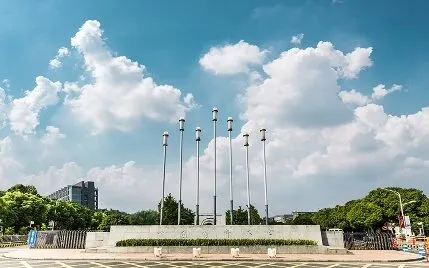
- Language courses
- English, Chinese
- Bachelor's Degree
- English, Chinese
- Master's Degree
- English, Chinese
- Doctoral (PhD) Programmes
- English, Chinese
- Accommodation from 7 200 ¥/year
CUMT · 中国矿业大学
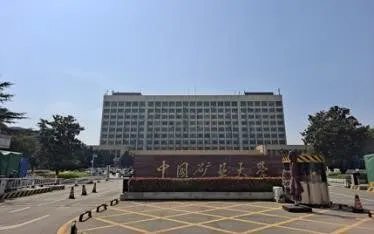
China University of Mining and Technology accepts international students on programmes in the following fields: business, engineering, education, economics, it. Choose the level and programme that suit your goals.
Chinese language study at the university — from a few weeks to a year or longer. Suitable for those starting from scratch or preparing for the HSK before entering a main programme.
self-funded · language programme
The first level of higher education: usually four years of study, specialised subjects, internships and a graduation thesis. It opens the way to working in your field and to a master's degree.
self-funded
Advanced study after a bachelor's degree: research, applied projects and internships. It helps you become an expert in your chosen field and broaden your career opportunities.
self-funded
China University of Mining and Technology is located in Xuzhou. Nihao Study consultants keep track of the deadlines and admission requirements of this university, and you can always check the most accurate and up-to-date information on its official website. In university rankings, it is ranked 115 in China and 792 worldwide.
Come for a face-to-face meeting: together we will go through the requirements, deadlines, documents and study options that suit you.

At the meeting we will look at your situation, tell you which documents to prepare and by when, talk about possible programmes and help you decide on the next step.
China University of Mining and Technology (CUMT, 中国矿业大学, Zhōngguó Kuàngyè Dàxué), known in Russian as the Chinese Mining and Technology University, is a public research university under the Ministry of Education of the PRC. The standard Chinese abbreviation is 中国矿大, and students say it even more briefly: 矿大 (Kuàngdà). Russian-language sources sometimes call it the 'Chinese University of Mining and Technology' or the 'University of Mining and Technology of China'; our Russian text uses the main form.
The university is located in Xuzhou (Jiangsu Province). It is part of Project 211 and Double First-Class, and under Project 985 it received a platform for strong disciplines. In the second round of Double First-Class it has two disciplines: mining engineering and safety science. In Xuzhou the university has two campuses, Nanhu and Wenchang. Its former Beijing branch has operated as a separate university since 2003, China University of Mining and Technology-Beijing (CUMTB), and its programmes and campuses do not belong to CUMT.
Below is information that a 2026 applicant will find useful: status and rankings, engineering fields, dormitories, HSK and CSCA requirements, the CSC scholarship and the application procedure. Questions about admission can be raised during a consultation with Nihao Study.
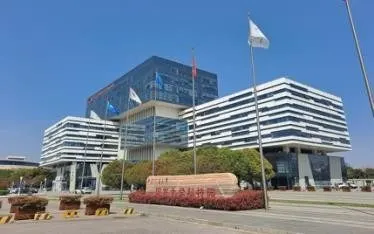
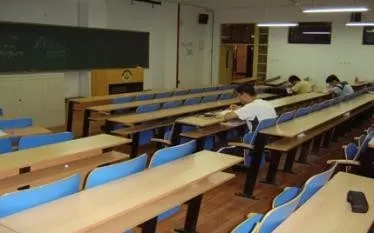
In international directories, the main CUMT is also listed under Xuzhou, while the Beijing university is counted separately. Its current scale shows that this is not a narrow industry institute but a large comprehensive university where you can complete every level, from bachelor's to doctoral.
| Indicator | Value | Why it matters to an applicant |
|---|---|---|
| Founded | 1909 | Its specialisation in mining, energy and engineering goes back more than a hundred years |
| Status | 211, 985 platform, Double First-Class | The university is among the national priorities and has a strong research base |
| Campuses | Nanhu and Wenchang, Xuzhou | The invitation must contain a specific address in Xuzhou |
| Students | 24,203 bachelor's, 11,307 master's and 3,902 doctoral students | A wide choice of disciplines and research teams |
| International students | About 1,100 people | Students from abroad are a familiar part of campus life |
| Academic structure | 25 schools and 72 bachelor's programmes | Besides mining: IT, economics and the humanities |
| Degrees | First-level disciplines: 21 doctoral, 36 master's | You can go from bachelor's to PhD at one university |
| International experience | International students have been taught since 1954 | The international college helps with admission and settling in |
CUMT traces its history to 1909, when Jiaozuo School of Railroad and Mines opened. In 1931 the school became the Private Jiaozuo Institute of Technology. During the war, in 1938, it was moved west, where it took part in founding the National Northwest Institute of Engineering. After returning to Jiaozuo, the institution came under the fuel industry administration, was named China Institute of Mining and Technology in 1950 and soon moved to Tianjin.
In 1952 the relevant departments of Tangshan Railway Institute, Peiyang University and Tsinghua University were merged into the mining institute. Just a year later the university moved to Beijing and became one of the well-known "eight institutes" of the Xueyuan Road area. A period in Sichuan followed, and in 1978 the move to Xuzhou began, while a graduate school remained in Beijing.
The university has borne its current name, 中国矿业大学, since 1988. This was followed by Project 211 (1997), the Project 985 platform for strong disciplines (2006) and the first round of Double First-Class (2017). The Beijing campus became the independent CUMTB in 2003. Since 2022 the university has been jointly supported by three parties: the Jiangsu Provincial Government, the Ministry of Emergency Management and the Ministry of Education.
Overall and subject rankings paint very different pictures of CUMT. In the composite tables the university sits several hundred places below the leaders, but in Mining and Mineral Engineering it rises to the top of the global list. For a future engineer this says more than the overall rank: a subject ranking shows more accurately where research and industry laboratories are concentrated.
| Ranking | Position | Graduates |
|---|---|---|
| QS World University Rankings | 659th | 2027 |
| QS World University Rankings | 654th | 2026 |
| QS Mining and Mineral Engineering | 14th in the world | 2025 |
| CWUR Global 2000 | 511th in the world, 92nd in China | 2026 |
| EduRank | 944th in the world, 62nd in China | 2026 |
| ShanghaiRanking, China | 67th | 2026 |
| THE World University Rankings | band 801 to 1000 | 2022 |
According to ESI, ten of CUMT's subject areas are in the world's top 1 per cent, with engineering, earth sciences and ecology in the top 0.1 per cent. EduRank singles out Mining Engineering, where CUMT ranks 1st in the world, as well as Environmental Management and Geotechnical Engineering, where the university is 2nd. Taken together, these figures show that CUMT is strongest where mining intersects with geology and ecology, safety, mechanics and digital management.
Mining Engineering is the historical backbone of CUMT and one of its two Double First-Class disciplines. The School of Mines trains specialists in new energy, industrial engineering, and both conventional and intelligent mining. It hosts national platforms for precision coal exploration and intelligent coal mining, open-pit mining, waste utilisation and virtual modelling. For an international student, this field leads not only underground: from here you can move into automation, robotics, geomechanics and digital twins of mineral deposits.
CUMT's second Double First-Class discipline is Safety Science and Engineering. Its roots lie in a bachelor's programme in mine ventilation and safety launched in 1982, the first in China. Today the field covers fire safety, occupational health, gas control, prevention of water and dynamic hazards, and emergency management. This profile suits those who want to work where engineering, occupational safety and sustainable industrial development meet.
CUMT is developing interdisciplinary platforms in four areas: the Internet of Things, artificial intelligence, carbon neutrality and energy storage. The university's profile goes far beyond coal: teaching and research cover clean energy, ecosystem restoration, mineral processing, low-carbon technologies and the use of underground space. The university's international network includes 166 universities and organisations from 51 countries.
The university combines engineering, natural sciences, management and the humanities. The name of a school is only a first pointer: what matters more is the language a specific programme is taught in, whether it is open to international students, and who can become your supervisor.
In total, CUMT offers 72 bachelor's programmes; it has 21 first-level disciplines at doctoral level and 36 at master's level. The International College is not a separate institution but a unit of the university itself: it is responsible for recruiting and onboarding international students, their language training and support.
CUMT's list of English-taught bachelor's programmes includes mining engineering, safety engineering, fire safety, mechanical engineering, chemical engineering and technology, mineral processing, geoinformatics and English. The standard duration of these programmes is four years.
Chinese-taught programmes require HSK 4 with at least 210 points. For English-taught programmes, the benchmarks are IELTS 6.0, TOEFL 85 or Duolingo 110. From the 2026/27 intake, bachelor's applicants also submit CSCA results: everyone takes mathematics, applicants to Chinese-taught programmes also take professional Chinese, and engineering majors additionally require physics or chemistry.
| Level | Standard duration | Examples and language of instruction |
|---|---|---|
| Bachelor's Degree | 4 years | Mining, mechanics, safety, GIS, chemical engineering, English |
| Master's Degree | 3 years | Chinese or English; a research plan and the supervisor's consent are required |
| Doctoral (PhD) Programmes | 4 years | Research work, publication prospects, a letter from the supervisor |
| Chinese Language | 1 academic year | From beginner level to HSK 4; the quota for the 2026 intake is 120 students |
For citizens of certain countries, the Silk Road intake for the 2025/26 academic year explicitly lists mining engineering, safety science and engineering, mechanical engineering and electrical engineering; some of these tracks are taught in English, others in Chinese. Which combinations of major, language and scholarship are open to applicants from Uzbekistan is best confirmed with the CUMT admissions office.
Current tuition and accommodation fees at CUMT, as well as related charges, are best checked on the university's official website before you apply.
International students are given places in double rooms. Eligibility for accommodation depends on registration at CUMT, a valid passport and a visa. The building and room are assigned at check-in, so it is worth matching the dormitory with your programme and campus in advance.
The International College is on Wenchang Campus: No. 1 Jinshan East Road, Xuzhou, Jiangsu, 221008. The main address of Nanhu Campus is No. 1 Daxue Road, Xuzhou, Jiangsu, 221116. The campuses are linked by a university bus. Within 24 hours of arrival, an international student must register their place of residence.
CUMT takes part in the Chinese Government Scholarship through two channels: Type A is the bilateral programme, Type B is admission through the university itself. The university's code in the CSC system is 10290. Master's and doctoral students are also admitted under the High-Level Postgraduate Program for the 2026/27 intake, with studies starting in September 2026. The full government scholarship usually covers tuition, a dormitory place, medical insurance and a monthly stipend, the amount of which depends on the student's category.
CUMT's own scholarship is divided into several levels:
The university scholarship is awarded for one academic year and then reviewed based on academic performance and conduct. Some CUMT students also hold the Jiangsu Government Scholarship, awarded by the Jiangsu provincial government. It makes sense to prepare the scholarship application alongside the main application, checking nationality, programme level, field and deadlines in advance.
CUMT's grounds exceed 4,200 mu, and the total floor area of buildings on the two campuses is 1.56 million square metres. Green space covers 65 per cent of Nanhu Campus with its lakes and 46 per cent of Wenchang. The university's ecosystem counts more than 150 plant species and 260 animal species, so this large engineering school sits alongside a spacious natural area.
The library holds more than 20 million items. For everyday life there are 16 canteens, 2 gyms, 4 stadiums, 54 outdoor basketball courts and 32 tennis courts. The International College organises language, cultural and orientation events; over the university's history, almost 4,000 international students from 86 countries have studied here.
Wenchang Campus has its own station on Metro Line 3. The metro takes you both to the main railway station and to Xuzhou East station, the latter with a change to Line 1. An internal bus runs between the campuses, so an international student should consider where classes take place, not just how close the area is to the city centre.
| University | Location | Distinguishing features |
|---|---|---|
| China University of Mining and Technology, CUMT, 中国矿业大学 | Xuzhou, Nanhu and Wenchang | The English name does not contain the word Beijing; the abbreviation is CUMT |
| China University of Mining and Technology-Beijing, CUMTB, 中国矿业大学(北京) | Beijing, Xueyuan Road and Shahe | The name always contains the word Beijing; the abbreviation is CUMTB |
Historically, both universities trace back to a school in Jiaozuo, which is why older descriptions often confuse them. CUMTB has operated as an independent university since 2003, when the Beijing campus separated. For the university discussed here, the correct markers are CUMT, the Nanhu and Wenchang campuses, and the city of Xuzhou in Jiangsu Province. Beijing, Shahe and Xueyuan Road in an address point to admission to a different university.
The main Russian form corresponds to 'Chinese Mining and Technology University'. The 'mining technical' variant without a hyphen is a spelling mistake. 'Chinese University of Mining and Technologies' is an understandable translation from English but not the main name. The official international name is China University of Mining and Technology, and the official English abbreviation is CUMT. The full Chinese name is 中国矿业大学 (Zhōngguó Kuàngyè Dàxué), the standard abbreviation is 中国矿大, and the shortest form is 矿大 (Kuàngdà).
It is a national public research university under the Ministry of Education of the PRC. It is located in Xuzhou, Jiangsu Province, and has two campuses — Nanhu and Wenchang.
Not for applicants. Since 2003, the former Beijing campus has operated as a separate university — China University of Mining and Technology-Beijing (CUMTB). An application to CUMT must state Xuzhou and the details of the university in Xuzhou.
Yes. The university joined Project 211 in 1997, received a Project 985 platform for strong disciplines in 2006, and has been part of Double First-Class since 2017. Its first-tier disciplines are Safety Science and Engineering and Mining Engineering.
In English, yes: there are separate programmes in mining, safety, fire engineering, mechanical engineering, chemical technology, mineral processing, GIS and English. CUMT's main academic tracks are taught in Chinese or English.
Chinese-taught programmes require HSK 4 with a score of at least 210; for English-taught programmes the benchmark is IELTS 6.0, TOEFL 85 or Duolingo 110. The one-year Chinese course is designed to take students from beginner level to HSK 4.
The price depends on the programme level, field and room type, and may change from year to year, so it is best to check current terms on the university's official website before applying.
Yes. The university accepts Type A (bilateral) and Type B (university) applications; its CSC code is 10290. There is a High-Level Postgraduate Program for master's and doctoral students, and some Silk Road intakes for citizens of certain countries include engineering fields.
Yes. CUMT's international college has a test centre that holds the HSK and HSKK. The centre opened in 2012 and became the first university-based internet HSK centre in Jiangsu Province. The 2026 schedule has been published for the Wenchang campus.
The standard set: a photo, passport, school-leaving certificate and transcript, language certificate, medical form, police clearance certificate and CSCA result. It is worth checking the translations of your documents before submitting them to the admissions office.
The Wenchang campus has its own station, CUMT Wenchang Campus, on metro line 3. From Xuzhou East station, take line 1 and then change to line 3; you can also take a taxi. The exact route and the right gate depend on the building stated in your invitation.
Xuzhou (徐州) is nicknamed the 'City of a Thousand Years' and is one of China's transport crossroads. Liu Bang, the first emperor of the Han dynasty, was born here. The city is known for its tombs and terracotta warriors: they are smaller than those in Xi'an but just as impressive.
Xuzhou is convenient for students thanks to its transport links: both Beijing and Shanghai can be reached quickly from here. It is an industrial city, but it has lots of greenery and the picturesque Yunlong Lake. The leading local university is China University of Mining and Technology. Parents can count on safety and stability, developed infrastructure, moderate prices and a comfortable climate typical of central China.
You work with Nihao Study specialists. They will help you put together a portfolio and a set of documents, draw up a study plan and choose a university or college and a specialty that genuinely interest you.
We take care of every stage of admission, from choosing to enrolment
We will gather, prepare, certify and send your documents to the institution
We will show the admissions committee your strengths
We run training sessions and courses so you can prepare with more confidence
We will help you settle in at the start of your studies and keep moving forward
Nihao Study specialists select universities and colleges that match the applicant's goals and means. We make sure the teachers are practitioners and that the knowledge will be useful in your profession.
We examine curricula, talk to students and teachers and look at which specialties employers need, and use this information to select options for the applicant.
Advisers guide the applicant from the first consultation to enrolment, help build a plan and spot mistakes in time that could get in the way.
The cost of our support depends on the programme and the partner university; you'll get an exact quote after a free consultation.
Get a quoteA free 15-minute consultation: together we will choose a university or college and a programme that suit your goals and budget.
Apply with peace of mind: we handle the documents, deadlines and correspondence with admissions committees, and you save time and energy.
Don't want to wait for a call? Message us in the chat.
Message us in chat 
University · Wuxi