- Language courses
- English, Chinese
- Bachelor's Degree
- English, Chinese
- Master's Degree
- English, Chinese
- Doctoral (PhD) Programmes
- English, Chinese
- Accommodation from 3 000 ¥/year
CPU · 中国药科大学
China Pharmaceutical University accepts international students on programmes in the following fields: engineering, medicine, humanities. Choose the level and programme that suit your goals.
Chinese language study at the university — from a few weeks to a year or longer. Suitable for those starting from scratch or preparing for the HSK before entering a main programme.
self-funded · language programme
The first level of higher education: usually four years of study, specialised subjects, internships and a graduation thesis. It opens the way to working in your field and to a master's degree.
self-funded
Advanced study after a bachelor's degree: research, applied projects and internships. It helps you become an expert in your chosen field and broaden your career opportunities.
self-funded
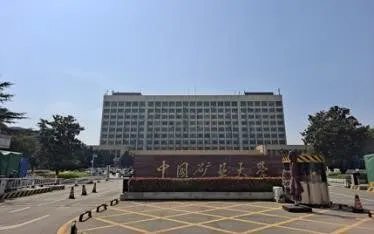
China Pharmaceutical University is located in Nanjing. Nihao Study consultants keep track of the deadlines and admission requirements of this university, and you can always check the most accurate and up-to-date information on its official website. In university rankings, it is ranked 67 in China and 1274 worldwide.
Come for a face-to-face meeting: together we will go through the requirements, deadlines, documents and study options that suit you.

At the meeting we will look at your situation, tell you which documents to prepare and by when, talk about possible programmes and help you decide on the next step.
China Pharmaceutical University (CPU, 中国药科大学, pinyin Zhōngguó Yàokē Dàxué) is a public research university in Nanjing under the Ministry of Education of the PRC. Russian-language searches also turn up the variant 'Pharmaceutical University of China' and occasionally a misspelling of the word 'pharmaceutical'. The official Chinese abbreviation is 中国药大, students simply say 药大, and the English abbreviation CPU is set out in the university's charter.
The university specialises in pharmaceutical sciences, reports to the Ministry of Education and is part of the historical Project 211. CPU also holds Double First-Class status, but it needs to be described precisely: the official list of disciplines under development includes 中药学, which is Chinese materia medica and herbal medicinal resources, not pharmacy as such. This distinction is also confirmed by the university's plan for 2026, which sets a separate goal of getting general pharmacy included in the next round.
Below Nihao Study has gathered what a 2026 applicant should know: CPU's status and programmes, HSK requirements, scholarships, dormitories, campuses and neighbouring universities in Nanjing.

| Item | Data |
|---|---|
| Founded | 1936 |
| Status | public university under the Ministry of Education; Project 211; Double First-Class |
| Campuses | Xuanwumen and Jiangning |
| Full-time students | 20 756 |
| Staff | 2 056 |
| Number of academic units | 17 |
| Bachelor's Degree | 30 majors and major groups |
| Master's and doctoral programmes | first-level disciplines: 8 master's groups, 4 doctoral groups |
| International links | over 110 partnerships worldwide; students from more than 66 countries |
New international students usually study at the Jiangning campus: 639 Longmian Avenue, Jiangning District, Nanjing, 211198. The historic Xuanwumen campus is at 24 Tongjiaxiang, Gulou District, Nanjing, 210009. Both addresses also appear in the university charter, which names the Gulou District site as the legal address.
The university traces its history to the National College of Pharmacy. It opened in 1936 and became China's first state-founded pharmaceutical higher education institution; from the very start it taught a full four-year programme. During the war the college was evacuated first to Hankou, then to Chongqing, and it returned to Nanjing in 1946.
In 1952 the pharmaceutical departments of Cheeloo University and Soochow University were merged into the college, which was renamed East China College of Pharmacy. It has trained postgraduates since 1955, and in 1956 it was renamed Nanjing College of Pharmacy. The current name, China Pharmaceutical University, dates from 1986, following a merger with Nanjing College of Traditional Chinese Pharmacy, which was then still being established.
In 1996 CPU joined Project 211, in 2000 it came directly under the Ministry of Education, and in 2001 Jiangsu Provincial Pharmaceutical School was merged into it. The Jiangning campus took shape after an infrastructure exchange in 2008 and became the university's main modern site. This history explains CPU's narrow specialisation: it is not a comprehensive medical university but a centre for drug development, pharmacology, pharmaceutical technology and industry management.
In the overall global standings a specialised university looks more modest than it really is, so for CPU it is worth looking at both institutional and subject rankings.
| Ranking | Position and edition | How to read it |
|---|---|---|
| Times Higher Education | band 1001-1200 worldwide, 2026; Medical and Health, band 401-500 | overall snapshot of the whole university |
| ShanghaiRanking GRAS | Pharmacy and Pharmaceutical Sciences, 7th in the world, 2025 | the highest subject position among external assessments |
| CWUR | 724th in the world, 128th in China, 2025 | the university is in the top 3.4 per cent of the ranking |
| EduRank | 1652nd in the world, 62nd in pharmacology, 2026 | assessment based on publications and citations |
| ESI | 11 fields in the global top 1 per cent (as of May 2026) | a broad research base around the pharmaceutical sciences |
CPU's pharmacology and toxicology ranks 4th in the world in the U.S. News 2024-2025 subject table, and in medicinal chemistry the university was 3rd in the CWUR subject ranking. These positions should not be confused with the university's overall rank. For a future pharmacist the subject results matter more, while those heading for interdisciplinary bioinformatics or management should look into the specific laboratory and supervisor.
The university offers medicinal chemistry, pharmacology, pharmacokinetics, pharmaceutical analysis, pharmaceutical technology and clinical pharmacy. The official English-taught master's programmes add pharmacognosy, marine pharmacy, biomedical engineering, and microbial and biochemical pharmacy. This makes it possible to cover the whole path: molecule discovery, analysis, dosage form development, preclinical research and rational drug use.
CPU's entry in the official Double First-Class list is specifically 中药学 (Chinese pharmacy), not pharmacy in general. The School of Traditional Chinese Pharmacy runs fields related to natural medicinal compounds, medicinal plant resources, and the analysis and technology of Chinese medicines. Its history begins with a pharmacognosy course in 1936, and today it is linked to a pharmaceutical museum and a botanical garden.
The English-taught Clinical Pharmacy programme prepares students for drug evaluation, information support for therapy, clinical consulting and research; the standard duration is 5 years. In addition, according to the university itself, CPU has joint programmes: Pharmacy with the University of Strathclyde and Clinical Pharmacy with the University of Manchester. Not every track leads to a foreign degree, so the conditions need to be checked for the specific intake year.
The Chinese-language catalogue lists pharmacy, pharmaceutics, pharmaceutical analysis, medicinal chemistry, traditional Chinese pharmacy, TCM resources and development, biotechnology, marine pharmacy, pharmaceutical engineering, food quality and safety, clinical pharmacy, pharmaceutical management, as well as economics and statistics. Check the curriculum before choosing: pharmacy (Pharmacy) and pharmaceutics (Pharmaceutics) are different programmes, not synonyms.
For 2026 the university has published separate lists of English-taught bachelor's, master's and doctoral programmes. Before applying, open the page of the programme you want and do not rely on outdated aggregators: the language of instruction, the supervisor and even the availability of a major change from cycle to cycle.
| Level | Sample programmes and language | Duration |
|---|---|---|
| Bachelor's Degree | Pharmacy (English) | 4 years |
| Bachelor's Degree | Clinical Pharmacy (English) | 5 years |
| Bachelor's Degree | International Economics and Trade (English) | 4 years |
| Master's Degree | pharmaceutical research (English) | 3 years |
| Doctoral (PhD) Programmes | research fields in English or Chinese | 4 years |
| Language course | Chinese language, non-degree | intake announced separately |
There are no Russian-taught programmes. In the Silk Road 2026 scholarship intake, Chinese-taught study required HSK 4 with a score of at least 220, and English-taught programmes required TOEFL 90 or IELTS 6.5 or above. These are the requirements of a specific scholarship competition: for a self-funded programme or in the next cycle the threshold may be different.
There are also separate Chinese requirements at graduation. For Chinese-taught programmes it is HSK 5 with at least 180 points, for English-taught bachelor's programmes HSK 4 with at least 180, and for English-taught master's and doctoral programmes HSK 3 with at least 180. In other words, studying in English does not exempt you from learning Chinese.
CPU's base rates have applied since September 2018, but only a recent invoice from the university confirms the exact amount payable. Check the current tuition fee, accommodation, insurance and visa processing costs on the official website cpu.edu.cn.
Both campuses, Jiangning and Xuanwumen, have double and single rooms; the price depends on the site and the room type. Under the accommodation rules, international students are usually required to live in a university dormitory in their first year. Rooms are allocated subject to availability, so the specific accommodation option is stated in the check-in confirmation. On moving in, the student checks the furnishings against an inventory and signs a separate agreement.
Registration for new international students usually takes place in Jiangning. From Nanjing Lukou Airport it is convenient to take Line S1 to Nanjing South Railway Station and change there to Line 1. This line connects the railway stations both with the terminus near the Jiangning campus and with Xuanwumen station near the city campus.
The most comprehensive support comes from the Chinese Government Scholarship. Under the Silk Road 2026 terms, the scholarship waived tuition fees and provided a place in a double room, comprehensive medical insurance and a monthly stipend, the amount of which differed for bachelor's, master's and doctoral students. In practice, applications for this intake closed on 17 May 2026.
Who receives a scholarship is decided by the intake's selection committee, so no one can guarantee an applicant a particular chance.
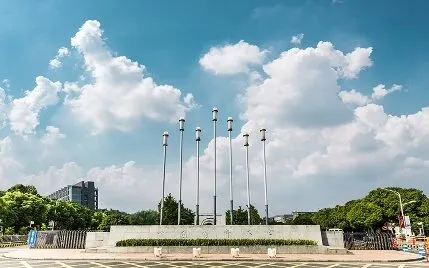
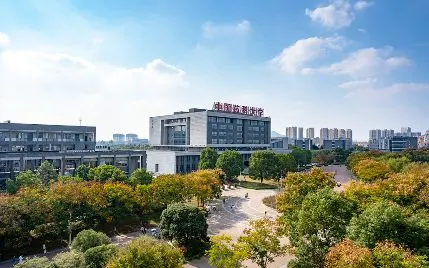
Jiangning is a spacious green campus near Fangshan Hill. Teaching buildings, laboratories, dormitories and sports grounds are linked by wide footpaths. The libraries of both campuses together cover about 28,933 square metres, and their holdings amount to around 4.51 million items, print and electronic.
The university's signature attraction is the Jiangsu Pharmaceutical Museum in Jiangning. It covers about 1,800 square metres; two floors of permanent exhibitions present the history of Chinese pharmacy, medicinal raw materials and herbarium specimens. The 320-mu medicinal plant botanical garden has existed since 1958 and serves as a base for study and research.
First, compare the curriculum with your career goal. Pharmacy focuses on the science of the drug itself, Clinical Pharmacy includes clinical practice, and Chinese Pharmacy is devoted to traditional medicinal raw materials. Under CPU's official scheme, the English-taught, Chinese-taught and non-degree catalogues are browsed separately.
In the Silk Road 2026 programme, bachelor's candidates needed a school certificate and had to be under 25, master's candidates needed a bachelor's degree and had to be under 35, and doctoral candidates needed a master's degree and had to be under 40. Check the conditions for your own cycle separately and plan your HSK test in advance.
Master's and doctoral candidates applying through the CSC need to obtain an acceptance letter from a CPU professor in advance. For Silk Road, the research plan had to be at least 800 words for master's and at least 1,000 words for doctoral programmes; for bachelor's programmes a study plan of at least 600 words was required.
The core package includes a passport, transcript and notarised education certificate, as well as a language certificate, medical form and police clearance certificate. Master's and doctoral applicants also need two recommendation letters. The medical results and police clearance certificate usually must be no older than six months.
Applications are submitted through the CPU Application Platform. If you are applying for a CSC scholarship, you may also need a second application through the China Scholarship Council system, where you enter CPU's agency number 10316 and the Type B category. Bachelor's candidates in the Silk Road 2026 intake also attached their China Scholastic Competency Assessment result.
Once your details are confirmed and payment is made, the university issues the admission notice and the JW202 form required for a student visa.
| University and Chinese name | Type | Main focus |
|---|---|---|
| China Pharmaceutical University, CPU, 中国药科大学 | specialised university under the Ministry of Education | medicines, pharmacy, Chinese pharmacy |
| Nanjing University of Chinese Medicine, 南京中医药大学 | university of Chinese medicine | Chinese medicine, clinical practice, acupuncture, Chinese Materia Medica |
| Nanjing Medical University, 南京医科大学 | medical university | medicine, clinical training, public health |
| Nanjing University, NJU, 南京大学 | comprehensive research university | fundamental sciences, humanities and engineering |
People choose CPU for the pharmaceutical sciences and a career in the pharmaceutical industry. NJUCM is a better fit for those interested in Chinese medicine and the clinical tradition, NMU for future doctors and public health specialists, and NJU for those who want a broad academic choice. If you are weighing overall prestige against pharmaceutical specialisation, compare Nanjing University and CPU side by side.
The standard Russian name is the one meaning ‘Chinese Pharmaceutical University’; the misspelt variant of ‘pharmaceutical’ is a spelling error. ‘Pharmaceutical University of China’ is an understandable calque of the English but not the main form. The official international name is China Pharmaceutical University, and the official English abbreviation is CPU. The Chinese short forms are 中国药大 and the shorter 药大, and the full original name is 中国药科大学 (Zhōngguó Yàokē Dàxué). These forms are set out in CPU's charter.
CPU is a public pharmaceutical university in Nanjing under the Ministry of Education of the PRC. It has two campuses: Xuanwumen in Gulou District and Jiangning on Longmian Avenue.
Yes, CPU is part of Project 211; it was selected in 1996. This historical status should not be confused with Project 985: the university took part in the 985 Project Advantage Discipline Innovation Platform but was not a full Project 985 university.
Officially it is 中药学, Chinese pharmacy, or Chinese Materia Medica. It is inaccurate to say that the whole of pharmaceutical science was included in the list, although CPU has strong subject rankings in Pharmacy.
You can study in English in pharmacy, clinical pharmacy, and international economics and trade, as well as on some master's and doctoral tracks. There are no degree programmes taught in Russian.
In the Silk Road 2026 scholarship intake, Chinese-taught programmes required HSK 4 with a score of at least 220. Requirements may differ in another intake, so check the current programme page and the HSK test schedule.
The cost depends on the level, language and programme: bachelor's, master's, doctoral programmes and the language course each have their own rates. The university publishes the current rates, and the exact amount payable is confirmed by its latest invoice — check the official website cpu.edu.cn.
The price depends on the campus and the number of roommates, and the specific room type is decided at allocation. Current terms are published on the university's official website.
Yes, provided you win the relevant competition. The Silk Road 2026 package included tuition, a place in a twin room in the dormitory, insurance and a monthly stipend.
CPU's international website has a separate section on HSK, but the programme page does not guarantee that every session is held on campus. When registering, check which centres are available and consult the HSK calendar.
As a rule, you need your school-leaving certificate and transcript with a notarised translation, passport, language certificate, medical form, police clearance certificate, study plan and any documents required by the specific programme. The Silk Road 2026 intake also required a CSCA result.
Nanjing (南京), the 'Southern Capital', was ruled by six dynasties. The city preserves a rich historical heritage: the Sun Yat-sen Mausoleum and the Ming-dynasty city wall. Today it is one of China's leading centres of science and education.
Nanjing has strong universities, including Nanjing University, beautiful campuses and a lively student life. The streets are lush with avenues of plane trees, the metro has 11 lines, and Shanghai is just 1 hour away. Parents are drawn by the calm, intellectual atmosphere, the high level of safety, good healthcare and developed infrastructure — while prices are lower than in Shanghai.
You work with Nihao Study specialists. They will help you put together a portfolio and a set of documents, draw up a study plan and choose a university or college and a specialty that genuinely interest you.
We take care of every stage of admission, from choosing to enrolment
We will gather, prepare, certify and send your documents to the institution
We will show the admissions committee your strengths
We run training sessions and courses so you can prepare with more confidence
We will help you settle in at the start of your studies and keep moving forward
Nihao Study specialists select universities and colleges that match the applicant's goals and means. We make sure the teachers are practitioners and that the knowledge will be useful in your profession.
We examine curricula, talk to students and teachers and look at which specialties employers need, and use this information to select options for the applicant.
Advisers guide the applicant from the first consultation to enrolment, help build a plan and spot mistakes in time that could get in the way.
The cost of our support depends on the programme and the partner university; you'll get an exact quote after a free consultation.
Get a quoteA free 15-minute consultation: together we will choose a university or college and a programme that suit your goals and budget.
Apply with peace of mind: we handle the documents, deadlines and correspondence with admissions committees, and you save time and energy.
Don't want to wait for a call? Message us in the chat.
Message us in chat 
University · Wuxi