- Language courses
- English
- Bachelor's Degree
- English
- Master's Degree
- English
- Accommodation from 3 000 ¥/semester
四川城市职业学院
Urban Vocational College of Sichuan accepts international students on programmes in the following fields: business, engineering, medicine, education, economics. Choose the level and programme that suit your goals.
Chinese language study at the university — from a few weeks to a year or longer. Suitable for those starting from scratch or preparing for the HSK before entering a main programme.
Check upcoming application deadlines for this level with your Nihao Study adviser.
All programmes at this level →Secondary vocational education: practice-oriented programmes where you learn the language and a profession. Suitable for graduates of grades 9 and 11, and some programmes lead on to a bachelor's degree.
Check upcoming application deadlines for this level with your Nihao Study adviser.
All programmes at this level →Urban Vocational College of Sichuan is located in Chengdu. Nihao Study consultants keep track of the deadlines and admission requirements of this university, and you can always check the most accurate and up-to-date information on its official website.
Come for a face-to-face meeting: together we will go through the requirements, deadlines, documents and study options that suit you.

At the meeting we will look at your situation, tell you which documents to prepare and by when, talk about possible programmes and help you decide on the next step.
Urban Vocational College of Sichuan (SCUVC, 四川城市职业学院) is a higher education institution in Sichuan Province. The college was approved by the Provincial People's Government and registered with the Ministry of Education of the PRC. In the Russian-speaking education community it is also known by a shorter name, which translates as Sichuan Vocational College.
The college was founded in 1999; it was originally called Nanyang College and operated under Sichuan Normal University. Over the decades since, it has grown into a large educational complex. Below you will find information about its facilities, its programmes for 2026 and living conditions for international students.
Today the college focuses on linking study with real-world industry. By 2026 it had significantly expanded its facilities, giving students access to modern technology and training to international standards.
Key figures:
For anyone going to study in China, housing is one of the key questions. SCUVC puts a lot of effort into helping international students settle in.
International students live in the dormitory in four-person rooms. Meals are not included in the accommodation fee, but there are many canteens on campus, including ones serving halal food. Students can leave the campus every day, so the living arrangements are fairly relaxed. The college itself provides the current dormitory fee.
This arrangement gives international students both everyday comfort and the freedom they need, which helps them focus calmly on their studies.
In addition to its residential areas, the college has two large main campuses with well-developed facilities.
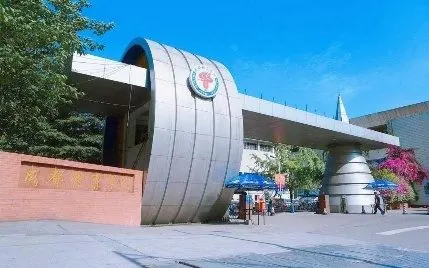
The campus is in Longquanyi District in Chengdu, the capital of Sichuan Province, and is known for its green environment and carefully designed landscape.
The new campus was built in Mindong New District (Meishan) and was designed with an emphasis on an 'international format'.
In 2026, SCUVC (Urban Vocational College of Sichuan) trains specialists in dozens of specialisations geared to the needs of the digital economy.
The five most popular fields in 2026:
For international students, the admission procedure is simplified.
SCUVC is a large college: it has 18,000 students, its teaching facilities are equipped with modern technology, and it offers international students a comfortable living environment.
For future IT specialists, healthcare workers and business professionals, the college offers access to new laboratories, while life outside class is catered for by an IMAX cinema, student canteens, sports facilities and the dormitory. Below are answers to frequently asked questions about admission, study and everyday life at the college.
Yes. The college (四川城市职业学院) is officially approved by the People’s Government of Sichuan Province and registered by the Ministry of Education of the PRC. Graduates receive a state-standard diploma recognised throughout China and beyond, which broadens their career opportunities.
International students are housed in the dormitory in rooms for four. Meals are paid for separately; there are many canteens on campus, including a halal one. Students can leave the campus every day, which is convenient for everyday life and for settling into the new environment. The college provides the current dormitory fee.
The college covers 1602 mu (more than 100 hectares) and is divided into two main sites. The main ‘garden’ campus is in Chengdu, the provincial capital, in Longquanyi District by Donghu Lake. The second, newer and more modern campus is in the city of Meishan, in Mindong New District.
The campus is designed so that students can both study and properly relax. The dormitories have modern gyms, laundries and lounge areas, and there are many canteens on site, including a halal one. A particular point of pride is the campus’s own IMAX 3D cinema, which shows world premieres. For study there is a large library with a collection of 1.95 million volumes.
On the wave of digitalisation, the most popular and strongest fields have become software development and information technology, as well as artificial intelligence (AI) and Big Data. The college has purchased the latest teaching and research equipment, so students of technical and medical specialities, such as nursing, practise on modern equipment.
The joint programmes (Sino-foreign cooperative programs) were created to develop the college’s international links. Entry requirements are more lenient and pass marks are lower than in the regular departments. This route suits applicants who are aiming for a double degree and international experience.
Chengdu (成都) is the capital of Sichuan Province. The city is known for its giant panda breeding centre and its fiery Sichuan cuisine. Today it is growing fast as the technology hub of western China, and students from all over Asia come here to study.
Chengdu attracts students with good education, moderate prices and a relaxed, comfortable pace of life. Public transport is well developed (the metro has 13 lines), there are many parks and teahouses, and the climate is mild, with no severe frosts. Parents like that this calm city has everything needed: it is safe, there are modern hospitals, direct flights leave from the international airport, and student life is well organised, with dormitories and support services.
You work with Nihao Study specialists. They will help you put together a portfolio and a set of documents, draw up a study plan and choose a university or college and a specialty that genuinely interest you.
We take care of every stage of admission, from choosing to enrolment
We will gather, prepare, certify and send your documents to the institution
We will show the admissions committee your strengths
We run training sessions and courses so you can prepare with more confidence
We will help you settle in at the start of your studies and keep moving forward
Nihao Study specialists select universities and colleges that match the applicant's goals and means. We make sure the teachers are practitioners and that the knowledge will be useful in your profession.
We examine curricula, talk to students and teachers and look at which specialties employers need, and use this information to select options for the applicant.
Advisers guide the applicant from the first consultation to enrolment, help build a plan and spot mistakes in time that could get in the way.
The cost of our support depends on the programme and the partner university; you'll get an exact quote after a free consultation.
Get a quoteA free 15-minute consultation: together we will choose a university or college and a programme that suit your goals and budget.
Apply with peace of mind: we handle the documents, deadlines and correspondence with admissions committees, and you save time and energy.
Don't want to wait for a call? Message us in the chat.
Message us in chat 
University · Ya'an