- Language courses
- English
- Bachelor's Degree
- English
- Master's Degree
- English
- Accommodation from 3 200 ¥/year
CDSU · 成都体育学院
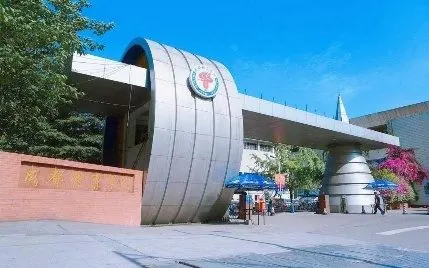
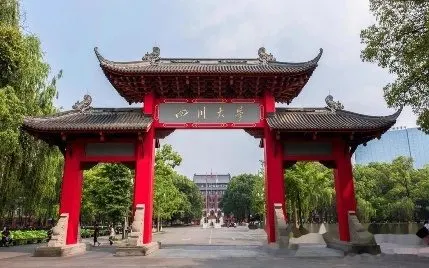
Chengdu Sport University accepts international students on programmes in the following fields: business, engineering, medicine, humanities. Choose the level and programme that suit your goals.
Chinese language study at the university — from a few weeks to a year or longer. Suitable for those starting from scratch or preparing for the HSK before entering a main programme.
self-funded · language programme
The first level of higher education: usually four years of study, specialised subjects, internships and a graduation thesis. It opens the way to working in your field and to a master's degree.
self-funded
Advanced study after a bachelor's degree: research, applied projects and internships. It helps you become an expert in your chosen field and broaden your career opportunities.
self-funded
Chengdu Sport University is located in Chengdu. Nihao Study consultants keep track of the deadlines and admission requirements of this university, and you can always check the most accurate and up-to-date information on its official website. In university rankings, it is ranked 584 in China and 6158 worldwide.
Come for a face-to-face meeting: together we will go through the requirements, deadlines, documents and study options that suit you.

At the meeting we will look at your situation, tell you which documents to prepare and by when, talk about possible programmes and help you decide on the next step.
Chengdu Sport University (CDSU, 成都体育学院, pinyin Chengdu Tiyu Xueyuan) is a public sports university in Chengdu (Sichuan Province). It is jointly overseen by the provincial authorities and the General Administration of Sport of China, although Sichuan plays the main administrative role. Russian renderings of the name vary, translating as 'Sport University of Chengdu', 'University of Physical Culture of Chengdu' and 'Chengdu Sports University', among others; our Russian pages use one standard form. In China itself the abbreviation 成体 (Chengti) is common, while international materials have settled on Chengdu Sport University.
An important caveat: the word University in the English name does not mean that the legal Chinese name has changed to 成都体育大学. According to the university itself, its charter and 2026 admission documents still use 成都体育学院, and graduates receive their diplomas under that name. So although this page uses the familiar name, in your application the Chinese form should be copied exactly as it appears in your current invitation, not translated by yourself.
In this overview Nihao Study has gathered what matters to a 2026 applicant: the university's status, subject rankings, programmes, accommodation, HSK requirements and the application procedure. The current list of programmes should be checked against the university's public website.
| Item | Verified data | What it means |
|---|---|---|
| Founded | 1942 | One of the oldest sports universities in the country |
| Status | Public; jointly administered by Sichuan and the national sports authority | A provincial-level university, not a private institution |
| Students | Over 10,000 bachelor's students, plus over 1,800 master's and doctoral students (based on the university website, published in 2024) | A large student community with a single profile |
| Staff | Over 1,200 staff, more than 600 of them teachers | The university has its own research, medical and coaching teams |
| Bachelor's Degree | 22 fields according to the published profile | Besides sport — medicine, economics, media and the arts |
| Main address | East Campus, 环湖北路1942号, postcode 641418 | The new main site near Sancha Lake |
| Second address | Wuhou Campus, 体院路2号, postcode 610041 | The historic city campus near the Wuhou Shrine |
In terms of educational level, CDSU is a full-fledged university offering bachelor's, master's and doctoral programmes. In 2024 the university gained the right to train professional doctorates in sport and master's students in special medicine. CDSU is not part of the national 985 and 211 projects, nor of the national Double First-Class list. However, it does have strong disciplines in Sichuan's provincial programme — these two lists should not be confused.
In 1942 the Sichuan Provincial Specialised Sports School opened — this is where the university's history begins. From 1950 it was called the Chengdu Specialised Sports School, in 1953 it became the Southwest Institute of Physical Education, and it has borne the name 成都体育学院 since 1956. In 1961 the Chongqing Institute of Physical Education merged into it.
For many years the university reported to the national sports authority. In 2001 its administration was transferred to the local level: since then it has been run jointly with the Sichuan government, with the province playing the leading role. So calling CDSU a provincial university is correct but not the whole picture: it is still institutionally linked to the national sports authority.
Its research level developed later. The university gained the right to award doctoral degrees in sports science in 2013, and in 2019 it opened a postdoctoral station in this field. In 2023, together with the International University Sports Federation, it founded the International Centre for University Sports Culture Exchange, and the campus was awarded FISU Healthy Campus status. In 2024 the main teaching moved from Wuhou District to the new East Campus near Sancha Lake.
| Ranking | Position | How to read it |
|---|---|---|
| ShanghaiRanking, Chinese sports universities 2026 | 8th place, reference position 330 | The main national benchmark for a university of this profile |
| ShanghaiRanking, Chinese sports universities 2025 | 7th place; 108.2 points; reference position 343 | Shows how its place among sports universities is changing |
| EduRank 2026 | 8457 (world), 3254 (Asia), 594 (China) | An overall bibliometric ranking; it does not assess the quality of training |
| EduRank for Chengdu 2026 | 15th of 21 universities ranked | Place among the city's large multidisciplinary universities |
| SCImago 2026 | 9795 in the world edition, overall percentile 91 | Takes into account research, innovation and public visibility |
In the leading rankings — Times Higher Education, CWUR, U.S. News — CDSU does not have a separate profile that could be fairly compared with large comprehensive universities. This does not indicate low quality: for a specialised sports university, the subject-specific ShanghaiRanking, research laboratories and programmes actually on offer are more telling. One more thing: the positions of Chengdu University do not apply to CDSU — that is a different university, 成都大学 in Chinese.
CDSU does not hold 985, 211 or national Double First-Class status. However, its disciplines — journalism, sports medicine, Chinese medicine and sports science — are included in Sichuan's "Gongga" higher education plan, with sports science placed in the plan's first category. The expression "provincial Double First-Class" is appropriate only with the caveat that this is not the national 双一流 list.
CDSU's sports cluster covers physical education and sports training, strength and conditioning, wushu, football, traditional sports and mass sports management. The university currently has separate schools of football, wushu, recreational sport, sports training and physical education. For a student this means that, besides theory, there will be coaching practice, competitions and classes at specialised facilities.
The university also remains a major examination and methodological centre in Sichuan. In 2026 the provincial sports examination was held on the East Campus — in swimming, volleyball, gymnastics, wushu, table tennis and a number of athletics events. 28,803 candidates registered for it, and testing lasted 10 days.
CDSU's second distinctive feature is its combination of sport and medicine. Bachelor's programmes include sports rehabilitation, rehabilitation therapy, human movement science, as well as Chinese medicine and Chinese traumatology and orthopaedics. The university has a School of Sports Medicine and Health, and its history includes its own sports hospital and research into athletes' injuries.
According to the university, in 2025 it had key laboratories in shooting, sports medicine, adolescent mental health and intelligent technologies for mass sport. This base will be useful for those who want to combine coaching with biomechanics, rehabilitation or medical support.
The third field brings together journalism and broadcasting, English, history and museology, and sports economics and management. It is designed for future club managers, competition organisers, sports editors and translators. In 2025 CDSU and the University of Southern Indiana launched a joint bachelor's programme in sports economics and management and agreed on mutual recognition of study results under a "2+2" model.
International students are recruited to this joint programme separately — under its own admission rules, with its own fees and language requirements. Even so, the project shows that CDSU's international links go beyond short visits.
The university's fields of study can conveniently be divided into four groups. The first is sport itself: physical education, sports training, strength and conditioning, football and wushu, as well as recreational sport, mass sports management and traditional ethnic sports. The second is medical: sports medicine, rehabilitation, movement science, Chinese medicine and Chinese traumatology.
The third group covers the humanities and applied fields: journalism, TV and radio production, English, tourism, history and museum studies, and sports economics and management. The fourth is related to the arts: music, dance, performance dance and broadcasting and hosting. Programmes last from 4 years; Chinese medicine and Chinese traumatology take 5 years.
The choice at master's level is more modest. The admission rules for 2026 provide for 14 academic master's fields and 7 types of professional master's — among them journalism and communication, sport, Chinese medicine, translation, dance, tourism and museum studies. The domestic admission plan was 513 places, but this figure refers to the intake of Chinese students and is not a quota for international students.
| Level | Published data | What to consider |
|---|---|---|
| Long-term Chinese | One-year course, applications until 15 May 2027, stated quota — 20 places | Check with the university whether the group will run and on which campus |
| Bachelor's Degree | Four-year programmes, applications until 15 May 2027 | The list of majors for international students is updated — check it before applying |
| Master's Degree | Self-funded programme, deadline 15 May 2027, approximately 5 places | A bachelor's degree and an agreed research area are required |
The list of majors for the domestic Chinese intake cannot simply be carried over into an international student's application. Whether a field is open to international students, what the language of instruction is and whether a sports portfolio is required all depend on the specific programme. A sensible order is: first choose the level, then request the latest document for international students, and only after that order notarised translations.
Earlier HSK requirements are known from a third-party guide: level 6 for Chinese medicine and human movement science, level 5 for journalism and management, and level 3 for other majors. This is a good indication of difficulty, but the rules for the current intake may differ. If you plan to study in Chinese, prepare for at least HSK 4 or a higher level and check the exact required level in the new guide.
The university has not yet published an open rate for international students for the current intake, and reference figures are only good for a rough budget estimate. The final amount is fixed in the invoice issued by the university, so check the current fees on the university's official website or with the admissions office. Besides tuition, your budget should include the visa and residence permit, insurance, medical examination, meals, transport and study materials.
The university has student dormitories, and in 2026 there was an official committee managing the apartments and allocating places. The current rate for international students is stated in the intake invoice. An old guide mentions a student dormitory and a guest house on campus, but the prices given there look too low for today's budget — you should not rely on them without written confirmation.
The main campus address is 1942 Huanhu North Road, Chengdu Eastern New Area, postcode 641418 — this is not the city centre. The second, historic Wuhou campus is at 2 Tiyuan Road (postcode 610041). The place of arrival should be named unambiguously in the invitation: Wuhou and Sancha Lake are in different parts of the metropolitan area.
Before moving in, check the room type and number of roommates, whether there is a private bathroom and air conditioning, whether bedding is provided, what deposit is required and what the campus closing hours are. If a place has not been confirmed in writing, compare rental prices near the building where you will actually study, not near the university's historic address.
CDSU currently has no active scholarship programme. This only means that no confirmed open competition has been announced at the moment, not that all government support is closed for good.
The safest approach is to work out two budget options in advance — one for fully self-funded study and one for study on a scholarship. If the scholarship has still not been confirmed by the payment deadline, you need to know whether you can pay for the first year yourself.
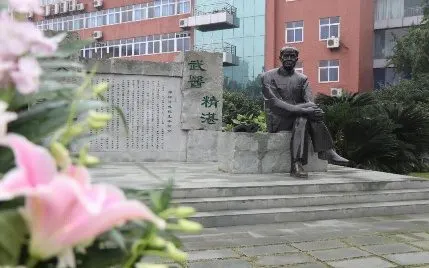
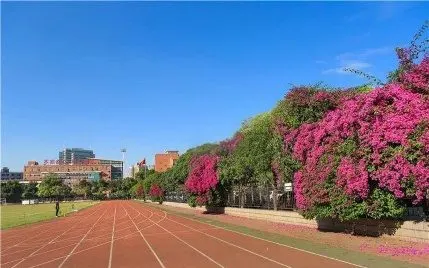
The East Campus became the main site in 2024. According to the published profile, its grounds cover more than 1,500 mu, and the floor area of its buildings is about 780,000 square metres. It houses teaching buildings, a library, dormitories, sports facilities and competition venues.
Campus facilities, including those at Sancha Lake, were used at the 2025 World Games, which means the infrastructure is also suitable for elite sport. And in 2024 the university's student Huang Zhangjiayang became an Olympic champion in the rhythmic gymnastics group all-around.
The historic Wuhou campus is still important: it is home to the university's heritage, the hospital and some departments. However, older English-language pages often give only the Tiyuan Road address, so always check your route, dormitory and registration against your admission letter.
If data from an old aggregator differs from the university's letter, go by the latest official letter.
| University | Type | Main focus |
|---|---|---|
| Chengdu Sport University, 成都体育学院 | Public university specialising in sport | Sport, rehabilitation, sports medicine |
| Chengdu University, 成都大学 | Multidisciplinary municipal university | Engineering, medicine, humanities, management |
| Chengdu University of Traditional Chinese Medicine, 成都中医药大学 | University on the national Double First-Class list | Pharmacology and Chinese medicine |
| Sichuan Sports College, 四川体育职业学院 | Public vocational college | Competitive sport and applied training |
The most reliable way is to check the name by its Chinese characters. The right university corresponds to the form 成都体育学院 and the code 10653. If the invitation says 成都大学, 成都中医药大学 or 四川体育职业学院, it refers to a different institution.
All these variants are in use. The Russian form meaning ‘University of Sport of Chengdu’ is the main Russian name on this page, ‘Sport University of Chengdu’ is the same form with the words rearranged, and ‘Chengdu Sports University’ is a literal calque. Chengdu Sport University is the international English name, CDSU is the commonly used abbreviation, and Chengti renders the Chinese short form 成体. Legally, the university is currently called 成都体育学院, not 成都体育大学, and your application must give exactly this form as it appears in the university's current documents.
Yes, it is a public university specialising in sport. It is jointly supervised by the General Administration of Sport of China and the Sichuan government, with the province playing the leading role in its management.
No, the university is not part of any of these national projects. However, several of its disciplines are included in Sichuan's provincial ‘Gongga’ plan, which is worth mentioning separately.
Teaching at the university is mainly in Chinese. English may be used in certain international and joint projects, but whether there is a group taught entirely in English or Russian must be checked for each specific intake. The final terms are set out in an official letter from the university.
According to an old guide, Chinese medicine and movement science required HSK 6, journalism and management HSK 5, and a number of other majors HSK 3. This is not a current offer: check the requirements of the new guide in advance, and look up exam dates in the official HSK schedule.
The university states the cost for the current intake on the invoice. Reference figures are only good for a rough estimate, and you must pay exactly the amount shown on the latest invoice; check current terms on the university's official website.
There are dormitories. The university planned the allocation of places for 2026 separately. Amounts from old sources cannot be treated as the current rate without written confirmation, so check the current cost with the university.
There is not yet a confirmed direct CDSU competition on the public page. Look into bilateral application routes and the latest list of CSC host universities, but do not count on a scholarship as guaranteed.
In the current intake, the university is not listed as an HSK or BCT test centre. Sports exams are indeed held on campus, but they should not be confused with language exams. Choose a test centre only in the official registration system for a specific session.
The main campus, the East Campus, is at 环湖北路1942号 (postcode 641418), and the Wuhou campus is at 体院路2号 (postcode 610041). Where exactly to go is stated in your invitation.
As a rule: international passport, previous education certificate with grades, translations, medical form, police clearance certificate, language certificate and a photo. For master's programmes, recommendations and a research plan are added.
Chengdu (成都) is the capital of Sichuan Province. The city is known for its giant panda breeding centre and its fiery Sichuan cuisine. Today it is growing fast as the technology hub of western China, and students from all over Asia come here to study.
Chengdu attracts students with good education, moderate prices and a relaxed, comfortable pace of life. Public transport is well developed (the metro has 13 lines), there are many parks and teahouses, and the climate is mild, with no severe frosts. Parents like that this calm city has everything needed: it is safe, there are modern hospitals, direct flights leave from the international airport, and student life is well organised, with dormitories and support services.
You work with Nihao Study specialists. They will help you put together a portfolio and a set of documents, draw up a study plan and choose a university or college and a specialty that genuinely interest you.
We take care of every stage of admission, from choosing to enrolment
We will gather, prepare, certify and send your documents to the institution
We will show the admissions committee your strengths
We run training sessions and courses so you can prepare with more confidence
We will help you settle in at the start of your studies and keep moving forward
Nihao Study specialists select universities and colleges that match the applicant's goals and means. We make sure the teachers are practitioners and that the knowledge will be useful in your profession.
We examine curricula, talk to students and teachers and look at which specialties employers need, and use this information to select options for the applicant.
Advisers guide the applicant from the first consultation to enrolment, help build a plan and spot mistakes in time that could get in the way.
The cost of our support depends on the programme and the partner university; you'll get an exact quote after a free consultation.
Get a quoteA free 15-minute consultation: together we will choose a university or college and a programme that suit your goals and budget.
Apply with peace of mind: we handle the documents, deadlines and correspondence with admissions committees, and you save time and energy.
Don't want to wait for a call? Message us in the chat.
Message us in chat 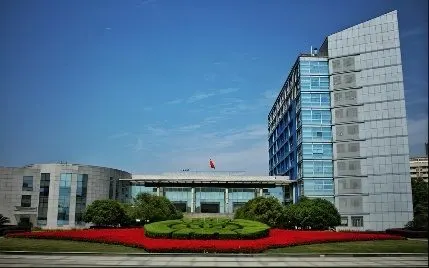
University · Ya'an