- Language courses
- English
- Bachelor's Degree
- English
- Master's Degree
- English
- Accommodation from 3 000 ¥/semester
SUSE · 四川轻化工大学
Engineering accepts international students on programmes in the following fields: business, engineering, medicine, education, economics. Choose the level and programme that suit your goals.
Chinese language study at the university — from a few weeks to a year or longer. Suitable for those starting from scratch or preparing for the HSK before entering a main programme.
self-funded · language programme
The first level of higher education: usually four years of study, specialised subjects, internships and a graduation thesis. It opens the way to working in your field and to a master's degree.
self-funded
Advanced study after a bachelor's degree: research, applied projects and internships. It helps you become an expert in your chosen field and broaden your career opportunities.
self-funded
Engineering is located in Zigong. Nihao Study consultants keep track of the deadlines and admission requirements of this university, and you can always check the most accurate and up-to-date information on its official website. In university rankings, it is ranked 413 in China and 7320 worldwide.
Come for a face-to-face meeting: together we will go through the requirements, deadlines, documents and study options that suit you.

At the meeting we will look at your situation, tell you which documents to prepare and by when, talk about possible programmes and help you decide on the next step.
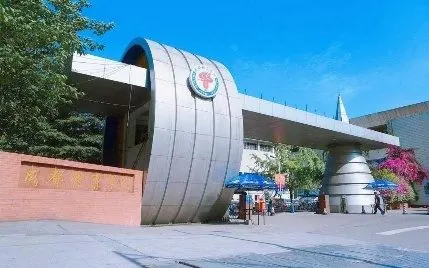
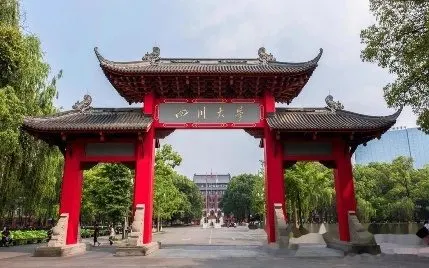
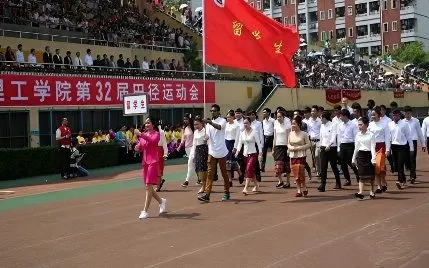
Sichuan University of Science and Engineering (SUSE, 四川轻化工大学) is a Chinese public university under provincial administration. Its official founding body is the People's Government of Sichuan Province, and teaching takes place in two cities of the province, Zigong and Yibin.
Here Nihao Study has collected what matters to a 2026 applicant: the university's status, rankings, strong fields, language requirements, scholarships, accommodation and the admission procedure.
| Indicator | Value |
|---|---|
| Year founded | 1965 |
| Cities | Zigong and Yibin |
| Campuses | 4 |
| Area | about 5000 mu |
| Students | about 36,000 |
| Colleges | 23 |
| Bachelor's programmes | 79 |
| National first-class programmes | 9 |
| ESI top 1% | chemistry, engineering, materials science |
SUSE's roots lie in the industrialisation of China's interior. In 1965 some classified specialisms were moved to Zigong from East China University of Science and Technology — then called the East China Institute of Chemical Technology — and a south-western branch was set up there. The project was given the code number 652. This is the origin of the university's phrase 'the 652 spirit', which stands for engineering responsibility, hard work and service to industry.
In 1979 the branch became the Sichuan Institute of Chemical Technology, and from 1983 it was called the Sichuan Institute of Light Industry and Chemical Technology. A merger with three educational institutions in Zigong in 2003 gave rise to Sichuan University of Science and Engineering, and the Chinese name the university bears today, 四川轻化工大学, was approved in 2018.
This timeline explains SUSE's profile more precisely than any slogan. The university did not start as a classic liberal arts university but as a school of chemical engineering; design, education, management, the humanities and digital technologies were added later. Its charter sets out the principle: engineering comes first, but development happens where disciplines meet.
SUSE is not part of Project 211. The official Ministry of Education list names these universities from Sichuan province: Southwestern University of Finance and Economics, Sichuan Agricultural University, University of Electronic Science and Technology of China, Southwest Jiaotong University and Sichuan University. SUSE is not among them.
Nor is SUSE part of Project 985: only 39 universities made the official list, and Sichuan province is represented by University of Electronic Science and Technology of China and Sichuan University. The university is not on the second national Double First-Class (双一流) list either.
The phrase 四川省高等学校双一流建设贡嘎计划 refers to the provincial Gongga programme. SUSE has control systems, food science and engineering, and chemical technology and management in it. This is a useful guide to regional funding, but it has nothing to do with national 双一流 status. The correct wording for an application form is: a public provincial university under joint administration, not part of 211, 985 or the national Double First-Class list.
Global search services often mix SUSE up with Sichuan University — this is especially noticeable in THE and QS results. Check the full English name and the city, Zigong. QS has a separate profile for Sichuan University of Science and Engineering, but it shows no place in the main world ranking. There is a THE profile too, but the published page does not show a numerical position for SUSE in the World University Rankings.
| Ranking | Position |
|---|---|
| ShanghaiRanking BCUR 2026 | 326th in China |
| EduRank 2026 | 319th in China, 3944th in the world |
| EduRank Engineering 2026 | 279th in China, 1840th in the world |
| ESI | 3 disciplines in the top 1% |
The EduRank database links about 9502 publications and 97,816 citations to the university. These figures describe the university's research footprint, but the quality of a particular English-taught programme has to be assessed separately. What matters more to an applicant is which language the courses are actually taught in, what the laboratory and supervisor will be like, and which degree is stated in the admission notice.
The university has kept its chemistry core since the days of Project 652. Its research base includes a national innovation centre for high-performance fluorine-containing materials, as well as laboratories studying corrosion and protection of materials, green catalysis and process equipment. For an applicant, this means an applied environment for chemical technology, materials science, polymers and industrial safety.
In this field the university carries out research along the whole chain — from raw materials to the finished product — and links it to regional businesses. Master's programmes open to international students include Fermentation Engineering, Food Engineering and Light Industry Technology and Engineering.
Master's tracks include control science and engineering, systems engineering, and pattern recognition and intelligent systems. The bachelor's catalogue lists automation, electronic information engineering, computer science and technology, software engineering and Internet of Things engineering. This does not make SUSE a national IT flagship, but automation here is closely tied to practice — chemical production, materials and the food industry.
According to the university's latest data, it has 23 colleges and 79 bachelor's programmes. They are easier to choose from when grouped into four clusters.
The university has 8 first-level academic master's disciplines and 13 professional master's categories. Doctoral programmes cannot be promised: SUSE is only listed among the candidates being prioritised for doctoral degree-awarding rights, whereas the right to award bachelor's and master's degrees is set out explicitly in its official charter and admission rules.
According to the international page, international students can study on bachelor's and master's programmes and on Chinese language courses. Since 2014 about 800 international students have studied at the university. Over that period its international programmes have covered 44 specialisms in 19 colleges. These are historical figures, not the size of the current intake.
| Level | Typical duration | Language (per catalogue) |
|---|---|---|
| Chinese Language | 1 year | Chinese |
| Bachelor's Degree | 4 years | mostly Chinese |
| Master's Degree | 3 years | mostly Chinese |
The catalogue lists International Business and Trade as an English-taught master's programme lasting 3 years, but this information relates to past intakes. Before applying, it is worth getting a letter confirming the language of all compulsory courses and of supervision.
The public guidelines name the school-leaving certificate as a required document and an HSK certificate as desirable. The page gives no minimum score, so it is impossible either to guarantee admission without HSK or to treat an HSK 4 threshold as universal. The requirement must be checked for the chosen specialism and the specific intake.
The national calendar for 2026 has 11 HSK sessions for levels 1–6 and separate dates for levels 7–9. The SUSE campus itself does not operate as an active HSK or BCT centre, so the test venue is chosen through the official Chinese Test service.
SUSE has four sites: Libaihe (100 Yongtian Road), Huidong (519 Huixing Road), Yibin (1 Baita Road) and Huangling (15 Xueyuan Road). Under the 2026 admission rules, Libaihe, Huidong and Yibin count as teaching campuses, while Huangling is classed as a site for practical activities.
Accommodation is available as beds in double rooms and as single rooms; check the current price with the university.
Dormitory rooms have beds with built-in desks, wardrobes, a study area, a bathroom with a shower and a washbasin area, as well as a hallway. The specific type of accommodation, price and campus are set out in a separate confirmation.
Four support programmes are open to international students. The SUSE President's Scholarship is intended for about 10% of international students. There is also a Zigong Mayor's Scholarship.
The SUSE Outstanding Student Scholarship is awarded after a successful first year and has three categories — for 5%, 10% and 15% of students respectively. The Sichuan provincial government also has its own scholarship, the amount of which differs for bachelor's students, master's students and students on the one-year programme. Check the exact amounts of all scholarships on the university's official website.
SUSE does not recruit directly under the university CSC track every year. Before applying, check whether SUSE is available in the Campus China system in the given year, and do not confuse the embassy-route Type A with the university-route Type B. In a Type B application the system asks for the host university's five-digit agency number.
The library covers 94,500 square metres; its collection holds over 3.18 million printed documents, and readers also have access to 2.55 million e-books and 212 databases. But for an engineering specialism what matters is not so much the overall size of the collection as access to specialist journals, software and laboratory equipment — these questions are best put to the school.
In 2021 SUSE became one of Sichuan province's first demonstration bases for educating international students. The university's partnerships cover more than 80 universities and research organisations from more than 20 countries, and almost 1000 international students from more than 60 countries have already studied here.
Libaihe and Huidong are in Zigong, while the Yibin campus is in another city, and this affects the everyday environment, transport and access to laboratories. In the admission notice, look not only at the name SUSE but also at which campus is stated.
| University | City and status | How it differs |
|---|---|---|
| SUSE, 四川轻化工大学 | Zigong and Yibin, provincial | focus: chemistry, materials, food engineering |
| Sichuan University, SCU | Chengdu, 211, 985, 双一流 | large comprehensive research university |
| Southwest University of Science and Technology, SWUST | Mianyang, provincial | a different English name and a different abbreviation |
| UESTC | Chengdu, 211, 985, 双一流 | focus: electronics and information technology |
Zigong is also home to Sichuan Vocational College of Health and Rehabilitation. It is a vocational institution at 专科 level with 3-year programmes, not a university offering bachelor's and master's degrees. To avoid mistakes in your documents, check the full Chinese name, the campus city and SUSE's code — 10622.
This page treats 'Sichuan University of Science and Engineering' as the standard form in Russian. A variant with a common Russian misspelling of 'Sichuan' is non-standard and best kept out of documents. 'University of Science and Engineering of Sichuan' is a loan translation from English. The official international name is Sichuan University of Science & Engineering, and the official abbreviation is SUSE. The full Chinese name is 四川轻化工大学 (Sìchuān Qīnghuàgōng Dàxué), and the short form is 川轻化 (Chuān Qīnghuà). English-language Wikipedia also distinguishes SUSE from Sichuan University.
SUSE is the abbreviation of the official English name. Teaching takes place in Zigong and Yibin; the legal address of the Huidong campus is 519 Huixing Road, Zigong.
No. SUSE is not on any of the three official national lists. The university has disciplines in the provincial Gongga plan and fields in the ESI top 1%, but these are a different kind of status.
The public catalogue lists the International Business and Trade master's programme as English-taught, while most of the programmes posted are marked as Chinese-taught. It is worth requesting the current curriculum and confirmation of the language of instruction before applying.
An HSK certificate is desirable, but there is no general minimum level for all programmes — the threshold depends on the specialism.
SUSE has university, city and provincial scholarships, while direct recruitment under CSC Type B does not happen every year. The CSC scholarship conditions for the current intake need to be checked separately.
The university has the right to award degrees at bachelor's and master's level. SUSE is listed as a priority candidate for doctoral degree-awarding status, but this does not mean doctoral admission is open.
The minimum list in the public guidelines is an application form with a photo, a certificate of previous education, a copy of your passport and an HSK certificate if you have one. Check the full package against SUSE's latest letter.
The campus is usually determined by the programme, and applicants do not choose it themselves. Look for the name in the admission notice: Libaihe, Huidong or Yibin. As for Huangling, the 2026 rules class it as a campus for practical activities.
Zigong (自贡) in Sichuan Province is called the 'City of Dinosaurs' and the 'City of Lanterns'. It is home to a world-famous dinosaur museum, and its large-scale local lantern festival tours the whole world.
Students get to know Sichuan culture from the inside: spicy food, ancient salt works and low living costs. By Chinese standards the city is small, and its atmosphere is cosy. For parents, it matters that the environment is safe and far from the bustle, the culture is authentic, the locals are hospitable, and studies can proceed at a calm pace.
You work with Nihao Study specialists. They will help you put together a portfolio and a set of documents, draw up a study plan and choose a university or college and a specialty that genuinely interest you.
We take care of every stage of admission, from choosing to enrolment
We will gather, prepare, certify and send your documents to the institution
We will show the admissions committee your strengths
We run training sessions and courses so you can prepare with more confidence
We will help you settle in at the start of your studies and keep moving forward
Nihao Study specialists select universities and colleges that match the applicant's goals and means. We make sure the teachers are practitioners and that the knowledge will be useful in your profession.
We examine curricula, talk to students and teachers and look at which specialties employers need, and use this information to select options for the applicant.
Advisers guide the applicant from the first consultation to enrolment, help build a plan and spot mistakes in time that could get in the way.
The cost of our support depends on the programme and the partner university; you'll get an exact quote after a free consultation.
Get a quoteA free 15-minute consultation: together we will choose a university or college and a programme that suit your goals and budget.
Apply with peace of mind: we handle the documents, deadlines and correspondence with admissions committees, and you save time and energy.
Don't want to wait for a call? Message us in the chat.
Message us in chat 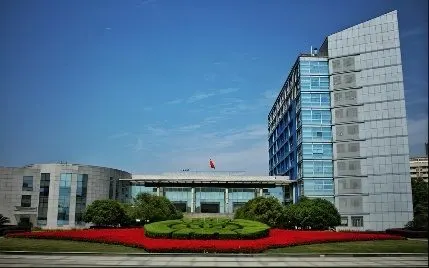
University · Ya'an