- Language courses
- English
- Bachelor's Degree
- English
- Master's Degree
- English
- Accommodation from 3 000 ¥/semester
UESTC · 电子科技大学
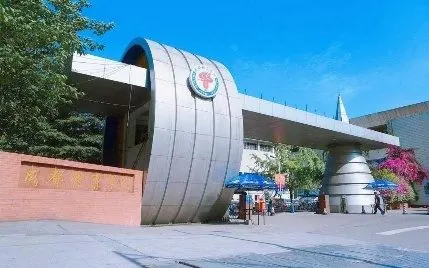
University of Electronic Science and Technology of China accepts international students on programmes in the following fields: natural sciences. Choose the level and programme that suit your goals.
Chinese language study at the university — from a few weeks to a year or longer. Suitable for those starting from scratch or preparing for the HSK before entering a main programme.
self-funded · language programme
The first level of higher education: usually four years of study, specialised subjects, internships and a graduation thesis. It opens the way to working in your field and to a master's degree.
self-funded
Advanced study after a bachelor's degree: research, applied projects and internships. It helps you become an expert in your chosen field and broaden your career opportunities.
self-funded
University of Electronic Science and Technology of China is located in Chengdu. Nihao Study consultants keep track of the deadlines and admission requirements of this university, and you can always check the most accurate and up-to-date information on its official website. In university rankings, it is ranked 33 in China and 649 worldwide.
Come for a face-to-face meeting: together we will go through the requirements, deadlines, documents and study options that suit you.

At the meeting we will look at your situation, tell you which documents to prepare and by when, talk about possible programmes and help you decide on the next step.
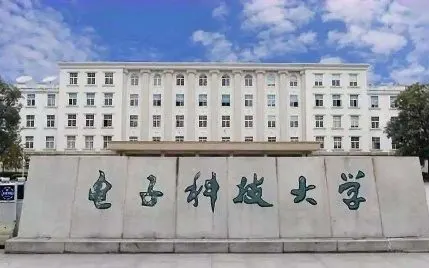
UESTC, the University of Electronic Science and Technology of China (in Chinese 电子科技大学, pinyin Diànzǐ Kējì Dàxué), is a public research university under the Ministry of Education of China, located in Chengdu (Sichuan Province). Russian-language searches show several other renderings of the name, as well as the incorrect abbreviation USTC. However, the official international name and abbreviation are fixed in the university's charter. In China the university is also called 成电 (Chéngdiàn): this second name is officially recognised and comes from its former name, 成都电讯工程学院.
The university took part in the national Project 211 and Project 985 and is included in the current, second round of the Double First-Class (双一流) programme. Under Double First-Class, its designated disciplines are information and communication engineering, and electronic science and technology. Unlike the nearby comprehensive Sichuan University, UESTC is a highly specialised university: it suits those who deliberately choose electronics, telecommunications, microelectronics, computer science, automation or related engineering fields.
In this overview Nihao Study has gathered what matters to a 2026 applicant: statuses and rankings, HSK and CSCA requirements, programmes, scholarships, accommodation and how UESTC differs from universities with similar names.
| Item | Value | Notes |
|---|---|---|
| Year founded | 1956 | predecessor: Chengdu Institute of Radio Engineering |
| Status | public university under the Ministry of Education of the PRC | the degree is awarded by a full-status university |
| National projects | 211, 985, second round of Double First-Class | status confirmed at national level |
| Students | over 44,000 (bachelor's, master's, doctoral) | a large research environment |
| Teaching and research units | more than 40 | plenty of choice of school and laboratory |
| Bachelor's majors | 65 | the range is not limited to electronics |
| Main campuses | Qingshuihe, Shahe, Jiulidi (over 3,700 mu in total) | classes for different programmes may take place at different sites |
| Main address | No. 2006 Xiyuan Avenue, West Hi-Tech Zone, Chengdu, 611731 | Qingshuihe campus in western Chengdu |
The size of the intake and the list of English-taught programmes change from year to year, so for an applicant it matters more whether a specific programme suits them than any advertised admission rate. The university reports that for 2026 admission is open to 11 Chinese-taught and 3 English-taught bachelor's programmes, as well as 15 master's and 14 doctoral programmes taught in English. These figures describe the current cycle and do not guarantee that the line-up will stay the same in future years.
UESTC traces its history back to September 1956, when the institution was created by a government decision in which Premier Zhou Enlai was involved. The Chengdu Institute of Radio Engineering was formed from the relevant departments of three universities: Jiao Tong University (today Shanghai Jiao Tong University and Xi'an Jiaotong University), Nanjing Institute of Technology (now Southeast University) and South China Institute of Technology (now South China University of Technology). According to the university itself, the institute became the first university in new China with a radio engineering profile.
The institute was granted national key university status in 1960, and in 1961 it was already one of seven higher education institutions of the defence industry. Its current name, University of Electronic Science and Technology of China, was adopted in 1988. Further milestones: 1997, Project 211; 2000, transfer to direct administration by the Ministry of Education; 2001, Project 985.
In 2007 the new Qingshuihe campus, covering about 219 hectares, opened. This history also explains the university's current specialisation: its popular IT programmes were not a late addition. For decades the university built up the entire electronic information chain, from materials and components to communications, computing and industrial systems.
To assess UESTC more accurately, it is worth looking at two types of ranking at once: overall and subject rankings. The first shows the scale of research, reputation and degree of internationalisation; the second shows how strong the university's expertise is specifically in electronics and communications.
| Ranking | Position | What it shows |
|---|---|---|
| THE World University Rankings 2026 | 301 to 350 worldwide | a strong level of research on a global scale |
| THE Computer Science 2026 | 101 to 125 | computer science is one of its strengths |
| QS World University Rankings 2027 | 488 | the university appears in the global QS table |
| ARWU 2025 | 151 to 200 | high research and publication output |
| CWUR 2026 | 210 worldwide, 33 in China | the upper part of the Global 2000 list |
| EduRank 2026 | 557 worldwide, 33 in China | bibliometric assessment, different methodology |
In individual disciplines the results are even higher. In the 2025 edition of ShanghaiRanking, UESTC's telecommunication engineering ranks 2nd in the world, remote sensing 5th, electrical and electronic engineering 14th, and instruments science and computer engineering 16th. In the ESI database, the university's computer science is in the top 0.01 per cent, while engineering, chemistry and materials science are in the top 0.1 per cent. Outdated U.S. News positions, which intermediary websites sometimes reprint, should not be put on a par with current editions: when choosing a university it is more useful to rely on the latest THE, ARWU, CWUR and EduRank editions and up-to-date ESI data.
This is not a single speciality but an interconnected set of disciplines: electronic science, information and communication systems, optics and instrumentation, microelectronics and automation, software engineering and cybersecurity. In first-level disciplines, the university holds 23 doctoral and 33 master's degree-granting rights. This base will be useful for anyone who is thinking about a research master's after their bachelor's degree or is looking for a laboratory at the intersection of several fields.
According to the official description, the university has 32 national-level innovation platforms and 93 at provincial or ministerial level. Its strong areas include integrated circuits, power electronics, terahertz technology, mobile communications and radar, as well as fibre-optic systems and precision measurement. So an applicant can choose not just an engineering programme "in general", but a specific department and research group that match their technological interests.
UESTC's partner network includes more than 200 universities, research organisations and companies from about 70 countries and regions. The best-known example is its joint programme in electronics and electrical engineering with the University of Glasgow. Its published curriculum includes circuit design, signals and systems, electromagnetic fields, microprocessors, digital communications and an individual project. International students should not confuse such joint programmes with regular English-taught admission through the School of International Education: their admission and fee conditions can differ.
The university's engineering core is made up of schools in the following areas: aeronautics and astronautics, resources and environment, integrated circuits, materials and energy, mechanical and electrical engineering, automation, optoelectronics, software engineering, computer science, electronic science and engineering, and information and communication engineering. The current international brochure lists the following bachelor's areas: clinical medicine and nursing, biotechnology and biomedical engineering, new energy materials, electrical engineering, mechanical design and automation, software engineering and computer science, communications, and electronic information engineering.
At master's and doctoral level, the following can be studied in English: mathematics, physics, electrical engineering, materials, management, instrumentation, mechanics, biomedical engineering, software engineering, optics, computer science, information and communication engineering, electronic science and technology, as well as a number of management fields. Each of these English-taught graduate majors may also have a Chinese-taught option, but whether admission is open in a given year should be confirmed with the international school.
| Level | Language and duration | Main requirements |
|---|---|---|
| Bachelor's Degree | Chinese or English; usually 4 years, medicine 5 years | school leaving certificate, valid CSCA result, proficiency in the programme language |
| Master's Degree | Chinese or English; at least 2 years | bachelor's degree, proficiency in the programme language |
| Doctoral (PhD) Programmes | Chinese or English; at least 4 years | master's degree, agreed research topic |
| Foundation programme | 6 months to 2 years | school leaving certificate; age 18 to 26 |
| Chinese language (courses in Chengdu) | 6 months to 2 years | education certificate, age 18 or over |
In the 2026 cycle, Chinese-taught bachelor's programmes require HSK 5 with a score of at least 180, and English-taught ones require TOEFL 80 or above or IELTS 5.5 or above. Every international bachelor's applicant must take the China Scholastic Competency Assessment (CSCA) and attach a valid result before admission closes. For master's programmes the requirements are: HSK 6 with at least 180 for the Chinese track, and TOEFL 80 or above or IELTS 5.5 or above for the English track.
Applications for the autumn 2026 bachelor's intake were accepted from 1 December 2025 to 30 June 2026, and for graduate programmes from 1 December 2025 to 1 March 2026. These dates must not be carried over to the next cycle without checking: the conditions of the new intake and HSK exam dates should be confirmed in advance.
UESTC publishes its official rates in the admission rules, and the amount stated in the admission notice is final. Besides tuition, your budget should include medical insurance, the residence permit, meals and bedding. Check current prices on the official university website or during a consultation before applying.
| Room type | What you need to know |
|---|---|
| Twin room | more personal space |
| Four-person room | the most economical option |
The prices in the student guide and the brochure are the same. Even for those on a full scholarship, the university recommends bringing enough money for at least 2 months: registration and opening a bank account sometimes take more than 1 month. The building, move-in and furnishings depend on allocation, and room photos do not guarantee that the layout will be exactly the same.
The Qingshuihe campus address is 2006 Xiyuan Avenue (postcode 611731), and the Shahe campus is at 4 North Jianshe Road, Section 2 (postcode 610054). The Qingshuihe map shows the library and university hospital, a stadium and swimming pool, two sports complexes, several canteens and the International Innovation Center. Near the Qingshuihe library is the Electronics Museum, with collections on computing, components, measuring instruments, television, radar and communications.
To get to Shahe, the official guide recommends taking the metro from Chengdu East Railway Station: first Line 2, then change to Line 6 and get off at Jianshe North Road station. Before you travel, find out which campus your programme registers at: Chengdu is big, there are several sites, and getting the address wrong will cost you time.
The 2026 brochure names several sources of funding, but it does not guarantee the same coverage to all candidates:
In addition, UESTC hosts participants in China Link, a short-term research programme. Officially, the programme provides a place on campus, medical insurance, a tuition waiver and a monthly stipend, the amount of which differs for general scholars and senior scholars. UESTC is also on the list of host institutions for the 2026 International Chinese Language Teachers Scholarship, but it is listed there only for language study, and no bachelor's, master's or doctoral programmes in teaching Chinese are listed for it.
The order of steps is as follows: choose a programme and a scheme that fits it, then check the deadline and the set of documents. Do not rely on an average approval rate for applications to UESTC: competition varies depending on the country, level of study and quota.
1. Decide on your level, language of instruction and major, checking against the current UESTC intake. If you are applying for a bachelor's degree, separately confirm which CSCA subjects are compulsory for your chosen programme.
2. Work on your language. In the 2026 cycle, Chinese-taught bachelor's programmes required HSK 5 with at least 180 points, and Chinese-taught master's programmes required HSK 6 with at least 180. English-taught programmes accepted TOEFL 80 or above, IELTS 5.5 or above, or an equivalent certificate.
3. Prepare your documents: passport, school leaving certificate or diploma, transcript, language certificate, medical form, police clearance certificate, study plan and proof of financial means. If you are submitting a graduate application, agree on a research topic and obtain letters of recommendation in advance.
4. Submit your application before admission closes and pay the application fee. Do not transfer money to intermediaries using payment details from unofficial emails.
5. At the same time, submit a separate scholarship application: CSC, city or university. Each scheme has its own form and submission method, so ticking the scholarship box in the university's applicant portal is by no means always the same as an application submitted to the scholarship provider.
6. Once you receive a decision, check your name, programme, campus and funding conditions in the admission notice. After that, apply for a student visa and insurance, sort out accommodation and set aside money for the first few weeks.
| University | City and status | Main focus |
|---|---|---|
| UESTC, 电子科技大学, University of Electronic Science and Technology of China | Chengdu; public university, 211, 985, Double First-Class | communications, electronics, computer science |
| Chengdu College of UESTC, CDUESTC | Chengdu; independent college, founded in 2001 | applied bachelor's degrees and college programmes |
| Chengdu University of Information Technology, CUIT | Chengdu; provincial public university, founded in 1951 | atmospheric sciences, IT, statistics |
| University of Science and Technology of China, USTC | Hefei; founded in 1958, affiliated with the Chinese Academy of Sciences | technology and fundamental sciences |
It is easy to check: the university you want is abbreviated UESTC (with the letter E), uses the official domain uestc.edu.cn and is located in Chengdu. USTC, without the E, is a university in Hefei. Chengdu College has a similar name, but it issues documents in its own name. If you would like to compare UESTC with a neighbour that has a broader profile, look at Sichuan University.
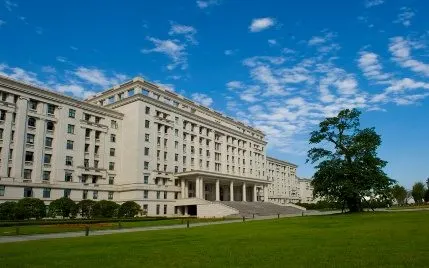
The Qingshuihe campus resembles a spacious, green engineers' town that brings together dormitories, sports grounds, tree-lined paths, a lake, and laboratory and teaching buildings. Shahe is surrounded by denser urban development, and its history is linked to the university's former site. The official guide lists at least 6 canteens at Qingshuihe, so everything needed for daily life is spread across the campus.
A future engineer should visit the Electronics Museum: the current description mentions 15,000 items and more than 500 key exhibits in the main exhibition. This is not decoration for tourists but the living history of computing, semiconductors, radar and communications. It is best to assess the campus together with the curriculum: a comfortable dormitory will not make up for an unsuitable language of instruction, and a strong laboratory means more than the university's overall position in any single ranking.
Russian-language sources render the name in a couple of word orders, but they refer to the same university. The official English name is University of Electronic Science and Technology of China, and the correct international abbreviation is UESTC. The abbreviation USTC belongs to a different university, located in Hefei. The original Chinese name is 电子科技大学 (Diànzǐ Kējì Dàxué), and the officially recognised short form is 成电 (Chéngdiàn).
UESTC is a research university in Chengdu (Sichuan Province); it is public and administered by the Ministry of Education of the PRC. The main campus, Qingshuihe, is in the West Hi-Tech Zone, and the second, Shahe, is on North Jianshe Road.
Yes, they are: membership of all three programmes is confirmed by official documents and lists of the Ministry of Education of the PRC.
Yes. For 2026, English-taught admission has been announced for 3 bachelor's, 15 master's and 14 doctoral programmes. The list is reviewed every year.
In the 2026 cycle, Chinese-taught bachelor's programmes required HSK 5 with a score of at least 180, and Chinese-taught master's programmes required HSK 6 with at least 180. Check the dates of upcoming exams in the official HSK schedule before registering.
For bachelor's programmes, yes: in the 2026 cycle all international applicants needed a valid CSCA result, and the list of compulsory subjects depended on the major. This requirement does not apply to master's and doctoral programmes.
The cost depends on the level, programme language and major, and accommodation depends on the room type. Current rates are published in the admission rules on the official university website.
Yes. UESTC lists several ways to take part in the Chinese Government Scholarship, but who can apply and what the scholarship covers are determined by the specific programme.
The university reports that its foundation programme includes HSK preparation. Whether the campus operates as a test centre depends on the specific session, so choose a centre and date through the official Chinese Test Service.
Yes. The programme lasts from 6 months to 2 years and includes Chinese language, culture and practical classes. For the autumn 2026 intake, applications closed on 30 June 2026; the deadline for the following year needs to be checked again.
The standard set: passport, school leaving certificate with transcript, CSCA result, language certificate, medical form, police clearance certificate, study or motivation plan and a document confirming your finances. The university may also request additional documents, so keep an eye on your application status.
Chengdu (成都) is the capital of Sichuan Province. The city is known for its giant panda breeding centre and its fiery Sichuan cuisine. Today it is growing fast as the technology hub of western China, and students from all over Asia come here to study.
Chengdu attracts students with good education, moderate prices and a relaxed, comfortable pace of life. Public transport is well developed (the metro has 13 lines), there are many parks and teahouses, and the climate is mild, with no severe frosts. Parents like that this calm city has everything needed: it is safe, there are modern hospitals, direct flights leave from the international airport, and student life is well organised, with dormitories and support services.
You work with Nihao Study specialists. They will help you put together a portfolio and a set of documents, draw up a study plan and choose a university or college and a specialty that genuinely interest you.
We take care of every stage of admission, from choosing to enrolment
We will gather, prepare, certify and send your documents to the institution
We will show the admissions committee your strengths
We run training sessions and courses so you can prepare with more confidence
We will help you settle in at the start of your studies and keep moving forward
Nihao Study specialists select universities and colleges that match the applicant's goals and means. We make sure the teachers are practitioners and that the knowledge will be useful in your profession.
We examine curricula, talk to students and teachers and look at which specialties employers need, and use this information to select options for the applicant.
Advisers guide the applicant from the first consultation to enrolment, help build a plan and spot mistakes in time that could get in the way.
The cost of our support depends on the programme and the partner university; you'll get an exact quote after a free consultation.
Get a quoteA free 15-minute consultation: together we will choose a university or college and a programme that suit your goals and budget.
Apply with peace of mind: we handle the documents, deadlines and correspondence with admissions committees, and you save time and energy.
Don't want to wait for a call? Message us in the chat.
Message us in chat 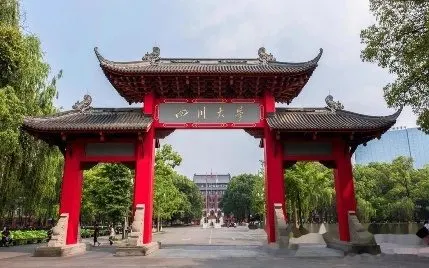
University · Ya'an