- Language courses
- English, Chinese
- Bachelor's Degree
- English, Chinese
- Master's Degree
- English, Chinese
- Doctoral (PhD) Programmes
- English, Chinese
- Accommodation from 75 ¥/day
TJU · 同济大学
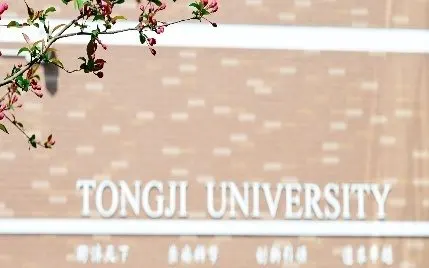
Tongji University accepts international students on programmes in the following fields: business, engineering, medicine, education, economics. Choose the level and programme that suit your goals.
Chinese language study at the university — from a few weeks to a year or longer. Suitable for those starting from scratch or preparing for the HSK before entering a main programme.
self-funded · language programme
The first level of higher education: usually four years of study, specialised subjects, internships and a graduation thesis. It opens the way to working in your field and to a master's degree.
self-funded
Advanced study after a bachelor's degree: research, applied projects and internships. It helps you become an expert in your chosen field and broaden your career opportunities.
self-funded
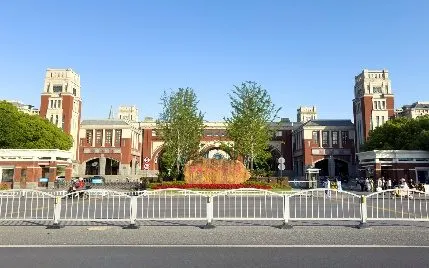
Tongji University is located in Shanghai. Nihao Study consultants keep track of the deadlines and admission requirements of this university, and you can always check the most accurate and up-to-date information on its official website. In university rankings, it is ranked 15 in China and 258 worldwide.
Come for a face-to-face meeting: together we will go through the requirements, deadlines, documents and study options that suit you.

At the meeting we will look at your situation, tell you which documents to prepare and by when, talk about possible programmes and help you decide on the next step.
Tongji University (abbreviated TJU; Chinese 同济大学, pinyin Tóngjì Dàxué) is a public research university in Shanghai. Russian-language searches show several different spellings of the name, while Chinese students simply say 同济. This page is about 同济大学 in Shanghai, not Tianjin University (天津大学), which is in the city of Tianjin.
Tongji reports directly to the Ministry of Education of China. The university took part in Project 211 and Project 985 and is now in the Double First-Class (双一流) programme. Its academic profile is strongest in architecture, construction and urban planning, as well as engineering, transport and ecology. Eight of the university's disciplines are on the official list for the second round of 双一流: biology, design, surveying and mapping, architecture, landscape architecture, urban planning, environmental engineering and civil engineering.
Below is information useful to a 2026 applicant: statistics, rankings, programmes, HSK and CSCA requirements, scholarships, dormitories, and a tip on how not to confuse Tongji with similar names.

| Item | Value |
|---|---|
| Founded | 1907 |
| Full-time bachelor's students | 18 920 |
| Master's / doctoral | 12 713 / 9 942 |
| International students | 4 426 |
| Full-time teaching staff | 3 206 |
| Campuses | 4 — Siping, Jiading, Huxi, Hubei |
| Grounds and buildings | Grounds: about 2.75 sq km; academic buildings: 2.25 million sq m |
| Structure | 33 subject-based colleges; 70 bachelor's programmes |
| Library collection | About 4.79 million volumes |
Figures are as of May 2026. They are more accurate than the old estimate of "about 50,000 students", which did not separate levels and modes of study.
The university was founded by the German doctor Erich Paulun, who opened a German medical school in Shanghai in 1907. Engineering was added to medicine in 1912. The name Tongji University was finally settled in 1923, and the university became a national university in 1927. The name 同济 conveys the idea of travelling together and helping one another, which suited the project's Chinese-German roots well.
During the war the university relocated six times, moving through Zhejiang, Jiangxi, Guangxi and Yunnan. In 1940 it found refuge in Lizhuang, Sichuan Province, and in 1946 it returned to Shanghai. When departments were reorganised nationwide in the early 1950s, Tongji handed some of its fields to other universities but received civil engineering and architecture disciplines from more than ten universities. This explains why its expertise today is concentrated on construction and the urban environment.
After 1978 the university re-established close ties with Germany and began moving from a narrow engineering profile towards the model of a comprehensive research university. In 1996 Shanghai Institute of Urban Construction and Shanghai Institute of Building Materials merged into it. Shanghai Railway University joined in 2000, and Tongji became part of Project 985 in 2002. By 2026 the university had more than 400,000 alumni.
| Ranking | Rank and edition |
|---|---|
| QS World University Rankings | 146th, 2027 edition |
| Times Higher Education | 141st, World University Rankings 2026 |
| ARWU | 101–150 band, 2025 |
| CWUR | 167th out of 21,462 universities, 2025 |
| EduRank | 344th worldwide and 18th in China, 2026 edition |
Overall rankings show the university's scale but only partly reveal Tongji's profile. In QS by Subject 2026, civil and structural engineering ranks 13th in the world, and architecture and the built environment 12th. In ShanghaiRanking GRAS 2025, Tongji is first in civil engineering, fifth in transportation science, tenth in remote sensing and twelfth in environmental engineering.
In U.S. News Best Global Universities by Subject 2026/2027, Tongji topped the civil engineering list with a score of 100.0 and has held first place for the sixth year running. In 2026 THE separately placed its engineering 49th in the world. In the January 2026 ESI data, 20 of the university's disciplines were in the global top 1 per cent, and engineering in the top one ten-thousandth.
The practical takeaway: judging TJU only by its overall position is a mistake. For those choosing architecture, civil engineering, transport, urban ecology or design, the subject rankings matter more.
The College of Architecture and Urban Planning brings together architecture and urban planning, landscape, urban design, building services engineering and historic building conservation. Five of the college's bachelor's majors have national first-class programme status, and its three core disciplines are included in the second round of 双一流 (Double First-Class). When applying, bear in mind that architecture and design programmes require additional professional materials and a portfolio.
Tongji's civil engineering school is not just one department. Its national key disciplines include geotechnical engineering, structures, bridges and tunnels, and disaster prevention. The university combines fundamental mechanics with testing facilities, earthquake resistance and large-scale urban infrastructure, so it suits those who want to work on real transport hubs, buildings and underground structures.
The university has major testing platforms in several fields at once: autonomous intelligent systems, underwater observation, road transport and urban rail infrastructure. The second-round Double First-Class list (eight disciplines) includes not only civil engineering but also design, biology, ecology and surveying. This is a convenient base for interdisciplinary topics such as low-carbon cities, intelligent mobility, digital construction, water environments and heritage conservation.
The university works across 11 broad fields of knowledge, from engineering, natural sciences and medicine to management, economics, humanities, law, education and the arts. When choosing a school, international applicants should look not only at its name but also at the campus, the language of instruction, the list of CSCA exams and the specific school's particular requirements.
The university's international network is focused mainly on Germany and Europe. According to Tongji, it has more than 300 overseas partners and 13 international platform colleges. The School of Economics and Management alone runs over 30 double-degree programmes with partner universities in the USA, Germany, France, Italy and Ireland. Transfer to a joint programme is arranged separately: the conditions, language of instruction and whether it is open to international applicants depend on the catalogue for the specific intake.
| Level | Format and main requirement |
|---|---|
| Bachelor's (taught in Chinese) | Usually full-time; HSK 5 with at least 180 points and CSCA |
| Bachelor's (taught in English) | Selected programmes, e.g. civil engineering, the international architecture class, MBBS |
| MBBS in English | 6 years; IELTS 6.5 or TOEFL iBT 85; CSCA: mathematics and chemistry |
| Master's Degree | Bachelor's degree required; you apply for one major; there may be an interview |
| Doctoral (PhD) Programmes | Master's degree required; the relevant school assesses candidates under its own rules |
| Chinese Language | Long-term programme; no degree awarded |
Bachelor's applications for 2026 were officially accepted from 20 January to 31 March. For master's and doctoral programmes, deadlines depended on the source of funding. The early CSC window was open between 25 October and 20 December 2025. For the Shanghai Government Scholarship and self-funded candidates, applications closed on 20 March 2026. These dates cannot be assumed to carry over to the next intake; check them again before applying.
Most Chinese-taught bachelor's programmes require a valid HSK 5 certificate with a score of 180 or more. Under the rules, it is valid for two years. For transfer students into Chinese-taught study, the thresholds are separate and depend on the year of study: HSK 4, HSK 5 or HSK 6. So the general requirement should not be applied to every case.
Chinese can be studied at the International School, and BCT appears in the admission rules for some programmes. For example, for one admission route the school's page lists HSK 3 at 180+ and HSKK intermediate at 40+, or BCT A at 180+ and BCT speaking at 220+. Tongji is also an official HSK test centre: the centre opened in 2007, the computer-based HSK has been taken here since 2014, and since 2023 HSK and HSKK have been held in a combined format. It is best to check session dates on the Chinese Test website, as the exam schedule changes independently of admission deadlines.
Fees depend on the level, language of instruction and major; on top of tuition, a registration fee and annual insurance are paid separately. After pre-admission, a self-funded candidate must pay one semester in advance, with the deadline stated in the university's letter. Check current amounts in your major's catalogue on the university's official website.
For international students there is International Building 1 on Siping Campus, International Building 2 and the Zhangwu Building, as well as a dormitory on Jiading Campus. Rooms must be booked in advance. Scholarship holders and exchange students get places first; once the housing is full, rooms are allocated on a first-come, first-served basis.
Siping Campus is in Yangpu District, at 1239 Siping Road, postcode 200092. Tongji University station on Metro Line 10 is at the main gate. Jiading is noticeably far from the centre, but a university shuttle runs to Shanghai Automobile City station on Line 11. Find out your school's campus in advance: a daily commute between Siping and Jiading affects everyday life more than a small difference in price.
There is no overall average success rate across all competitions, so it would be wrong to promise a guaranteed scholarship. Check whether the university is on the CSC partner list and whether your chosen programme is open to your nationality. Also bear in mind that holding several government scholarships at the same time is not allowed.
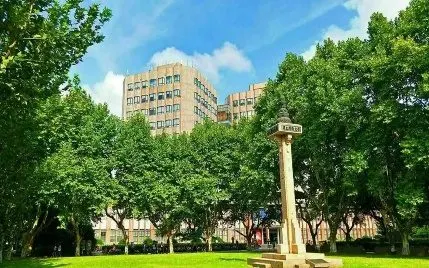
Academic units are spread across the main campuses: Siping, Jiading, Huxi and Hubei. Siping remains the historic and administrative centre, Jiading is closely linked to transport and automotive engineering, and the medical units are based at Huxi and Hubei. The university's libraries hold about 4.79 million volumes in total, and it has 124 provincial- or national-level research platforms.
Canteens, study spaces, sports fields, basketball courts and international dormitories make up distinct campus environments. Siping's main practical advantage is Metro Line 10 right by the campus. Trips to Jiading need to be planned in advance, by shuttle or with a change to Line 11. It is worth comparing Tongji's location with universities closer to Hongqiao, Pudong or the city centre.
The university's partner network is built around Germany with a focus on Europe, as shown by its joint institutes, exchanges and double-degree programmes.
| University | Distinguishing features |
|---|---|
| Tongji University, 同济大学 | Shanghai; abbreviated TJU; focus on architecture, civil engineering, urban engineering |
| Tianjin University, 天津大学 | Located in Tianjin, Tianjin University in English; a separate university |
| Shanghai Jiao Tong University, 上海交通大学 | Also in Shanghai, but abbreviated SJTU and with a different Chinese name |
| Shanghai University, 上海大学 | Another multidisciplinary university in Shanghai; the word Tongji does not appear in its name |
The most reliable check is the Chinese characters and the city. For this page the correct combination is 同济大学, Shanghai, whereas 天津大学, Tianjin means Tianjin University. It is especially important not to get this wrong when paying the registration fee, choosing the institution in the CSC system and sending documents.
The standard form in Russian is a direct rendering of "Tongji University", which is also the title of the Russian encyclopaedia article; some other Russian spellings render the name inaccurately, and adjectival variants are understandable in search but it is better to stick to one name in text. The official international name is Tongji University, and the university's materials use the abbreviation TJU. 同济 is the short Chinese form, and 同济人 refers to members of the Tongji community. The full name 同济大学 is pronounced Tóngjì Dàxué. None of these variants refers to 天津大学.
Here TJU means Tongji University in Shanghai. The main campus address is 1239 Siping Road, Yangpu District, Shanghai, 200092.
Yes. The university joined Project 211 in 1996 and Project 985 in 2002, and in 2017 it was included in the national programme for world-class universities. In the second round of Double First-Class, eight disciplines are listed for it.
In the 2026 intake, most Chinese-taught programmes required HSK 5 with a score of 180 or more, and the certificate had to be no more than two years old. Check the rules for your specific major: language and transfer routes have their own requirements.
Yes. The 2026 admission rules make a CSCA report compulsory for everyone applying for Chinese- or English-taught bachelor's programmes, both scholarship holders and self-funded students. The subjects depend on the programme.
Yes, there are English-taught programmes at several levels. At bachelor's level these include, for example, civil engineering, the international architecture class and MBBS. Admission to MBBS requires IELTS 6.5 or TOEFL iBT 85.
Fees depend on the level, language of instruction and major. Current fees are published in the intake catalogue on the university's official website; check it before applying.
Yes, but the available categories and competition conditions depend on the level of study and nationality. For master's and doctoral students, the High-Level Postgraduate Program covers tuition, insurance and accommodation and provides a monthly stipend. A preliminary letter from Tongji does not yet mean a final CSC decision.
Yes. The university has had an HSK test centre since 2007, and the computer-based format has been offered there since 2014. Check the dates of a specific session separately in the official calendar.
No. If there are not enough places, even full scholarship holders may be asked to find off-campus housing. Room booking starts after you receive your admission notice.
Tongji University is written 同济大学 in Chinese and is in Shanghai, while Tianjin University is 天津大学 in Tianjin. They are two different universities, although the names written in Russian without characters are sometimes confusing.
The standard package: passport, school certificate, transcript, translations, HSK or other proof of language ability, CSCA report, personal statement, medical certificate and receipt for the fee payment. Architecture and design applicants also attach a portfolio. Originals are shown at registration.
Shanghai (上海) is the largest city in China and one of the world's financial centres. Students from more than 150 countries study here. The Bund with its futuristic views, the skyscrapers of Pudong and the old French Concession together create a special atmosphere for student life.
By enrolling in Shanghai, students gain access to strong universities and thousands of international companies offering internships. The city has 16 metro lines, the campuses are equipped to modern standards, and student life is active. For parents, it matters that healthcare here is of a high standard, there are international schools and hospitals and direct international flights, the city is safe, and every major university has a support service for international students.
You work with Nihao Study specialists. They will help you put together a portfolio and a set of documents, draw up a study plan and choose a university or college and a specialty that genuinely interest you.
We take care of every stage of admission, from choosing to enrolment
We will gather, prepare, certify and send your documents to the institution
We will show the admissions committee your strengths
We run training sessions and courses so you can prepare with more confidence
We will help you settle in at the start of your studies and keep moving forward
Nihao Study specialists select universities and colleges that match the applicant's goals and means. We make sure the teachers are practitioners and that the knowledge will be useful in your profession.
We examine curricula, talk to students and teachers and look at which specialties employers need, and use this information to select options for the applicant.
Advisers guide the applicant from the first consultation to enrolment, help build a plan and spot mistakes in time that could get in the way.
The cost of our support depends on the programme and the partner university; you'll get an exact quote after a free consultation.
Get a quoteA free 15-minute consultation: together we will choose a university or college and a programme that suit your goals and budget.
Apply with peace of mind: we handle the documents, deadlines and correspondence with admissions committees, and you save time and energy.
Don't want to wait for a call? Message us in the chat.
Message us in chat 
University · Shanghai