- Language courses
- English
- Bachelor's Degree
- English
- Master's Degree
- English
- Accommodation from 3 000 ¥/semester
SWJTU · 西南交通大学
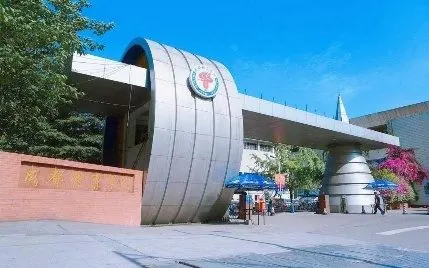
Southwest Jiaotong University accepts international students on programmes in the following fields: engineering, economics. Choose the level and programme that suit your goals.
Chinese language study at the university — from a few weeks to a year or longer. Suitable for those starting from scratch or preparing for the HSK before entering a main programme.
self-funded · language programme
The first level of higher education: usually four years of study, specialised subjects, internships and a graduation thesis. It opens the way to working in your field and to a master's degree.
self-funded
Advanced study after a bachelor's degree: research, applied projects and internships. It helps you become an expert in your chosen field and broaden your career opportunities.
self-funded
Southwest Jiaotong University is located in Chengdu. Nihao Study consultants keep track of the deadlines and admission requirements of this university, and you can always check the most accurate and up-to-date information on its official website. In university rankings, it is ranked 48 in China and 1022 worldwide.
Come for a face-to-face meeting: together we will go through the requirements, deadlines, documents and study options that suit you.

At the meeting we will look at your situation, tell you which documents to prepare and by when, talk about possible programmes and help you decide on the next step.
Southwest Jiaotong University (SWJTU, 西南交通大学) is a public university in Sichuan Province with its main campus in Chengdu. The university is part of Project 211 and takes part in the Double First-Class programme in a number of disciplines.
The city is precisely where frequent confusion arises. Chengdu has three universities whose Russian names begin with the word for ‘Southwest’, and SWJTU's Chinese name sounds similar to the names of the Jiaotong universities in Beijing, Shanghai and Xi'an. These Jiaotong universities share a common history going back to 1896, but formally they are not branches of one another, so it is best to understand the difference before you apply.
Below, Nihao Study has gathered the essentials for 2026 applicants: accommodation, scholarships available to international students, ranking positions and strong research areas, the admission procedure and, importantly, the features that make it easy to tell SWJTU apart from neighbouring Chengdu universities and from other members of the Jiaotong family.
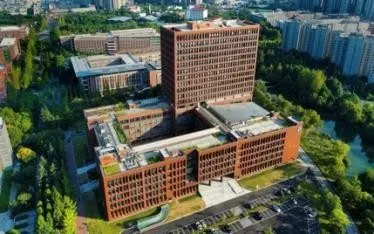
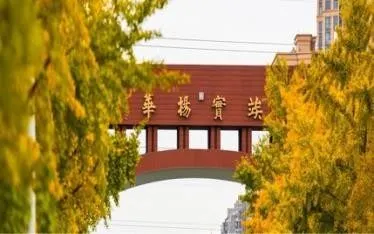
This short overview is based on the university's own official data.
| Item | Data |
|---|---|
| Founded | 1896, as the Imperial Chinese Railway College |
| Status | Project 211; Double First-Class — in selected disciplines |
| Number of students | more than 45,800, including about 900 international students |
| Faculty and staff | more than 2600 |
| Campuses | 3 — Xipu and Jiuli in Chengdu itself, Emeishan 140 km from the city |
| Schools and institutes | 18, plus 3 departments and 2 divisions |
| Disciplines in the ESI top 1% | 9; engineering in the top 0.1% |
| Anniversary | 130th anniversary of its founding, celebrated in May 2026 |
The main anniversary celebrations took place in May 2026 on the Xipu campus. In time for them, the anniversary banner returned to the university after a year-long journey through 66 cities around the world. In addition, on 7 April 2026 CPC General Secretary Xi Jinping sent a personal letter addressed to the teachers, students and alumni of all four universities of the Jiaotong family.
On 29 October 1896 Wang Wenshao, Viceroy of Zhili, submitted a memorial to the Guangxu Emperor requesting the establishment of a railway school in Shanhaiguan. The emperor approved it with his endorsement, and this document still serves as the official confirmation of the university's founding. Thus the Imperial Chinese Railway College was created — one of the first engineering institutions in China. It produced its first graduates as early as April 1900: 17 people received civil engineering diplomas, and one of those diplomas is considered the oldest document in the university archive. However, the college closed that same year because of the Boxer Rebellion and the invasion by the Eight-Nation Alliance. Work resumed only in 1905 — now in Tangshan and under a new name, the Tangshan Railway Institute.
Over the next twenty years the institution was repeatedly renamed and transferred from one government body to another: at various times it was called the Tangshan School of Technology, the Institute of Communications under the Ministry of Transport, and the College of Railways and Mining. The turning point came in 1921, when the Ministry of Transport merged the institutions under its control into a single Jiaotong University with three campuses — in Beijing, Tangshan and Shanghai. Today's Beijing, Shanghai and Southwest (then Tangshan) Jiaotong universities all descend from this merger. According to the university's official chronology, right up to the mid-20th century it changed its name or location almost every year, moving away from fighting and going through departmental reorganisations.
The hardest period for the institution was the war with Japan. In 1937 the Japanese army occupied the Tangshan campus, and the institute moved through several locations one after another — Xiangtan, Yangjiatan, Pingyue (Guizhou province) and Bishan (Sichuan) — but kept training engineers even in evacuation. After victory in 1945 it returned to Tangshan. With the founding of the PRC in 1949 the institute came under the Ministry of Railways and changed its name several more times. In September 1964, as part of the Third Front strategy, it was moved to Emeishan (Sichuan province), and it has borne its current name, Southwest Jiaotong University, since 1972. In 1988 the main part of the university moved to Chengdu, and since 2002 the new Xipu campus has been under construction in the city. Hence the university describes itself as "one university, two cities, three campuses".
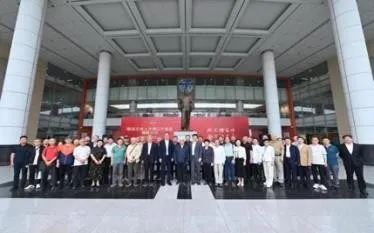
May 2026 was a special date. Delegations from all four Jiaotong universities — Beijing, Xi'an, Shanghai and Southwest — came to the Xipu campus for the 130th anniversary celebrations. By then the SWJTU banner had already returned from its year-long journey through 66 cities and regions of the world.
SWJTU is not part of Project 985 and does not aim to be a world-class university in every field at once. As a result, it ranks lower in overall rankings than one might expect given its importance in its specialist engineering fields.
| Ranking | Position |
|---|---|
| EduRank, China, 2026 | 53rd of 960; 3rd in Chengdu |
| EduRank, world, 2026 | 866th of 14,131 |
| ARWU (ShanghaiRanking) | 301–400 band |
| THE World University Rankings, 2026 | 801–1000 band |
| US News Best Global Universities | 497th worldwide, 130th in Asia, 71st in China |
| QS (according to China Admissions) | around 301st |
These discrepancies come down to methodology. EduRank and similar aggregators count publications and citations across 246 topics at once, and the overall result poorly reflects how strong a university with an engineering and transport profile is in narrow fields. For example, in automotive engineering EduRank places SWJTU 12th in the world. CWUR includes the university in its Global 2000 ranking year after year; the exact position is best checked on CWUR's own website. There are also ESI indicators. The four disciplines that have long been in the top 1% — chemistry, engineering, materials science and computer science — were joined in 2023 by ecology, physics, geosciences, and economics and business. Social sciences entered the top 1% earlier, in September 2021, with 239 publications and 1808 citations.
The first field is railways. SWJTU was China's first engineering university specialising in transport and communications, and it is called the cradle of Chinese railway engineers. The university's research teams took part in developing the Fuxing high-speed train: it entered service on the Beijing–Shanghai line in 2017, and all the intellectual property in it belongs to China. The second field is magnetic levitation. In 2000 the university created Century, the world's first passenger train using high-temperature superconductors, and in November 2016 it launched on campus the world's first test line for a new-generation maglev running on permanent magnets; the work was led by Academician Zhai Wanming. The third field is tunnels and bridges. SWJTU graduates and specialists took part in building the extra-long Dayaoshan Tunnel (1987) and the Hong Kong–Zhuhai–Macau Bridge, which opened in 2018. And in 1990 the university became the first in a developing country to host the annual conference of the International Tunnelling Association.
The university's alumni and staff include some well-known figures. One of the university's named schools is named after the bridge builder Mao Yisheng. T. Y. Lin was a pioneer of prestressed concrete technology. Ta-Chung Liu was a Cornell University economist; among his students was Robert Engle, who later won the Nobel Prize in Economics.
The university has 18 schools, 3 departments and 2 divisions. Its core consists of the engineering fields typical of a transport university: transport and logistics, information science and technology, civil engineering, electrical and mechanical engineering, materials science, geology and environmental engineering. In addition to the specialist schools, there are the School of Mao Yisheng and the School of Zhan Tianyou — institutes named after outstanding engineers. The first is named after the famous bridge builder, the second after the engineer regarded in China as the father of the national railways; the most motivated engineering students are selected for these institutes. The humanities and social sciences are represented by the schools of public administration and political science, foreign languages, and arts and communication. In 2019 transport engineering became a separate faculty, splitting off from related disciplines.
Among its international projects, the SWJTU-Leeds Joint School stands out as the university's first joint school with a foreign partner. It was opened in October 2015 together with the University of Leeds in the UK; to mark the occasion, David Cameron, then Prime Minister of the United Kingdom, sent a personal letter of congratulations.
An international applicant has three parallel paths: language study, a degree, and then master's or doctoral study.
Like most major universities in the country, SWJTU accepts students on its Chinese language courses without an HSK certificate. This study does not earn credits. It is best to check the current cost per semester on the university's website.
Bachelor's programmes are taught mainly in Chinese, and your language level must be confirmed with an HSK 4 certificate or higher. Master's and doctoral programmes offer more options: besides Chinese-taught programmes, there are English-taught tracks in architecture, artificial intelligence, computer science, bridge and tunnel engineering, and civil and hydraulic engineering. A master's degree usually takes 3 years and a doctorate 4. To compete for a funded place or scholarship, you apply in parallel through the university's admissions system and on the China Scholarship Council portal.
International students are housed in separate apartment buildings with double rooms. Dormitory capacity for international students is limited, so it is best to find out the building and availability for your semester in advance. Check the current cost of accommodation on the university's official website.
The main option for international students is the Chinese Government Scholarship (CSC) under the Type B scheme. SWJTU's code as a host institution is 10613. This scheme accepts master's and doctoral students only; you can study in English or Chinese, and Chinese-taught programmes require HSK 4 or higher. The full scholarship covers tuition and medical insurance in full and also includes a monthly stipend and an accommodation allowance. For the 2025/2026 academic year, applications closed on 28 February 2025, so the deadlines for the next intake need to be checked separately. SWJTU is on the list of 306 universities that accept CSC scholarship holders.
The second most important option is the university's own SWJTU Presidential Scholarship, established in 2012 specifically for international students. It covers tuition and insurance in full, and master's and doctoral students also receive a monthly stipend and an accommodation allowance. Those who already hold another scholarship cannot apply. In addition, the Chengdu Government Scholarship and the MOFCOM Scholarship of the PRC Ministry of Commerce are awarded through the university; the terms of these programmes should be checked separately for each intake year.
The main campus, Xipu, is in western Chengdu, in Pidu District. It covers more than 3000 mu (about 200 hectares), and construction began in 2002. Most classes take place here and most international students live here. The historic Jiuli campus is closer to the centre; some faculties and research units remain there. The Emeishan campus serves as an off-site location: it is about 140 km south-west of Chengdu, at the foot of one of China's four mountains considered sacred in Buddhism. The university also has its own mascot — Train Hero (火车侠), an anthropomorphic character you can meet at student events.
Chengdu is the capital of Sichuan province, home to about 21 million people, and is counted among the most liveable cities in China. The climate is mild, without sharp swings, the metro has 13 lines, and Chengdu is also famous for its panda breeding base and spicy Sichuan cuisine. The city's safety level is rated 9 out of 10.
Confusion around SWJTU arises for two independent reasons — the translated name and the Chinese original. Let's look at each.
| University (Chinese name) | Type | Main focus |
|---|---|---|
| Southwest Jiaotong University, 西南交通大学 (the subject of this page) | Project 211 university | transport; railway and tunnel engineering |
| Southwestern University of Finance and Economics, 西南财经大学 | Project 211 university | finance, economics and banking |
| Southwest Petroleum University, 西南石油大学 | industry-specific university | oil and gas engineering |
| Southwest Minzu University, 西南民族大学 | comprehensive university | ethnology; languages and cultures of China's peoples |
Another university that is often confused is Southwest University (西南大学). It is located in neighbouring Chongqing, not in Sichuan, and has nothing to do with SWJTU, although their names are almost identical in translation. It is more reliable to go by the characters than by a translation. 交通 ("transport") in the name unmistakably points to SWJTU; 石油 ("petroleum") to Southwest Petroleum University; 财经 ("finance and economics") to Southwestern University of Finance and Economics.
The second source of mistakes has to do with Chinese itself: the word 交通 appears in the names of four major universities — Beijing, Shanghai, Xi'an and Southwest, the one this page is about. All four officially regard as their common ancestor the Imperial Chinese Railway College, founded in 1896, and the Jiaotong University that grew out of it in 1921, which had campuses in Beijing, Shanghai and Tangshan (the Tangshan branch later moved to Emeishan and Chengdu). However, since the mid-20th century they have been completely independent universities: each has its own founders, president and admissions office, and they are not branches of one another. May 2026 confirmed that the kinship is historical rather than administrative: all four universities celebrated the 130th anniversary of their common ancestor at the same time, and CPC General Secretary Xi Jinping addressed a single joint message of congratulations to them. When applying, go by the English name together with the abbreviation: Beijing Jiaotong University, Shanghai Jiao Tong University, Xi'an Jiaotong University or Southwest Jiaotong University. Each university has its own competition, tuition fees and CSC scholarship quotas.
Several variants are in circulation, including various Russian transliterations of "Jiaotong", some of them misspelt. "Southwest Transport University" is a translation of the meaning of the characters 交通 ("transport, communications"), but it is not considered standard. Southwest Jiaotong University is the official international name, and SWJTU is the abbreviation used in rankings, applications and correspondence. 西南交大 (Xīnán Jiāodà) is the abbreviation used by Chinese students, and 西南交通大学 (Xīnán Jiāotōng Dàxué) is the full original name.
It is a public Project 211 university with three campuses in Sichuan province: the main campus (Xipu) and the historic campus (Jiuli) are in Chengdu, while the off-site Emeishan campus is about 140 km from the city. The university is under the PRC Ministry of Education and is supported by China Railway Group, the Sichuan provincial authorities and the Chengdu government.
Project 211 — yes; Project 985 — no. However, the university takes part in the Double First-Class programme in a number of disciplines, and in the global ESI ranking it has 9 fields in the top 1%, with engineering in the top 0.1%.
Partly. Bachelor's programmes are taught mainly in Chinese and require HSK level 4 or higher. Master's and doctoral programmes include English-taught options: architecture, artificial intelligence, bridge and tunnel engineering, civil engineering and computer science.
No certificate is needed to enrol on the language courses. Chinese-taught study — at bachelor's, master's or doctoral level — usually requires HSK 4 or higher. For the university's own Presidential Scholarship, HSK 5 is officially required for Chinese-taught study.
International students are offered places in double dormitory rooms. On top of the accommodation fee come the usual monthly living expenses — it is best to check current terms on the university's official website.
The main one is the CSC government scholarship (Type B, code 10613), for which master's and doctoral students apply: it pays tuition and insurance in full and includes a monthly stipend. The MOFCOM Scholarship, the Chengdu Government Scholarship and the university's own SWJTU Presidential Scholarship are also awarded through the university. SWJTU is one of the 306 universities that accept CSC scholarship holders.
No. These are four independent universities: they share a historical ancestor, but their founders, admissions competitions and scholarship quotas are different. They all descend from the Jiaotong University of 1921, which had campuses in Beijing, Shanghai and Tangshan (the Tangshan one is today's SWJTU). In May 2026 the four universities jointly celebrated the 130th anniversary of their common ancestor.
The difference lies in their profile and status. SWJTU is part of Project 211 and specialises in transport, railway and tunnel engineering. Southwestern University of Finance and Economics is also a Project 211 university, but its profile is finance and economics. Southwest Petroleum University is an industry-specific oil and gas engineering university without 211 status, and Southwest Minzu University focuses on ethnology and the languages of China's peoples. When applying, look at the characters and the abbreviation rather than a translation of the name.
Usually you need an international passport, a school-leaving certificate or diploma with translation, an academic transcript, a medical certificate in the prescribed format, a police clearance certificate and, for Chinese-taught study, an HSK certificate. Scholarship applicants also need two letters of recommendation and a study plan or personal statement of at least 800 words.
The main Xipu campus is in Pidu District in western Chengdu, next to the West Park of the high-tech zone; metro lines connect it to the city. International students usually live in dedicated dormitories on this campus; which building you get and whether places are available is determined when you move in.
Chengdu (成都) is the capital of Sichuan Province. The city is known for its giant panda breeding centre and its fiery Sichuan cuisine. Today it is growing fast as the technology hub of western China, and students from all over Asia come here to study.
Chengdu attracts students with good education, moderate prices and a relaxed, comfortable pace of life. Public transport is well developed (the metro has 13 lines), there are many parks and teahouses, and the climate is mild, with no severe frosts. Parents like that this calm city has everything needed: it is safe, there are modern hospitals, direct flights leave from the international airport, and student life is well organised, with dormitories and support services.
You work with Nihao Study specialists. They will help you put together a portfolio and a set of documents, draw up a study plan and choose a university or college and a specialty that genuinely interest you.
We take care of every stage of admission, from choosing to enrolment
We will gather, prepare, certify and send your documents to the institution
We will show the admissions committee your strengths
We run training sessions and courses so you can prepare with more confidence
We will help you settle in at the start of your studies and keep moving forward
Nihao Study specialists select universities and colleges that match the applicant's goals and means. We make sure the teachers are practitioners and that the knowledge will be useful in your profession.
We examine curricula, talk to students and teachers and look at which specialties employers need, and use this information to select options for the applicant.
Advisers guide the applicant from the first consultation to enrolment, help build a plan and spot mistakes in time that could get in the way.
The cost of our support depends on the programme and the partner university; you'll get an exact quote after a free consultation.
Get a quoteA free 15-minute consultation: together we will choose a university or college and a programme that suit your goals and budget.
Apply with peace of mind: we handle the documents, deadlines and correspondence with admissions committees, and you save time and energy.
Don't want to wait for a call? Message us in the chat.
Message us in chat 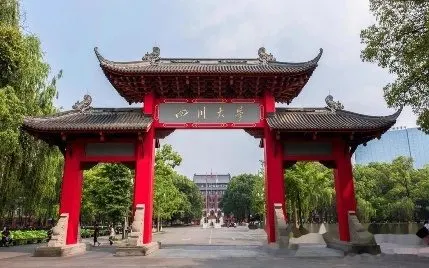
University · Ya'an