- Language courses
- English, Chinese
- Bachelor's Degree
- English, Chinese
- Master's Degree
- English, Chinese
- Doctoral (PhD) Programmes
- English, Chinese
- Accommodation from 7 200 ¥/year
SEU · 东南大学
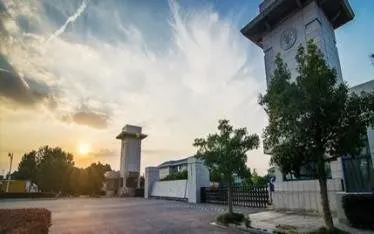
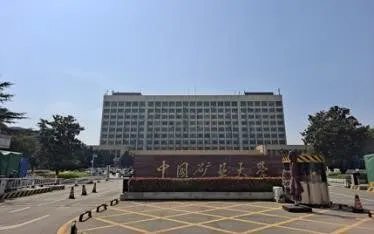
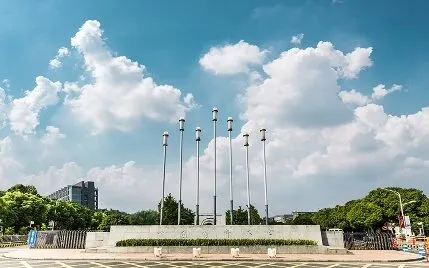
Southeast University accepts international students on programmes in the following fields: business, engineering, medicine, education, economics. Choose the level and programme that suit your goals.
Chinese language study at the university — from a few weeks to a year or longer. Suitable for those starting from scratch or preparing for the HSK before entering a main programme.
self-funded · language programme
The first level of higher education: usually four years of study, specialised subjects, internships and a graduation thesis. It opens the way to working in your field and to a master's degree.
self-funded
Advanced study after a bachelor's degree: research, applied projects and internships. It helps you become an expert in your chosen field and broaden your career opportunities.
self-funded
Southeast University is located in Nanjing. Nihao Study consultants keep track of the deadlines and admission requirements of this university, and you can always check the most accurate and up-to-date information on its official website. In university rankings, it is ranked 22 in China and 296 worldwide.
Come for a face-to-face meeting: together we will go through the requirements, deadlines, documents and study options that suit you.

At the meeting we will look at your situation, tell you which documents to prepare and by when, talk about possible programmes and help you decide on the next step.
Southeast University (SEU, 东南大学, pinyin Dōngnán Dàxué) is a public research university in Nanjing under the Ministry of Education of China. The university's charter establishes the English name Southeast University, the abbreviation SEU and the short form 东大 (Dōngdà). Russian-language searches also turn up other spellings of its Russian name, with different capitalisation and hyphenation, as well as a literal calque.
This page is about 东南大学 in Nanjing (Jiangsu Province), not Shandong University, which is written 山东大学 in Chinese, nor universities with the same name in other countries. SEU is under the Ministry of Education and is part of Project 985 and Project 211, as well as the Double First-Class initiative. Twelve disciplines are assigned to the university in the second round of 双一流, including computer science, electronics and communications, architecture, civil engineering, transport and management.
Here Nihao Study has collected what a 2026 applicant will need: statuses and rankings, programmes and HSK requirements, accommodation, scholarships, the application procedure and how the university differs from others with similar names.
| Item | Value |
|---|---|
| Year founded | 1902 |
| Full-time students | 43 651 |
| Full-time teaching staff | 3 070 |
| CAS and CAE academicians | 19 |
| Schools and departments | 39 |
| Bachelor's programmes | 85 |
| Double First-Class disciplines | 12 |
| International students | 2,381 from 107 countries and regions |
The data come from the university's own current information. If they differ from this year's admission rules, go by SEU's rules.
The university traces its history to Sanjiang Normal School, founded in 1902. The institution was later Liangjiang Normal School, Nanjing Higher Normal School, National Southeastern University and National Central University. This helps explain how SEU is connected to Nanjing University: the two universities share some historical roots, but today they are independent institutions, each with its own structure, campuses and admissions procedures.
In 1952 China carried out a nationwide reorganisation of higher education: the engineering departments of several universities were brought together on the site of the former Central University, where the Nanjing Institute of Technology was formed. The name Southeast University was restored in May 1988. In 2000 Nanjing Railway Medical College, Nanjing College of Communications and Nanjing Geological School merged into the university — adding medicine and several other applied fields to its engineering base.
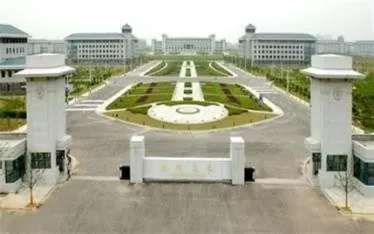
The Sipailou campus remains the university's historical centre. There, in a 1918 workshop building, is the university museum, covering about 1,000 square metres; its exhibition is divided into three periods of SEU's history. It is a telling detail: old architecture and a modern engineering school stand side by side on the same site.
SEU is a Project 985 and Project 211 university. This is stated not only in the university's own description but also in documents of China's Ministry of Education on the joint development of SEU with the Jiangsu provincial government. Today the earlier projects have been replaced by the Double First-Class initiative: SEU was on its first list back in 2017, and after the second round (2022) twelve of its disciplines were confirmed.
The list includes architecture and landscape architecture, civil engineering, transport, mechanical engineering, materials science, electronic science and technology, information and communication, computer science, control, biomedical engineering, and art theory. Eleven of the twelve fields belong to engineering — this shows what the university specialises in better than any generic ‘prestigious university’ label.
| Ranking | Position | Edition |
|---|---|---|
| QS World University Rankings | 335th | 2027 |
| Times Higher Education | 251–300 band | 2026 |
| ARWU | 101–150 band | 2025 |
| U.S. News Best Global Universities | 155th | 2025/2026 |
| CWUR Global 2000 | 181st | 2025 |
| EduRank | 426th in the world, 24th in China | 2026 |
It is not correct to combine these positions into a single overall score. QS gives more weight to reputation and international indicators, ARWU relies on research indicators, THE uses its own system of metrics, and EduRank takes into account publications, citations, reputation and alumni influence. Applicants should look not only at the overall position but also at subject rankings. For example, in EduRank 2026 SEU is 7th in the world for transport engineering, 11th for automation and control, and 16th for electronic engineering.
The ESI data are as follows: 18 SEU disciplines are in the top 1 per cent, materials and chemistry are in the top 0.1 per cent, and computer science and engineering are in the top 0.01 per cent. This indicates a high concentration of research, but it is important to remember that ESI measures research activity, not the quality of an individual degree programme or graduates' career outcomes.
Architecture is on SEU's national Double First-Class list. The university combines something rarely found together: the historic urban Sipailou campus, the large modern Jiulonghu site and a school dedicated to architecture, planning and landscape. International bachelor's students study architecture for 5 years, and urban planning and landscape architecture usually for 4 years.
Computer science, control, electronic science, and information and communication engineering — all four are among the twelve priority disciplines. As a result, candidates have a wide choice of laboratories and research groups. However, the language of instruction is set separately for each course, so check the language and the list of programmes against the catalogue for your specific intake.
Transport engineering and civil engineering build on strong positions in subject rankings and on the experience of China's fast-growing infrastructure. Biomedical engineering is supported by the university's medical schools and the Dingjiaqiao campus. Through international cooperation, SEU is developing joint laboratories in intelligent transport, construction materials and biomedical engineering.
SEU has 39 schools and departments and 85 bachelor's programmes. The engineering cluster covers architecture, mechanical engineering, energy and environment, materials, civil engineering, transport, electronics, information and communication, automation, computer science, instrument science and cybersecurity.
The natural sciences and medicine are represented by mathematics, physics, chemistry, biology, the medical school and public health. The social sciences and humanities include law, economics and management, foreign languages, humanities, art, and Marxist studies. The words ‘School’ and ‘College’ here refer to units within the university, not to independent colleges.
SEU has more than 160 partnerships in 45 countries and regions. A joint graduate school with Monash University was established in Suzhou in 2012 and offers 14 master's programmes. Rennes Graduate School opened in 2017 and runs 4 master's programmes and 5 doctoral programmes. Such projects are not the same as a regular SEU degree in Nanjing: they may have a different campus, a different cost and a different route to the diploma. General partnership agreements do not mean that a joint degree programme is open — admissions for it are announced separately.
| Level | Language and format | Approximate duration |
|---|---|---|
| Bachelor's Degree | Chinese; MBBS in English | 4 years; architecture 5 years; MBBS according to the curriculum |
| Master's Degree | Chinese or English | Usually 3 years |
| Doctoral (PhD) Programmes | Chinese or English | Depends on the programme and research plan |
| Chinese language courses | One-year or short-term course | Academic year, semester or short module |
For Chinese-taught programmes in the 2026 intake, HSK 4 with a score of at least 200 is required. Master's and doctoral programmes in medicine, the humanities, economics and management have a higher requirement — HSK 5. For English-taught programmes the guidelines are TOEFL 80, IELTS 6.0 or Duolingo 100 or higher; you do not need to take the test if you are exempt on the basis of the language of your previous studies. A BCT certificate is not accepted in place of HSK.
There are no Russian-taught programmes on the current list. For those whose Chinese is not yet good enough, SEU offers a language centre with basic and intensive courses and HSK preparation. The intensive format means up to 30 class hours a week, and the HSK preparation course lasts 8 weeks.
Costs at SEU depend on the level, field and language of the programme; in addition to tuition, the registration fee, medical insurance and dormitory fees are paid separately. The registration fee in announcements for individual intakes may differ from the one on the payment page, so check the current terms on the university's official payment page or during a consultation, and pay only against the official invoice for your intake.
| Item | How it works | What to check |
|---|---|---|
| Room | Double | A place is given if available |
| Facilities | Air conditioning, bathroom with shower, hot water, bed, desk, chair, wardrobe | List taken from the official description |
| Main campuses | Jiulonghu and Dingjiaqiao | Where you are housed depends on your school |
The university warns that places are limited: they are allocated on a first-come, first-served basis, and bookings are confirmed separately. Since 2025 most international students have been moved to the Lanyuan dormitories on the Jiulonghu campus; students on medical and some other programmes may be housed at Dingjiaqiao or another site. Check the campus name, room type and list of additional charges in advance — for example, water and electricity are paid for separately from the room.
The monthly stipend for the full scholarship shown on SEU's overview page is a maximum, not an amount guaranteed to every admitted student; partial funding may cover only part of the tuition. Check scholarship availability against the current year's announcement.
SEU has three main sites — Sipailou, Jiulonghu and Dingjiaqiao; the university also has units in Wuxi and Suzhou. Together the three campuses cover 5,888 mu, of which Jiulonghu accounts for 3,752.35 mu. Addresses: Sipailou — 2 Sipailou, central Nanjing; Jiulonghu — 2 Southeast University Road, Jiangning District; Dingjiaqiao — 87 Dingjiaqiao.
The main library is at Jiulonghu, with branches at Sipailou and Dingjiaqiao. The whole library system covers 66,900 square metres and has 4,914 reader seats; it is open up to 98 hours a week. Normally, many of the reading rooms are open from 8:00 to 22:00, and the self-study area is open until 23:00.
How to get there depends on the campus. Jiulonghu is easy to reach by metro: Line 3, Dongda Jiulonghu Campus station. Walking from the north-east exit to the teaching buildings can take 25 to 30 minutes — the university specifically warns about this in its exam instructions. Sipailou is closer to the historic centre and city amenities.
If you are choosing between engineering-focused SEU and a university with a broader classical profile, it is useful to compare it with Nanjing University.
| University | Location | How it differs |
|---|---|---|
| Southeast University, 东南大学, SEU | Nanjing, Jiangsu | The university this page is about; public, part of 985, 211 and Double First-Class |
| Shandong University, 山东大学, SDU | Jinan, Shandong | The first part of the name, 山东, refers to Shandong Province — this is a separate university |
| Northeastern University, 东北大学, NEU | Shenyang, Liaoning | 东北 means ‘north-east’, not ‘south-east’ |
| Southeast University in Bangladesh | Dhaka, Bangladesh | A private university outside China, unrelated to SEU in Nanjing |
The most reliable approach is to check three markers at once: 东南大学, the seu.edu.cn domain and the city of Nanjing. Shandong is written 山东, so the combination ‘Shandong/东南’ mistakenly mixes two different Chinese words.
This page uses the Russian form meaning ‘South-east University’. The variant with a capital on the second part simply adds an extra capital letter, and the spelling without a hyphen is a spelling mistake. ‘University of the South-East’ is a literal calque, which we do not use. The official English name is Southeast University, and the official English abbreviation is SEU. In Chinese the university is called 东南大学 (Dōngnán Dàxué), and 东大 (Dōngdà) is the official short form set out in its charter.
It is a public research university in Nanjing under China's Ministry of Education. Its main campuses are Sipailou, Jiulonghu and Dingjiaqiao.
Yes. Its participation in Projects 985 and 211 is confirmed, and in the second round of Double First-Class twelve disciplines are listed for SEU.
There are no Russian-taught programmes in the current table. Besides Chinese-taught programmes, there are English-taught ones — including MBBS and some master's and doctoral programmes; the list changes from one intake to the next.
For Chinese-taught programmes the basic threshold is HSK 4 with a score of 200 or higher. Programmes in medicine, the humanities, economics and management require HSK 5. Individual schools may set a higher requirement.
Fees depend on the level of study, the programme, the language of instruction and the type of dormitory room. Current amounts are published on SEU's official payment page — check them there and against the invoice for your intake.
You can take part in the competition. A full CSC scholarship can cover tuition, accommodation, insurance and a monthly stipend, but the outcome depends on the competitive assessment and the quota. If you apply through the university, you also need to register in the CSC system.
The university offers preparation for the HSK and HSKK; its in-house HSK preparation course lasts 8 weeks. Check the city and venue for the exam when you register.
Head for Dongda Jiulonghu Campus station on Metro Line 3. The university advises allowing up to 30 minutes to walk from the north-east entrance to some of the teaching buildings.
SEU and Nanjing University are two separate universities in Nanjing: they share part of their historical heritage, but their present-day structures are different. Shandong University is in Shandong province and its name is written 山东大学, whereas SEU is 东南大学 in Nanjing.
The basic set includes your school-leaving certificate and transcript, passport, language certificate, medical form, police clearance certificate and proof of financial means. In addition, the CSCA entrance test was used in the 2026 intake; the subjects it covers depend on the field of study.
Nanjing (南京), the 'Southern Capital', was ruled by six dynasties. The city preserves a rich historical heritage: the Sun Yat-sen Mausoleum and the Ming-dynasty city wall. Today it is one of China's leading centres of science and education.
Nanjing has strong universities, including Nanjing University, beautiful campuses and a lively student life. The streets are lush with avenues of plane trees, the metro has 11 lines, and Shanghai is just 1 hour away. Parents are drawn by the calm, intellectual atmosphere, the high level of safety, good healthcare and developed infrastructure — while prices are lower than in Shanghai.
You work with Nihao Study specialists. They will help you put together a portfolio and a set of documents, draw up a study plan and choose a university or college and a specialty that genuinely interest you.
We take care of every stage of admission, from choosing to enrolment
We will gather, prepare, certify and send your documents to the institution
We will show the admissions committee your strengths
We run training sessions and courses so you can prepare with more confidence
We will help you settle in at the start of your studies and keep moving forward
Nihao Study specialists select universities and colleges that match the applicant's goals and means. We make sure the teachers are practitioners and that the knowledge will be useful in your profession.
We examine curricula, talk to students and teachers and look at which specialties employers need, and use this information to select options for the applicant.
Advisers guide the applicant from the first consultation to enrolment, help build a plan and spot mistakes in time that could get in the way.
The cost of our support depends on the programme and the partner university; you'll get an exact quote after a free consultation.
Get a quoteA free 15-minute consultation: together we will choose a university or college and a programme that suit your goals and budget.
Apply with peace of mind: we handle the documents, deadlines and correspondence with admissions committees, and you save time and energy.
Don't want to wait for a call? Message us in the chat.
Message us in chat