- Language courses
- English, Chinese
- Bachelor's Degree
- English, Chinese
- Master's Degree
- English, Chinese
- Doctoral (PhD) Programmes
- English, Chinese
- Accommodation from 7 200 ¥/year
SUDA · 苏州大学
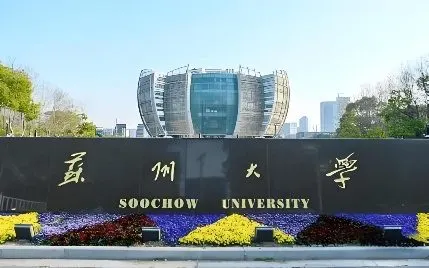
Soochow University accepts international students on programmes in the following fields: business, engineering, medicine, education, economics. Choose the level and programme that suit your goals.
Chinese language study at the university — from a few weeks to a year or longer. Suitable for those starting from scratch or preparing for the HSK before entering a main programme.
self-funded · language programme
The first level of higher education: usually four years of study, specialised subjects, internships and a graduation thesis. It opens the way to working in your field and to a master's degree.
self-funded
Advanced study after a bachelor's degree: research, applied projects and internships. It helps you become an expert in your chosen field and broaden your career opportunities.
self-funded
Soochow University is located in Suzhou. Nihao Study consultants keep track of the deadlines and admission requirements of this university, and you can always check the most accurate and up-to-date information on its official website. In university rankings, it is ranked 27 in China and 436 worldwide.
Come for a face-to-face meeting: together we will go through the requirements, deadlines, documents and study options that suit you.

At the meeting we will look at your situation, tell you which documents to prepare and by when, talk about possible programmes and help you decide on the next step.
Soochow University (abbreviated SUDA; Chinese 苏州大学, pinyin Sūzhōu Dàxué) is a public research university in Suzhou, Jiangsu Province. Russian-language sources render its name in several ways, while in China the short form 苏大 (Sūdà) is common, sometimes written as ‘Suda’. Its official international name remains Soochow University, even though under pinyin rules the city's name is now spelt Suzhou.
This page is about Soochow University in Suzhou (Jiangsu). It is easily confused with Soochow University in Taiwan, Suzhou University of Science and Technology, Suzhou University in Anhui Province, and Shandong University — the last uses the abbreviation SDU and is in Shandong Province. SUDA was part of Project 211 and is in the Double First-Class (双一流) programme; its discipline on the national list is materials science and engineering.
On this page Nihao Study has gathered the essentials about SUDA for 2026 applicants: its 211 and 双一流 status, current rankings, schools, language and degree programmes, HSK and CSCA requirements, dormitories and scholarships.
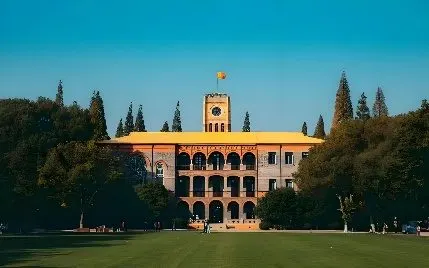
| Item | Data |
|---|---|
| Year founded | 1900 — the date of its historical predecessor, Soochow University |
| Status | public university of Jiangsu province; 211, Double First-Class |
| Number of students | 27,671 bachelor's students, 18,506 master's students, 2,239 doctoral students |
| International students | 1,523 people |
| Structure | 37 schools and units, 121 bachelor's programmes |
| Staff | 5,956 people, of whom 3,263 are full-time teaching staff |
| Campuses | Tiancizhuang, Dushu Lake, Yangcheng Lake, Future Campus |
| Main address | 1 Shizi Street, Gusu District, Suzhou, Jiangsu |
Figures on scale should be read against the date they refer to: some publications carry an outdated snapshot. The university's own latest statistics are as of December 2025, and that is what the table is based on.
The university traces its history to Soochow University (东吴大学), founded in Suzhou in 1900. The university counts it among the first institutions in China to build a modern system of disciplines. Among the milestones of that period, it highlights early master's training and the awarding of master's degrees, a course in Anglo-American law and its own academic journal.
In 1952, when higher education was being restructured across the country, the humanities and natural science departments of Dongwu Daxue were merged with part of Jiangnan University and the Sunan Institute of Culture and Education. The resulting institution was named Jiangsu Teachers College. In 1982 it was renamed 苏州大学, and Soochow University once again became its international name.
Its current broad profile took shape through further mergers: Suzhou College of Sericulture joined in 1995, Suzhou Institute of Silk Textile Technology in 1997 and Suzhou Medical College in 2000. As a result, medicine and education, law and the classical humanities, as well as materials, engineering and textile technology, came together under one roof. According to the university, over its history the number of its graduates has exceeded 500,000.
SUDA was indeed part of Project 211. The university also reports that it was in the first group of the 2011 Plan and that, within Double First-Class, it is being developed as a university jointly built by the Ministry of Education and the Jiangsu provincial government. It does not, however, belong to the historical Project 985. So the correct formula for an applicant is '211 plus 双一流', and mentioning 985 would be a mistake.
The second round of Double First-Class was published in 2022, and SUDA was on the list again. Its designated discipline is materials science and engineering: it is named in the university's announcement of the selection results and matches the Ministry of Education's notice on the second round. It follows that participant status in the initiative applies to the university as a whole, but not every one of its programmes automatically counts as a Double First-Class discipline.
Its research profile, meanwhile, is much broader than a single priority discipline. As of December 2025, 19 SUDA fields were in the ESI top 1%, and five of them — clinical medicine, chemistry, engineering, materials science, and pharmacology and toxicology — had reached the top 0.1%. It is important to understand that this is a bibliometric measure of research visibility, not an assessment of the quality of an individual degree programme.
| Ranking | Position | Edition |
|---|---|---|
| ARWU | 101–150 band | 2025 |
| CWUR Global 2000 | 201st in the world, 30th in China | 2026 |
| THE World University Rankings | band 501–600 | 2026 |
| QS World University Rankings | 801 to 850 band | 2026 |
| QS World University Rankings | band 711–720 | 2027, published in 2026 |
| EduRank | 615th in the world, 39th in China | 2026 |
| U.S. News | 292nd in the world | 2025 |
Differences in position are normal. ARWU relies more heavily on measurable research output; THE takes into account teaching, research, citations, international outlook and industry income; QS has its own set of reputational and quantitative indicators, and CWUR uses a separate model. So when choosing a programme it is wiser to look at the overall picture: the overall ranking, ESI positions and the strength of the specific school. For example, in THE 2026 SUDA's engineering is in the 201–250 band, physical sciences in the 301–400 band, and medicine and health in the 401–500 band.
Materials science and engineering is SUDA's official discipline on the Double First-Class list. The Institute of Functional Nano and Soft Materials works on nanomaterials, soft matter, optoelectronics and their interdisciplinary applications. The university links the institute's work with the national Collaborative Innovation Center of Suzhou Nano Science and Technology and with infrastructure for synchrotron analysis of materials. If an applicant plans a career in chemistry, physics, materials, energy or nanoelectronics, this path at SUDA looks like one of the most logical.
The university's medical field took shape after Suzhou Medical College joined it. In SUDA's current profile, clinical medicine and pharmacology and toxicology are named among the five fields in the ESI top 0.1%. Its research infrastructure includes a national clinical research centre and laboratories for radiation medicine and protection. Programmes taught fully or partly in English should be checked individually: a strong medical school does not remove the Chinese language requirements that apply on most courses.
The tradition of Anglo-American law remains important to SUDA's identity; today it is carried on by the Kenneth Wang School of Law. Another distinctive line is sericulture, textiles and design: after the mergers of 1995 and 1997 SUDA retained expertise in silk, fibres, clothing and materials. As a result, a law school, materials research and Suzhou's living industrial tradition come together here in a way that is rarely found.
Teaching at the university covers 13 disciplinary areas: natural and agricultural sciences, engineering, medicine, economics, management, law, philosophy, history, literature, education, art, and interdisciplinary studies. The word School or College in the English name of a unit denotes a structural part of SUDA, not a separate university.
| Level | Usual duration and language of instruction | What to check before applying |
|---|---|---|
| Bachelor's Degree | usually 4 years (medicine may take longer); Chinese or English depending on the programme | which specialisms are open to international students, HSK, CSCA, the language of instruction through to graduation |
| Master's Degree | about 3 years in most fields; Chinese or English | supervisor, HSK 5 or English requirement, current quota |
| Doctoral (PhD) Programmes | research training, often 4 years | letter from a supervisor, research proposal, language of the programme |
| Long-term Chinese | 1 semester or 1 academic year | class level, academic calendar, insurance, whether a dormitory place is available |
| CSCA foundation programme | 1 semester or 1 academic year | entry HSK level, mathematics, preparation for the CSCA and HSK |
In the 2026/27 intake, 27 bachelor's programmes are open to international students, but the final list depends on the particular intake year. Examples include computer science, finance, international economics, trade and management.
In the 2025/26 intake, Chinese-taught master's and doctoral programmes required HSK 5 with at least 180 points. English-taught tracks accepted TOEFL 80 or above, IELTS 6.0 or above, proof that the previous level of study was completed in English, or another recognised equivalent. Thresholds for the new cycle must be checked against the university's current notice.
Tuition fees at SUDA depend on the programme and the specific intake, and for master's programmes they are currently listed as to be confirmed. Check current amounts on the university's official website (suda.edu.cn) and in the current intake documents. When budgeting, bear in mind that besides tuition you usually pay for accommodation, a visa, a medical check-up, insurance, textbooks and laboratory costs.
SUDA has four main campuses. Tiancizhuang, near the old town, is the historical and administrative heart of the university; Dushu Lake is linked to a large education zone in the Industrial Park; Yangcheng Lake and Future Campus are expanding teaching and research infrastructure. The address of the main Tiancizhuang campus is 1 Shizi Street. It is home to the schools of law, mathematics and physics, foreign languages, and electronics and computer science, and there are several canteens.
Student life is not limited to classes. According to the English-language website, the university has more than 200 clubs and student societies, and 31 of them hold SUDA's five-star rating. The library system includes buildings on different campuses. Binglin Library on the Dushu Lake campus covers about 32,000 square metres, with floors above ground and a basement level; its collection holds about 1,000,000 volumes, with chemistry, biomedicine, art and the humanities especially well represented.
International students learning Chinese study at the School of Overseas Education. The 2026 programme includes compulsory courses — grammar, Chinese characters, writing, listening and speaking practice — and electives: phonetics, reading, Chinese cinema, folklore and geography. Each semester includes 4 to 6 cultural sessions, as well as trips around Suzhou and nearby cities.
| Room type | Note |
|---|---|
| Foundation programme, international dormitory | double room, 2026 intake |
| East Campus, degree programmes | double room, according to the university |
| Dushu Lake, degree programmes | double room, according to the university |
For the foundation intake, the room is described as follows: a bed with a mattress, a wardrobe, a desk and chair, air conditioning, a small fridge and a private bathroom. The university states plainly that places are in short supply and allocates rooms according to actual availability. Even the old English-language handbook asked students to state their need for on-campus housing in the application itself, so without confirmation you cannot count on a dormitory place as guaranteed.
The English-language admissions section names four types of support for international students: Chinese Government Scholarship, International Chinese Language Teachers Scholarship, Jiangsu Government Scholarship and Soochow University International Student Scholarship. What exactly is available to a given candidate depends on the level of study, nationality, specialism and intake year.
A full Chinese Government Scholarship includes a tuition waiver, a monthly stipend, insurance, and either a dormitory place or a housing allowance; the stipend amount in the 2026/27 cycle differs for bachelor's, master's and doctoral students. Funding is not awarded automatically: selection is competitive and quotas are limited.
| University and Chinese name | Location | How it differs |
|---|---|---|
| Soochow University, 苏州大学, SUDA | Suzhou, Jiangsu | the university this page is about; public, 211 and Double First-Class |
| Soochow University, 東吳大學, SCU | Taipei, Taiwan | a separate university with the same English name |
| Suzhou University, 宿州学院 | Suzhou (Chinese 宿州), Anhui province | a separate applied university, not one of SUDA's campuses |
| Suzhou University of Science and Technology, 苏州科技大学 | Suzhou, Jiangsu | a separate technological university |
| Suzhou City University, 苏州城市学院 | Suzhou, Jiangsu | a separate municipal applied university |
| Shandong University, 山东大学, SDU | Jinan, plus other campuses in Shandong province | a different university: it has a different Chinese name and a different abbreviation |
To avoid mistakes, check four markers together: 苏州大学, Soochow University, the abbreviation SUDA and the city of Suzhou in Jiangsu province. Shandong is 山东大学, and it has nothing to do with the word Soochow.
This page uses the Russian equivalent of 'University of Suzhou' as its main form. An adjectival Russian variant ('Suzhou University') is understandable but not used as a heading, and a misspelt variant also turns up in search results. The official international name is Soochow University, and SUDA is the abbreviation for international use. 苏大 (Sūdà), or 'Suda', is the Chinese short form, and 苏州大学 (Sūzhōu Dàxué) is the original name. The old spelling Soochow in the English name does not point to a different city.
SUDA is short for Soochow University. The address of the main Tiancizhuang campus in Suzhou is No. 1 Shizi Street, and the School of Overseas Education gives its address as Yiyuan Building, 333 Ganjiang East Road. When travelling to the university, go to the campus named in your admission notice.
Yes. SUDA has historical Project 211 status and takes part in Double First-Class, where in the second round it was assigned the discipline of materials science and engineering. The university was not part of Project 985.
Yes, some programmes are taught in English, most often at master's and doctoral level, but the language must be checked for each specialism separately. According to the university, English-taught graduate tracks require TOEFL 80 or above, IELTS 6.0 or above, proof that previous education was in English, or a recognised equivalent. SUDA has no programmes taught entirely in Russian.
It depends on the level of study and the programme. Chinese-taught master's and doctoral programmes require HSK 5 with at least 180 points. For the 2026 foundation course, the one-semester option accepted HSK 4 and the one-year option HSK 3, in both cases with a score of at least 180.
Yes. The School of Overseas Education has published HSK and HSKK registration announcements in which Soochow University School of Overseas Education could be chosen as the test centre. Dates, format and available levels change from session to session, so check registration on chinesetest.cn.
The cost depends on the programme, length of study, campus and room type. Current terms are published on the university's official website and in the current intake documents — these are what you should check before applying.
Yes, the university takes part in the CSC programme and admits strong international candidates through it — mainly to master's and doctoral programmes. A full scholarship can cover tuition, on-campus housing, medical insurance and a monthly stipend. But it is a competition, not an automatic benefit.
From the 2026/27 cycle, the CSCA is part of the admission procedure for international bachelor's students at Chinese universities that take part in government scholarship programmes. SUDA has opened a foundation programme where students study mathematics and Chinese and prepare for the CSCA; passing the CSCA and HSK 4 gives an advantage when moving on to a bachelor's programme. Check which subjects to take for your chosen specialism.
SUDA is in Suzhou (Jiangsu province), and its Chinese name is 苏州大学. Soochow University in Taiwan is written in traditional characters as 東吳大學 and abbreviated as SCU. Shandong University is 山东大学, abbreviated as SDU, and it is in Shandong province. A partial overlap in Latin spelling does not make them the same university.
The basic set includes a passport, a language certificate, a diploma or a certificate of expected graduation, a transcript, a medical form, a financial guarantee and a police clearance certificate. Graduate programmes also require recommendation letters and a research proposal, and doctoral programmes require contact with a supervisor. The final list is set by the notice for the chosen intake year.
Suzhou (苏州) is called the Venice of the East: it has classical gardens protected by UNESCO and, at the same time, a large industrial park where thousands of international companies operate. The city is 25 minutes from Shanghai by high-speed train.
Students get several advantages at once: a good education, access to the Shanghai job market and cheaper accommodation. The city's metro is well developed (5 lines), there are numerous parks and canals for relaxing, the climate is mild, and student life is active. For parents, the key points are the high level of safety and comfort, the clean environment, modern healthcare and the proximity to Shanghai: after flying into its airport, it is easy to visit their child. The campuses are well organised and guarded around the clock, with services for international students.
You work with Nihao Study specialists. They will help you put together a portfolio and a set of documents, draw up a study plan and choose a university or college and a specialty that genuinely interest you.
We take care of every stage of admission, from choosing to enrolment
We will gather, prepare, certify and send your documents to the institution
We will show the admissions committee your strengths
We run training sessions and courses so you can prepare with more confidence
We will help you settle in at the start of your studies and keep moving forward
Nihao Study specialists select universities and colleges that match the applicant's goals and means. We make sure the teachers are practitioners and that the knowledge will be useful in your profession.
We examine curricula, talk to students and teachers and look at which specialties employers need, and use this information to select options for the applicant.
Advisers guide the applicant from the first consultation to enrolment, help build a plan and spot mistakes in time that could get in the way.
The cost of our support depends on the programme and the partner university; you'll get an exact quote after a free consultation.
Get a quoteA free 15-minute consultation: together we will choose a university or college and a programme that suit your goals and budget.
Apply with peace of mind: we handle the documents, deadlines and correspondence with admissions committees, and you save time and energy.
Don't want to wait for a call? Message us in the chat.
Message us in chat