- Language courses
- English
- Bachelor's Degree
- English
- Master's Degree
- English
- Accommodation from 3 000 ¥/semester
SCU · 四川大学
Sichuan University accepts international students on programmes in the following fields: business, engineering, medicine, education, economics. Choose the level and programme that suit your goals.
Chinese language study at the university — from a few weeks to a year or longer. Suitable for those starting from scratch or preparing for the HSK before entering a main programme.
self-funded · language programme
The first level of higher education: usually four years of study, specialised subjects, internships and a graduation thesis. It opens the way to working in your field and to a master's degree.
self-funded
Advanced study after a bachelor's degree: research, applied projects and internships. It helps you become an expert in your chosen field and broaden your career opportunities.
self-funded
Sichuan University is located in Chengdu. Nihao Study consultants keep track of the deadlines and admission requirements of this university, and you can always check the most accurate and up-to-date information on its official website. In university rankings, it is ranked 17 in China and 625 worldwide.
Come for a face-to-face meeting: together we will go through the requirements, deadlines, documents and study options that suit you.

At the meeting we will look at your situation, tell you which documents to prepare and by when, talk about possible programmes and help you decide on the next step.
Sichuan University (SCU; Chinese 四川大学, pinyin Sìchuān Dàxué) is a large public research university in Chengdu under the Ministry of Education of China. The standard Russian form of its name corresponds directly to the Chinese 四川大学 and to the international name Sichuan University. Russian-language search results also show other variants, as well as a common misspelling.
Within China the university is known for short as 川大 (Chuāndà). It should not be confused with universities with similar names: Soochow University (Suzhou), South China University of Technology (Guangzhou), Sichuan University of Science and Engineering and Sichuan Normal University. SCU traces its history back to 1896; it was part of the former Project 211 and Project 985 and now takes part in the national Double First-Class (双一流) programme. It is one of the largest universities in the country: according to data for the 2026 intake, it has over 38,000 bachelor's students, over 33,000 master's and doctoral students, and almost 3,000 international students, including those from Hong Kong, Macao and Taiwan.
In this overview Nihao Study has gathered for 2026 applicants the 985, 211 and 双一流 statuses, rankings, programmes taught in Chinese and English, dormitory conditions, HSK and CSCA requirements, scholarships and the application procedure.
| Indicator | Value |
|---|---|
| Year founded | 1896 |
| Status | public university under China's Ministry of Education; 211, 985, 双一流 |
| Students | over 38,000 bachelor's students, over 33,000 master's and doctoral students |
| International students | almost 3,000, including students from Hong Kong, Macao and Taiwan |
| Main campuses | Wangjiang, Huaxi, Jiang'an, Meishan |
| Fields of study | 13 disciplinary fields |
| Main address | No. 24, South Section 1, Yihuan Road, Chengdu, 610065 |
The international office's old overview page names three historically established campuses and a total area of 470 hectares. The current guide for international applicants adds Meishan to them. So when choosing a programme, do not go by the SCU name alone: your admission letter states a specific campus, so check it.
The university's official chronicle begins in 1896: by decree of the Guangxu Emperor, the governor of Sichuan Province, Lu Chuanlin, founded the Sichuan Chinese and Western School. The university considers it the earliest modern higher education institution in south-west China. Medicine developed along its own path: in 1910 West China Union University was established in Chengdu, one of China's early Western-style universities offering postgraduate training.
SCU's present form is the result of two mergers. In April 1994 the then Sichuan University and Chengdu University of Science and Technology merged to form Sichuan Union University. The merged university got the name Sichuan University back in December 1998, and in September 2000 West China University of Medical Sciences joined it. Hence its unusually broad profile: classical humanities, strong engineering schools and a large medical complex sit side by side in one university.
According to the SCU archive, the merged university entered the first group of Project 211 in 1996. Competitive rounds of 211 and 985 are no longer held, but both projects remain important historical markers of state priority. Current status is checked against the Double First-Class list.
SCU did indeed take part in both projects, Project 211 and Project 985; this is confirmed, among other sources, by its ShanghaiRanking profile. It is important to understand what this means: 211 and 985 are the names of historical government programmes, not a special type of modern degree.
In the second round of 双一流, SCU is listed as a Double First-Class institution. Its list of priority disciplines has six fields: basic medicine, stomatology, nursing, mathematics, chemistry, and materials science and engineering. So SCU can rightly be called a Double First-Class university, but not every one of its programmes is a 双一流 discipline.
| Ranking | Position | Edition |
|---|---|---|
| ARWU | 87th place | 2025 |
| QS World University Rankings | 324th place | 2026 |
| QS World University Rankings | 300th place | 2027 (published in 2026) |
| THE World University Rankings | 201–250 band | 2026 |
| CWUR Global 2000 | 141st place, 15th in China | 2026 |
| EduRank | 345th worldwide, 19th in China | 2026 |
The positions differ, and that is normal: ARWU gives more weight to research output, QS combines reputation and bibliometric indicators, THE uses its own system, and CWUR looks at education, graduate employment and research. When deciding on admission, rely on editions with a stated year.
A subject breakdown by ESI for 2025: 8 SCU disciplines are in the global top 0.1 per cent, and 21 disciplines are in the top 1 per cent. These eight are chemistry, engineering, materials science, computer science, clinical medicine, pharmacology and toxicology, biology and biochemistry, and molecular biology and genetics.
SCU's medical side grew out of West China University of Medical Sciences. In the ShanghaiRanking Global Ranking of Academic Subjects 2025, the university's biomedical engineering is ranked 2nd, and dentistry and oral sciences are in the group sharing 5th place. This echoes the Double First-Class list, which specifically mentions stomatology, nursing and basic medicine.
The same subject ranking places SCU's chemical engineering 5th, pharmacy 8th, and nanoscience and nanotechnology 11th. For an international applicant this opens up a wide choice of fields: pharmacy, bioengineering, materials science, chemical technology, and computer applications in medicine.
SCU covers 13 broad fields of knowledge, among them literature, natural sciences, engineering, medicine, economics, management and law. The international office cites more than 200 partnerships with universities and organisations in various countries around the world.
The bachelor's catalogue for international students lists: clinical medicine, stomatology, pharmacy, public health, materials science, electrical engineering, electronics, chemical engineering, architecture, hydropower, computer science, mathematics, physics, biology, economics, business, law, international politics, journalism, Chinese language, foreign languages and art. If a unit's name contains School or College, it is a part of Sichuan University, not a separate university.
| Level | Format and duration | Examples |
|---|---|---|
| Bachelor's Degree | usually 4–6 years; Chinese or English | Software engineering, civil engineering, business administration, stomatology, MBBS |
| Master's Degree | 3 years for most programmes in the catalogue | materials, electronics, law, public health, stomatology |
| Doctoral (PhD) Programmes | research programmes in many disciplines | SCU doctoral programme catalogue |
| Chinese Language | from 1 semester, about 20 hours of classes a week | from beginner to advanced level |
At bachelor's level there are fewer programmes in English than in Chinese. English is stated as the language of instruction for software engineering, civil engineering, Business Management, stomatology and the six-year Clinical Medicine programme. Look at the line for the specific programme: the language of instruction is given there separately, and an English programme name does not in itself mean the programme is taught in English.
Those who first need to improve their Chinese can take a language course in Chengdu. It covers comprehensive Chinese, speaking practice, listening, reading and writing; at intermediate and advanced levels, culture, history, the Sichuan dialect and HSK preparation are added. The university states that after the relevant stages, students usually reach HSK 3, HSK 4 or HSK 5 level. This is an approximate course outcome, not an exam score.
The tuition fee at SCU depends on the level and field: MBBS and clinical medicine, as well as art and sports programmes, are usually more expensive. Check the current amounts, including the application fee (which is also paid when applying for a scholarship), on the university's official website. Besides tuition itself, budget for dormitory accommodation, food, the visa, health insurance, and translation and legalisation of documents.
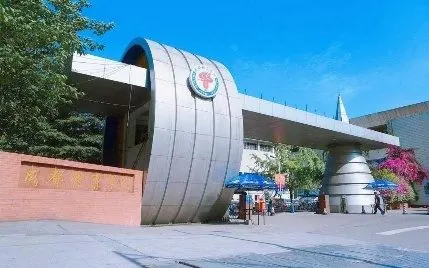
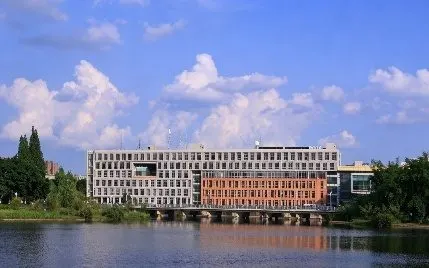
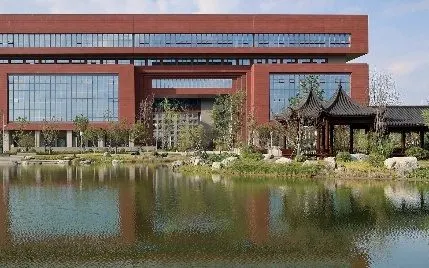
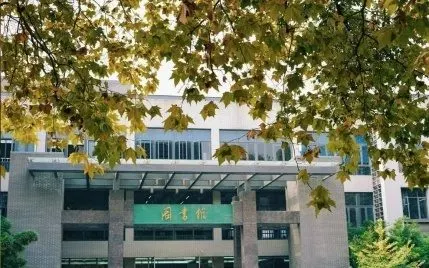
The look of the SCU campus is defined by historic teaching buildings; there is also an outdoor sports area on site.
The number of dormitory places is limited, so the university advises self-funded students to book a room after admission, by phone or email. CSC scholarship holders are housed by the International Students Office. The price depends on the campus and the room type.
| Campus | Room type |
|---|---|
| Wangjiang, Hongwa | standard or single |
| Wangjiang, West Zone | a place in a double or a single |
| Huaxi | from triple to single |
| Jiang'an | triple or quadruple |
Rooms in Hongwa have their own bathroom and air conditioning. Huaxi has a shared kitchen, laundry, Wi-Fi and furniture. At Jiang'an, the annual fee includes water and electricity for lighting, while air conditioning has a separate allowance. Confirm the final cost and availability in writing: a programme may be assigned to a particular campus.
The admission decision and the scholarship decision are made separately. CSC, together with the university, assesses the applicant's academic profile, language, study plan and documents.
The three campuses differ in location: Wangjiang is in central Chengdu, Huaxi is attached to the medical schools, and Jiang'an is in Shuangliu District. The practical difference is clear from the official dormitory addresses: Hongwa is next to Wangjiang Park, the Huaxi dormitory is on South Renmin Road, and Jiang'an is on Chuanda Road in Xihanggang.
SCU's institutional profile gives these figures: over 6 million volumes in the library, over 54,000 cultural artefacts in the humanities museum, over 860,000 plant and animal specimens in the natural history collection, and over 9,000 items in the historical archive. On top of this there are sports halls and university centres.
The international office organises classes and trips related to the region's culture: students visit Sanxingdui, learn about Qiang embroidery and take an emergency response course. This helps with settling in; the programme for a particular semester is confirmed after registration.
For master's and doctoral programmes, language requirements depend on the field: HSK 4 with 180 points or more is enough for natural science, engineering and medical programmes, while Chinese-taught humanities programmes require HSK 5 with 180 points or more. The age guideline is 18–40 for master's and 18–45 for doctoral programmes.
| University | City and province | How it differs |
|---|---|---|
| Sichuan University, 四川大学, SCU | Chengdu, Sichuan | a comprehensive 985, 211 and 双一流 university, the subject of this page |
| Sichuan University of Science and Engineering, SUSE | Zigong, Sichuan | an independent provincial university, not an SCU campus |
| Sichuan Normal University | Chengdu, Sichuan | a different university, with a teacher-training and comprehensive profile |
| Soochow University | Suzhou, Jiangsu | 苏州大学: a different city and, historically, a different English name |
| South China University of Technology, SCUT | Guangzhou, Guangdong | 华南理工大学, a technical university abbreviated SCUT |
The most reliable approach is to check four markers at once: 四川大学, Sichuan University, the city of Chengdu and the domain scu.edu.cn. South China University of Technology's abbreviation is always the full SCUT, and Soochow University is in Suzhou.
This page uses the standard Russian form of the name; other Russian spellings come from search queries or are typos, and one variant sounds unnatural because it is a calque of the English. The official international name is Sichuan University, and the abbreviation SCU appears in rankings and correspondence. In Chinese, the full name is 四川大学 (Sìchuān Dàxué) and the short form is 川大 (Chuāndà).
SCU is short for Sichuan University. The university is in Chengdu, the capital of Sichuan Province; its main administrative address is South Section 1, Yihuan Road, postcode 610065.
Yes. The university took part in Projects 985 and 211 and is now part of the Double First-Class initiative. In its second round, six disciplines are assigned to SCU: mathematics, chemistry, basic medicine, materials science and engineering, stomatology and nursing.
Yes, but not for all programmes. The bachelor's catalogue lists English for MBBS, software engineering, civil engineering, business administration and stomatology. If English is not your native language, you will usually need TOEFL 80 or higher or IELTS 6.0 or higher.
Bachelor's programmes taught in Chinese require HSK 5 with at least 180 points; the exception is the bachelor's programme in Chinese Language. For master's and doctoral programmes, the humanities require HSK 5 with at least 180, while the natural sciences, engineering and medicine accept HSK 4 with at least 180.
The cost depends on the level and the programme: medical programmes, as well as art and sport, are usually more expensive. The language programme has its own fee per semester, plus a registration fee. Current amounts are published on the university's official website.
Yes, if you win a full scholarship in the competition. SCU's current Type B page is for master's and doctoral programmes: the scholarship covers tuition, a dormitory place, insurance and a monthly stipend. Conditions vary from scheme to scheme, so check each one separately.
Yes: SCU has added the CSCA certificate to its list of documents. The subjects depend on the field and the language of the programme: mathematics is taken on all the main tracks, physics on engineering and medical tracks, chemistry on medical tracks, and Chinese Language on programmes taught in Chinese.
Yes, there are dormitories at Wangjiang, Huaxi and Jiang'an. The fee depends on the campus and the room type: at Wangjiang and Huaxi it is charged per day, at Jiang'an per year. Check the exact rates on the university's official website. Places are limited and must be booked after enrolment.
The SCU this page is about is 四川大学 (Sichuan University) in Chengdu. Soochow University is in Suzhou, and South China University of Technology is in Guangzhou; its abbreviation is SCUT.
The core set: passport, school-leaving certificate (or a certificate of expected graduation), school transcript, personal statement, language certificate, CSCA certificate, medical form, proof of financial support and a police clearance certificate. Check the requirements for translations and document formatting in advance.
Chengdu (成都) is the capital of Sichuan Province. The city is known for its giant panda breeding centre and its fiery Sichuan cuisine. Today it is growing fast as the technology hub of western China, and students from all over Asia come here to study.
Chengdu attracts students with good education, moderate prices and a relaxed, comfortable pace of life. Public transport is well developed (the metro has 13 lines), there are many parks and teahouses, and the climate is mild, with no severe frosts. Parents like that this calm city has everything needed: it is safe, there are modern hospitals, direct flights leave from the international airport, and student life is well organised, with dormitories and support services.
You work with Nihao Study specialists. They will help you put together a portfolio and a set of documents, draw up a study plan and choose a university or college and a specialty that genuinely interest you.
We take care of every stage of admission, from choosing to enrolment
We will gather, prepare, certify and send your documents to the institution
We will show the admissions committee your strengths
We run training sessions and courses so you can prepare with more confidence
We will help you settle in at the start of your studies and keep moving forward
Nihao Study specialists select universities and colleges that match the applicant's goals and means. We make sure the teachers are practitioners and that the knowledge will be useful in your profession.
We examine curricula, talk to students and teachers and look at which specialties employers need, and use this information to select options for the applicant.
Advisers guide the applicant from the first consultation to enrolment, help build a plan and spot mistakes in time that could get in the way.
The cost of our support depends on the programme and the partner university; you'll get an exact quote after a free consultation.
Get a quoteA free 15-minute consultation: together we will choose a university or college and a programme that suit your goals and budget.
Apply with peace of mind: we handle the documents, deadlines and correspondence with admissions committees, and you save time and energy.
Don't want to wait for a call? Message us in the chat.
Message us in chat 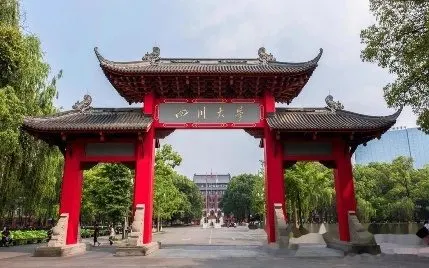
University · Ya'an