- Language courses
- English, Chinese
- Bachelor's Degree
- English, Chinese
- Master's Degree
- English, Chinese
- Doctoral (PhD) Programmes
- English, Chinese
- Accommodation from 75 ¥/day
SUFE · 上海财经大学
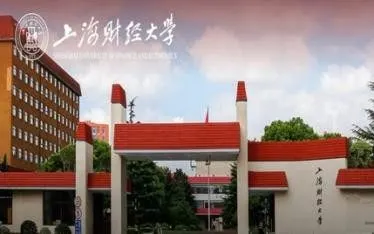
Shanghai University of Finance and Economics accepts international students on programmes in the following fields: business, economics. Choose the level and programme that suit your goals.
A short language programme during the summer holidays: Chinese classes and getting to know the campus and the city. A convenient way to try studying in China before applying for a main programme.
Check upcoming application deadlines for this level with your Nihao Study adviser.
All programmes at this level →Chinese language study at the university — from a few weeks to a year or longer. Suitable for those starting from scratch or preparing for the HSK before entering a main programme.
self-funded · language programme
Cost: 18 000 ¥/year
Foundation programme: language and core subjects before a bachelor's degree. It helps you strengthen your knowledge and get used to studying in China before the main programme begins.
self-funded · language programme
Cost: 30 000 ¥/year
The first level of higher education: usually four years of study, specialised subjects, internships and a graduation thesis. It opens the way to working in your field and to a master's degree.
self-funded
Cost: 30 000 ¥/year
Advanced study after a bachelor's degree: research, applied projects and internships. It helps you become an expert in your chosen field and broaden your career opportunities.
scholarship-funded
Cost: up to 144 000 ¥/year
self-funded
Cost: 34 000–144 000 ¥/year
Shanghai University of Finance and Economics is located in Shanghai. Nihao Study consultants keep track of the deadlines and admission requirements of this university, and you can always check the most accurate and up-to-date information on its official website. In university rankings, it is ranked 3 in China and 120 worldwide.
Come for a face-to-face meeting: together we will go through the requirements, deadlines, documents and study options that suit you.

At the meeting we will look at your situation, tell you which documents to prepare and by when, talk about possible programmes and help you decide on the next step.
Shanghai University of Finance and Economics (SUFE, 上海财经大学, pinyin Shànghǎi Cáijīng Dàxué) is a public research university in Shanghai under the Ministry of Education of the PRC. Its official Russian name corresponds to 'Shanghai Finance and Economics University'; students call it 上财 or 财大 for short.
Precision matters when it comes to status. SUFE is on the official Project 211 list. In Double First-Class (second round), its designated discipline is applied economics. SUFE is not a Project 985 university: through its economics innovation platform it took part only in the separate 985 Project Innovation Platform for Advantageous Disciplines initiative, and calling it a '985 university' on that basis is incorrect.
The Nihao Study overview covers SUFE's statuses and subject rankings, programmes in Chinese and English, dormitories, scholarships and the application procedure for 2026 applicants.
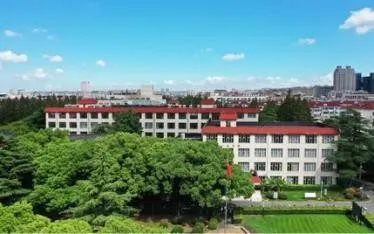
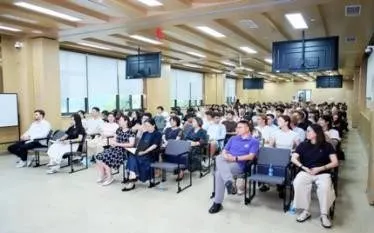
By Chinese standards SUFE is a compact university, but with broad academic coverage within its field. The university reports 18,299 students: 8,071 undergraduates, 7,151 master's students and 1,401 doctoral students, plus 1,290 adult education students, 31 foundation students and 355 international students. There are 987 full-time teaching staff.
| Indicator | Data | What matters to applicants |
|---|---|---|
| Year founded | 1917 | More than a hundred years of experience in commercial and economic education |
| Campuses | 3 campuses | Classes and accommodation may be at different addresses |
| Area | 812.9 mu | A university within the city, not a remote out-of-town campus |
| Student body | 18,299 students | A high proportion of master's and doctoral students |
| Academic structure | 7 fields of study; first-level disciplines: 10 doctoral and 15 master's | Law, mathematics, statistics and technology complement economics |
| Main address | 777 Guoding Road, Yangpu, Shanghai 200433 | The campus is in Yangpu District |
SUFE is a public university jointly supervised by the Ministry of Education, the Ministry of Finance and the Shanghai government. It should not be confused with a private business school: it awards bachelor's, master's and doctoral degrees and conducts fundamental research.
Its history dates back to 1917, when a commerce department opened at Nanjing Higher Normal School. In 1921 it moved to Shanghai and became Shanghai College of Commerce, the first institution of its kind in the history of Chinese education. From 1932 it operated independently as the National Shanghai College of Commerce, and after the higher education reform of 1950 it was renamed Shanghai Institute of Finance and Economics.
The university has held its current name, 上海财经大学, since 1985; in 1996 SUFE was included in Project 211; in 2000 it moved from the Ministry of Finance to the direct authority of the Ministry of Education; and in 2012 a model of joint development by the ministries and the city government was formalised. In 2017 the university was included in the first round of Double First-Class.
In 2022 SUFE remained in the second round of Double First-Class, and the national list assigns applied economics to it. The conclusion for applicants is simple: SUFE's strength is not broad-based engineering or medicine, but finance, economics, accounting, management, statistics and law, including where they meet digital technology.
For a finance university, the overall ranking and subject positions diverge especially sharply. In the QS World University Rankings 2027 SUFE is in the 1201–1400 band, but it looks much stronger in the subject tables. The university cites QS 2025 data: 64th in economics and econometrics, the 101–150 band in accounting and finance, and 251–300 in business and management.
| Ranking | Position and edition | How to read it |
|---|---|---|
| QS World University Rankings | 1201–1400, 2027 edition | The overall table underrates narrow specialisation |
| ShanghaiRanking GRAS | Finance 37, statistics 76–100, 2025 edition | The university is noticeably stronger by subject than overall |
| Best Chinese Universities Ranking | 2025 edition: 1st among finance and economics universities | Comparison with universities of the same profile |
| CWUR | 893rd worldwide, 2026 edition | The university is in the top 4.2 per cent of the list |
| EduRank | 2026 edition: 1,613th worldwide, 115th in China | A bibliometric assessment using a different methodology |
| THE | 801–1000, 2022 edition | No more recent overall result is given on SUFE's page |
SUFE has four fields in the ESI top 1%: engineering, social sciences, economics and business, and ecology and environment. This is not a line in a familiar league table but an indicator of citations by field. So it is more accurate to judge SUFE by subject, programme content, language of instruction and cost than by a single overall number.
In the second round of Double First-Class, applied economics is explicitly named as the discipline SUFE is building. For students, this means that faculty, research centres and advanced courses are concentrated on finance, market analysis, economic policy and public economics.
SUFE's academic structure covers law, philosophy, literature, management and economics, as well as the natural sciences and engineering; in addition, the university hosts 8 postdoctoral research stations. The new master's programme in the digital economy draws on economics, statistics, data analysis and intelligent technologies. This combination suits those interested in fintech, business analytics or econometrics rather than classical theory alone.
The library holds 2.38 million printed books, 15.56 million e-books and dissertations, 2.3 million e-journals and 131 databases. As of March 2026, SUFE had signed agreements with 192 partners, universities and organisations abroad, from 36 countries and regions. The English-taught MBA is accredited by CAMEA, AMBA, AACSB and EQUIS.
In 2026, international bachelor's students are offered finance, investment, accounting and financial management, business administration, public administration, law, the digital economy, international economics and trade, and Chinese for international education with a business focus. Most standard programmes are taught in Chinese.
At master's level, the choice of languages is wider. In Chinese you can study international business, finance, applied statistics, the digital economy, linguistics and teaching Chinese; in English, the MBA, LLM, finance and international finance, international business, regional economics and public administration. Doctoral students can choose economics, finance, marketing, management, law and related fields; the standard duration is 4 years.
Schools and colleges within SUFE are units of the university, not separate universities. International admissions are handled by the International Cultural Exchange School. In the 2026 intake, SUFE's programmes for international students are gathered in one place, while joint pathways with a specific university abroad are arranged under a separate agreement.
| Level | Language and duration | Sample programmes |
|---|---|---|
| Bachelor's Degree | Chinese, 4 years | Finance, accounting, investment, management, law, digital economy |
| Bachelor's Degree | English, 4 years | International Economics and Trade |
| Bachelor's Degree | English, 4 years | Finance |
| Master's Degree | Chinese or English, 2 years | Finance, international business, MBA, MPA, LLM, applied statistics |
| Doctoral (PhD) Programmes | Mainly Chinese, 4 years | Finance, economics, management, law |
| Foundation programme | Chinese and mathematics, 2 semesters | Beginner or intermediate level before entering a bachelor's programme |
For English-taught bachelor's programmes, HSK is not the main entry certificate, but Chinese courses are included in the programme. For International Economics and Trade in the 2026 intake, IELTS 6.0, TOEFL iBT 80 or Duolingo 100 were accepted, and all candidates took the CSCA mathematics test. Chinese-taught programmes require HSK 5 with at least 180 points; the exception is Chinese for international education, where the minimum is HSK 4 with 180 points.
Comprehensive medical insurance is compulsory for degree students, and its cost is set by the university. Your budget should also cover flights, a visa, food and transport, notarised translations and the dormitory deposit.
SUFE offers international students two main options. Zhongshan Beiyi Road dormitory: the address is 66 Guangxiu Road, about a 5-minute walk from Chifeng Road station (Metro Line 3), with accommodation in three-person rooms.
Sanmen Road dormitory (409 Sanmen Road) is closer to the teaching buildings: about a 10-minute walk to the main campus. It has places in double rooms as well as single rooms. Both dormitories charge a deposit, and utilities and laundry are paid separately; the university publishes the current rates.
| Dormitory | In the room | Features |
|---|---|---|
| Zhongshan Beiyi Road | Room for three; air conditioning, bathroom and shower, laundry available | Cheaper, but with less personal space |
| Sanmen Road | Apartments: single rooms and one double room; air conditioning, bathroom and shower | More expensive, but next to the main campus |
Places are allocated according to the student's category and the availability of rooms. Under the housing rules, holders of a full Shanghai Government Scholarship or a full CSC scholarship were given their assigned dormitory free of charge.
There are several independent funding routes; they differ in level of study, nationality requirements and deadlines.
In 2026 the procedure was as follows: the candidate applied to SUFE, went through screening and an interview, received a conditional offer, and then applied to CSC under Type B, giving the institution code 10272. The final decision rested with CSC.
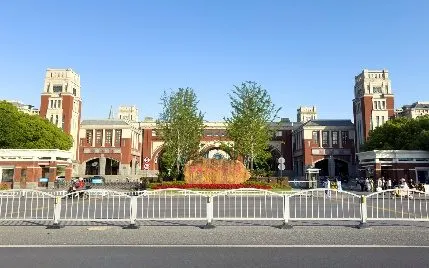
The main campus is in Yangpu District, at 777 Guoding Road. Shanghai University of Finance and Economics station on Metro Line 18 is right on campus, and Line 3 is about a 5-minute walk away.
The library has study areas, group work rooms, a media hall, quiet booths and financial databases. Its collection includes materials from UNCTAD (the United Nations Conference on Trade and Development), the IMF and the World Bank. For a finance student, this is useful for market analysis, coursework and company research.
The international environment at SUFE is not limited to English-taught courses. The university's partner network comprises more than 200 organisations from 42 countries and regions, covering exchanges, joint degrees and research projects. When choosing an exchange, check the partner list for your own faculty.
| University and Chinese name | Type | Main focus |
|---|---|---|
| Shanghai University of Finance and Economics, SUFE, 上海财经大学 | National university, 211 and Double First-Class | Research-level economics, finance, accounting, statistics |
| Shanghai University of International Business and Economics, SUIBE, 上海对外经贸大学 | Municipal university | International trade, business and WTO rules |
| Shanghai Lixin University of Accounting and Finance, SLU, 上海立信会计金融学院 | Applied university under the city government | Accounting, auditing and finance |
| Shanghai Business School, SBS, 上海商学院 | Applied university under the city government | Business, tourism, e-commerce, logistics |
SUFE has national 211 status, a core discipline in Double First-Class and in-depth research. For international trade and the WTO, SUIBE is the more logical choice; for applied accounting and auditing, Lixin; for practice-oriented business, SBS. This list does not replace comparing specific programmes by language, price and content.
There is one standard Russian form, used on Shanghai's official Russian-language portal; some other Russian spellings are simply errors, and a literal translation of the English name is understandable but not considered the main form. Shanghai University of Finance and Economics is the official international name, and SUFE is the official abbreviation. ‘Shangcai’ renders the Chinese abbreviation 上财; 财大 is also used. The original name 上海财经大学 is read Shànghǎi Cáijīng Dàxué.
It is a public university specialising in finance and economics in Shanghai. It is under the Ministry of Education and is developed jointly by the Ministry of Education, the Ministry of Finance and the Shanghai government.
Yes. SUFE is on the 211 list approved by the Ministry of Education; in the second round of Double First-Class, applied economics was assigned to it. SUFE is not, however, on the official list of 985 universities.
You can study in English at bachelor's level in Finance and International Economics and Trade, as well as in several master's programmes. No full programmes in Russian were announced for the 2026 intake.
Most Chinese-taught bachelor's programmes require HSK 5 with a score of 180; for Teaching Chinese to Speakers of Other Languages, HSK 4 with 180 points is enough. Chinese-taught master's programmes require HSK 5 with 180 points.
Yes, but on SUFE's standard route the full CSC scholarship is intended for master's and doctoral programmes. It covers tuition, on-campus accommodation and insurance and includes a monthly stipend, but the applicant must first be selected by the university, after which CSC makes the decision.
According to the university, the International Cultural Exchange School is one of the HSK centres in Shanghai and registers candidates for exam sessions. Dates of upcoming sessions should be checked in the official exam system.
Main campus: No. 777 Guoding Road, Yangpu District, Shanghai, postcode 200433. There is a Shanghai University of Finance and Economics station on Line 18 on the campus, and it is about a 5-minute walk from Jiangwan Town station on Line 3.
SUFE is a 211 and Double First-Class research university specialising in applied economics. SUIBE focuses on international trade and the WTO, and Shanghai Lixin on applied finance, accounting and auditing.
The basic set: passport, photo, school-leaving certificate or a letter confirming expected graduation, a full school transcript, CSCA result, language certificate, personal statement, recommendation letter, financial guarantee and police clearance certificate.
Yes. The foundation programme combines Chinese language and mathematics and lasts 2 semesters. Check the current course fee on the university's official website.
Shanghai (上海) is the largest city in China and one of the world's financial centres. Students from more than 150 countries study here. The Bund with its futuristic views, the skyscrapers of Pudong and the old French Concession together create a special atmosphere for student life.
By enrolling in Shanghai, students gain access to strong universities and thousands of international companies offering internships. The city has 16 metro lines, the campuses are equipped to modern standards, and student life is active. For parents, it matters that healthcare here is of a high standard, there are international schools and hospitals and direct international flights, the city is safe, and every major university has a support service for international students.
You work with Nihao Study specialists. They will help you put together a portfolio and a set of documents, draw up a study plan and choose a university or college and a specialty that genuinely interest you.
We take care of every stage of admission, from choosing to enrolment
We will gather, prepare, certify and send your documents to the institution
We will show the admissions committee your strengths
We run training sessions and courses so you can prepare with more confidence
We will help you settle in at the start of your studies and keep moving forward
Nihao Study specialists select universities and colleges that match the applicant's goals and means. We make sure the teachers are practitioners and that the knowledge will be useful in your profession.
We examine curricula, talk to students and teachers and look at which specialties employers need, and use this information to select options for the applicant.
Advisers guide the applicant from the first consultation to enrolment, help build a plan and spot mistakes in time that could get in the way.
The cost of our support depends on the programme and the partner university; you'll get an exact quote after a free consultation.
Get a quoteA free 15-minute consultation: together we will choose a university or college and a programme that suit your goals and budget.
Apply with peace of mind: we handle the documents, deadlines and correspondence with admissions committees, and you save time and energy.
Don't want to wait for a call? Message us in the chat.
Message us in chat 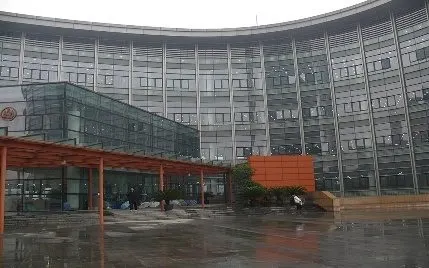
University · Shanghai