- Language courses
- English, Chinese
- Bachelor's Degree
- English, Chinese
- Master's Degree
- English, Chinese
- Doctoral (PhD) Programmes
- English, Chinese
- Accommodation from 75 ¥/day
上海工程技术大学
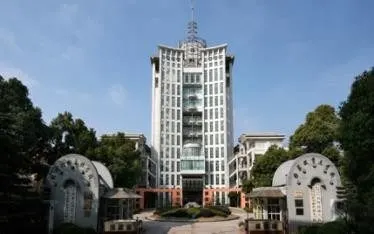
Shanghai University of Engineering Science accepts international students on programmes in the following fields: business, engineering, medicine, education, economics. Choose the level and programme that suit your goals.
Chinese language study at the university — from a few weeks to a year or longer. Suitable for those starting from scratch or preparing for the HSK before entering a main programme.
self-funded · language programme
The first level of higher education: usually four years of study, specialised subjects, internships and a graduation thesis. It opens the way to working in your field and to a master's degree.
self-funded
Advanced study after a bachelor's degree: research, applied projects and internships. It helps you become an expert in your chosen field and broaden your career opportunities.
self-funded
Shanghai University of Engineering Science is located in Shanghai. Nihao Study consultants keep track of the deadlines and admission requirements of this university, and you can always check the most accurate and up-to-date information on its official website.
Come for a face-to-face meeting: together we will go through the requirements, deadlines, documents and study options that suit you.

At the meeting we will look at your situation, tell you which documents to prepare and by when, talk about possible programmes and help you decide on the next step.
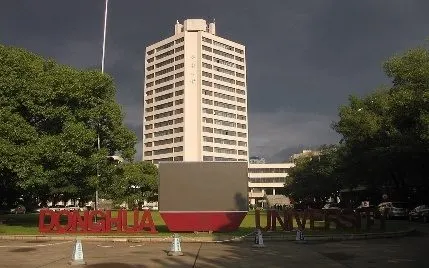
Shanghai University of Engineering Science (SUES, 上海工程技术大学, pinyin Shànghǎi Gōngchéng Jìshù Dàxué) is a public multidisciplinary technical university in Shanghai (上海), China's largest city. The main Russian form of the name in official texts and on education portals translates as 'Shanghai University of Engineering Sciences'; Russian-language materials also use a variant meaning 'Shanghai Engineering and Technology University'. Chinese students shorten the name to 上工大 (Shàng Gōng Dà); the official abbreviation SUES is used in international rankings and email correspondence.
The university was founded in 1985. Today it is in the first group of universities selected by the Ministry of Education of the PRC for the 'Excellent Engineers Training' programme, leads the country's local universities in developing 'new engineering disciplines', and serves as a pilot site in Shanghai for building a 'high-level applied university'. Formally, SUES belongs neither to Project '211' nor to 'Double First-Class': it is a strong industry-oriented engineering university valued for its close ties with industry and its Shanghai location.
Below are details on SUES from the Nihao Study overview: key figures, history, rankings, accommodation, scholarships and the admission procedure for 2026.
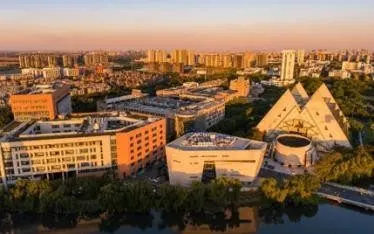

The table shows the university's key figures for the current academic year, taken from the official website and the admission rules.
| Indicator | Data |
|---|---|
| Year founded | 1985 |
| City | Shanghai (上海) |
| Campuses | Songjiang, Changning, Hongkou |
| Area | about 1,308 mu, almost 1 million m² |
| Schools and colleges | 19 |
| Total students | about 24,000 |
| Master's and doctoral students | about 4,700 |
| Staff and teachers | about 2,000, of whom 1,500+ are full-time |
| International students | about 1,000 a year, from 90+ countries |
| Bachelor's programmes | 61 |
SUES was established in 1985, when several specialised institutions in industrial Shanghai were merged. Its foundation was the mechanical and electrical branch of Shanghai Jiao Tong University, together with branches of the Shanghai Textile Institute and the Shanghai Institute of Chemical Technology, which explains the university's original focus on engineering, technology and textiles.
In 2003 the Shanghai Technical School, which had existed since 1951, joined SUES, and the practical side of teaching became noticeably stronger. This ‘factory’ past is the root of the university's current emphasis on linking engineering training with economics, management, art and design.
Today SUES presents itself as a modern applied engineering university with a history of more than 40 years: it combines the traditions of Shanghai's well-known technical schools and trains specialists for China's high-tech industries.
SUES does not make the top hundred of the world rankings, but it regularly appears in the major international lists, and its positions in engineering are rising. According to ESI (Essential Science Indicators), the university's engineering is in the world's top 1%, and after one update the university jumped 173 places, to around 2452nd in the global list.
| Ranking (year) | SUES position |
|---|---|
| EduRank, world (2026) | 2476 of 14,131 |
| EduRank, China (2026) | 189 of 960 |
| EduRank, Shanghai (2026) | 14 of 35 |
| EduRank, engineering, world | 968, China: 147 |
| U.S. News, Best Global | about 1542 |
| QS Asia (2026) | 951–1000 |
In its core field of engineering, its positions are noticeably higher than its overall place: EduRank ranks SUES 968th in the world and 147th in China for engineering, based on more than 15,900 publications and 176,000 citations. This is a typical picture for an applied, industry-oriented university: it is strongest in its working field rather than in an averaged overall table.
When reading SUES rankings, it helps to keep two things in mind. First, systems assess research activity, reputation and citations differently, so the spread of positions, from about 1500 in U.S. News to 2476 in EduRank, reflects differences in methodology rather than a contradiction. Second, for an applicant choosing a specific engineering major, subject positions say more than the overall place: it is precisely in engineering and materials science that the university reaches the upper part of the Chinese tables. So it makes more sense to compare SUES with other universities by the subject breakdown for your field rather than by a single figure.
The first is engineering, confirmed by ESI: on this indicator SUES's engineering disciplines are in the top 1%, and the university itself was included in the first group of the Chinese Ministry of Education's ‘Excellent Engineers Education and Training Programme’. This means an engineering degree here is backed by a real research base, not just advertising.
The second is textiles, fashion and design. A strong ‘fashion design and engineering’ cluster has grown out of the textile foundation; together with mechanical engineering, it has been awarded the status of a national first-class bachelor's programme. Shanghai is considered China's fashion capital, so the university's links with this industry are very real.
The third is links with industry and employment. Teaching follows a ‘four joint strands’ model covering joint education, talent training, innovation and employment. The graduate employment rate stays above 98% year after year, and for an applied university in a business megacity this is one of the main arguments in its favour.
The university provides dormitory places for international students; separate rates apply to them, depending on the room type. It is best to check the current cost of accommodation and meals on the SUES official website.
From the second year, classes take place on Songjiang campus, which has repeatedly been named among the most picturesque campuses in Shanghai.
International applicants to SUES have three main ways to get financial support. The first is the university's own scholarship, which fully or partly covers tuition and comprehensive medical insurance for the whole period of study. The second is the Category B scholarship that the Shanghai government awards to international students; the university itself recommends candidates, selecting strong applicants with Chinese at HSK 4 or above (180+ points). The third option is the national-level CSC scholarship (China Scholarship Council): at many Chinese universities it fully or partly removes the cost of tuition and accommodation.
Candidates with clear academic motivation and a proven language level are more likely to be selected by industry-focused engineering universities such as SUES. So it is worth taking the HSK, or IELTS or TOEFL for English-taught programmes, well in advance.
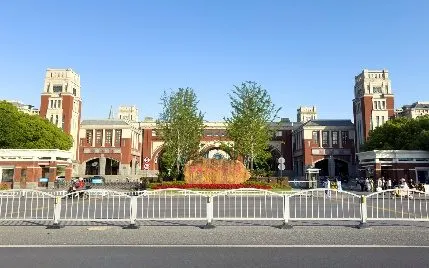
SUES has three campuses with a combined area of about 1 million m², and a total building floor area of roughly 739,000 m². The main campus, Songjiang, is a modern university town in south-western Shanghai, while Changning and Hongkou are closer to the city centre.
For research there is a National University Science Park, a nanotechnology centre, 14 provincial-level research platforms and specialised institutes of chemical engineering, industrial laser technology, and energy and environmental engineering. Since 2015, SUES faculty have won 167 grants from the National Natural Science Foundation and registered more than 2,700 patents, which shows that research here is taken seriously.
The international environment deserves a separate mention. SUES cooperates with universities abroad and has exchange and joint training programmes, and the international students from dozens of countries who arrive every year make the campus multilingual. This makes it easier for newcomers to settle in: there are plenty of other new arrivals around, and the administrative procedures have long been set up for students from abroad. That said, the city mostly speaks Chinese, so even on an English-taught programme it is worth bringing your Chinese up to at least an everyday level.
The main advantage of studying at SUES is Shanghai itself: the metro and an extensive transport network, an international atmosphere and access to the country's largest business market.
In 2026, an international applicant to an English-taught bachelor's programme at SUES needs to go through six steps.
For the 2026 cycle, the application deadline fell at the end of June, so it is sensible to gather your documents well in advance.
Seven forms of the name are in use in total. In Russian there is one standard rendering (used by education portals and Wikipedia) and two common literal translations, which are acceptable but are only translation variants. A frequent mistake is confusing SUES with other Shanghai universities. Shanghai University of Engineering Science is the official international name, SUES is the official abbreviation for rankings and correspondence, 上工大 (Shàng Gōng Dà) is the students' abbreviation in China, and 上海工程技术大学 (Shànghǎi Gōngchéng Jìshù Dàxué) is the original Chinese name.
It is short for Shanghai University of Engineering Science, the name of a public applied engineering university in Shanghai.
Yes. Since 2020 the university has run English-taught bachelor's programmes in economics and trade, textiles, artificial intelligence and pharmaceutical chemistry; master's programmes are also available in English.
For English-taught programmes: IELTS 5.5 or higher, TOEFL iBT 60 or higher, or the university's own test. For the Shanghai Government Scholarship, category B, HSK 4 with a score of 180 or more is recommended.
No, SUES is part of neither ‘211’ nor ‘Double First-Class’. However, it takes part in the Excellent Engineers Training programme and serves as a pilot ‘high-level applied university’ for Shanghai.
The price depends on the room type; current rates for international students are published on the official SUES website.
Yes. The national CSC scholarship and the Shanghai Government Scholarship can cover costs partly or in full.
The campuses are in Shanghai's Songjiang, Changning and Hongkou districts. The School of International Education is at 350 Xianxia Road, Changning District.
SUES (上海工程技术大学) is an applied engineering university. Shanghai University (上海大学) is a comprehensive Project 211 university. USST (上海理工大学) focuses on optics and instrument engineering.
You will need your school-leaving certificate with a transcript of grades and a translation, proof of English proficiency, a copy of your passport and a photo, as well as a study plan, a financial guarantee, an applicant's pledge and a police clearance certificate.
Every year the university admits around 1000 international students from more than 90 countries; over its history more than 4000 international students have been educated here.
Shanghai (上海) is the largest city in China and one of the world's financial centres. Students from more than 150 countries study here. The Bund with its futuristic views, the skyscrapers of Pudong and the old French Concession together create a special atmosphere for student life.
By enrolling in Shanghai, students gain access to strong universities and thousands of international companies offering internships. The city has 16 metro lines, the campuses are equipped to modern standards, and student life is active. For parents, it matters that healthcare here is of a high standard, there are international schools and hospitals and direct international flights, the city is safe, and every major university has a support service for international students.
You work with Nihao Study specialists. They will help you put together a portfolio and a set of documents, draw up a study plan and choose a university or college and a specialty that genuinely interest you.
We take care of every stage of admission, from choosing to enrolment
We will gather, prepare, certify and send your documents to the institution
We will show the admissions committee your strengths
We run training sessions and courses so you can prepare with more confidence
We will help you settle in at the start of your studies and keep moving forward
Nihao Study specialists select universities and colleges that match the applicant's goals and means. We make sure the teachers are practitioners and that the knowledge will be useful in your profession.
We examine curricula, talk to students and teachers and look at which specialties employers need, and use this information to select options for the applicant.
Advisers guide the applicant from the first consultation to enrolment, help build a plan and spot mistakes in time that could get in the way.
The cost of our support depends on the programme and the partner university; you'll get an exact quote after a free consultation.
Get a quoteA free 15-minute consultation: together we will choose a university or college and a programme that suit your goals and budget.
Apply with peace of mind: we handle the documents, deadlines and correspondence with admissions committees, and you save time and energy.
Don't want to wait for a call? Message us in the chat.
Message us in chat 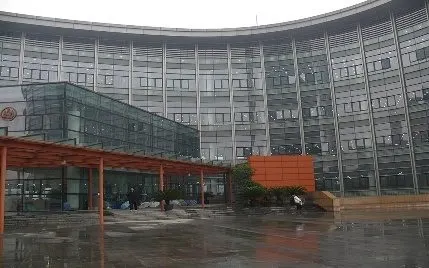
University · Shanghai