- Language courses
- English, Chinese
- Bachelor's Degree
- English, Chinese
- Master's Degree
- English, Chinese
- Doctoral (PhD) Programmes
- English, Chinese
- Accommodation from 75 ¥/day
SHU · 上海大学
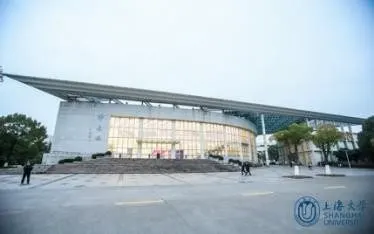
Shanghai University accepts international students on programmes in the following fields: business, engineering, medicine, it, arts, natural sciences. Choose the level and programme that suit your goals.
Chinese language study at the university — from a few weeks to a year or longer. Suitable for those starting from scratch or preparing for the HSK before entering a main programme.
self-funded · language programme
The first level of higher education: usually four years of study, specialised subjects, internships and a graduation thesis. It opens the way to working in your field and to a master's degree.
scholarship-funded
Advanced study after a bachelor's degree: research, applied projects and internships. It helps you become an expert in your chosen field and broaden your career opportunities.
self-funded
Shanghai University is located in Shanghai. Nihao Study consultants keep track of the deadlines and admission requirements of this university, and you can always check the most accurate and up-to-date information on its official website. In university rankings, it is ranked 41 in China and 536 worldwide.
Come for a face-to-face meeting: together we will go through the requirements, deadlines, documents and study options that suit you.

At the meeting we will look at your situation, tell you which documents to prepare and by when, talk about possible programmes and help you decide on the next step.
Shanghai University (SHU, 上海大学, pinyin Shànghǎi Dàxué) is a large public research university in Shanghai. There is one correct Russian form of the name; searches also turn up variants with a different word order and a common typo. Chinese students call the university 上大 (Shàngdà) for short.
It is important to understand the university's status precisely. SHU is one of the universities of the former national Project 211 and a participant in the national Double First-Class initiative, in which its designated discipline is mechanical engineering. SHU belongs neither to Project 985 nor to the C9 League. It is a strong comprehensive municipal university with a notable presence in engineering, materials science, computer science, and art and film.
This Nihao Study overview covers what matters to a 2026 applicant: SHU's status and rankings, programmes and admission requirements, scholarships, accommodation and how it differs from other Shanghai universities with which it is often confused.
The figures below are as of March 2026 and give a sense of SHU's current scale.
| Item | Data | Notes |
|---|---|---|
| Year founded | 1922 | The university traces its history back to the original Shanghai University |
| Campuses | Baoshan, Yanchang and Jiading | Schools and international programmes are spread across different sites |
| Area | about 1.8 million m² | The main campus is in Baoshan District |
| Full-time students | 37 663 | Includes bachelor's, master's, doctoral and foundation students |
| International degree students | 2 375 | Bachelor's, master's and doctoral students combined |
| Schools and colleges | 31 | The range spans the humanities to microelectronics and medicine |
| Full-time teaching staff | 3 469 | Including academicians of China's national academies |
| Bachelor's majors | 82 | Counts SHU's own internal degree programmes |
| ESI disciplines | 16 in the top 1%, 3 of them in the top 0.1% | Reflects research output and citation impact |
| Main campus address | 99 Shangda Road, Baoshan, Shanghai, 200444 | The university's official postal address |
The original Shanghai University was founded on 23 October 1922. The university itself describes it as the first regular university established and effectively led by the Communist Party of China. Prominent public figures taught and worked there in those years, and it became a centre of social sciences and political thought. The historical institution closed in 1927, so today's SHU has a largely symbolic link to it, while its organisational history is a different one.
In 1983 the city authorities re-established the university, bringing together six teaching units, including branches of East China Normal University, Fudan University and Shanghai International Studies University. SHU took its present form in May 1994, when Shanghai Science and Technology College, Shanghai University of Technology, Shanghai University of Science and Technology and the Shanghai University of that time merged.
The key figure in the new period was the scientist Qian Weichang. He headed Shanghai University of Technology from 1983, and from 1994 to 2010 led the merged SHU. This explains the university's dual nature: a historical memory rooted in the humanities combined with an applied engineering and science base inherited from several predecessors.
SHU appears in all the major global rankings, but its position depends on how each system does its sums. Research-focused rankings place the university higher than those that give great weight to international reputation and surveys. So it makes more sense to rely not on a single number but on several independent assessments.
| Ranking | Position | Comment |
|---|---|---|
| QS World University Rankings 2027 | 443rd | Assesses reputation, citations, international mix and employability |
| THE World University Rankings 2026 | 501–600 band | In engineering, SHU is in the 301–400 band |
| ARWU 2025 | 201–300 band | Reflects the university's publication and research activity |
| CWUR 2026 | 322nd worldwide | 271st for research in this edition |
| EduRank 2026 | 670th worldwide, 42nd in China | Takes into account publications, citations and the prominence of alumni |
In addition, THE places SHU's business and economics in the 251–300 band, and its engineering, natural sciences and social sciences in several bands between 301 and 400. This confirms that SHU is visible abroad as a research university, but the quality of an individual programme should be judged by its curriculum.
Mechanical engineering is the discipline that represents SHU in the ‘Double First-Class’ programme. At school level, this area brings together mechatronics, industrial automation, robotics, measurement systems and intelligent manufacturing. To train specialists in digital twins, equipment diagnostics and humanoid robots, the engineering school works with COMAC, Shanghai Electric and several robot manufacturers.
SHU has sixteen disciplines in the ESI top 1%, three of them in the top 0.1%. The university hosts national and provincial research platforms: laboratories, engineering centres and technology transfer bases. For an applicant, this opens the door to a research environment, but joining a specific lab must be arranged in advance with the faculty and the supervisor.
SHU's profile is broader than STEM. It includes the Shanghai Film Academy and the Shanghai Academy of Fine Arts, as well as schools of sociology, journalism, music, the humanities and cultural heritage. This breadth sets SHU apart from Shanghai's narrowly specialised technical universities: here you can build an interdisciplinary path combining design, media, computing and management.
The engineering cluster includes the schools of mechatronics and automation, materials science, mechanics, microelectronics, computer science, communication and information engineering, and environmental and chemical engineering. Bachelor's fields include materials science, industrial design, robotics, intelligent manufacturing, electronic information and computer science. In the full internal list, each major is shown with its code and the school it belongs to.
The humanities and social sciences cluster covers literature, history, law, foreign languages, sociology, journalism, economics, management and cultural heritage; the creative cluster covers film, fine art, music and design. An international applicant needs to check not only that a major appears in SHU's general catalogue, but also that it is open in the current international intake.
Another advantage of SHU is its joint international institutes. The university founded SILC Business School in 1994 together with the University of Technology Sydney; it runs business programmes with an international component. The partners of the Sino-French engineering institute UTSEUS are the universities of technology UTBM, UTC and UTT; its teaching is developing in mechanics, computing, materials and bioengineering.
In the current intake, bachelor's programmes come in three types: taught in Chinese, taught in English and bilingual. The list changes from year to year, so check it against SHU's current intake rather than outdated descriptions.
| Format | Sample programmes | Key requirement |
|---|---|---|
| Chinese-taught bachelor's programmes | humanities, economics, engineering and arts programmes | The required HSK level and a CSCA result |
| English-taught bachelor's programmes | international economics, finance, business at SILC | Proven English proficiency and a CSCA result |
| Bilingual programmes | environmental engineering, electrical engineering, civil engineering | Requirements in both languages plus subject preparation |
| Master's Degree | engineering, economics, management, humanities and creative fields | Bachelor's degree, relevant academic background, language; a supervisor's consent is often required |
| Chinese language courses | one-semester and one-year programmes | Applications go through the College of International Education |
The HSK requirements for Chinese-taught bachelor's programmes are as follows: HSK 4 with at least 180 points for Chinese Language and Teaching Chinese to Speakers of Other Languages; HSK 5 with at least 180 for programmes in engineering, natural sciences, economics, management and art; HSK 5 with at least 210 for humanities programmes. English-taught programmes usually expect IELTS Academic 6.5 or TOEFL iBT 90, unless the candidate has grounds for an exemption.
The widest choice of faculties is in Chinese. This route suits those who can already read textbooks, follow lectures and give written answers in their subject. The certificate on its own only makes you eligible for your application to be considered. If your HSK score barely reaches the minimum, set aside time in advance for academic vocabulary, note-taking and speaking. This is especially true for engineering, economics and the humanities: the language there quickly goes far beyond everyday Chinese.
An English-taught programme makes the start easier, but it does not make the campus environment fully English-speaking. You will still need Chinese in the dormitory and canteen, for everyday matters, when seeing a doctor, during internships and when talking to Chinese students. So it is more accurate to see this option as studying your subject in English alongside Chinese, rather than as a way to manage without the local language.
With bilingual and joint programmes, read the curriculum especially carefully. Find out what share of courses is taught in each language, who awards the degree, whether there is a compulsory period of study abroad, what the conditions are for obtaining a second degree, and whether trips are included in the stated cost. A partner university's degree is awarded only if the academic and language requirements of the specific programme are met.
When comparing faculties, start with your career goal, then look at the compulsory courses, and only after that pay attention to the university's overall ranking. For robotics and manufacturing, SHU's engineering schools are the natural choice. In media communication, film and art, the portfolio, the creative atmosphere and the specific school's requirements come to the fore. Those interested in international business should compare SHU's regular programmes with SILC's programmes separately: their language of instruction, campus and payment rules may differ.
SHU is worth putting on your shortlist if you want a large research university in Shanghai that is not tied to a single industry. Here you can combine engineering training with business, design, film, sociology or communication. This is especially valuable when your interests lie between disciplines: materials and industrial design, computing and media, digital manufacturing and management.
For an international student, SHU's main advantage is its several distinct learning environments. The main campus offers the familiar format of a classic university, the international schools offer joint teaching models, and the city of Shanghai around them gives access to a rich professional life. That said, the city itself is no substitute for work placements or internships. Before applying, it is worth asking the faculty which projects are open to international students, how lab places are allocated and in what language work with industry partners is conducted.
If, however, you want a small, cosy campus, a guaranteed single room or a fully English-speaking environment, SHU may not be the right fit. At a large university you have to sort out a lot on your own: faculties are spread across different sites, joint schools have their own rules, and a dormitory place depends on whether rooms are available. So base your decision on the specific programme and campus rather than on SHU's reputation as a whole.
To keep your admission strategy realistic, check yourself against three criteria. Academic: do your school or university subjects match the chosen field? Language: are you ready not just to show a certificate but actually to study in that language? Financial: will you have enough money for tuition, accommodation, food, insurance, flights, a visa and unexpected expenses? A scholarship can be treated as an additional competitive option, but it is safer to plan your main budget as if there were no funding decision yet.
SHU's tuition fee depends on the programme category: separate rates apply to Chinese-taught humanities programmes, Chinese-taught programmes in science, engineering, economics and management, art (where extra costs for materials are possible), and English-taught and bilingual programmes; SILC may have its own payment rules. The application fee is non-refundable. Self-funded students are usually required to pay a deposit within twenty working days of electronic admission: either half of the annual fee or the full amount. Check the exact amounts for the relevant academic year on the university's official website.
There are dormitories for international students on several campuses, but a place is not allocated automatically. You can book a room after admission, obtaining a student visa and meeting the deposit conditions. On Baoshan campus, international students are housed in buildings V, Z and W, which have 24-hour security and an advice service.
| Room type | In the room |
|---|---|
| Single | Bed, desk, wardrobe, air conditioning, internet, private bathroom |
| Double | Two beds and two desks, shared bathroom |
| Four-person room (few places of this type) | Bunk beds, air conditioning, internet, shared bathroom |
Electricity is charged on top of the basic rate, and the rates themselves are reviewed every year. It is best to check in advance whether the room type you want is available on your programme's campus.
SHU works with several types of financial support. The Chinese Government Scholarship (CSC) is available through bilateral and university tracks; Shanghai University's code as a host institution is 10280. For the 2026/27 intake, the university separately announced competitions for the Bilateral Program and the High Level Postgraduate Program.
The full city scholarship includes a monthly payment whose amount depends on the level of study: bachelor's, master's or doctoral. It is a competition, not an automatic benefit, so it is best to prepare well in advance.
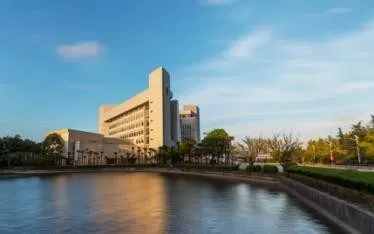
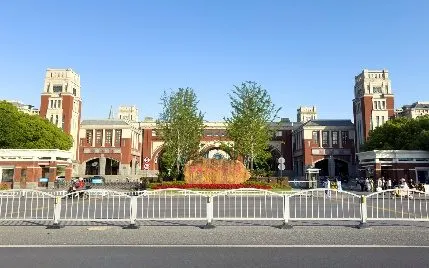
Baoshan is the main campus: it accounts for most of the university's grounds and is home to most of the schools, research institutes and shared teaching facilities. Yanchang campus, located in central Jing'an District, focuses on research and innovation facilities, while Jiading hosts the international joint schools and the university's science park projects.
SHU's library consists of four buildings on three campuses. Its holdings include 74 electronic databases, more than 9 million e-books and 4.586 million printed books. The grounds also have museum spaces, sports facilities, canteens, clinics and student support services.
The easiest way to reach the main campus is by metro: Line 7, Shanghai University station. The registration venue and address depend on the specific programme, so plan your route based on the admission letter, not just the university's name.
The English name Shanghai University sounds very generic, and in searches it is often mixed up with other, entirely separate universities. Go by the Chinese name and the abbreviation.
| University and Chinese name | Type | Main focus |
|---|---|---|
| Shanghai University, SHU, 上海大学 | Public comprehensive university, member of Project 211 and ‘Double First-Class’ | Engineering, computer science, materials, film, art, sociology |
| University of Shanghai for Science and Technology, 上海理工大学 | Separate university of technology | Engineering, energy, optics, management |
| Shanghai Jiao Tong University, 上海交通大学 | Separate research university, member of the C9 League | Engineering, medicine, natural sciences, business |
| Shanghai International Studies University, 上海外国语大学 | Separate specialised university | Foreign languages, translation, international relations |
The reliable markers of the right university are 上海大学 and SHU. If the name contains Science and Technology, Jiao Tong or International Studies, it is a different university. When comparing programmes, do not rely on a shortened translation from search results.
Shanghai University is the official international name, and SHU is its international abbreviation. Several Russian renderings circulate; the standard one simply means ‘Shanghai University’, while the others are typos, awkward word order or overly literal translations. 上大 (Shàngdà) is how Chinese students shorten 上海大学 (Shànghǎi Dàxué).
It is a public comprehensive research university in Shanghai. The main campus is in Baoshan District, at 99 Shangda Road; the other campuses are in Jing'an and Jiading districts.
Yes. According to the university and the city authorities, SHU is one of the Project 211 universities and takes part in the Double First-Class programme; its national-level discipline is mechanical engineering. SHU is not part of Project 985.
Yes, some bachelor's and master's programmes are taught in English, mainly in the international schools. Unless an applicant is exempt from the language requirement, the usual benchmark is IELTS Academic 6.5 or TOEFL iBT 90. The language of instruction needs to be checked for each programme separately.
It all depends on the field. For bachelor's programmes in Chinese language, HSK 4 with 180 points is enough; many programmes in engineering, economics, management and art require HSK 5 with 180 points, and humanities programmes HSK 5 with 210 points. Check the current admissions brochure and the HSK exam schedule.
The tuition fee depends on the programme category, and the price of a dormitory on the room type; electricity is paid separately. The university itself publishes the current amounts for each academic year, so check its official website.
Yes. SHU accepts Chinese Government Scholarship students, including through separate CSC tracks. The university's code in the CSC system is 10280. The scholarship is awarded competitively.
Yes. Starting with the 2026/27 admissions round, international bachelor's applicants must submit a China Scholastic Competency Assessment report. Which exams to take depends on the chosen programme.
Yes. The university's official international portal links to the SHU HSK Test Center. In addition, some scholarship guidelines allow a recommendation from the test centre if study at SHU or its Confucius Institute is confirmed. Specific session dates need to be checked separately.
Metro Line 7 runs to Baoshan campus; get off at Shanghai University station. Register at the campus stated in your admission letter, as SHU's programmes are spread across three campuses: Baoshan, Yanchang and Jiading.
As a rule, these are a passport, photo, school-leaving certificate with transcript, language certificate, CSCA report, police clearance certificate, study plan and a document confirming financial support. Documents in languages other than Chinese and English are submitted with a certified translation. Check the exact list before you apply.
Shanghai (上海) is the largest city in China and one of the world's financial centres. Students from more than 150 countries study here. The Bund with its futuristic views, the skyscrapers of Pudong and the old French Concession together create a special atmosphere for student life.
By enrolling in Shanghai, students gain access to strong universities and thousands of international companies offering internships. The city has 16 metro lines, the campuses are equipped to modern standards, and student life is active. For parents, it matters that healthcare here is of a high standard, there are international schools and hospitals and direct international flights, the city is safe, and every major university has a support service for international students.
You work with Nihao Study specialists. They will help you put together a portfolio and a set of documents, draw up a study plan and choose a university or college and a specialty that genuinely interest you.
We take care of every stage of admission, from choosing to enrolment
We will gather, prepare, certify and send your documents to the institution
We will show the admissions committee your strengths
We run training sessions and courses so you can prepare with more confidence
We will help you settle in at the start of your studies and keep moving forward
Nihao Study specialists select universities and colleges that match the applicant's goals and means. We make sure the teachers are practitioners and that the knowledge will be useful in your profession.
We examine curricula, talk to students and teachers and look at which specialties employers need, and use this information to select options for the applicant.
Advisers guide the applicant from the first consultation to enrolment, help build a plan and spot mistakes in time that could get in the way.
The cost of our support depends on the programme and the partner university; you'll get an exact quote after a free consultation.
Get a quoteA free 15-minute consultation: together we will choose a university or college and a programme that suit your goals and budget.
Apply with peace of mind: we handle the documents, deadlines and correspondence with admissions committees, and you save time and energy.
Don't want to wait for a call? Message us in the chat.
Message us in chat 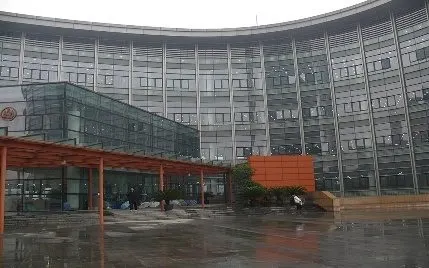
University · Shanghai