
- Language courses
- English, Chinese
- Bachelor's Degree
- English, Chinese
- Master's Degree
- English, Chinese
- Doctoral (PhD) Programmes
- English, Chinese
- Accommodation from 75 ¥/day
上海师范大学
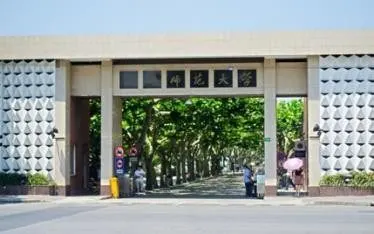
Shanghai Normal University accepts international students on programmes in the following fields: business, engineering, medicine, education, economics. Choose the level and programme that suit your goals.
Chinese language study at the university — from a few weeks to a year or longer. Suitable for those starting from scratch or preparing for the HSK before entering a main programme.
self-funded · language programme
The first level of higher education: usually four years of study, specialised subjects, internships and a graduation thesis. It opens the way to working in your field and to a master's degree.
self-funded
Advanced study after a bachelor's degree: research, applied projects and internships. It helps you become an expert in your chosen field and broaden your career opportunities.
self-funded
Shanghai Normal University is located in Shanghai. Nihao Study consultants keep track of the deadlines and admission requirements of this university, and you can always check the most accurate and up-to-date information on its official website.
Come for a face-to-face meeting: together we will go through the requirements, deadlines, documents and study options that suit you.

At the meeting we will look at your situation, tell you which documents to prepare and by when, talk about possible programmes and help you decide on the next step.
Shanghai Normal University (SHNU, 上海师范大学) is a Chinese public university in Shanghai. It was originally founded to train teachers, but today it is a comprehensive research university with programmes in the humanities, social sciences, natural sciences and engineering.
Below, Nihao Study has gathered information for 2026: SHNU's positions in rankings, campuses, dormitories, scholarships and admission requirements.


Studying in Shanghai opens up wide opportunities for international students, and SHNU can be a first step towards an international career. The university was founded in 1954 and has since trained hundreds of thousands of specialists. About 70% of Shanghai's school principals and leading teachers are its graduates.
Key figures:
Before applying, it is useful for international students to see where the university stands globally. SHNU maintains its positions in global academic rankings. Teaching at the university is supported by the Shanghai Municipal Government and the PRC Ministry of Education, notably through the 111 Project and other programmes.
SHNU's positions in global rankings for 2025-2026 are summarised in the table:
| Ranking | Ranking worldwide | Position in Asia (China) |
|---|---|---|
| QS World University Rankings | 1401+ | 375 (Asia) |
| CWUR World University Rankings 2025 | 902 | 156 (in China) |
| Academic Ranking of World Universities (ARWU) | 501-600 | Top 120 (in China) |
| Times Higher Education (THE) | 1001+ | No data |
According to Essential Science Indicators (ESI), several of the university's disciplines are in the global top 1% — for example, mathematics, chemistry, engineering and materials science.
The university occupies two large campuses with a total area of 1.53–1.62 million square metres.
The library system is one of SHNU's strengths. The two campuses have two central libraries with more than 3.25–3.5 million printed books, and readers have access to hundreds of electronic databases. The university library is a national centre for the protection of ancient books; its collections include rare manuscripts, old Chinese scrolls and chronicles — more than 180,000 antique volumes in total.
International students at SHNU can live in the International Students Dormitory right on campus. Living on university grounds is safe and, by the standards of expensive Shanghai, good value.
There is a choice of double rooms (Double Room) and single rooms (Single Room). Fees are charged per night; if you pay for the whole semester at once (about 120 days), a noticeable discount applies (“Promotion price”). On check-in, a refundable cash deposit for keys and property is also taken. It is best to check exact rates on the university's official website.
Each room has a bed, air conditioning, a private bathroom with a shower, a wardrobe, a desk, a fridge and internet (paid separately). Shared kitchens and laundry rooms are on each floor. Each student gets 20 kWh of electricity free every month. Budget in advance for food and personal expenses in Shanghai.
SHNU is an official partner of many Chinese government scholarship programmes. International students can apply for grants covering tuition and accommodation fully or partially.
Applications for the 2026 academic year are submitted online; scholarship applications usually close between late March and late May.
What candidates need:
SHNU suits those looking for a balance between quality of education, international opportunities and cost. In 2026 the university offers a solid academic base, scholarship programmes and convenient campuses in a major global metropolis. If you prepare your documents in advance — especially your HSK and IELTS certificates — your chances of a scholarship and admission will rise considerably.
Below are answers to the questions applicants ask most often: about admission rules, moving to China and life at SHNU.
No, flawless Chinese is not required: SHNU has programmes taught entirely in English. This year SHNU is admitting students to English-taught bachelor's and master's programmes; one example is Linguistics and Applied Linguistics.
For English-taught programmes, international applicants need IELTS 5.5 or higher or TOEFL iBT 85 or higher. Those choosing Chinese-taught programmes (for example business, art or engineering) will need a valid HSK 4 with a passing score of 180-210 or more (the threshold depends on the faculty's requirements) or HSK 5.
Deadlines depend on the programme and how your studies are funded. For applicants for the Shanghai Government Scholarship (SGS) or the Chinese Government Scholarship (CSC), applications usually close on 30 May of the year of admission. Self-funded students can apply later for the autumn semester: their deadline is extended to 30 June. A non-refundable application fee is charged when applying through the university's online portal.
SHNU has two large campuses, and they differ noticeably in location and pace of life. The historic and main one is Xuhui Campus: it is in the city centre, with easy access to the metro, shopping centres and all city amenities. The vast majority of international students study and live here. The second campus, Fengxian Campus, occupies a large out-of-town site in the south, roughly 40-50 kilometres from central Shanghai. The university bus between the campuses takes 40 to 90 minutes. At Fengxian, away from the bustle of the city, it is mainly Chinese first- and second-year students who study.
Chinese immigration law allows international students to work, but only if the official procedure is strictly followed. A Residence Permit for Study does not in itself give the right to work. To do an internship or a part-time job (Work-Study) legally, a student first obtains the university's consent and then applies to the local exit-entry bureau (PSB), which adds an ‘Internship Annotation’ (加注) to the passport. Working hours are strictly limited: no more than 8 hours a week during term and up to 16 hours a week during long holidays. Illegal work, such as the popular private English lessons paid in cash, is strictly prohibited: it is one of the main reasons international students are expelled and immediately deported.
Health insurance is compulsory. Under the rules of China's Ministry of Education, every international student coming to China for more than 6 months must buy a standard group comprehensive medical insurance policy. The university does not accept individual policies bought at home before departure. Such a policy is usually provided by the state-owned company Ping An and is paid annually. Without insurance paid on time, a student will not be allowed to complete final registration on campus.
Shanghai (上海) is the largest city in China and one of the world's financial centres. Students from more than 150 countries study here. The Bund with its futuristic views, the skyscrapers of Pudong and the old French Concession together create a special atmosphere for student life.
By enrolling in Shanghai, students gain access to strong universities and thousands of international companies offering internships. The city has 16 metro lines, the campuses are equipped to modern standards, and student life is active. For parents, it matters that healthcare here is of a high standard, there are international schools and hospitals and direct international flights, the city is safe, and every major university has a support service for international students.
You work with Nihao Study specialists. They will help you put together a portfolio and a set of documents, draw up a study plan and choose a university or college and a specialty that genuinely interest you.
We take care of every stage of admission, from choosing to enrolment
We will gather, prepare, certify and send your documents to the institution
We will show the admissions committee your strengths
We run training sessions and courses so you can prepare with more confidence
We will help you settle in at the start of your studies and keep moving forward
Nihao Study specialists select universities and colleges that match the applicant's goals and means. We make sure the teachers are practitioners and that the knowledge will be useful in your profession.
We examine curricula, talk to students and teachers and look at which specialties employers need, and use this information to select options for the applicant.
Advisers guide the applicant from the first consultation to enrolment, help build a plan and spot mistakes in time that could get in the way.
The cost of our support depends on the programme and the partner university; you'll get an exact quote after a free consultation.
Get a quoteA free 15-minute consultation: together we will choose a university or college and a programme that suit your goals and budget.
Apply with peace of mind: we handle the documents, deadlines and correspondence with admissions committees, and you save time and energy.
Don't want to wait for a call? Message us in the chat.
Message us in chat 

University · Shanghai