- Language courses
- English, Chinese
- Bachelor's Degree
- English, Chinese
- Master's Degree
- English, Chinese
- Doctoral (PhD) Programmes
- English, Chinese
- Accommodation from 75 ¥/day
上海交通大学
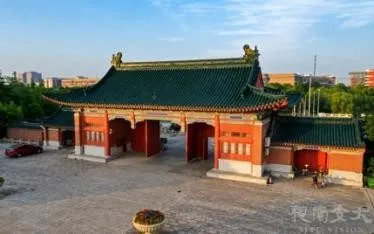
Shanghai Jiao Tong University accepts international students on programmes in the following fields: business, engineering, medicine, education, economics. Choose the level and programme that suit your goals.
Chinese language study at the university — from a few weeks to a year or longer. Suitable for those starting from scratch or preparing for the HSK before entering a main programme.
self-funded · language programme
Cost: 21 000 ¥/year
The first level of higher education: usually four years of study, specialised subjects, internships and a graduation thesis. It opens the way to working in your field and to a master's degree.
self-funded
Advanced study after a bachelor's degree: research, applied projects and internships. It helps you become an expert in your chosen field and broaden your career opportunities.
self-funded
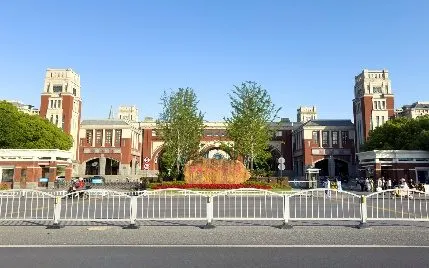
Shanghai Jiao Tong University is located in Shanghai. Nihao Study consultants keep track of the deadlines and admission requirements of this university, and you can always check the most accurate and up-to-date information on its official website. In university rankings, it is ranked 4 in China and 47 worldwide.
Come for a face-to-face meeting: together we will go through the requirements, deadlines, documents and study options that suit you.

At the meeting we will look at your situation, tell you which documents to prepare and by when, talk about possible programmes and help you decide on the next step.
Shanghai Jiao Tong University (SJTU, 上海交通大学) is a public research university in Shanghai under the Chinese Ministry of Education. Russian texts render the name in several ways, with different transliterations of 'Jiao Tong' and different word orders. Chinese students simply call it Jiaoda (交大), and the full name in pinyin is Shànghǎi Jiāotōng Dàxué.
The university traces its history back to 1896 and is now one of the country's leading comprehensive universities. SJTU took part in Projects 211 and 985, is a member of the C9 League and is included in the national Double First-Class (双一流) programme. It should not be confused with Xi'an Jiaotong University (XJTU): this page is specifically about SJTU in Shanghai.
In this Nihao Study overview for 2026 applicants you will find SJTU's statuses and rankings, programmes in Chinese and English, dormitories, scholarships, HSK requirements and the main differences between SJTU and XJTU.
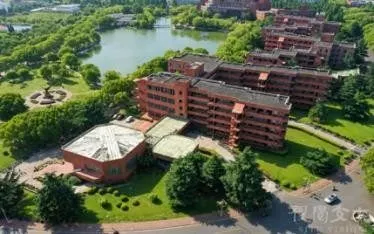

SJTU's figures should be read with an eye to how each source counts them. The university includes a wide range of learners in its statistics, so its total enrolment is higher than in the questionnaires of individual rankings.
| Item | Value |
|---|---|
| Year founded | 1896 |
| Students | Over 61,100 (university data) |
| International students | Over 2,800 |
| Teaching staff | 4,130 people |
| Academicians | 59 members of the Chinese Academy of Engineering and the Chinese Academy of Sciences |
| Strong fields according to ESI | In 2025, 21 disciplines in the global top 1 per cent |
| Main address | 800 Dongchuan Road, Minhang District, Shanghai, 200240 |
Another indicator of international openness: about 45 per cent of bachelor's students go abroad on short-term exchange programmes.
The university began as Nanyang Public School, founded by Sheng Xuanhuai in 1896. In the early years of the 20th century it developed engineering training: a railway programme opened in 1906, electrical engineering in 1908 and maritime studies in 1909. Even then the profile took shape that later made the university known for mechanical engineering, power engineering and shipbuilding.
In 1921 the Shanghai branch merged with institutions in Tangshan and Beijing to form a single Jiao Tong University. In 1928 the university took the name National Jiao Tong University; during the war years part of its operations moved to Chongqing. When the sector-based reorganisation took place in 1952, the strong fields — mechanical engineering, electrical engineering and shipbuilding — remained in Shanghai.
What matters most for applicants is the events of 1955, when a large part of the university was moved to the west of the country. In 1957 the university existed as two divisions — Shanghai and Xi'an — and in 1959 each became a separate university. Hence the two modern universities: Shanghai Jiao Tong University (SJTU) in Shanghai and Xi'an Jiaotong University (XJTU) in Xi'an. The fact that the Xi'an university received its own name in 1959 is also reflected in XJTU's official history.
In 1985 the Minhang campus opened. SJTU joined Project 211 in 1995, and in 1999 it merged with Shanghai Agricultural College and joined Project 985. Since 2005 the university has included the former Shanghai Second Medical University, on which the SJTU School of Medicine was built.
Global rankings agree that SJTU is of a high standard, but each looks at the university from its own angle. QS gives great weight to reputation surveys and international indicators; THE combines assessments of teaching, research environment and citations; ARWU focuses primarily on academic output; CWUR and EduRank have their own bibliometric methodologies.
| Ranking | Position and edition |
|---|---|
| QS World University Rankings | 36th, 2027 edition (published in 2026) |
| Times Higher Education | 40th, World University Rankings 2026 |
| Academic Ranking of World Universities | 30th, ARWU 2025 |
| CWUR | 2025 edition: 61st in the world, 4th in China |
| EduRank | 2026: 130th in the world, 5th in China, 1st in Shanghai |
Positions 30, 40, 47, 61 and 130 do not contradict one another — they simply show how much the result depends on methodology. When choosing a major, subject rankings are more useful. In THE 2026, SJTU ranks 24th in engineering, 25th in computer science (shared with other universities) and 28th in business and economics. In addition, in the QS 2025 subject rankings, 23 more of the university's disciplines made the top 50.
Marine engineering grew out of the university's historical technical specialisation. In the ShanghaiRanking 2025 subject rankings, SJTU is 1st in the world for Marine/Ocean Engineering and 4th for Oceanography. So the university is worth considering for anyone drawn to ship design, offshore structures, hydrodynamics, power plants and infrastructure.
The second field combines engineering approaches, biology and clinical practice. In the ShanghaiRanking 2025 subject edition, SJTU ranks 1st in the world for Biomedical Engineering. The medical school was formed from several long-established Shanghai medical institutions and became part of SJTU in 2005. Major hospitals are affiliated with the university, including Ruijin, Renji and Xinhua.
The technology cluster is the third field. In the ShanghaiRanking 2025 subject rankings, SJTU is 2nd for Energy Science and Engineering, 3rd for Nanoscience and Nanotechnology and 5th for Computer Science and Engineering. In ESI, engineering and materials science are in the top 0.01 per cent. According to the university itself, in 2024 it had 1,553 projects funded by the National Natural Science Foundation of China and 25,711 SCI publications. This scale matters especially for master's and doctoral students: for them, what counts is not just the programme but also the laboratory, the supervisor and the equipment they will be able to work with.
SJTU is not just an engineering university but a fully fledged comprehensive one. It covers medicine and life sciences, engineering, natural sciences, economics and management, law, the humanities, design, agriculture and international programmes.
On the SJTU website, the words School and College denote a unit of the university, not a separate institution — for example, the School of Materials Science and Engineering is part of SJTU. It is best to check the school, campus, language of instruction, degree and curriculum against a single source, ideally the catalogue for the relevant intake.
Chinese-taught bachelor's programmes usually last 4 years and cover 10 broad areas: engineering, natural sciences, medicine, economics, management, law, humanities, education, arts and agriculture. Admission to medical programmes is handled separately by the School of Medicine.
The Engineering Cluster is taught in English: it includes the Global College and engineering schools in materials science, electrical engineering, automation, computer science and mechanical engineering. The English-taught Civil Engineering track and the Global Institute of Future Technology (GIFT) are announced separately. At GIFT you can choose the interdisciplinary bachelor's programme in Sustainable Energy or Health Science and Technology.
| Level | Available formats |
|---|---|
| Bachelor's in Chinese | SJTU's main majors, usually 4 years |
| Bachelor's in English | Engineering Cluster, Civil Engineering, GIFT |
| Master's Degree | Over 100 English- and Chinese-taught programmes in a single graduate admission round |
| Doctoral (PhD) Programmes | 56 first-level disciplines (data as of October 2025) |
| Chinese language courses | Full-time semester; in the general track for autumn 2026, 20 academic hours a week |
The published international range includes no main degree programmes taught in Russian, so you will have to study in Chinese or English.
Fees depend on the level, language and specific programme; the figures published by SJTU come from the official 2026 admissions announcements. Check the current tuition, application fee and insurance amounts against these announcements on the university website. Only pay using bank details received through the university's official channels.
In the 2026 intake, the price of a dormitory place depends on the campus and room type. The guide for international students lists double rooms in Minhang, as well as single options with a shared or private bathroom. Rooms have air conditioning and basic furniture and are connected to the campus network; there is a private bathroom and hot water 24 hours a day.
Dormitory places are booked after admission, within the deadlines set by the university. Budget separately for food, transport, phone, the accommodation deposit and personal expenses. Shanghai is one of China's more expensive cities, so it is better to compare the cost of study and living before you apply, not after the offer arrives.
International students can apply for the China Government Scholarship, the Shanghai Government Scholarship and SJTU's own scholarships. For bachelor's students, the first-category university scholarship covers tuition and insurance and also includes monthly accommodation and living allowances. The second-category scholarship covers half the tuition, an accommodation subsidy and insurance; the third covers a quarter of the tuition and insurance.
International master's students can apply for CSC, SGS, the SJTU Scholarship, tuition waivers and school scholarships; doctoral students also have the SJTU Fellowship. In a CSC Type B application through the university, SJTU's code is 10248. You may apply through only one channel: either through SJTU or through a Chinese diplomatic mission — an embassy or consulate.
It is best to prepare for SJTU in advance. A strong candidate usually comes with high grades, a language certificate, a well-thought-out personal statement and a clear academic plan.
The international student admissions office is in Minhang, at 800 Dongchuan Road. The historic Xuhui campus is at 1954 Huashan Road; it is easy to reach by metro — Jiao Tong University station, Lines 10 and 11. You can get to Minhang on Line 15 to Zizhu Hi-Tech Park station. SJTU's official transport guide also describes another option — Line 5 with a change to a bus.
Minhang has modern teaching buildings, laboratories, libraries, sports grounds and most of the infrastructure for students' everyday life. Xuhui is closer to central Shanghai, and the university's historical atmosphere is stronger there. The SJTU History Museum opened in 1996 for the university's centenary; in 2021 a new 2,350-square-metre venue opened in Minhang. There are many exhibits: over 1,200 photos and documents plus more than 400 models.
Through their university jAccount, students use email, Wi-Fi and cloud services, register for courses and access the library. Before choosing accommodation, find out which campus your programme is on: commuting daily between Minhang and Xuhui changes your schedule considerably.
| University and Chinese name | City and status | What to check |
|---|---|---|
| Shanghai Jiao Tong University, SJTU, 上海交通大学 | Shanghai; national research university | Engineering and medicine, C9, Projects 985 and 211 |
| Xi'an Jiaotong University, XJTU, 西安交通大学 | Xi'an; independent national university | Separated from the Shanghai division in 1959 |
| Shanghai University, SHU, 上海大学 | Shanghai; public university under municipal administration | Different name and leadership; abbreviated SHU |
| Beijing Jiaotong University, BJTU, 北京交通大学 | Beijing; national transport university | A separate historical line; strong in railways and transport systems |
It is easy to check: SJTU = Shanghai = 上海交通大学, and XJTU = Xi'an = 西安交通大学. The shared word Jiaotong points to common historical roots but does not mean they are one university today.
In this text the main form is the Russian for ‘Shanghai Jiao Tong University’. Other transliterations of Jiao Tong are also common, but one of them renders the pronunciation less accurately. A Russian version reading ‘University Shanghai Jiao Tong’ copies the English word order. Shanghai Jiao Tong University is the official international name, SJTU is the generally accepted international abbreviation, and Jiaoda (交大) is the short Chinese name. The original is 上海交通大学, in pinyin Shànghǎi Jiāotōng Dàxué.
It is a public research university under China's Ministry of Education. It took part in the 985 and 211 projects and is now a member of the C9 League and Double First-Class. Its high standing is confirmed by various rankings, for example 40th place in THE 2026 and 30th place in ARWU 2025.
International programmes are taught in Chinese or English. Bachelor's study in English is available in the Engineering Cluster and a number of other programmes, and the catalogue of graduate programmes includes options in both languages. The published list has no full degree in Russian.
For the 2026 intake, Chinese-taught bachelor's programmes required HSK 5 with at least 200 points or HSK 6 with at least 180 points; in both cases at least 60 had to be scored on the writing section. It is worth double-checking the terms for your intake and planning the exam in advance using the HSK calendar.
Yes. Its participation in the 211 and 985 projects is recorded in SJTU's official history, and the Ministry of Education list includes the university among the Double First-Class participants.
The price depends on the campus and the room type. See SJTU's official announcements for the exact terms for your programme and campus.
Yes, if you pass a separate competition. Graduate applications through the Type B channel use the SJTU code 10248. You cannot apply through both channels at the same time.
Yes. For autumn 2026, SJTU announced an in-person semester-long Chinese course: 20 academic hours a week, with the general group divided into six levels. Registration for the HSK exam itself is separate, so check the test schedule.
The main Minhang campus is at 800 Dongchuan Road; according to the city, the nearest metro station is Zizhu Hi-Tech Park (Line 15). The historic Xuhui campus is at 1954 Huashan Road, next to Jiao Tong University station on Lines 10 and 11.
SJTU is a Shanghai university whose Chinese name is 上海交通大学. Since 1959, XJTU, located in Xi'an, has been a separate university. Shanghai University is also in Shanghai, but its Chinese name is written 上海大学 and its abbreviation is SHU.
The core set: passport, school-leaving certificate or confirmation of expected graduation, school transcript, language test results and any exam documents the programme requires. For the 2026 intake, SJTU also asked for the CSCA, and the result could be submitted after the preliminary selection, by a set date. Check the final list in the terms of your intake.
Shanghai (上海) is the largest city in China and one of the world's financial centres. Students from more than 150 countries study here. The Bund with its futuristic views, the skyscrapers of Pudong and the old French Concession together create a special atmosphere for student life.
By enrolling in Shanghai, students gain access to strong universities and thousands of international companies offering internships. The city has 16 metro lines, the campuses are equipped to modern standards, and student life is active. For parents, it matters that healthcare here is of a high standard, there are international schools and hospitals and direct international flights, the city is safe, and every major university has a support service for international students.
You work with Nihao Study specialists. They will help you put together a portfolio and a set of documents, draw up a study plan and choose a university or college and a specialty that genuinely interest you.
We take care of every stage of admission, from choosing to enrolment
We will gather, prepare, certify and send your documents to the institution
We will show the admissions committee your strengths
We run training sessions and courses so you can prepare with more confidence
We will help you settle in at the start of your studies and keep moving forward
Nihao Study specialists select universities and colleges that match the applicant's goals and means. We make sure the teachers are practitioners and that the knowledge will be useful in your profession.
We examine curricula, talk to students and teachers and look at which specialties employers need, and use this information to select options for the applicant.
Advisers guide the applicant from the first consultation to enrolment, help build a plan and spot mistakes in time that could get in the way.
The cost of our support depends on the programme and the partner university; you'll get an exact quote after a free consultation.
Get a quoteA free 15-minute consultation: together we will choose a university or college and a programme that suit your goals and budget.
Apply with peace of mind: we handle the documents, deadlines and correspondence with admissions committees, and you save time and energy.
Don't want to wait for a call? Message us in the chat.
Message us in chat 
University · Shanghai