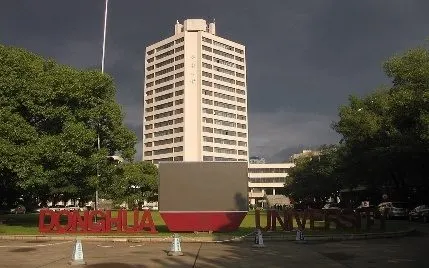
- Language courses
- English, Chinese
- Bachelor's Degree
- English, Chinese
- Master's Degree
- English, Chinese
- Doctoral (PhD) Programmes
- English, Chinese
- Accommodation from 75 ¥/day
上海电机学院
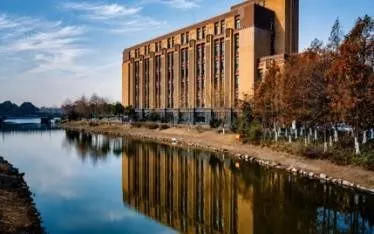
Shanghai Dianji University accepts international students on programmes in the following fields: business, engineering, education, economics, it. Choose the level and programme that suit your goals.
Chinese language study at the university — from a few weeks to a year or longer. Suitable for those starting from scratch or preparing for the HSK before entering a main programme.
self-funded · language programme
The first level of higher education: usually four years of study, specialised subjects, internships and a graduation thesis. It opens the way to working in your field and to a master's degree.
self-funded
Advanced study after a bachelor's degree: research, applied projects and internships. It helps you become an expert in your chosen field and broaden your career opportunities.
self-funded
Shanghai Dianji University is located in Shanghai. Nihao Study consultants keep track of the deadlines and admission requirements of this university, and you can always check the most accurate and up-to-date information on its official website. In university rankings, it is ranked 429 in China and 3728 worldwide.
Come for a face-to-face meeting: together we will go through the requirements, deadlines, documents and study options that suit you.

At the meeting we will look at your situation, tell you which documents to prepare and by when, talk about possible programmes and help you decide on the next step.
Shanghai Dianji University (SDJU, 上海电机学院) is a public university in Shanghai with an applied engineering profile. In Chinese the name is pronounced Shànghǎi Diànjī Xuéyuàn, and the official English styling is Shanghai DianJi University. The university belongs to the government of Shanghai as a municipality under the central government; it is managed by the Shanghai Municipal Education Commission, and the industrial group Shanghai Electric is involved in supporting it. The university's charter records only two names: the Chinese 上海电机学院 and the English Shanghai DianJi University.
Names under which people search for the university include Shanghai Dianji University and SDJU, Russian forms meaning 'Dianji University in Shanghai' and 'Shanghai Dianji University' (with a variant transliteration), simply 'Dianji', and the incorrect Chinese 上海电机大学. The last of these must not be used in an application or in document translations. The official Chinese name ends in 学院, even though the international English name uses the word University. That said, SDJU's bachelor's and master's programmes are genuine: the university runs them and awards diplomas and degrees for them.
SDJU did not take part in the historic Projects 211 and 985 and is not in the national Double First-Class (双一流) programme. In the second cycle of 双一流 the official list includes several Shanghai universities, but SDJU is not among them. It is more accurate to see it as a municipal university of applied sciences closely linked to industry rather than a national research flagship. In this overview Nihao Study has gathered what will be useful to a 2026 applicant: the university's status and rankings, its exact name, programmes, fees, accommodation, scholarships and admission steps.
| Item | Value according to sources | What to check |
|---|---|---|
| Year founded | 1953 | The university's roots lie in training specialists for the electrical engineering industry |
| Type | Public municipal university | The university is neither a private college nor a campus of Shanghai University |
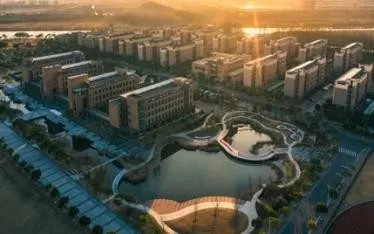
| Main campus | Lingang, 300 Shuihua Road, Pudong, Shanghai, 201306 | The international school is located here |
| Students | Over 15,000 full-time students, including more than 2000 master's students (data as of September 2025) | This figure covers different levels of study |
| International students | Over 200 a year, from more than 40 countries and regions | Both degree and non-degree programmes are available |
| Bachelor's Degree | 46 degree programmes (data as of September 2025) | Engineering forms the core, but there are also business, languages and design |
| Teaching staff | Over 900 full-time teaching staff (as of September 2025) | More than half of them held a doctorate |
| Language requirement | HSK 4 with at least 180 points for Chinese-taught bachelor's programmes | English-taught programmes have their own requirements |
The figures above were published at different times — the dates are given in the original sources. This matters: the university's structure changes, and the International Education School has already issued a separate admissions notice for 2026. Check the terms of your intake against the latest edition of the rules.
The university traces its history back to 1953, when Shanghai Electrical Appliance Manufacturing School was founded. It was established by the former First Ministry of Machine Building, with teachers and students from several Shanghai institutions taking part. The school later changed its name several times: Shanghai Electrical Machinery Manufacturing School, then Shanghai Electrical Machinery Manufacturing Technology College and, finally, Shanghai Electrical Machinery Technology College. This path explains the applied character of SDJU — a comparison with a classic comprehensive research university is less apt here.
In 1985 the institution was included in the first national group that piloted a five-year technical programme. In 2002 it became a key vocational college under national development. In 2004 Shanghai Mechanical and Electrical Industry School and Shanghai Mechanical and Electrical Industry Staff University were merged into it, and in September of that year it gained the status of a regular undergraduate institution and a new name — 上海电机学院.
The next stage was master's programmes. In 2011 SDJU joined a pilot project for training professional master's students to meet special national needs, and in 2020 it was officially granted the right to award master's degrees. So translating 学院 as “institute” is historically understandable, but the university's current status is broader than a college: it offers both bachelor's and master's programmes.
| Ranking or programme | Position | Comment |
|---|---|---|
| ShanghaiRanking BCUR 2026 | China: 332nd | Compares universities within China; this is not the global ARWU |
| EduRank 2026 | China: 580th; Shanghai: 30th out of 35 | The assessment is based on bibliometrics and web indicators |
| EduRank 2026 | Asia: 3165th; world: 8184th | This is not QS, THE or ARWU — do not mix them up |
| Double First-Class | Not included in the official second-round list | The university does not have 双一流 (Double First-Class) status |
Some SDJU profiles fill the empty THE, CWUR, U.S. News and ESI fields with random numbers — this is an error. The university's page on ShanghaiRanking reflects the Best Chinese Universities Ranking, not a position in the global ARWU. The admission rate on EduRank is an estimate, so an invented acceptance rate should not be used to judge your chances of admission.
In this case, the programme, language of instruction, industrial placements and campus matter more to an applicant than the ranking. SDJU focuses on advanced manufacturing and the modern service sector, and engineering disciplines form the core of its profile. If a scholarship or employer formally requires 211, 985 or 双一流 status, choose a university from the official list and do not try to substitute SDJU's regional achievements for that status.
The first advantage follows directly from the university's name. The School of Electrical Engineering develops fields such as electrical engineering and automation, robotics, new energy, smart electrical apparatus and intelligent control. The Electrical Engineering and Automation programme has been designated a national first-class programme development site; the automation and new energy programmes are recognised at Shanghai level. The research platform for advanced electric motors works on drive control, diagnostics of high-voltage machines, new energy generation and smart grids.
Mechanical Design and Manufacturing has also been recognised as a national first-class undergraduate programme; in 2021 it passed engineering accreditation. The university develops its teaching projects together with Shanghai Electric, the automotive industry and Lingang companies. The 2025 programme list includes mechatronics, intelligent manufacturing, new energy vehicle engineering, and aircraft manufacturing and maintenance.
SDJU's partners include Shanghai Electric, China United Gas Turbine Technology, Lingang Group, China Eastern Airlines, Zhenhua Heavy Industries and other industrial companies. This does not automatically guarantee every student an internship, but it shows which industries the laboratories and teaching projects are geared towards. Internationally, the university cooperates with 118 universities from 32 countries and regions and has mutual credit recognition with 36 universities.
The university comprises schools of electrical engineering, mechanical engineering, electronic information, materials science, aviation, business, languages and design, as well as other units. The words School or 学院 in their names denote an internal unit of SDJU, not a separate college.
When choosing a programme, look not only at the translation of its name but also at its code, language of instruction and campus. For example, international trade is offered both as a standard programme and as a joint Sino-American track, while three Sino-German programmes belong to the joint institute of intelligent manufacturing.
According to the university, bachelor's studies last four years. For Chinese-taught study you choose a major from the general list, while four fields are offered in English. The list of English-taught programmes may change, so check the 2026 intake separately.
| Level and language of instruction | Programmes (examples) | Minimum requirement |
|---|---|---|
| Bachelor's, Chinese language | Engineering, IT, business and design fields | HSK 4 with at least 180 points |
| Bachelor's, English | Automation, software engineering, international economics and trade, marketing | IELTS Academic 5.5 or TOEFL iBT 72 |
| Master's, Chinese | Electrical engineering, mechanical engineering, electronics and information technology, materials and chemical engineering | HSK 5 with at least 180 points |
| Chinese language course | Autumn non-degree course | The current intake has been announced by the International Education School |
Applicants to English-taught bachelor's programmes may not need IELTS or TOEFL if they studied in English throughout senior secondary school and provide a certificate signed or stamped by the school. On the same principle, an HSK exemption is possible if previous education was conducted entirely in Chinese. Under the 2025 rules, language certificates must be no more than two years old.
Tuition fees at SDJU depend on the level and programme: design and some master's programmes have separate rates, and the published figures applied to the 2025 intake. Check the current fees on the university's official website or during a consultation. Besides tuition, budget for a medical check-up, visa, transport, phone, food, study materials and insurance.
International students are housed on the Lingang campus in Pudong. Places in double rooms and single rooms are available. Water and electricity are paid separately, according to actual use. The number of places is limited, so accommodation is confirmed separately.
For international matters, the main address is: International Education School, Student Affairs Center, Office 101, 300 Shuihua Road, Pudong New District, Shanghai. The historic campus in Minhang is at 690 Jiangchuan Road, Minhang District. Check the address against your admission notice: the registered address, the main campus address in the charter and the address of an individual unit sometimes differ.
The campuses have a library, canteens, teaching and industrial training centres, dormitories and sports grounds. According to university data as of October 2022, the library held 1.459 million printed books and 1.769 million e-books. At the same date, SDJU had two main campuses with a total area of 1147 mu.
The bachelor's brochure lists two scholarships: the Shanghai Government Scholarship Class B and the university's own Shanghai Dianji University Scholarship. The city scholarship covered first-year tuition and insurance. The university scholarship was awarded in two classes and reduced first-year tuition: the first class gave a larger discount, the second a smaller one; for two design programmes the second-class discount was set separately. From the second year onwards, the scholarship decision depends on the student's academic performance and conduct.
If you are considering CSC, check the current agency number and programme category in advance. Until this is confirmed, it is safer to base your plan on the city or university scholarship.
According to the university, in 2025 applications were accepted until 10 July 2025. This is the reference date from the previous cycle, not the 2026 deadline, so the current deadline needs to be confirmed.
| University and Chinese name | Type of institution | Key difference |
|---|---|---|
| Shanghai Dianji University, 上海电机学院 | Applied municipal university | Manufacturing, automation, electrical machines |
| Shanghai University, 上海大学 | University in the national Double First-Class programme | Large comprehensive research university |
| Shanghai University of Electric Power, 上海电力大学 | Municipal university of electric power | Electric power and power systems |
| University of Shanghai for Science and Technology, 上海理工大学 | Municipal comprehensive university | Engineering, optics, management and medicine |
The most common mix-up is between 上海电机学院 and 上海电力大学, and this mistake is particularly risky. In the first name, 电机 means electrical machines and electromechanics; in the second, 电力 means electric power. In addition, SDJU is not part of Shanghai University. When comparing universities, always check the name in Chinese characters.
The main Russian form in this review means ‘Shanghai Dianji University’. Some Russian spellings of Dianji and a variant word order appear in searches, but they are inaccurate transliterations. ‘Dianji University in Shanghai’ is an understandable descriptive calque, Shanghai Dianji University is the usual international spelling, and SDJU is the official abbreviation. The short forms ‘Dianji’ and 电机 are also in use, but they do not replace the full name in documents. Legally, the university is called 上海电机学院 (Shànghǎi Diànjī Xuéyuàn), and its charter records the English name as Shanghai DianJi University.
No. The charter establishes the name 上海电机学院. The variant 上海电机大学 changes the last part of the name, so it must not be used on an application form, in a diploma translation or in the reference of a bank payment.
No. SDJU is a public applied university in Shanghai, but it is not on the official 211, 985 or second-round 双一流 lists.
The latest brochure available in full listed automation, software engineering, international economics and trade, and marketing. Unless it was confirmed that the applicant's previous education was entirely in English, IELTS Academic 5.5 or TOEFL iBT 72 was required.
The published minimum is HSK 4 with 180 points or more for Chinese-taught bachelor's programmes and HSK 5 with 180 points or more for Chinese-taught master's programmes. Before registering for the exam, check the certificate's validity period and the latest HSK schedule.
Fees depend on the programme: design fields such as Product Design and Digital Media Art have a different rate from the standard one. The published figures applied to the 2025 intake, so check the current cost on the university's official website.
The price depends on the room type, double or single; utilities are paid separately and places are limited. The university publishes current terms on its official website.
Two scholarships are confirmed: the Shanghai Government Scholarship and SDJU's own. The rules and category of the CSC scholarship need to be checked separately.
The HSK is required for admission to programmes taught in Chinese, but the exam itself is taken at a centre listed in the official Chinese Test Service system.
The Lingang campus, which is also home to the International Education School, is at 300 Shuihua Road, Pudong New District, Shanghai, postcode 201306. SDJU also has a site in Minhang, so it is worth double-checking the building and campus in your invitation.
SDJU (上海电机学院) has historically specialised in electrical machines, mechatronics and manufacturing. Shanghai University of Electric Power (上海电力大学) focuses primarily on electric power. They are two different universities, independent of each other.
Shanghai (上海) is the largest city in China and one of the world's financial centres. Students from more than 150 countries study here. The Bund with its futuristic views, the skyscrapers of Pudong and the old French Concession together create a special atmosphere for student life.
By enrolling in Shanghai, students gain access to strong universities and thousands of international companies offering internships. The city has 16 metro lines, the campuses are equipped to modern standards, and student life is active. For parents, it matters that healthcare here is of a high standard, there are international schools and hospitals and direct international flights, the city is safe, and every major university has a support service for international students.
You work with Nihao Study specialists. They will help you put together a portfolio and a set of documents, draw up a study plan and choose a university or college and a specialty that genuinely interest you.
We take care of every stage of admission, from choosing to enrolment
We will gather, prepare, certify and send your documents to the institution
We will show the admissions committee your strengths
We run training sessions and courses so you can prepare with more confidence
We will help you settle in at the start of your studies and keep moving forward
Nihao Study specialists select universities and colleges that match the applicant's goals and means. We make sure the teachers are practitioners and that the knowledge will be useful in your profession.
We examine curricula, talk to students and teachers and look at which specialties employers need, and use this information to select options for the applicant.
Advisers guide the applicant from the first consultation to enrolment, help build a plan and spot mistakes in time that could get in the way.
The cost of our support depends on the programme and the partner university; you'll get an exact quote after a free consultation.
Get a quoteA free 15-minute consultation: together we will choose a university or college and a programme that suit your goals and budget.
Apply with peace of mind: we handle the documents, deadlines and correspondence with admissions committees, and you save time and energy.
Don't want to wait for a call? Message us in the chat.
Message us in chat 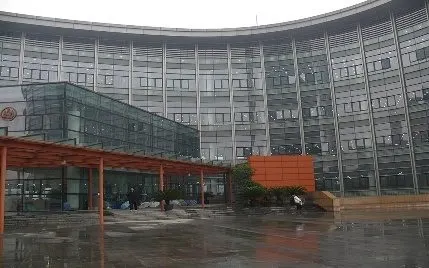
University · Shanghai