- Language courses
- English, Chinese
- Bachelor's Degree
- English, Chinese
- Master's Degree
- English, Chinese
- Accommodation from 600 ¥/month
SDUT · 山东理工大学
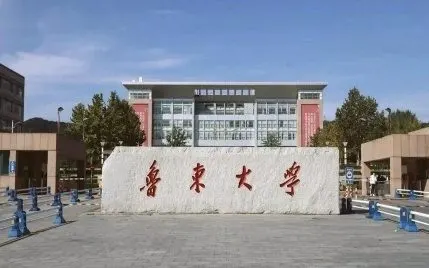
Shandong University of Technology accepts international students on programmes in the following fields: business, medicine, law, economics, natural sciences. Choose the level and programme that suit your goals.
Chinese language study at the university — from a few weeks to a year or longer. Suitable for those starting from scratch or preparing for the HSK before entering a main programme.
self-funded · language programme
Cost: 6 000 ¥/semester
scholarship-funded · language programme
Cost: 6 600–12 000 ¥/year
self-funded · language programme
Cost: 8 500–12 000 ¥/year
The first level of higher education: usually four years of study, specialised subjects, internships and a graduation thesis. It opens the way to working in your field and to a master's degree.
scholarship-funded
Cost: 7 500–16 900 ¥/year
self-funded
Cost: 13 600–16 900 ¥/year
The first level of higher education: usually four years of study, specialised subjects, internships and a graduation thesis. It opens the way to working in your field and to a master's degree.
self-funded
Cost: 13 600 ¥/year
The first level of higher education: usually four years of study, specialised subjects, internships and a graduation thesis. It opens the way to working in your field and to a master's degree.
Check upcoming application deadlines for this level with your Nihao Study adviser.
All programmes at this level →Shandong University of Technology is located in Zibo. Nihao Study consultants keep track of the deadlines and admission requirements of this university, and you can always check the most accurate and up-to-date information on its official website. In university rankings, it is ranked 155 in China and 1446 worldwide.
Come for a face-to-face meeting: together we will go through the requirements, deadlines, documents and study options that suit you.

At the meeting we will look at your situation, tell you which documents to prepare and by when, talk about possible programmes and help you decide on the next step.
Shandong University of Technology (SDUT for short; in Chinese 山东理工大学) is a provincial public university in Shandong; its campuses are in Zibo, in Zhangdian District. In Russian the university is called by a name meaning 'Shandong Polytechnic University', although variant spellings of that name and a form meaning 'Polytechnic University of Shandong' also appear online. Chinese students shorten the name to 山理工 (Shān Lǐgōng), and in rankings the university appears as SDUT.
SDUT has its roots in engineering and agricultural engineering training, and today its profile covers mechanical engineering, transport technology and chemical engineering. The university does not take part in Projects 211, 985 or Double First-Class (双一流). It does, however, have the status of a key university of Shandong Province and is jointly supported by two parties: the provincial government and the State Administration of Science, Technology and Industry for National Defence of the PRC.
Below, Nihao Study has gathered what a 2026 applicant needs to know: SDUT's status and rankings, strong fields, HSK requirements, accommodation, scholarships and the application procedure. We also explain which Shandong universities SDUT is confused with because of similar translations of their names.
| Indicator | Value | Comment |
|---|---|---|
| Year founded | 1956 | origins: the Shandong Institute of Agricultural Mechanisation |
| Status | provincial university | not part of 211, 985 or Double First-Class |
| Campuses | 2: East and West | both in Zhangdian District, Zibo |
| Campus area | about 240 hectares | 3600 mu in Chinese units of measurement |
| Academic units | 28 | institutes, schools and a continuing professional education college |
| Full-time bachelor's students | more than 35,000 | one of Shandong's large regional universities by size |
| Master's and doctoral students | more than 6,100 | doctoral fields: 7; master's fields: 25 |
| Teaching staff | 2 804 | of whom 2,265 are full-time teachers |
| Library holdings | about 3.55 million volumes | one of the province's large university collections |
SDUT traces its history back to June 1956, when the Shandong Institute of Agricultural Mechanisation was founded in Shandong province. By 1990 it had grown into an institution with a broader engineering profile and was renamed Shandong Institute of Engineering (山东工程学院). Then, in April 1998, another institution appeared in Zibo itself: Zibo College (淄博学院). It was formed from four institutions: Zibo University, Zibo Teachers School, the city's workers' university and a branch of the Shandong Institute of Building Materials Industry.
The Shandong Provincial People's Government decided on 29 March 2001 to merge Zibo College and Shandong Institute of Engineering, creating the new Shandong University of Technology. China's Ministry of Education gave its official approval on 21 March 2002. The merged university was headed by Yao Fusheng, an academician of the Chinese Academy of Engineering who had previously been president of Shandong Institute of Engineering. This explains the mix at today's SDUT: alongside engineering and mechanical engineering, it has teacher-training and humanities departments inherited from Zibo College.
SDUT holds moderate positions in world rankings, which is to be expected for a provincial university of technology without 211 status. At the same time, the university has subject areas that are in the top percentile of international citation databases.
| Ranking | Position and year | What this means |
|---|---|---|
| CWUR, world | 1166 out of 21291, 2026 | top 5.5 per cent of all universities in the CWUR sample |
| CWUR, China | 225th place, 2026 | overall score: 69.7 out of 100 |
| EduRank, world | 2392 out of 14131, 2026 | based on combined research indicators |
| EduRank, China | 181st out of 960, 2026 | 1st of the 2 universities in Zibo |
| EduRank, engineering | 140th in China, 922nd in the world, 2026 | SDUT's strongest subject area |
| ESI, top 1 per cent | 5 disciplines as of 2026 | including ecology, chemistry and materials science |
No. SDUT is not on the national lists of Project 211, Project 985 or Double First-Class (双一流). However, the university is jointly developed by the Shandong provincial authorities and China's State Administration of Science, Technology and Industry for National Defence, and it was in the first group of universities in the national Excellent Engineers Education and Training Programme (卓越工程师教育培养计划). SDUT has no national status, but in mechanical engineering, transport and chemical technology it is a solid industry-oriented university with a long-standing reputation in the province.
Mechanical engineering is SDUT's traditional mainstay. The field has its roots in the engineering training of the former Shandong Institute of Engineering; today the university has separate schools of mechanical engineering, transport and rolling stock. International students can study in English on the Mechanical Engineering programme and related engineering programmes.
In spring 2026, environment and ecology entered the ESI global top 1 per cent, becoming SDUT's fifth discipline on this list. Engineering, chemistry and materials science were already there.
SDUT was among the first participants in the national programme for training excellent engineers. The university has a national engineering research centre and four national practical engineering education bases.
SDUT has 28 academic units in total, including schools of mechanical engineering and transport, as well as schools of business, art and foreign languages. Its fields can be grouped into three broad areas.
The university has 7 doctoral fields and 25 first-level master's programmes, mostly in engineering and agricultural technology.
| Room type | Features |
|---|---|
| Quadruple | standard room in the international student dormitory |
| Double | essentially a 4-bed room shared by two |
A new dormitory building for international students opened in 2020; it was built to European standards and is within walking distance of the teaching buildings. Each room is equipped with a bed, desk and wardrobe for every student, plus air conditioning, and a bathroom with shower is shared by a cluster of several rooms. Floors are separated, with men living on some and women on others. There is a common room on the second floor with a TV, a table-tennis table and chess, open from 6 am to 11 pm. Shared kitchens are open 24 hours a day, and the washing machines on each floor are paid for via WeChat Pay. On weekdays you must be back in the dormitory by 23:00, and by midnight at weekends. If you prefer, you can also rent accommodation off campus.
In 2011 SDUT was among the first 16 universities in Shandong authorised to admit international students holding the provincial government scholarship. Since 2014 the university has been a host institution for recipients of the Chinese Government Scholarship. However, SDUT does not appear in the consolidated list of 306 CSC host universities, so the availability of places under this scheme needs to be checked separately for each intake year.
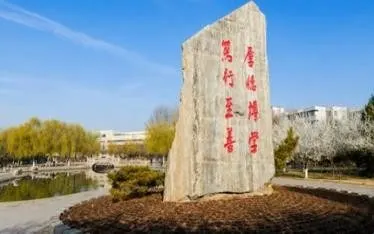
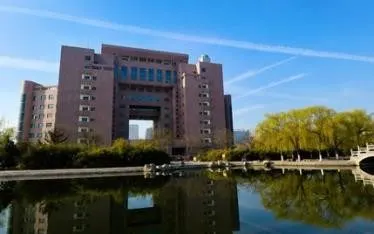
Both SDUT campuses are in Zhangdian District, Zibo. The main one is the West Campus, at No. 266, Xincun West Road, Zhangdian District, Zibo, 255000. The university library holds about 3.55 million volumes, and the campuses have 268 multimedia classrooms and 21 laboratories.
For sport, the campus has 4 tennis courts, 4 badminton courts, 3 football pitches, 6 volleyball courts and 12 basketball courts. You can swim in a pool with 50-metre and 100-metre lanes, a 5 to 7-minute walk from the dormitory. Students say the campus is so large and self-contained that it feels like a separate town, with parks, a pond, several student canteens and a food court inside.
Zibo itself is called a historic cradle of Chinese civilisation: in ancient times this was the site of Linzi, capital of the State of Qi, and the Great Silk Road passed through the area. Today's Zibo is an industrial city of about 5 million people, with developed ceramics, petrochemical and electronics industries. Zibo is about an hour from Qingdao by high-speed train, and the provincial capital, Jinan, is also close by.
The word Technology in the English names of Shandong universities is translated inconsistently in other languages, sometimes as 'technological' and sometimes as 'polytechnic', so SDUT is often confused with other universities in the province.
| University and Chinese name | City and status | Profile |
|---|---|---|
| Shandong University of Technology, SDUT, 山东理工大学 | Zibo, provincial university | mechanical engineering, transport, chemical technology |
| Shandong University of Science and Technology, SDUST, 山东科技大学 | Qingdao, provincial university | mining, industrial safety, surveying |
| Shandong University, SDU, 山东大学 | Jinan, 985, 211 and Double First-Class status | comprehensive university; medicine and law |
| Qilu University of Technology, 齐鲁工业大学 | Jinan, provincial; merged with the Shandong Academy of Sciences | applied chemistry, biotechnology, light industry |
| Shandong Technology and Business University, SDTBU, 山东工商学院 | Yantai, provincial university | economics, management, business |
What sets SDUT apart in this group is its origin: its history begins with agricultural mechanisation and Zibo's engineering institute, whereas its neighbours have their roots in mining, in the model of a comprehensive national university or in business education.
Campus videos let you see the dormitories, teaching buildings and the SDUT campus in Zhangdian District in advance. Pay attention to the room layouts, the route from the teaching buildings to the sports area and the campus facilities. This makes it easier to compare the official figures with the reality on the ground — especially if you are choosing between SDUT and another university in Shandong.
1) The standard Russian name means ‘Shandong Polytechnic University’; it is used by partner universities and agencies. 2) Russian spellings without the soft sign or with an extra soft sign are common typos. 3) ‘Polytechnic University of Shandong’ is a calque of the English word order; formally it is incorrect, but it turns up in searches. 4) Shandong University of Technology is the university's name in international documents. 5) The official English abbreviation is SDUT; it is used in rankings and in correspondence with the admissions office. 6) Chinese students commonly use the abbreviation 山理工 (Shān Lǐgōng). 7) 山东理工大学 (Shāndōng Lǐgōng Dàxué) is the original Chinese name. A colloquial Russian abbreviation used by the students themselves stands apart from these.
SDUT (short for Shandong University of Technology) is a provincial public university in the city of Zibo, Shandong Province. It was founded in 1956; its strengths are engineering, mechanical engineering and chemical technology.
Yes. International students can take English-taught bachelor's programmes in mechanical engineering, computer science, civil and electronic engineering, international logistics and natural resource exploration. The main programmes are not taught in Russian.
For Chinese-taught bachelor's programmes, the threshold common across China applies: HSK 4. Students studying in English do not need the HSK: an international English test is accepted instead, for example Duolingo with 90 points or more.
No, SDUT takes part in neither the 211 and 985 projects nor Double First-Class. It is officially listed as a key university of Shandong Province; its sector specialisation is engineering and chemical technology.
The price depends on the room type: four-person or double. Check the current rates for this academic year on the university's official website.
The university became a CSC scholarship host institution back in 2014. However, SDUT does not appear in the current consolidated list of 306 CSC host universities, so quotas should be checked separately for the specific intake year.
Choose a suitable session from the current HSK schedule and find the nearest venue in the Chinese Test system.
The address of the main West campus is No. 266, Xincun West Road, Zhangdian District, Zibo, Shandong Province, 255000. High-speed trains run from Zibo to Jinan and Qingdao; the journey to Qingdao takes about an hour.
Shandong University of Science and Technology (SDUST) is in Qingdao and specialises in mining and industrial safety. Shandong University (SDU) is in Jinan and holds 985, 211 and Double First-Class category A status. SDUT, by contrast, is a provincial university in Zibo: it has no national status, but it has its own specialisation in engineering and chemistry.
As a rule: passport, photographs, medical certificates, proof of financial means and a school certificate or diploma with a translation; for the Chinese-taught track, an HSK 4 certificate is added.
Zibo (淄博) is an ancient city in Shandong Province that served as the capital of the State of Qi during the Warring States period. Today it is known for ceramics and the chemical industry, and in 2023 the whole country started talking about it thanks to its street barbecue.
Zibo gives students an affordable education in a real Chinese city: accommodation is cheap, industry is well developed and suitable for work placements, life flows calmly, and people here are friendly towards foreigners — the city is deliberately developing student tourism. For parents, it matters that the environment is safe, prices are affordable, basic infrastructure is good, Qingdao and its international airport are 1 hour away by train, students receive organised support, and the city itself lets you see authentic China, not much touched by Western influence.
You work with Nihao Study specialists. They will help you put together a portfolio and a set of documents, draw up a study plan and choose a university or college and a specialty that genuinely interest you.
We take care of every stage of admission, from choosing to enrolment
We will gather, prepare, certify and send your documents to the institution
We will show the admissions committee your strengths
We run training sessions and courses so you can prepare with more confidence
We will help you settle in at the start of your studies and keep moving forward
Nihao Study specialists select universities and colleges that match the applicant's goals and means. We make sure the teachers are practitioners and that the knowledge will be useful in your profession.
We examine curricula, talk to students and teachers and look at which specialties employers need, and use this information to select options for the applicant.
Advisers guide the applicant from the first consultation to enrolment, help build a plan and spot mistakes in time that could get in the way.
The cost of our support depends on the programme and the partner university; you'll get an exact quote after a free consultation.
Get a quoteA free 15-minute consultation: together we will choose a university or college and a programme that suit your goals and budget.
Apply with peace of mind: we handle the documents, deadlines and correspondence with admissions committees, and you save time and energy.
Don't want to wait for a call? Message us in the chat.
Message us in chat 
University · Linyi
Language courses · Bachelor's Degree · Master's Degree