Linyi University
University · Linyi
Language courses · Bachelor's Degree · Master's Degree
中国石油大学
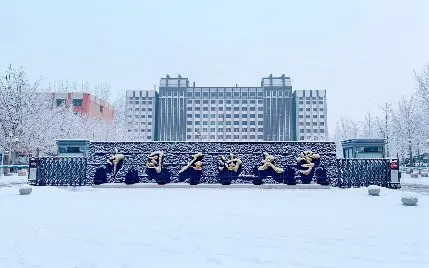
China University of Petroleum accepts international students on programmes in the following fields: engineering, education, natural sciences. Choose the level and programme that suit your goals.
Chinese language study at the university — from a few weeks to a year or longer. Suitable for those starting from scratch or preparing for the HSK before entering a main programme.
self-funded · language programme
The first level of higher education: usually four years of study, specialised subjects, internships and a graduation thesis. It opens the way to working in your field and to a master's degree.
self-funded
Advanced study after a bachelor's degree: research, applied projects and internships. It helps you become an expert in your chosen field and broaden your career opportunities.
self-funded
China University of Petroleum is located in Qingdao. Nihao Study consultants keep track of the deadlines and admission requirements of this university, and you can always check the most accurate and up-to-date information on its official website. In university rankings, it is ranked 97 in China and 876 worldwide.
Come for a face-to-face meeting: together we will go through the requirements, deadlines, documents and study options that suit you.

At the meeting we will look at your situation, tell you which documents to prepare and by when, talk about possible programmes and help you decide on the next step.
China University of Petroleum (East China), in Chinese 中国石油大学(华东), Zhōngguó Shíyóu Dàxué (Huádōng), is a public research university in Qingdao. The accurate Russian rendering of the official name corresponds to 'China University of Petroleum (Huadong)'; it is used on the Russian-language page of the university's international education platform. A shorter variant, 'Huadong Petroleum University', is also common, and searches turn up further versions such as 'Petroleum University of Huadong', 'China Petroleum University in East China' and the split spelling 'Hua Dong'. The official abbreviation is UPC, and in spoken Chinese people say 中石大 or simply 石大.
The main campus is in Huangdao District, part of the West Coast New Area of Qingdao (Shandong Province). The university is part of Project 211 and the Double First-Class programme and reports to the Ministry of Education of the PRC. In Qingdao the university has two campuses, with another research and teaching site in Dongying. It is important not to confuse the two: this page is about 中国石油大学(华东), not the China University of Petroleum in Beijing; since 2005 they have been two different legal entities, each with its own administration.
Below is what a 2026 applicant should know: names and campuses, rankings, programmes, dormitories, scholarships, HSK and the application stages. For questions about admission, you can come for a consultation with Nihao Study.
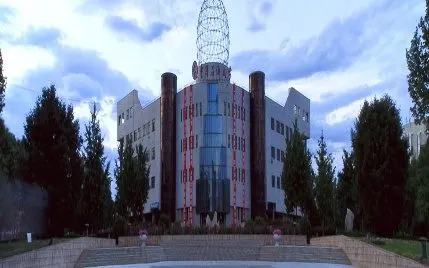
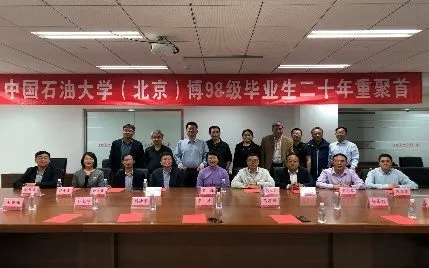
| Item | Data |
|---|---|
| Founded | 1953 |
| Location | Qingdao: 2 campuses; Dongying: 1 site |
| Area | Over 5000 mu of land, more than 1.7 million m² of floor space |
| Students | More than 19,000 bachelor's students, 11,000 master's and doctoral students, over 800 international students |
| Staff | 2985 staff, including 1734 teaching staff |
| Programmes | 58 bachelor's majors; first-level disciplines: 34 at master's and 16 at doctoral level |
| Status | Double First-Class, Project 211, Project 985 Innovation Platform for Priority Disciplines |
| Address | 66 West Changjiang Road, Huangdao, Qingdao, 266580 |
The university's large size does not in itself guarantee admission. For an international applicant, what matters more is that three things align: the right programme, the language of instruction and a confirmed cost.
The university's history begins in 1953, when the Beijing Petroleum Institute was founded. It was built on the petroleum department of Tsinghua University, joined by teachers and resources from Peking University, Tianjin University and several other universities. In 1960 the institute became a national key university, and in 1969 it moved to Dongying, closer to the Shengli oilfield, and was renamed the East China Petroleum Institute.
In 1988 the university was named the University of Petroleum. The Beijing part developed in parallel; in 2000 the university came under the Ministry of Education, after which the eastern and Beijing branches were established as relatively independent. The ministry approved the Qingdao campus in 2004, the current name was adopted in 2005, and by 2011 the main teaching centre had moved to Qingdao.
Today the Tangdaowan and Guzhenkou campuses operate in Qingdao, with a science and education park in Dongying. It is true that the university also has a campus in Dongying, but for standard international applications and registration the reference address is in Huangdao, Qingdao.
Each ranking system looks at a university from its own angle, so it is better to compare several of them and examine subject areas separately. It is important not to confuse East China data with the figures for China University of Petroleum (Beijing).
| Ranking | Position | Edition |
|---|---|---|
| ARWU | 301 to 400 worldwide | 2025 |
| THE World University Rankings | 801 to 1000 | 2025 |
| CWUR | 559 worldwide, 153 in Asia | 2026 |
| QS World University Rankings | 686 | edition published in 2025 |
| U.S. News Best Global Universities | 500 | edition published in 2025 |
| ShanghaiRanking China | 73 in China | 2026 |
| EduRank consensus | 575 worldwide | 2027 ranking (data checked in June 2026) |
The university's reputation is better explained by its subject results than by its overall position. In ShanghaiRanking 2025, UPC is 26th in marine and ocean engineering, 36th in chemical engineering and in remote sensing, while energy science falls in the 76 to 100 band. The university reports that 9 of its fields are in the ESI top 1 per cent, and materials science, geosciences, chemistry and engineering are in the top 0.1 per cent.
Here you can study every link in the industry, from exploration and drilling to field development, transport and chemical processing. The university has five national key disciplines: mineral exploration, drilling, oilfield development, chemical technology, and oil and gas storage and transport. This choice suits those who want to understand how geology connects with production and infrastructure, rather than studying one link in isolation from the rest.
The university's profile is not limited to traditional hydrocarbons. Its structure includes a school of new energy, as well as fields related to materials, automation, ecology and computer technology. Among the recently launched English-taught bachelor's programmes, New Energy Materials and Devices and Big Data Management and Application are officially listed.
The university has more than 50 national and provincial research platforms, including laboratories for deep oil and gas resources and heavy oil, as well as a China–Saudi energy laboratory. Cooperation agreements link the university with more than 250 universities and organisations from 55 countries and regions. For a master's student, this above all means access to a supervisor and a specific laboratory, which are worth choosing even before you apply.
The academic structure comprises 16 main teaching schools and units. The oil and gas core includes the schools of pipeline and civil engineering, geosciences, chemistry and chemical engineering, and petroleum engineering. They teach geology and geophysics, resource exploration, drilling and production, pipeline systems, chemical processes and offshore oil and gas engineering.
The second group covers mechanical engineering, materials, energy and automation, as well as ocean and spatial information technologies. The Chinese-taught bachelor's list also includes environmental engineering, architecture, civil engineering, data science and artificial intelligence.
The humanities and management group includes economics and management, law, foreign languages, Chinese language and literature, and Marxist studies. The word School or College in an English name denotes a unit of UPC, not an independent college. Admission, language training, visa and everyday matters for international students are handled by the College of International Education.
In principle, all of the university's programmes are open to international students. The College of International Education lists 9 English-taught bachelor's programmes and 3 master's programmes in English; English is also possible on doctoral tracks. The exact list should be confirmed with the admissions office, as it changes from year to year.
| Level | What you can choose | Duration |
|---|---|---|
| Bachelor's in English | Geology, petroleum engineering, resource exploration, architecture, civil engineering, mechanical engineering, software, new energy materials, big data | Usually 4 years; architecture may take 5 years |
| Bachelor's in Chinese | Programmes in engineering, natural sciences, economics and the humanities | 4 to 5 years |
| Master's Degree | In Chinese or English; the language depends on the programme and supervisor | 3 years |
| Doctoral (PhD) Programmes | In Chinese or English, depending on the research field | 4 years |
| Chinese language courses in Qingdao | From HSK 1 to HSK 6: reading, speaking, listening and writing | 1 to 4 semesters |
The international dormitory occupies a 14-storey building. The lower floors house teaching and administrative premises, while the residential rooms are on floors 3 to 12. Rooms are for two people and have a bathroom, shower, furniture, internet, air conditioning and basic household appliances.
| Side of the building | Room type |
|---|---|
| North side, city view | Double |
| South side, sea view | Double |
The monthly fee depends on the side of the building; the university publishes the current rate, and it is worth checking before moving in. For long-term stays, payment is made for at least 6 months in advance, and 60 kWh of electricity per month is included at no extra charge. A deposit is also charged, which is refunded if the room is undamaged.
UPC is authorised to admit Chinese Government Scholarship recipients, and the official FAQ states that you can apply directly to China University of Petroleum (East China). Conditions and quotas are not fixed, so refer to the current CSC announcement.
The university's own scholarship can be full or partial. A bachelor's student may be exempted from tuition and accommodation fees, from tuition fees only, or given a 50 per cent discount. For master's students there are levels where an annual allowance is added to the tuition and dormitory exemption; an annual allowance is also possible for doctoral students.
Tangdaowan Campus has east and north library buildings, engineering buildings, laboratories, a sports complex and several canteens. The university gives the following library figures: 112 databases, a collection of 3.5281 million items, 7061 seats and an area of 52,600 m². The east building houses a petroleum education centre, an exhibition on the university's history, as well as lecture halls and workspaces.
For sport there are football, basketball, tennis and volleyball courts, table tennis areas and a multi-purpose hall for training and events. Four canteens and everyday services cover the main daily needs without leaving campus.
UPC is the computer-based HSK centre for the Huangdao district: the exam is held here more than 6 times a year, and according to the university, the centre runs both HSK and HSKK.
Qingdao Jiaodong Airport is about 60 km from the university. The official guide recommends taking the metro (Lines 8 and 1) or the airport bus, which takes about 90 minutes.
If deadlines or translation requirements differ between sources, rely on the university's official letter.
| University | City | Main focus |
|---|---|---|
| China University of Petroleum (East China), 中国石油大学(华东) | Qingdao, plus a site in Dongying | Oil and gas, chemistry, geology, energy |
| China University of Petroleum (Beijing) | Beijing, with another campus in Karamay | An independent oil and gas university |
| East China University of Science and Technology | Shanghai | Chemical technology, various engineering fields |
| Northeast Petroleum University | Daqing | Oil and gas teaching and research |
| Ocean University of China | Qingdao | Marine sciences, oceanography, fisheries |
The key markers of the right university are the domain upc.edu.cn, the qualifier 华东 in the Chinese name and an address in Qingdao on Changjiang West Road. The domain cup.edu.cn belongs to the Beijing university. The eastern university's charter officially establishes the name China University of Petroleum (East China) and the abbreviation UPC.
The exact Russian rendering of the official name corresponds to 'China Petroleum University (Huadong)'; you can find it on a Russian-language education page. The established short variant corresponds to 'Petroleum University Huadong'. The forms 'Huadong Petroleum University' and 'Hua Dong' are understandable but less accurate. The official international name is China University of Petroleum (East China), and the official abbreviation under its charter is UPC. The abbreviation CUP is not official for this university and causes confusion with the Beijing university, whose domain is cup.edu.cn. In Chinese, the university is abbreviated as 中石大 and 石大 (the latter is read 'Shida'), and the full name 中国石油大学(华东) is read Zhōngguó Shíyóu Dàxué (Huádōng).
Yes. The official list includes 9 English-taught bachelor's programmes — among them geology, petroleum engineering, mechanics, software, architecture, new energy materials and big data. Some master's and doctoral programmes are also taught in English.
For Chinese-taught bachelor's, master's and doctoral programmes, the published threshold is HSK 5 with a score of at least 180. The foundation programme requires HSK 4 with at least 180, but other proof of language level may also be accepted.
Yes. The university was selected for both the first and second rounds of Double First-Class, with two specialist fields named: petroleum and natural gas engineering, and 'geological resources and geological engineering'. The university is also part of Project 211.
The fee depends on which side the room's windows face and may change. The university publishes current terms on its accommodation page, and the final amount is confirmed by the invoice and the accommodation letter.
UPC accepts Chinese Government scholarship holders, and you can apply for the Chinese Government Scholarship directly. Exactly what the scholarship covers depends on its type and the terms of the current competition.
Yes, the campus has a computer-based HSK centre, with exams held more than 6 times a year. The exact venue is stated on your admission ticket — usually the multimedia centre or the international students' building.
The international admissions office is at 66 West Changjiang Road, Huangdao District, Qingdao, 266580. From the airport, you can take a taxi, a bus to the West Coast New Area or the metro (lines 8 and 1).
They are two independent universities. UPC's official domain is upc.edu.cn, with campuses in Qingdao and a site in Dongying. The Beijing university uses the domain cup.edu.cn and has its own management.
You will need a passport, school-leaving certificate with transcript, proof of language proficiency, financial guarantee, medical form, police clearance certificate and CSCA result. Documents not in Chinese or English must be accompanied by a translation.
Qingdao (青岛) is the main seaside resort of northern China, on the coast of the Yellow Sea. The city is famous for its German architecture and long beaches, and in 2008 it hosted the Olympic sailing events. Qingdao is home to the Ocean University of China and Qingdao University.
In Qingdao, a good education goes together with life by the sea and a mild maritime climate. Work placements are available in shipbuilding and other marine industries. The city has 8 metro lines, many beaches and parks, and a noticeable international community. Parents value the safety, clean air, modern healthcare, international airport, European-style architecture and well-thought-out campuses, with dormitories and dedicated services that help international students.
You work with Nihao Study specialists. They will help you put together a portfolio and a set of documents, draw up a study plan and choose a university or college and a specialty that genuinely interest you.
We take care of every stage of admission, from choosing to enrolment
We will gather, prepare, certify and send your documents to the institution
We will show the admissions committee your strengths
We run training sessions and courses so you can prepare with more confidence
We will help you settle in at the start of your studies and keep moving forward
Nihao Study specialists select universities and colleges that match the applicant's goals and means. We make sure the teachers are practitioners and that the knowledge will be useful in your profession.
We examine curricula, talk to students and teachers and look at which specialties employers need, and use this information to select options for the applicant.
Advisers guide the applicant from the first consultation to enrolment, help build a plan and spot mistakes in time that could get in the way.
The cost of our support depends on the programme and the partner university; you'll get an exact quote after a free consultation.
Get a quoteA free 15-minute consultation: together we will choose a university or college and a programme that suit your goals and budget.
Apply with peace of mind: we handle the documents, deadlines and correspondence with admissions committees, and you save time and energy.
Don't want to wait for a call? Message us in the chat.
Message us in chat University · Linyi
Language courses · Bachelor's Degree · Master's Degree