- Language courses
- English, Chinese
- Bachelor's Degree
- English, Chinese
- Master's Degree
- English, Chinese
- Accommodation from 600 ¥/month
鲁东大学
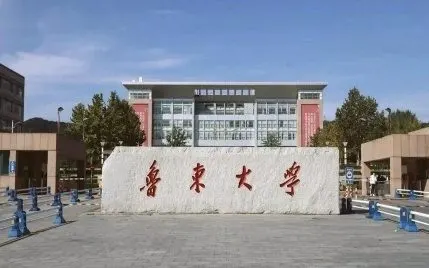
Ludong University accepts international students on programmes in the following fields: business, engineering, education, law, economics, natural sciences. Choose the level and programme that suit your goals.
Chinese language study at the university — from a few weeks to a year or longer. Suitable for those starting from scratch or preparing for the HSK before entering a main programme.
self-funded · language programme
The first level of higher education: usually four years of study, specialised subjects, internships and a graduation thesis. It opens the way to working in your field and to a master's degree.
self-funded
Advanced study after a bachelor's degree: research, applied projects and internships. It helps you become an expert in your chosen field and broaden your career opportunities.
self-funded
Ludong University is located in Yantai. Nihao Study consultants keep track of the deadlines and admission requirements of this university, and you can always check the most accurate and up-to-date information on its official website. In university rankings, it is ranked 198 in China and 10536 worldwide.
Come for a face-to-face meeting: together we will go through the requirements, deadlines, documents and study options that suit you.

At the meeting we will look at your situation, tell you which documents to prepare and by when, talk about possible programmes and help you decide on the next step.
Ludong University (LDU, 鲁东大学, Lǔdōng Dàxué) is a provincially administered public university located in Yantai (Shandong Province). In Russian-language searches it is also referred to by several transliterated variants and as University of Ludong; this page uses the form meaning "Ludong University". Its Chinese abbreviation is 鲁大 (Lǔdà), and the English name Ludong University is set out in the university's charter.
LDU is not part of the national 211, 985 or Double First-Class (双一流) projects. The university is under the Shandong provincial government and is administered by the provincial department of education. It does not appear on the official list of the 211 project, on the 985 list, or in the second round of 双一流 published by the Ministry of Education. The 山东省“双高” status is a separate provincial programme and does not make the university part of the national 双一流.
Below, Nihao Study has gathered the essentials about this university for 2026 applicants: status, rankings, programmes, scholarships, dormitories, HSK and the admission procedure.
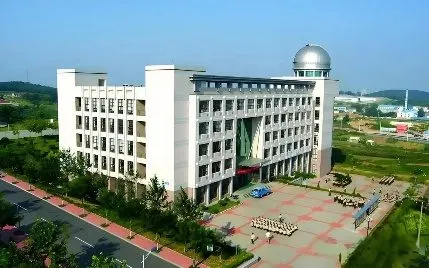
LDU is a comprehensive, application-oriented university with engineering, agricultural, natural-science and humanities programmes. Main campus address: 186 Hongqi Middle Road, Zhifu District, Yantai, Shandong, 264025.
| Item | Data |
|---|---|
| Year founded | 1930 |
| Structure | 26 colleges and schools |
| Bachelor's Degree | 56 programmes open for admission |
| Master's Degree | 23 academic fields and 23 professional categories |
| Students | over 30,000 (full-time) |
| Teaching staff | about 2,000 full-time |
| Campus area | 3,450 mu, about 230 hectares |
| Library | 2.724 million print and over 1.35 million e-books |
| International links | over 170 partners in more than 30 countries and regions |
| National status | not part of 211, 985 or Double First-Class (双一流) |
Its history dates back to 1930, when the Shandong Provincial Second Rural Normal School opened. The institution was later successively named Jiaodong Public School, Jiaodong Normal School, Laiyang Teachers' College, Yantai Teachers' College and Yantai Normal University. This is why teacher training, education and languages remain important to LDU, even though it has long since outgrown its role as a teacher-training institution.
The institution gained the right to award master's degrees in 1998. In 2001 it absorbed the Shandong Transport School, which strengthened its applied and engineering profile. Its current name, Ludong University (鲁东大学), has been in use since 2006. Under its charter, the university can award bachelor's, master's and doctoral degrees and teach international students.
Today the university's development is built around six major clusters: ocean, water and environment; artificial intelligence and integrated circuits; modern agriculture, medicines and food; chemistry, materials and energy; cultural communication; and teacher education. This set describes LDU more accurately than the old "teacher-training" label.
LDU's positions vary noticeably across rankings: some systems look at research publications, others at reputation, university size or the range of subjects. In the 2026 ShanghaiRanking, the university is 240th in China. In the 2025 subject ranking, water resources were placed in the 201–300 band and agricultural sciences in the 301–400 band.
| Ranking | Position and year | Comment |
|---|---|---|
| ShanghaiRanking BCUR | 240th in China, 2026 | comparison of universities within the country |
| CWUR | 1,613th worldwide, 2025 | in the top 7.6% of the list |
| EduRank | world — 4,687, China — 387, 2026 | publication activity and visibility |
| Nature Index | 482, Asia-Pacific, natural sciences, 2025 | counts only selected journals |
According to CWUR, the university is also 609th in Asia and 280th in China, with a research rank of 1,544 and an overall score of 67.7. In EduRank, LDU is second among the four Yantai universities in the ranking, but this methodology does not measure the quality of an individual programme. The university should not be credited with positions in QS, THE or U.S. News unless the ranking itself has a corresponding page.
The university's priorities include the study of water resources and the coastal environment, marine structures, the safety of cooling systems at coastal nuclear power plants, and the design of a Bohai Strait crossing. Hydraulic engineering is included in the provincial programme of high-level disciplines; according to the university, it is the only one among Shandong's provincial universities offering this discipline to hold such an advantage in it.
Six of LDU's disciplines are in the ESI top 1%: chemistry, materials science, engineering, agricultural sciences, plant and animal science, and environment and ecology. Engineering even reaches the ESI top 0.5%. According to EduRank, the university's most prominent areas are nanotechnology, chemical and marine engineering, and automation and control.
Bachelor's and master's programmes in International Chinese Language Education are run by the School of International Education, which hosts HSK, HSKK, YCT and BCT test centres. According to the school, it has trained over 10,000 international students from more than 40 countries and works with more than 20 overseas organisations. For applicants this means a language environment and access to specialist teachers, but it does not automatically guarantee a particular HSK result.
The university's areas include humanities, journalism, law, education, sport, business and foreign languages. The natural sciences are represented by mathematics and statistics, physics and optoelectronics, chemistry and materials, life sciences, and resources and environment.
The engineering and applied cluster includes transport, shipbuilding and ocean engineering, hydraulic and civil engineering, information and electrical engineering, integrated circuits, food engineering, horticulture and aquaculture. If a name contains School or College, it refers to a unit of LDU rather than an independent university.
Of the 56 bachelor's programmes, 14 are recognised as national first-class programmes and another 17 have received this designation at provincial level. Six programmes have passed engineering accreditation, and 13 teacher-education programmes have achieved second-level professional certification.
In 2026, the university is admitting international students to Chinese language courses and degree programmes. According to the university, you can apply to the majors that are open in a given year's intake.
| Field | Format | What is known |
|---|---|---|
| Chinese Language | a semester or an academic year | School of International Education |
| Bachelor's Degree | usually full-time and in Chinese | 4 years (according to the programme description) |
| Master's Degree | in Chinese, or in English where offered | the 2026 intake includes physics in English |
| Doctoral studies | narrow focus | doctoral training project and postdoctoral programme in education |
The English-taught master's in physics requires a bachelor's degree. Applicants from countries where English is not the native language must present TOEFL 550 (paper-based) or 80 (internet-based), IELTS 6.5, or pass an interview with an academic committee. Core courses and the thesis defence are in English; the exceptions are Chinese language and the culture module.
International students are housed in the international dormitory and the Liuyuan building. The rate and the paid accommodation period are stated in the invoice, so it is worth checking the current conditions on the university's official website. Under university rules, students must spend their first semester on campus; exceptions are agreed separately.
The university's public materials show single and double rooms with beds, desks, storage space, air conditioning, a bathroom and Wi-Fi. What exactly your room will have depends on the building and the room type.
LDU accepts Chinese Government Scholarship holders. The admission materials for international students also list the Chinese Government Scholarship, the International Chinese Language Teachers Scholarship and the Shandong Provincial Government Scholarship — so funding sources do exist.
Before applying, make sure LDU is on the list of universities accepting CSC scholarship holders, and find out the agency number, application type and deadline in advance.
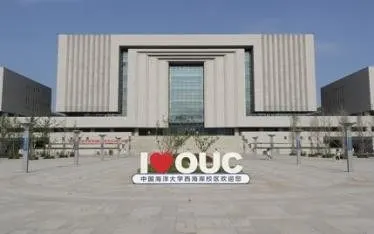
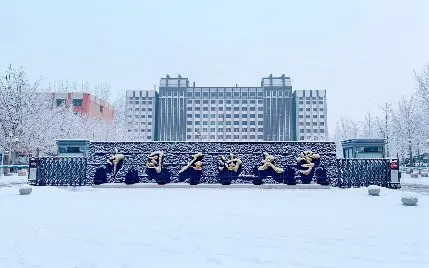
The campus has sports facilities, a library, a museum and archive, laboratory buildings, an analysis centre, supercomputing infrastructure and sites for applied research. Besides its print collection, the library offers over 130 databases, and its electronic periodicals number more than 1.38 million resources. The campus also has a stadium, an indoor gym, a pond, green areas and a ceremonial main gate.
The campus is in Zhifu District — do not confuse it with the Laishan university district. The international office's postcode is 264025, and its phone numbers are 0535-6697578 and 0535-6696181.
For Chinese-taught programmes, plan your HSK exam well in advance. LDU itself has an HSK and HSKK test centre; session dates and registration deadlines are published in the official HSK schedule. There is no single minimum level for all programmes. According to the university, the master's in International Chinese Language Education previously required HSK 5; check the current requirement with the university.
| University | Type | Main focus |
|---|---|---|
| Ludong University, 鲁东大学 | provincial-level comprehensive university | applied sciences, water resources, education |
| Yantai University, 烟台大学 | provincial-level comprehensive university | law, engineering and natural sciences |
| Shandong Technology and Business University, 山东工商学院 | provincial-level university | economics, management, business |
LDU is located in Zhifu and traces its history to a teacher-training institution. Yantai University is a separate university with its own campus and its own admissions office. Shandong Technology and Business University is not part of LDU either. Check the English and Chinese names on your documents especially carefully.
LDU suits those looking for a large public provincial-level university who are not chasing a national elite brand. Its advantage is the combination of applied research with a broad academic structure. It is a particularly sensible choice for those interested in water resources, coastal ecology, materials, chemistry, agricultural sciences, education or International Chinese Language Education. But do not assume that a high ranking in one discipline automatically extends to every programme: the quality of a course is determined by the specific school, its teachers, the language of instruction and the curriculum.
For a bachelor's degree, language is the deciding factor. If the programme is taught in Chinese, a formal certificate may not be enough to handle the terminology with ease. Consider whether you will be able to read textbooks, write reports and sit exams without constant translation. If your level is not yet sufficient, a language year at LDU can be sensible preparation — especially as the university has its own test centre. However, find out in advance whether successful completion of the course leads to automatic transfer to a degree programme or whether you will have to apply again.
For a master's applicant, it is more important to find a supervisor and match your topic to the work of actual labs. Ask the international office for information about the school, the list of disciplines, the language of seminars and the publication requirements. If you are considering physics in English, find out separately which subjects are actually taught in English, who teaches them and what language the lab groups use. Being able to defend your thesis in English does not mean that everyday life and administration will also be in English.
Scholarship applicants need to distinguish between three separate decisions: whether you are admitted to the programme, whether you are accepted on academic criteria, and whether you are awarded funding. Even if LDU accepts CSC scholarship holders, the university's quota may be limited, and the major you want may not be open to a particular category. Confirm the application route, the list of documents and how to obtain a pre-admission letter with the university in advance.
When comparing offers, look beyond the tuition fee. Ask for a full invoice and find out the cost of insurance, the deposit amount, the room type, the paid accommodation period and the refund rules. Also find out whether you keep your dormitory bed during the holidays and whether a single room is available. This kind of detailed calculation is more useful than a single annual figure, because different universities include different mandatory charges in their invoices.
Another factor is the campus location. Zhifu is the central part of Yantai, but it is best to check the route to your building, lab or placement site on a map. Ask your coordinator to send the name of the dormitory in Chinese and the entry point for registration: this makes it easier to get there from the airport or station and avoids confusing LDU with another university in the city.
Before you finally accept, briefly check the offer itself. The university name on the notice must match 鲁东大学, the programme's level and language must be clearly stated, and the payee must be the university or a recipient it has officially named. Keep copies of all documents: the application, the admission letter, invoices and correspondence. If any wording is open to more than one interpretation, ask LDU's international office for clarification.
Until your place is confirmed, ask for the curriculum and academic calendar, and find out the registration procedure, the rules on changing rooms and the refund conditions if your visa is refused. Make sure the name of the major matches what will appear on your diploma. If the profession is regulated, find out in advance how the degree is recognised in the country where you plan to work. A university's ranking is no substitute for checking what you will be taught and the professional requirements.
It is useful to talk to an international student enrolled on your particular programme. Ask what language classes are actually taught in, how accessible the teachers are, what the workload is like, and about internet speed, food and heating, how the laundry works and how to visit the medical centre. Someone else's experience is no substitute for the admission rules, but it will help you understand the practical details that rarely make it into a programme description. It is best to make your final decision after weighing the programme requirements, your budget and independent reviews.
This page uses one standard Russian form of the name; a variant spelling inaccurately renders the character 鲁, and an adjectival form is an understandable descriptive Russian variant. Ludong University is the official name according to the university's charter, and LDU is its international abbreviation. 鲁大 (Lǔdà) is the abbreviation used in China, and 鲁东大学 (Lǔdōng Dàxué) is the full Chinese name.
It is a provincial-level public university located in Yantai (Shandong province), in Zhifu District. Its registered address is 186 Hongqi Middle Road.
No. The university is not on the national 211, 985 or second-round 双一流 lists. The provincial 双高 status is a different programme.
Yes, but the choice depends on the specific year's intake. According to the university, a master's programme in physics is available in English; check the current tuition fee on the university's official website.
There is no general requirement for all programmes. For English-taught physics, English proficiency is assessed, and in a previous intake International Chinese Language Education required HSK 5. Go by the current programme catalogue and the HSK calendar.
LDU is officially listed as a host university for the Chinese Government Scholarship. Check whether the category and programme you need are open in the year you apply, under the current CSC rules.
Yes. The International Education Institute has HSK, HSKK, YCT and BCT test sites; a place for a specific session is booked separately.
Applicants are usually asked for a school certificate with transcript and translations, a passport, photos, a language certificate, a medical form, a police clearance certificate and financial documents. Check the exact list against the current year's admission requirements.
For the autumn intake, LDU published an application period from 15 April to 10 June. In other years, or for scholarship programmes, the dates may differ, so do not rely on outdated information alone.
They are two independent universities. LDU is located in Zhifu and combines a teacher-training tradition with applied disciplines — water-related, engineering and agricultural.
Yantai (烟台) is a port city on the Yellow Sea with beautiful views and a mild maritime climate; it is renowned for growing apples. The UN has listed it among China's most liveable cities.
Yantai offers comfortable conditions for study: clean air, the sea close by, moderate prices, developed food and shipbuilding industries that offer work placements, an unhurried pace of life, and beaches and parks for relaxing. Parents should note the high level of safety, clean environment, good healthcare, international airport and ferries to South Korea. The university campuses are well organised, with dormitories and services for international students, and expenses here are noticeably lower than in the megacities.
You work with Nihao Study specialists. They will help you put together a portfolio and a set of documents, draw up a study plan and choose a university or college and a specialty that genuinely interest you.
We take care of every stage of admission, from choosing to enrolment
We will gather, prepare, certify and send your documents to the institution
We will show the admissions committee your strengths
We run training sessions and courses so you can prepare with more confidence
We will help you settle in at the start of your studies and keep moving forward
Nihao Study specialists select universities and colleges that match the applicant's goals and means. We make sure the teachers are practitioners and that the knowledge will be useful in your profession.
We examine curricula, talk to students and teachers and look at which specialties employers need, and use this information to select options for the applicant.
Advisers guide the applicant from the first consultation to enrolment, help build a plan and spot mistakes in time that could get in the way.
The cost of our support depends on the programme and the partner university; you'll get an exact quote after a free consultation.
Get a quoteA free 15-minute consultation: together we will choose a university or college and a programme that suit your goals and budget.
Apply with peace of mind: we handle the documents, deadlines and correspondence with admissions committees, and you save time and energy.
Don't want to wait for a call? Message us in the chat.
Message us in chat 
University · Linyi
Language courses · Bachelor's Degree · Master's Degree