
- Language courses
- English, Chinese
- Bachelor's Degree
- English, Chinese
- Master's Degree
- English, Chinese
- Accommodation from 600 ¥/month
OUC · 中国海洋大学

Ocean University of China accepts international students on programmes in the following fields: engineering, medicine. Choose the level and programme that suit your goals.
Chinese language study at the university — from a few weeks to a year or longer. Suitable for those starting from scratch or preparing for the HSK before entering a main programme.
self-funded · language programme
The first level of higher education: usually four years of study, specialised subjects, internships and a graduation thesis. It opens the way to working in your field and to a master's degree.
self-funded
Advanced study after a bachelor's degree: research, applied projects and internships. It helps you become an expert in your chosen field and broaden your career opportunities.
self-funded
Ocean University of China is located in Qingdao. Nihao Study consultants keep track of the deadlines and admission requirements of this university, and you can always check the most accurate and up-to-date information on its official website. In university rankings, it is ranked 61 in China and 831 worldwide.
Come for a face-to-face meeting: together we will go through the requirements, deadlines, documents and study options that suit you.

At the meeting we will look at your situation, tell you which documents to prepare and by when, talk about possible programmes and help you decide on the next step.
Ocean University of China (OUC for short; in Chinese 中国海洋大学) is a public research university in Qingdao, Shandong Province, under the Ministry of Education of the PRC. In Russian the name appears in several variants, translating as 'Chinese Oceanological University', 'Oceanological University of China' and 'Chinese Oceanographic University'. To distinguish OUC from the country's other maritime universities, look for the Chinese abbreviation 中国海大, the full name 中国海洋大学 and its pinyin, Zhōngguó Hǎiyáng Dàxué.
OUC belongs to Projects 985 and 211 and the national Double First-Class programme; in the programme's second round, marine science and fisheries were recognised as world-class disciplines. Behind these statuses lies a very specific profile: oceanography, aquatic biological resources, ecology, engineering, food technology and climate research.
This Nihao Study article covers what matters to a 2026 applicant: status and rankings, programmes, HSK requirements, scholarships, accommodation and how the university's four campuses are organised.
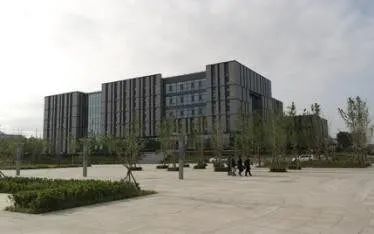
The key figures are given as of 30 June 2024 — the latest snapshot for which the data can be compared correctly. A later English-language source puts the number of students at about 36,500, but the table does not mix different reporting dates.
| Indicator | Data |
|---|---|
| Year founded | 1924 |
| Number of campuses | 4 |
| Total students | over 35,400 |
| Bachelor's students | over 17,200 |
| Master's students | over 14,500 |
| Doctoral students | over 3,400 |
| International students | over 330 |
| Staff and teachers | 4,114 staff, 2,175 teaching staff |
| Bachelor's majors | 74 majors |
| Main campus address | 238 Songling Road, Qingdao, 266100 |
Its history dates back to 1924, when Private Qingdao University was founded. The official chronicle calls it the first modern university in Shandong with bachelor's programmes founded by the Chinese themselves. Its first students were future engineers and commerce specialists, and they studied on the site of former German barracks — this area now belongs to the Yushan campus.
In 1930 National Qingdao University was established, and in 1932 it was renamed National Shandong University. It was then that marine biology, oceanography and meteorology became firmly established in teaching and research. When most of Shandong University was moved to Jinan, the marine and related departments stayed in Qingdao. In 1959 they grew into the Shandong College of Oceanography.
In 1960 the college was included in the list of the country's 13 key comprehensive universities. From 1988 it was called Ocean University of Qingdao; in 1994 it joined the first group of Project 211 universities, and in 2002 it received its current name — Ocean University of China. OUC celebrated the centenary of its founding on 25 October 2024 on the Laoshan campus.
International rankings measure different things. QS gives more weight to reputation and international indicators, THE combines assessments of teaching and research, ARWU relies primarily on research output, and EduRank uses a bibliometric model. So it is not worth judging OUC by a single position in a single table.
| Ranking | Position | Edition |
|---|---|---|
| QS World University Rankings | 801 to 850 band | 2026 |
| Times Higher Education | 601–800 band | 2026 |
| ARWU | 301–400 band | 2025 |
| CWUR | 482nd worldwide | 2025 |
| EduRank | 892nd worldwide, 57th in China | 2026 |
The university's profile is clearer from the subject rankings than from its overall position. In the ShanghaiRanking 2025 subject edition, OUC is 2nd in the world for oceanography. In water resources the university ranks 4th. In the U.S. News subject ranking for marine and freshwater biology, OUC was 1st in two consecutive editions. For a future oceanographer or aquaculture specialist, these positions say more than the overall band in QS.
OUC brings together physical oceanography, marine chemistry, geology, meteorology, climate modelling and remote sensing. Marine science is on the official Double First-Class list, and the roots of the bachelor's programmes go back to the marine disciplines first taught in Qingdao in the 1930s.
Hands-on training is supported by three research vessels: the five-thousand-tonne Dongfanghong 3, the three-thousand-tonne Dongfanghong 2 and the supply ship Tianshi 1. The university describes them as a mobile laboratory system that operates in coastal waters, the deep ocean and polar regions alike.
Fisheries is OUC's second discipline on the Double First-Class list. It covers aquaculture, aquatic biological resources, breeding, aquatic animal health and ecosystem management. The university reports that the discipline received an A+ rating in the 2017 national discipline assessment and was again included in the national list in 2022. Together with food science and biotechnology, it allows a study path that runs from farming marine organisms to industrial processing and product safety.
The university is developing artificial intelligence and computer science, marine engineering and underwater robotics, materials and environmental monitoring. In 2026 OUC announced new programmes in biological breeding and future robotics, geared towards deep-sea exploration, polar research and intelligent equipment. 12 of the university's fields are in the ESI top 1 per cent, including geosciences, engineering, ecology, agricultural sciences, microbiology and computer science.
OUC is not a narrowly specialised oceanography school but a comprehensive university. According to its official structure, it has 20 schools, plus one academic division and one centre for foundation studies. For an applicant, it is easiest to group the fields into four large clusters.
The university has the right to award doctoral degrees in 17 first-level disciplines (一级); in addition, OUC offers 34 academic master's disciplines and 25 categories of professional master's degrees. This makes it possible to combine a marine specialisation with data analysis, mathematics, logistics, the law of the sea or resource economics.
International opportunities are not limited to a single English-taught programme. OUC cooperates with the University of Tasmania in marine sciences, with the University of Arizona in law and with Heriot-Watt University in physics and computer science; Haide College was set up jointly with the University of Adelaide. However, Haide College has suspended admissions for 2026, so outdated pages on aggregator sites do not prove that the programme is currently available.
The College of International Education publishes several separate documents: a general guide, a list of programmes, and descriptions of the long-term Chinese language course and short-term formats. The range of fields changes, so the order is this: first decide on your level and language, then find the programme in the list for your specific intake.
| Level | Language and format | Approximate duration |
|---|---|---|
| Bachelor's Degree | in Chinese, some programmes in English | usually 4 years |
| Master's Degree | in Chinese or English | usually 2 to 3 years |
| Doctoral (PhD) Programmes | research programmes | usually 4 years |
| Chinese Language | long-term non-degree programme | a semester or an academic year |
Admission to Chinese-taught programmes in 2026 requires HSK 4 with a score of at least 180. For English-taught programmes, applicants from countries where English is not the native language submit IELTS 5.5 or higher, TOEFL 80 or higher, or proof recognised by the university that they have previously studied in English. If you do not yet have an HSK certificate, check the exam dates in advance and consider Chinese language courses.
Fees at OUC depend on the level, the specific programme and the language of instruction, and the final invoice is issued to the student by the university itself. Check the current tuition and medical insurance rates on the university's official website or with its international office before applying.
International students in the 2026 intake are offered double rooms with en-suite bathrooms. The room type and final conditions may differ between campuses. A dormitory place must be confirmed with the international office, and those living off campus must follow university rules and register with the local police.
| Cost item | What to check |
|---|---|
| Dormitory | campus and room type |
| Medical insurance | policy period |
| Personal expenses | food, transport and phone/internet |
OUC has four campuses: Laoshan (238 Songling Road), Yushan (5 Yushan Road), Fushan (23 Hong Kong East Road) and the West Coast campus (1299 Sansha Road). The main administrative address and the international office are linked to Laoshan. The historic Yushan campus is close to the old part of the city and the seaside sights. The West Coast campus is a large new site; its first phase opened in September 2022.
OUC accepts applications for several types of financial support. Selection criteria and coverage depend on the level of study and the programme, so the words "free tuition" by no means imply that every admitted student automatically receives a scholarship.
When applying to OUC, it is wiser to prepare a strong academic CV, a research plan and letters of recommendation than to rely on any single formal pass mark.
The university's libraries are located on the Yushan and Laoshan campuses and on the West Coast campus. Their total floor area is about 107,000 square metres, with more than 6,000 reader seats. According to the official description, the collection holds about 2.95 million print items, 3.2 million e-books and e-journals and around 350 databases. There is also a dedicated marine collection with over 20,000 titles of specialist literature and over 30,000 print dissertations dating from 2002 onwards.
Each campus has its own feel: different canteens, green spaces, sports buildings, student societies and historic architecture. International students can join university clubs and take part in cultural and sporting events. When choosing accommodation, find out where most of your classes will take place: travelling between Laoshan, Yushan and the West Coast campus affects your daily routine.
OUC is a logical choice for anyone who wants to study the sea comprehensively rather than within a single subject. Here an oceanographer can work on physics and climate, a biologist on ecosystems and aquatic organisms, an engineer on equipment and underwater vehicles, and a programmer on models, sensors and large sets of observational data. This environment is especially useful for those who already understand how their field connects to the sea. If your interest is not yet specific, take programmes from several OUC schools, compare them and draw up a list of courses, laboratories and possible thesis topics.
Rather than starting with the university's overall ranking, start with three questions. Which subjects are compulsory in the chosen programme? Does OUC have a research group or laboratory working on your topic? In what language are the core classes and the thesis defence actually conducted? The answers help you see what lies behind an attractive programme title. Master's and doctoral applicants will benefit from reading a potential supervisor's publications in advance and briefly setting out the research problem they want to tackle. In your letter, it is important to show a concrete overlap of interests, not just a desire to get into a prestigious university.
OUC may be a poor choice for someone who wants a purely urban business profile with no link to technology, natural resources or the marine economy. Such applicants should also consider the broader programmes at Qingdao University. Nor is it worth choosing OUC solely because of its 985 or 211 status: these reflect the university's place in the system of state support but do not replace checking the language, curriculum, campus and cost.
Bachelor's students need to be ready for rigorous foundational training. Even applied marine subjects are built on mathematics, physics, chemistry, biology or programming, and if any of these is a weak point, set aside time to bring it up to standard before your studies begin. On a Chinese-taught programme, an HSK certificate may not be enough in day-to-day practice: lectures, scientific terminology and laboratory instructions require a wider vocabulary. At the same time, an English-taught programme does not remove the need to speak Chinese in everyday life, with the administration and off campus.
Think about location separately. Laoshan, Yushan and the West Coast campus offer different urban settings. The historic campus is close to the old part of Qingdao; the West Coast campus is new and more spacious but far from the centre; Laoshan combines extensive teaching facilities with residential neighbourhoods in the east of the city. Before booking a room, ask the international office where your main classes will be, so that cheap accommodation does not turn into a long daily commute.
Before applying, it helps to draw up a decision card for yourself. Simply write down the programme name, language of instruction, campus, cost, accommodation option, available scholarship, deadline and a back-up option, and next to each note where the information came from and when you checked it. A one-page plan like this is more convenient than a dozen open browser tabs.
For the autumn 2026 intake, applications are accepted from 1 January to 10 June. For non-degree programmes starting in spring, documents are submitted from 1 September to 31 December. Bachelor's applicants must be aged 16 to 30 and hold a secondary school certificate; master's and doctoral programmes accept applicants aged 18 to 50 who hold a degree from the previous level.
Do not leave your language exam until June: by the time you apply, you should already have the result in hand so that you can upload it.
Qingdao has several major universities, each with a different profile. OUC and Qingdao University are most often confused, as the same city appears for both in English-language search results.
| University | Name in Chinese | Main focus |
|---|---|---|
| Ocean University of China, OUC | 中国海洋大学 | marine engineering, oceanography, fisheries |
| Qingdao University, QU | 青岛大学 | multidisciplinary university: medicine, engineering and other fields |
| China University of Petroleum (East China), UPC | 中国石油大学(华东) | energy, geology, oil and gas engineering |
There is also Shanghai Ocean University. It is located in Shanghai and is not a branch of OUC. To avoid mistakes in correspondence, write the abbreviation OUC together with the full name Ocean University of China, and in Chinese check the characters 中国海洋大学.
All these forms refer to the same university. Ocean University of China is the official international name, and OUC is the official English abbreviation. The full Chinese name is 中国海洋大学 (pinyin Zhōngguó Hǎiyáng Dàxué), and 中国海大 is its Chinese abbreviation.
Of the Russian variants, this page uses the one meaning ‘Chinese Oceanological University’. ‘Oceanological University of China’ is a calque of the English, while ‘Chinese Oceanographic University’ occurs as a variant based on the meaning.
Yes. The university takes part in the 985 and 211 projects, and its Double First-Class status is confirmed by the Ministry of Education list. In the second wave of the programme, marine sciences and fisheries became OUC's designated disciplines.
Yes, some programmes are taught in English. If a candidate is not exempt from proving their English level, the 2026 intake requires at least IELTS 5.5 or TOEFL 80.
The general guide to international admissions for 2026 requires HSK 4 with a score of at least 180 points. The threshold for a particular programme may be higher, so check its description.
Fees depend on the level, programme and language of instruction. Current rates for the 2026 intake are published by the university itself, so check them on OUC's official website before applying.
International students in the 2026 intake are offered double rooms with en-suite bathrooms. The cost may vary depending on the campus and room type, so check the current terms on the university's official website.
Yes. The university's international office publishes several Chinese Government Scholarship programmes, including High Level Graduate and the Marine Scholarship. What exactly the scholarship covers and what the application deadlines are must be checked in the terms of each specific competition.
Yes. A separate long-term Chinese programme has been announced for 2026, and there is also a summer programme and other short-term programmes.
The main campus is Laoshan, at 238 Songling Road, Laoshan District, Qingdao, 266100. In addition, the university has the Yushan, Fushan and West campuses.
OUC is a 985 and 211 university with two marine fields included in Double First-Class. Qingdao University is a separate comprehensive university in the same city. To avoid mixing them up, check the Chinese names (中国海洋大学 and 青岛大学) and the abbreviations, OUC and QU.
As a rule, you need a passport, a school certificate with a transcript, certified translations, a language certificate, photographs, a medical form and a police clearance certificate. Check the final list for your intake in OUC's application system.
Qingdao (青岛) is the main seaside resort of northern China, on the coast of the Yellow Sea. The city is famous for its German architecture and long beaches, and in 2008 it hosted the Olympic sailing events. Qingdao is home to the Ocean University of China and Qingdao University.
In Qingdao, a good education goes together with life by the sea and a mild maritime climate. Work placements are available in shipbuilding and other marine industries. The city has 8 metro lines, many beaches and parks, and a noticeable international community. Parents value the safety, clean air, modern healthcare, international airport, European-style architecture and well-thought-out campuses, with dormitories and dedicated services that help international students.
You work with Nihao Study specialists. They will help you put together a portfolio and a set of documents, draw up a study plan and choose a university or college and a specialty that genuinely interest you.
We take care of every stage of admission, from choosing to enrolment
We will gather, prepare, certify and send your documents to the institution
We will show the admissions committee your strengths
We run training sessions and courses so you can prepare with more confidence
We will help you settle in at the start of your studies and keep moving forward
Nihao Study specialists select universities and colleges that match the applicant's goals and means. We make sure the teachers are practitioners and that the knowledge will be useful in your profession.
We examine curricula, talk to students and teachers and look at which specialties employers need, and use this information to select options for the applicant.
Advisers guide the applicant from the first consultation to enrolment, help build a plan and spot mistakes in time that could get in the way.
The cost of our support depends on the programme and the partner university; you'll get an exact quote after a free consultation.
Get a quoteA free 15-minute consultation: together we will choose a university or college and a programme that suit your goals and budget.
Apply with peace of mind: we handle the documents, deadlines and correspondence with admissions committees, and you save time and energy.
Don't want to wait for a call? Message us in the chat.
Message us in chat 
University · Linyi
Language courses · Bachelor's Degree · Master's Degree