- Language courses
- English, Chinese
- Bachelor's Degree
- English, Chinese
- Master's Degree
- English, Chinese
- Accommodation from 600 ¥/month
SDU · 山东大学
Shandong University accepts international students on programmes in the following fields: business, engineering, medicine, economics, humanities. Choose the level and programme that suit your goals.
Chinese language study at the university — from a few weeks to a year or longer. Suitable for those starting from scratch or preparing for the HSK before entering a main programme.
self-funded · language programme
The first level of higher education: usually four years of study, specialised subjects, internships and a graduation thesis. It opens the way to working in your field and to a master's degree.
self-funded
Advanced study after a bachelor's degree: research, applied projects and internships. It helps you become an expert in your chosen field and broaden your career opportunities.
self-funded
Shandong University is located in Jinan. Nihao Study consultants keep track of the deadlines and admission requirements of this university, and you can always check the most accurate and up-to-date information on its official website. In university rankings, it is ranked 23 in China and 453 worldwide.
Come for a face-to-face meeting: together we will go through the requirements, deadlines, documents and study options that suit you.

At the meeting we will look at your situation, tell you which documents to prepare and by when, talk about possible programmes and help you decide on the next step.
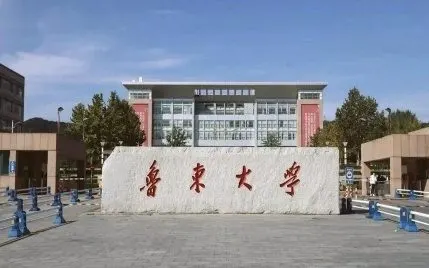
Shandong University (SDU for short; in Chinese 山东大学) is a public research university under the Ministry of Education of the PRC. Its main base is Jinan, the capital of Shandong Province, but SDU's unified system also includes campuses in Qingdao and Weihai. The correct Russian name translates as 'Shandong University'; searches also turn up a form meaning 'University of Shandong', a variant transliteration and a common misspelling. In international documents the university is called Shandong University; its full Chinese name is 山东大学 (pinyin Shāndōng Dàxué), and in China it is known for short as 山大 (Shāndà), an abbreviation formed from the first characters of the full name.
SDU joined Project 211 in 1997 and Project 985 in 2001; today it takes part in the national Double First-Class (双一流) programme. In the programme's second round it has four disciplines: mathematics, chemistry, clinical medicine, and Chinese language and literature. Projects 211 and 985 no longer admit new universities, so SDU's participation in them is a historical status, while Double First-Class remains current.
Below, Nihao Study has gathered the essentials for a 2026 applicant: SDU's key figures and rankings, programmes for international students, HSK and CSCA requirements, accommodation, scholarships and the application procedure. Double-check your chosen programme against the university's official admissions announcement.

The figures below come from the university's fact sheet updated on 1 April 2026. It is more recent than SDU's general English-language profile, which still contains outdated figures on the number of programmes and research platforms.
| Indicator | Value | What it means for applicants |
|---|---|---|
| Year founded | 1901 | one of the starting points of modern China's public higher education |
| Students | over 70,000 | a large academic community |
| Locations | 3 cities, 8 campuses | you may study outside Jinan as well |
| Programmes and degrees | bachelor's: 102 majors; first-level disciplines: doctoral 53, master's 56; postdoctoral stations 45 | you can continue your studies level by level |
| Research and medicine | national key laboratories: 11; affiliated hospitals of its own: 5 | a base for laboratory work and clinical training |
| International links | over 300 partner institutions in 45 countries and regions | exchange opportunities depend on the school and on whether an agreement is in force |
| Main address | 27 Shanda Nanlu, Jinan, 250100 | home to the central campus and the admissions office for international students |
SDU's official history dates back to 1901. That was when the Governor of Shandong, Yuan Shikai, submitted to the Guangxu Emperor a draft charter for a new educational institution. According to SDU itself, it is one of the first public universities of modern China and the first to be established under a formal charter. The date matters not in itself but because it explains the university's long, strong tradition in the humanities, law and administration.
After that, the story did not follow a straight line. In 1926, Provincial Shandong University was created in Jinan from six specialised schools. In 1930, National Tsingtao University opened in Qingdao, and in 1932 it was renamed National Shandong University. In 1951 the university merged with East China University while keeping the name Shandong University, and in 1958 it moved from Qingdao back to Jinan.
SDU took its present form on 22 July 2000, when three universities merged: the former Shandong University, Shandong Medical University and Shandong University of Technology. Hence its unusually broad profile: alongside strong literature and history, it is developing mathematics, engineering and a large medical system. The Weihai campus has been running since 1984, and the university sums up its current model as 'three cities, eight campuses, one university'.
SDU's positions in different rankings vary considerably, and this is not a mistake. QS assesses reputation among academics and employers, international mix and citations. THE has its own model for evaluating teaching and research. ARWU focuses more on research achievements, CWUR on research output and graduates' careers, while EduRank bases its assessment on bibliometrics. So it is best to take a range from the table rather than look for a single 'correct' position.
| Ranking | Position and edition | Comment |
|---|---|---|
| QS World University Rankings | 309th place, 2027 edition | the latest QS edition published so far |
| Times Higher Education | 251 to 300 band, 2026 edition | 176 to 200 band for engineering and physical sciences |
| ARWU | 101 to 150 band, 2025 edition | a strong result under ShanghaiRanking's research methodology |
| CWUR | world: 153, China: 19, 2026 edition | 83rd place for the research component alone |
| EduRank | world: 336, China: 16, 2026 edition | the assessment is based mainly on publications and their citations |
| U.S. News Best Global Universities | 238th place, 2025/26 edition | the official U.S. News page cannot be opened for automated checking, so the position was verified through a rankings aggregator |
Individual subjects show more clearly why students choose SDU in particular. The ShanghaiRanking 2025 edition assessed 45 of the university's disciplines. Its best global positions are mining engineering at 14th, instrument science at 20th, metallurgical engineering at 25th, chemical engineering at 27th, nanoscience at 30th and chemistry at 33rd. According to ESI data from January 2026, 20 SDU disciplines were in the world's top 1 per cent, while clinical medicine, chemistry, engineering, computer science, ecology/environment, materials science, biology and biochemistry, and pharmacology and toxicology were in the top 0.1 per cent.
Mathematics at SDU is not a supporting department but one of the university's four disciplines in the second round of Double First-Class. Within it, the university develops cryptography, financial mathematics, data analysis and interdisciplinary computing. In the EduRank 2026 subject ranking, SDU's applied mathematics placed 49th in the world. Graduates can go into pure mathematics or into fintech, information security or artificial intelligence.
Chemistry is also on the national Double First-Class list. In SDU's research it is closely linked to crystal materials, colloid chemistry, new drug development, materials science and manufacturing technologies. The university reports 11 national key laboratories and considers its work on crystal materials and underground construction to be world-class. This base suits students who need laboratory practice as well as lectures.
The fourth Double First-Class discipline is clinical medicine; SDU's medical system includes five affiliated hospitals of its own. For international students there is a six-year English-taught clinical medicine programme. Chinese language and literature is on the same national list. Medicine, the exact sciences and a classical humanities school in one university are what set SDU apart from specialised universities.
The university covers almost all major fields of knowledge except military science. When choosing a programme, it is easier to think in terms of six broad groups of fields rather than dozens of separate schools.
According to the latest fact sheet, SDU has 102 bachelor's majors, as well as 53 doctoral and 56 master's first-level disciplines. 'School' and 'College' in the English names are units of one university, not separate colleges. Where you will study is shown in the programme list: medicine is usually based at the Baotuquan campus, some engineering majors at Xinglongshan and Qianfoshan, and computer science and political science programmes may be taught in Qingdao.
For the 2026/27 academic year there are programmes taught in both Chinese and English. The key English-taught fields include clinical medicine, biomedical engineering, electrical engineering, mechanical manufacturing and automation, business, tourism, English language and nursing. For master's level, China Studies, international relations, project management, global health and cross-border e-commerce are listed separately.
| Level | Fields and language | Duration |
|---|---|---|
| Bachelor's in Chinese | finance, economics, computer science, international trade, medicine, engineering | usually 4 years; clinical pharmacy 5 years |
| Bachelor's in English | medicine, dentistry, nursing, tourism, mechanical engineering, intelligent manufacturing | 4 to 6 years |
| Master's Degree | Chinese- or English-taught programmes in the humanities, economics, engineering and medicine | most often 2 to 3 years |
| Doctoral (PhD) Programmes | physics, chemistry, economics, materials, medicine and other research fields | mostly 4 years |
| Chinese Language | intensive Chinese course, HSK preparation, culture modules | a semester or an academic year |
| Foundation programme | Chinese and subject-specific language, mathematics or chemistry | a semester or an academic year |
There is no single HSK threshold for all Chinese-taught programme competitions. For the regular bachelor's intake in 2025, HSK 5 with at least 180 points was required. For the current scholarship track, the university lists these minimums: bachelor's, HSK 4 with 210 points or more; master's, HSK 5 with 180 or more; doctoral, HSK 6 with 180 or more. From 2026, bachelor's applicants also need a CSCA result; the subjects depend on the major, and for MBBS they are mathematics and chemistry. Before applying, check the latest version of the guide and the HSK exam dates.
The tuition fee depends on the level, field and language of the programme; on top of it you pay a non-refundable application fee and annual medical insurance. Check the current 2026 amounts on SDU's official website, and pay only against the university's official invoice.
In Jinan, international students are housed mainly in two places: the central campus (27 Shanda Nanlu) and the Baotuquan medical campus (44 Wenhua West Road). Shared kitchens and laundries are on each floor, and some buildings also have self-study rooms.
| Campuses | Accommodation options | Conditions |
|---|---|---|
| Central and Baotuquan | both campuses have single and double rooms | furnished rooms, paid per semester or per academic year |
A dormitory place does not come automatically with admission: you first need to receive your admission notice and then submit a separate room application. If your programme is in Qingdao or Weihai, different rates and procedures apply there.
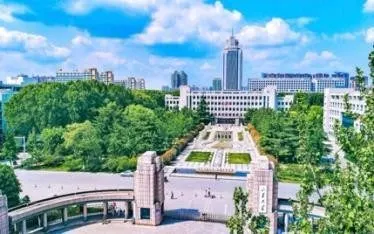
The central campus is within Jinan's city limits, while Baotuquan, where medical students study, is close to the historic centre and the city's springs. Jinan Yaoqiang Airport is about 36 kilometres from the central campus, 45 to 50 minutes by taxi; to Baotuquan it is about 37 kilometres, 40 to 60 minutes. Jinan Railway Station is about 7 kilometres from the central campus and about 4.5 kilometres from Baotuquan. These figures are approximate and depend on traffic, so it is best to check the route again on the day you arrive.
A full CSC scholarship usually covers tuition, a dormitory place or an accommodation allowance, medical insurance and a monthly stipend, according to the rules of the specific programme. Selection is competitive. To improve your chances, apply early, attach a strong transcript and a clear study or research plan, and keep a self-funded option as a back-up just in case.
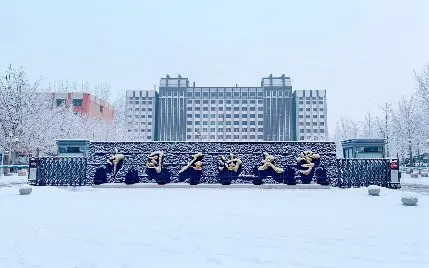
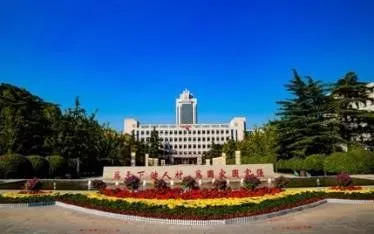
Each of the eight campuses has its own character. The central campus houses the international office and suits humanities and economics programmes. Baotuquan is dedicated to medicine. Hongjialou is known for its historic architecture and language programmes. Qianfoshan and Xinglongshan host the engineering schools. The Software Park campus focuses on IT, while Qingdao and Weihai are major branches of a single university.
The SDU museum holds more than 40,000 items, 17,000 of which are cultural relics. A substantial part of its archaeological collection was gathered in Shandong province by the university's own teachers and students. The campuses have libraries, stadiums and sports grounds, canteens, banks and spaces for experiencing culture. International first-year students attend an orientation covering the medical check-up, banking, mobile services, course selection and campus facilities.
Russian speakers may find the Russian language department useful: according to the university, it is one of the oldest Russian departments in China. In 2025, SDU renewed its partnerships with HSE University, RUDN University and MEPhI, discussing exchanges, joint research and student training. The cooperation plan with RUDN University has been signed for 2025–2028.
| University and Chinese name | Type and city | Main focus |
|---|---|---|
| Shandong University, SDU, 山东大学 | Jinan, national comprehensive university | 985, 211, Double First-Class |
| Shandong Normal University, SDNU, 山东师范大学 | Jinan, provincial university | education, humanities and natural sciences |
| Shandong University of Finance and Economics, SDUFE, 山东财经大学 | Jinan, specialised university | finance, economics, management |
| University of Jinan, UJN, 济南大学 | Jinan, provincial comprehensive university | a broad range of applied fields |
| Shandong Jianzhu University, SDJZU, 山东建筑大学 | Jinan, engineering university | architecture, construction, civil engineering |
The most confusion arises between Shandong University and Shandong University of Technology. The latter is located in Zibo, is written 山东理工大学 in Chinese and is not an SDU campus. In your application, always check the Chinese name 山东大学, the abbreviation SDU and the CSC code 10422.
1) The main Russian form means ‘Shandong University’; it is used by the Russian-language version of the SDU website. 2) A Russian spelling without the soft sign does occur, but it matches the standard Russian spelling of the province's name less well. 3) A spelling with an extra soft sign at the end is a mistake. 4) ‘University of Shandong’ is a calque of the English word order that turns up in search queries. 5) Shandong University is the official international name. 6) SDU is the official abbreviation, and 山大 (Shāndà) is the Chinese abbreviation. 7) 山东大学 (Shāndōng Dàxué) is the full name in Chinese.
Yes. The university was included in Project 211 in 1997 and in Project 985 in 2001. In the second, current round of Double First-Class, its designated disciplines are mathematics, chemistry, clinical medicine, and Chinese language and literature.
Certain bachelor's and master's programmes are taught in English, among them medicine, engineering fields, China Studies and Global Health. The current list has no full programme in Russian for international students. Partnerships with Russian universities do not mean you can study in Russian.
It depends on the programme and the source of funding. For regular bachelor's programmes in Chinese, the guide specifies HSK 5 with at least 180 points; for the scholarship bachelor's track, HSK 4 with at least 210. On the same track, master's programmes require HSK 5 with 180 or more and doctoral programmes HSK 6 with 180 or more.
Yes, from the 2026 intake onwards the CSCA is a compulsory requirement for bachelor's programmes. Which subjects you take depends on the major; for clinical medicine in English they are mathematics and chemistry.
The amount depends on the level, field and language of the programme: humanities and economics, engineering and medicine are charged differently, and English-taught programmes and MBBS are priced separately. Current figures are published on the university's official website, and payment is made against an official invoice.
The price depends on the campus, the type of accommodation (single or double room) and the bathroom. Check current rates on the university's official website.
Yes: the university accepts Chinese Government Scholarship applications through two routes, Type A and Type B. For Type B, the agency code 10422 is given; selection is competitive.
SDU's Weihai campus holds computer-based HSK 4, HSK 5 and HSK 6 exams and the oral HSKK. Check specific dates and whether external candidates can register in the official calendar; if you need the BCT, look for it at other exam centres in Jinan.
As a rule: passport, school certificate with transcript, certified translations, language certificate, CSCA result for the 2026 intake, medical form, police clearance certificate, photos and a financial guarantee. The final list and templates are set by the 2026 admission rules.
SDU is a national comprehensive university under the Ministry of Education; it has 985, 211 and Double First-Class status. SDNU is a provincial university focused on teacher training. SDUFE specialises in finance, economics and management. These are three independent universities, each with its own Chinese name and its own application system.
Jinan (济南), the capital of Shandong Province, is called the 'City of Springs'. It is famous for Daming Lake and Baotu Spring, which ancient poets already wrote about. The city lies halfway between Beijing and Shanghai.
Here students will find a solid classical education at large universities (Shandong University), a lively city life with shopping centres and parks, and a convenient base for trips across the whole country — Jinan is a major railway hub. For parents, it matters that the city is safe and stable, healthcare is well developed, and living costs are moderate even though it is a provincial capital, while the campuses are well organised, guarded and supportive of international students.
You work with Nihao Study specialists. They will help you put together a portfolio and a set of documents, draw up a study plan and choose a university or college and a specialty that genuinely interest you.
We take care of every stage of admission, from choosing to enrolment
We will gather, prepare, certify and send your documents to the institution
We will show the admissions committee your strengths
We run training sessions and courses so you can prepare with more confidence
We will help you settle in at the start of your studies and keep moving forward
Nihao Study specialists select universities and colleges that match the applicant's goals and means. We make sure the teachers are practitioners and that the knowledge will be useful in your profession.
We examine curricula, talk to students and teachers and look at which specialties employers need, and use this information to select options for the applicant.
Advisers guide the applicant from the first consultation to enrolment, help build a plan and spot mistakes in time that could get in the way.
The cost of our support depends on the programme and the partner university; you'll get an exact quote after a free consultation.
Get a quoteA free 15-minute consultation: together we will choose a university or college and a programme that suit your goals and budget.
Apply with peace of mind: we handle the documents, deadlines and correspondence with admissions committees, and you save time and energy.
Don't want to wait for a call? Message us in the chat.
Message us in chat 
University · Linyi
Language courses · Bachelor's Degree · Master's Degree