- Language courses
- English, Chinese
- Bachelor's Degree
- English, Chinese
- Master's Degree
- English, Chinese
- Accommodation from 600 ¥/month
QU · 青岛大学
Qingdao University accepts international students on programmes in the following fields: engineering, medicine, natural sciences. Choose the level and programme that suit your goals.
Chinese language study at the university — from a few weeks to a year or longer. Suitable for those starting from scratch or preparing for the HSK before entering a main programme.
self-funded · language programme
The first level of higher education: usually four years of study, specialised subjects, internships and a graduation thesis. It opens the way to working in your field and to a master's degree.
self-funded
Advanced study after a bachelor's degree: research, applied projects and internships. It helps you become an expert in your chosen field and broaden your career opportunities.
self-funded
Qingdao University is located in Qingdao. Nihao Study consultants keep track of the deadlines and admission requirements of this university, and you can always check the most accurate and up-to-date information on its official website. In university rankings, it is ranked 137 in China and 960 worldwide.
Come for a face-to-face meeting: together we will go through the requirements, deadlines, documents and study options that suit you.

At the meeting we will look at your situation, tell you which documents to prepare and by when, talk about possible programmes and help you decide on the next step.
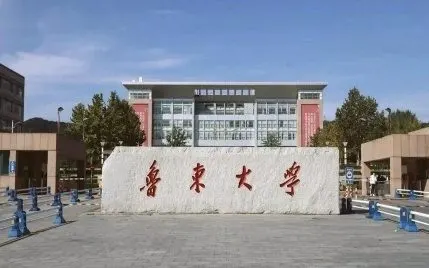
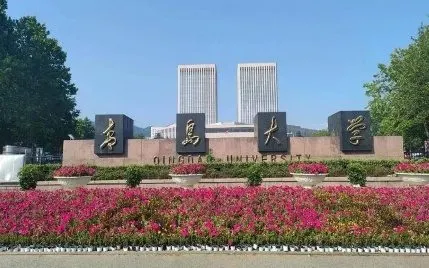
Qingdao University (QU for short; Chinese 青岛大学, pinyin Qīngdǎo Dàxué) is a public comprehensive university in Qingdao, Shandong Province. In Russian it is also called by names meaning 'Qingdao University' (in adjectival form) or 'University of Qingdao City'; Chinese students use the short form 青大 (Qīngdà), derived from the full name. The English name Qingdao University and the abbreviation QU are considered official.
QU's status is that of a key provincial comprehensive university jointly supported by Shandong Province and the city of Qingdao. It is not part of Projects 985 and 211 and is not in the national Double First-Class (双一流) programme either: it does not appear on the official lists of the Ministry of Education of the PRC. It is most accurately described as a strong provincial research university selected by Shandong for its high-level university programme in the 冲一流 category.
On this page Nihao Study has gathered what matters to a 2026 applicant: QU's status and rankings, programmes, HSK and CSCA requirements, accommodation, scholarships, documents and universities with similar names.
The information on QU is given as of May 2026; it describes the university as a whole rather than any particular intake of international students.
| Indicator | Value |
|---|---|
| Founded | 1909 |
| Structure after the merger | since 1993 |
| Campuses | Fushan, Jinjialing and Songshan, 3 in total |
| Area and buildings | 2,496 mu, 1.119 million m² |
| Students | more than 42,000, including more than 600 international students |
| Teaching staff | more than 2,600 full-time teaching staff |
| Units | 28 colleges and Qingdao Medical College |
| Bachelor's programmes, 2026 intake | 83 majors |
| International office address | 308 Ningxia Road, Qingdao, 266071 |
International rankings count students using their own methodology: THE gives 42,202 students and QS 41,234. Their figures should therefore not be compared directly with QU's internal statistics.
The university traces its history back to the Qingdao Special Higher School, which opened in 1909. According to the official chronicle, it taught law and administration, engineering, medicine, agriculture and forestry. The most continuous line of succession is in medical education: the clinical base was the hospital that grew into today's Affiliated Hospital of QU.
The present university took shape in 1993, when the former Qingdao University, Qingdao Medical College, Shandong Textile Engineering College and Qingdao Normal College merged. Other educational institutions joined later, but it is the 1993 merger that explains why medicine, textiles, engineering, education and the humanities sit side by side here today. According to its current profile, the university already has almost 500,000 graduates.
Qingdao University is visible in research rankings even though it does not hold the national 985, 211 or Double First-Class labels. There is no contradiction here: administrative status and bibliometric indicators assess a university from different angles.
| Ranking | Position | Edition |
|---|---|---|
| ARWU | 301–400 band | 2025 |
| U.S. News Best Global Universities | 371st in the world, 51st in China | 2025 or 2026 |
| THE World University Rankings | 601–800 band | 2026 |
| CWUR | 376th in the world, 65th in China | 2026 |
| EduRank | 1131st in the world, 80th in China | 2026 |
| ShanghaiRanking Best Chinese Universities | 108th | 2026 |
The university is not in the main QS world table, but in the QS 2026 subject rankings it falls within the 401 to 550 band. This is a result for individual subjects, and presenting it as an overall world ranking is incorrect. Applicants would do better to weigh several things at once (the discipline, the language of the programme, the laboratory and the supervisor) rather than look for a single universal figure.
The legacy of the former Shandong Textile Engineering College has grown into a present-day research specialisation. In the ShanghaiRanking Global Ranking of Academic Subjects 2025, QU's Textile Science and Engineering ranks 4th in the world; another field, Automation and Control, is in the 51 to 75 band. For those drawn to industrial design, fibres and functional materials, automation or sustainable manufacturing, this is a strong argument.
QU has 12 affiliated hospitals and 5 teaching hospitals. The medical division brings together pharmacy, biology, public health, clinical practice and interdisciplinary research. According to the current profile, four fields are in the ESI top 0.1 per cent (chemistry, engineering, materials science, and pharmacology and toxicology), and another 18 fields are in the top 1 per cent.
In the 2025 national subject ranking, QU's Systems Science ranked 4th in China for the second year running, while Textile Science and Engineering came 6th. The ShanghaiRanking 2025 global subject rankings included 29 of the university's disciplines; U.S. News included 33, with 11 of them in the world's top hundred. These figures describe the research side of the university, not the list of English-taught programmes for international students.
The university covers 11 broad fields of knowledge: natural sciences and engineering, medicine, economics, law, education, literature, management, art, and interdisciplinary programmes. It is easier to choose if you group them into four clusters.
QU has 16 first-level academic doctoral disciplines, 4 categories of professional doctorates, 39 academic master's disciplines and 31 categories of professional master's degrees. 39 bachelor's programmes hold national first-class programme status, and another 17 have the same status at provincial level. The university's partner network includes 245 universities in 40 countries and regions.
For the 2026 intake, bachelor's programmes are mainly taught in Chinese, with some in English; the standard length of study is 4 to 6 years.
| Field | Language and duration | Main requirement |
|---|---|---|
| Chinese Language and Literature | Chinese, 4 years | HSK 4 with 210+ and HSKK Intermediate with 60+ |
| Chinese plus international politics or business | Chinese, 4 years | HSK 4 with 180+ |
| General bachelor's programmes in the same groups as Chinese students | Chinese | HSK 6 with 180+ |
| MBBS | English, 6 years | separate application for the medical programme |
| Master's and doctoral programmes | Chinese or English | HSK 5, or IELTS 6.0 or higher, or TOEFL 75 or higher |
From 2026, all international applicants to bachelor's programmes must submit a valid CSCA result; the subjects to be taken are set by the programme. The Chinese language programme also required a CSCA mathematics result, and the double-degree programmes additionally required Professional Chinese for Humanities.
In the 2026 cycle, the deadline for regular bachelor's programmes fell on 31 May, and for master's and doctoral programmes on 15 May. These dates apply to that specific intake and cannot automatically be carried over to the following year.
The university publishes tuition fees, the application fee and the cost of insurance in its official admissions guides, and issues the invoice for the chosen programme itself. Check the current amounts on the QU website. Bear in mind that if a student leaves for personal reasons, tuition fees are not refunded, so pay them only after official confirmation.
The international dormitories have single and double rooms; scholarship holders and exchange students are usually accommodated two to a room. Self-funded students have to book a room themselves, as they are not guaranteed an automatically assigned place.
According to the university, the rooms have heating and air conditioning, each with its own shower and toilet; kitchens and washing machines are shared. The room type, building, number of roommates, deposit amount and refund procedure should be checked against the latest notice from the university.
The university gives the cost of canteen meals and dormitory internet only as everyday guidelines, not as a fixed rate for the coming year.
The official 2026 guide lists four main scholarship options: the Chinese Government Scholarship, the International Chinese Language Teachers Scholarship, the Shandong Provincial Government Scholarship and the QU President Scholarship.
Scholarships are awarded competitively. Those who receive long-term funding are reviewed every year on their academic performance, attendance and conduct. It is wise to prepare a self-funded option in parallel.
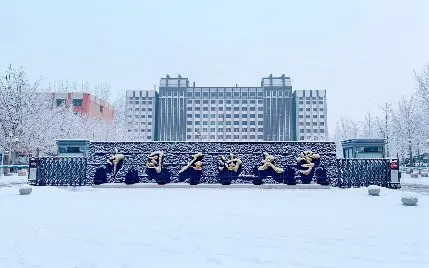
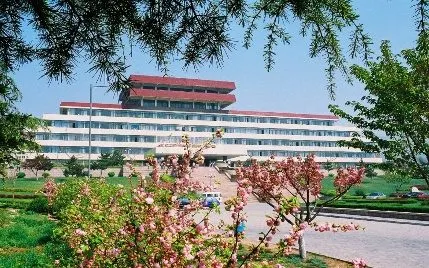
Fushan, Jinjialing and Songshan are three very different urban settings. The library holds 3.394 million print books and 1.716 million e-books; in addition, the university has a large network of teaching and research facilities. Campus canteens accept payment by student card, and the international college runs optional classes in tea culture, calligraphy, guqin and other practices.
QU is worth considering for those who want a strong multidisciplinary university and for whom national 985 or 211 status is not essential. It makes particular sense to look here for a programme at the intersection of fields: materials and textiles, manufacturing and automation, biomedicine and medicine, data analysis and systems science. The broad profile is also convenient when an applicant is still choosing between related fields but already knows which language they want to study in and what career they want to build.
This university may not suit someone who chooses solely by national administrative category. If you are interested in marine sciences, compare it separately with OUC in Qingdao; if oil and gas, with UPC. Future doctors should find out in advance which language clinical training is conducted in, which hospital serves as the base and how the degree is recognised in their country. Even if the programme is taught in English, you will still need Chinese in everyday life and when dealing with the administration.
Before applying, it is useful to draw up a short decision card: the exact programme name, campus, language, annual cost, dormitory, scholarship, deadline and a back-up option. For each item, add a link to the official guide and note when you checked it. That way you can see at once what has been confirmed and what is left over from outdated sources. If an aggregator's data and the international office's information differ, an official letter from QU is decisive.
For the 2026 intake, bachelor's applicants had to be under 25, hold a secondary school certificate and meet the programme's language and academic thresholds. Master's programmes accept holders of a bachelor's degree, and doctoral programmes holders of a master's degree; age limits of 35 and 40 applied to certain scholarships.
If anything about translations, payment or choice of campus is unclear, the answer from QU's international office is decisive.
In English-language searches, the names of several universities begin with the word Qingdao, but they are independent universities, each with its own status and application procedure.
| University and Chinese name | Type | Main focus |
|---|---|---|
| Qingdao University, QU, 青岛大学 | provincial-level comprehensive university | medicine, textiles, materials and many other disciplines |
| Ocean University of China, OUC, 中国海洋大学 | 985, 211, Double First-Class | oceanography, fisheries |
| China University of Petroleum (East China), UPC, 中国石油大学(华东) | 211, Double First-Class | oil, geology, energy |
| Qingdao University of Science and Technology, QUST, 青岛科技大学 | provincial-level technological university | chemistry, materials, engineering |
| Qingdao University of Technology, QUT, 青岛理工大学 | provincial-level technological university | construction, architecture, engineering |
To avoid mistakes, check the combination Qingdao University, QU and 青岛大学. The name of OUC contains the word Ocean, QUST has Science and Technology, and QUT has Technology. The full name and the characters must match across all your papers: the invoice, the invitation and the JW form.
The main Russian form means ‘University of Qingdao’. A Russian adjective form, ‘Qingdao’s University’, is an understandable translation but not the main one in this article, while ‘University of the City of Qingdao’ is merely an explanatory calque. The official English name is Qingdao University. The abbreviation QU is used by the international admissions office; the domain qdu.edu.cn belongs to the same university, not to a different institution. 青大 (Qīngdà) is the Chinese abbreviation, and 青岛大学 (Qīngdǎo Dàxué) is the full Chinese name.
No. Qingdao University is not on any of the three official national lists. It is correctly described as a key provincial-level comprehensive university taking part in Shandong's programme for high-level universities.
Certain programmes are available in English, including MBBS. There are no degree programmes in Russian. According to the admissions guide, a candidate from a country where English is not the native language needs IELTS 6.0 or above, TOEFL 75 or above, or recognised proof that their previous education was in English for master's programmes.
It depends on the programme. Chinese language and literature: HSK 4 with at least 210 and HSKK with at least 60; two dual programmes: HSK 4 with at least 180; general bachelor's programmes in Chinese: HSK 6 with at least 180; master's and doctoral programmes in Chinese: HSK 5.
The cost depends on the level and field of the programme. The university publishes current rates in its admissions guides and issues the invoice itself, so check the amount on QU's official website.
It depends on the building and the room type; current terms are published on the university's official website.
Yes, if you win the competition in the relevant category. CSC pays for tuition, a basic dormitory place and insurance, and also pays a monthly allowance, which differs for master's and doctoral students. A nomination from QU does not yet mean a final decision by CSC.
The admissions office requires the HSK, but the university itself is not a venue for HSK or BCT exams. Accepting a certificate and holding the exam are different things. Find a test centre using the official exam centre search.
The office is in the Minxing Building: 308 Ningxia Road, Qingdao, Shandong, 266071. Find out which campus your classes will be on before booking accommodation.
QU is a broad-based provincial university with strengths in medicine, textiles and materials. OUC is a separate 985 and 211 university, and its Double First-Class fields are marine sciences and fisheries.
You will need a passport, a transcript, a secondary education certificate, a CV, a language certificate, an applicant's pledge, a CSCA result, a medical form, a financial guarantee and a police clearance certificate. Documents not in Chinese or English must be accompanied by a certified translation.
Qingdao (青岛) is the main seaside resort of northern China, on the coast of the Yellow Sea. The city is famous for its German architecture and long beaches, and in 2008 it hosted the Olympic sailing events. Qingdao is home to the Ocean University of China and Qingdao University.
In Qingdao, a good education goes together with life by the sea and a mild maritime climate. Work placements are available in shipbuilding and other marine industries. The city has 8 metro lines, many beaches and parks, and a noticeable international community. Parents value the safety, clean air, modern healthcare, international airport, European-style architecture and well-thought-out campuses, with dormitories and dedicated services that help international students.
You work with Nihao Study specialists. They will help you put together a portfolio and a set of documents, draw up a study plan and choose a university or college and a specialty that genuinely interest you.
We take care of every stage of admission, from choosing to enrolment
We will gather, prepare, certify and send your documents to the institution
We will show the admissions committee your strengths
We run training sessions and courses so you can prepare with more confidence
We will help you settle in at the start of your studies and keep moving forward
Nihao Study specialists select universities and colleges that match the applicant's goals and means. We make sure the teachers are practitioners and that the knowledge will be useful in your profession.
We examine curricula, talk to students and teachers and look at which specialties employers need, and use this information to select options for the applicant.
Advisers guide the applicant from the first consultation to enrolment, help build a plan and spot mistakes in time that could get in the way.
The cost of our support depends on the programme and the partner university; you'll get an exact quote after a free consultation.
Get a quoteA free 15-minute consultation: together we will choose a university or college and a programme that suit your goals and budget.
Apply with peace of mind: we handle the documents, deadlines and correspondence with admissions committees, and you save time and energy.
Don't want to wait for a call? Message us in the chat.
Message us in chat 
University · Linyi
Language courses · Bachelor's Degree · Master's Degree