- Language courses
- English, Chinese
- Bachelor's Degree
- English, Chinese
- Master's Degree
- English, Chinese
- Doctoral (PhD) Programmes
- English, Chinese
- Accommodation from 7 200 ¥/year
NJUIT · 南京工业职业技术大学
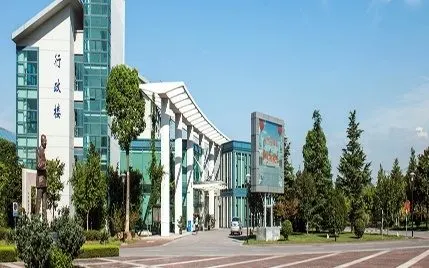
Nanjing Vocational University of Industry Technology accepts international students on programmes in the following fields: natural sciences. Choose the level and programme that suit your goals.
Chinese language study at the university — from a few weeks to a year or longer. Suitable for those starting from scratch or preparing for the HSK before entering a main programme.
self-funded · language programme
The first level of higher education: usually four years of study, specialised subjects, internships and a graduation thesis. It opens the way to working in your field and to a master's degree.
self-funded
Advanced study after a bachelor's degree: research, applied projects and internships. It helps you become an expert in your chosen field and broaden your career opportunities.
self-funded
Nanjing Vocational University of Industry Technology is located in Nanjing. Nihao Study consultants keep track of the deadlines and admission requirements of this university, and you can always check the most accurate and up-to-date information on its official website. In university rankings, it is ranked 618 in China and 4435 worldwide.
Come for a face-to-face meeting: together we will go through the requirements, deadlines, documents and study options that suit you.

At the meeting we will look at your situation, tell you which documents to prepare and by when, talk about possible programmes and help you decide on the next step.
Nanjing Vocational University of Industry Technology (NJUIT) is a public university in Nanjing that trains bachelor's graduates through vocational programmes. Its name is rendered in Russian in several ways, translating roughly as 'Nanjing Professional University of Industrial Technologies', 'Nanjing University of Industrial Technologies' and 'Nanjing Industrial Vocational and Technical University'. The English version of the official website also uses the short form Nanjing University of Industry Technology. The Chinese name is 南京工业职业技术大学 (pinyin Nánjīng Gōngyè Zhíyè Jìshù Dàxué), and in everyday use the university is often called by the abbreviation 南工院.
This is a fully fledged applied university, not a college that has simply changed its sign. The Ministry of Education of the PRC chose NJUIT as the first public institution to pilot vocational bachelor's degrees. A graduate who meets the programme requirements receives both a bachelor's diploma and a bachelor's degree. The main emphasis is on laboratory work, practical training, solving production problems and workplace skills. This is not the same as the classic research track, where a bachelor's degree is necessarily followed by a master's and a doctorate.
Admission requirements for international students are updated more often than general information about the university, so before applying, check the current intake in NJUIT's English-language admissions guide.

As of June 2026, NJUIT is a well-established vocational university, not a small experimental college.
| Item | Data | Comment |
|---|---|---|
| Year founded | 1918 | Its history begins with the Chinese Vocational School |
| Status | Public vocational university at bachelor's level | Trains practice-oriented bachelor's graduates |
| Campuses | Xianlin, Zhongshan, Tiantan and the planned Longpao campus | Main address: Xianlin University Town |
| Area | 1360 mu, buildings of 460,000 sq m | A large base for study and practical training |
| Programmes | 43 bachelor's programmes | A broader range than a classic industrial college |
| Students | 21,136 full-time students, including 20,073 bachelor's students | The main level of study is the bachelor's degree |
| International students | 260 international students (as of June 2026) | Admitting international students is an active area of work |
| Teaching staff | 1238 staff; over 92 per cent of teachers hold dual qualifications | Theory is combined with industry practice |
NJUIT traces its roots to the Chinese Vocational School, opened in Shanghai in 1918 by the educator and public figure Huang Yanpei. According to the university's official history, it was the first school in China to have the word "vocational" in its name. For today's applicant, the founding date is not the only point of interest: even back then, teaching was built on a combination of manual work, technology and thinking. In other words, the university's current applied approach rests on a long tradition.
In 1954 the school was reorganised as the Shanghai Machinery School. In 1960 it was moved to Nanjing, where it became the Nanjing Electromechanical School of the Ministry of Light Industry. In 1998 control of the institution was transferred to Jiangsu Province, and in 1999 it was reorganised as Nanjing Institute of Industry Technology.
The institution gained bachelor's university status in two stages. First, in 2019, it was entrusted with a pilot vocational bachelor's programme; then, in June 2020, the Ministry of Education approved the name 南京工业职业技术大学. The first vocational bachelor's graduates completed their studies in 2022, so the new model was confirmed not only on paper but by an actual graduating class.
It makes more sense to compare NJUIT with other vocational and applied universities than with Nanjing's major research universities. In 2025 ShanghaiRanking placed it 8th among China's vocational and technical universities, with a score of 230.9 points. In July 2026 the publication China Jiangsu reported that NJUIT had risen to 5th place in ShanghaiRanking's national ranking of vocational universities, becoming the top such university in Jiangsu Province. In the 2026 ABC ranking, NJUIT holds 2nd place in the category of bachelor's-level vocational universities.
| Ranking | Position | How to read it |
|---|---|---|
| ShanghaiRanking, vocational universities | 5th place in 2026 | The most telling comparison within China |
| ABC, vocational universities | 2nd place in 2026 | Another view of the applied sector |
| ShanghaiRanking, vocational universities | 8th place in 2025 | Shows the trend over time |
NJUIT is not included in the second Double First-Class list and did not take part in the former Project 211 and Project 985. The official Double First-Class list contains 147 universities of a different, research-oriented type, and the 985 list includes 39 universities; NJUIT is not among them. Project 211 also has its own closed list approved by the Ministry of Education.
Double First-Class should not be confused with the 双高 programme, the Double High Plan, which is designed for vocational education. In 2025 NJUIT was included in the new round of the Double High Plan; this status is directly linked to the development of vocational bachelor's programmes and serves as sector-specific recognition for universities of this type.
NJUIT has no separate page in the main editions of the THE, CWUR, U.S. News and EduRank rankings; if you confuse it with Nanjing Tech University or Nanjing Institute of Technology, you will get the wrong figures. ESI is also a poor main indicator for a young vocational university: for now, NJUIT is listed only as a project site that may in future gain the right to award master's degrees.
What sets NJUIT apart from a conventional academic bachelor's programme is above all the way teaching is organised. The university reports that over 92 per cent of its teachers are 双师型, i.e. "dual-qualified" specialists who hold both teaching and practical professional qualifications. Together with major companies, the university has set up 18 joint platforms, and it has close cooperation with 33 Fortune Global 500 companies. For students this means more project and production work, although a specific internship is not guaranteed.
The academic profile centres on intelligent equipment, automation, energy, electronics, software engineering, aviation maintenance, transport and industrial design. How applied the training is can be seen from the curriculum for new energy vehicles: it combines electrical engineering, engineering graphics, electronic systems, diagnostics and testing.
NJUIT cooperates with more than 100 organisations and universities from 50 countries and regions. The university promotes a "Chinese language plus vocational skills" model and has opened sites in Zambia, Cambodia and Malaysia. In 2024 the Ministry of Education highlighted 7 bachelor's programmes built on a China–Cambodia model. For an applicant who values an international environment with an industry focus, this is a notable advantage.
NJUIT's academic units cover aviation, transport, electronics and integrated circuits, mechanical and electrical engineering, software and artificial intelligence, economics, trade, design and international education. Here the words School or 学院 refer to a structural unit of the university, not an independent college.
| Field group | Sample programmes | What is taught in practice |
|---|---|---|
| Intelligent manufacturing | mechatronics, automation, mechanical design | robotic systems, equipment, production lines |
| Energy and transport | new energy, power grids, new energy vehicles | operation of power systems and electric vehicles |
| Electronics and IT | electronic engineering, integrated circuits, software engineering | hardware, communications, software product development |
| Aviation | maintenance of aircraft and aircraft engines | repair, diagnostics, safe operation |
| Business and design | tourism, e-commerce, product design | service sector, online retail, industrial product aesthetics |
According to the English-language admissions guide for 2026, international students can apply for a vocational bachelor's programme lasting 4 academic years and a one-year non-degree Chinese language course. Nine bachelor's fields are advertised as bilingual, taught in Chinese and English. You will not be able to manage entirely without Chinese, so it is worth checking the language of individual modules and practical training before you apply.
| Programme type | Fields of study | Duration and language |
|---|---|---|
| Vocational bachelor's degree | mechatronics, new energy, electronic engineering | 4 years, Chinese and English |
| Vocational bachelor's degree | aviation maintenance, new energy vehicles, software engineering | 4 years, Chinese and English |
| Vocational bachelor's degree | tourism, e-commerce, product design | 4 years, Chinese and English |
| Language course | Chinese language, an overview of China, Chinese culture | 1 year, non-degree |
The joint institute of NJUIT and London South Bank University stands apart. In 2025 the Chinese Ministry of Education approved it as a unit without separate legal entity status; it offers three programmes: mechatronics, automation and new energy vehicle technology. The institute is designed for 1000 students, admits 250 people each year, and study lasts 4 years. Its rules do not automatically apply to NJUIT's regular international admissions.
In the 2026 guide, an HSK certificate is listed among the documents to submit if available; no single mandatory minimum has been published. In the archived 2019 guide, Chinese-taught programmes required HSK 4, and English-taught ones required TOEFL 80 or IELTS 6. Such archived requirements are only a rough guide and do not guarantee that admission conditions will be the same.
The practical conclusion is this: find out the language requirement for your specific programme and intake before submitting your documents. NJUIT is not listed as an HSK or BCT test centre, so do not count on taking the exam on campus. The university does run Chinese Bridge programmes and is developing the "Chinese language plus vocational skills" model, but that does not make it a test centre.
Fees for international students for the 2026 intake are announced separately, and the archived 2019 data no longer reflect the real cost now that the university has moved to vocational bachelor's programmes. Check the current tuition fee on the university's official website. In addition to tuition, your personal budget should cover food, local transport, phone and internet, study materials, a dormitory deposit and travel costs. Only pay against an invoice issued in NJUIT's admissions system, not using old bank details.
An archived international payments page mentions places in double rooms, but the price of accommodation for 2026 is confirmed only by the invoice you receive. So the room type, bathroom, utilities, bedding and deposit should be agreed in writing in advance.
In 2026 there were separate accommodation options at different prices for Chinese students, but they do not apply to the international dormitory. No detailed description of the rooms in the dormitory for international students is publicly available.
NJUIT admits international students and has taken part in government projects, for example training teachers from South Africa. The first 15 graduates of this project received bachelor's degrees from NJUIT in 2024. The university also runs Study in Jiangsu programmes and international vocational training courses. However, none of this means that any independent applicant can count on an open CSC quota.
The 2026 guide does not list a dedicated CSC scholarship, so promising that you can "study for free on a CSC scholarship" without individual confirmation would be a mistake. First study the CSC scholarship rules and check whether the university accepts scholarship holders, then ask NJUIT for the agency code and programme type.
The archived 2019 international guide mentioned several internal scholarships, but that information is out of date today. It is more realistic to check the following options:
Address of the main Xianlin campus: 1 Yangshan North Road, Xianlin University Town, Qixia District, Nanjing, Jiangsu Province, postcode 210023. Do not confuse it with Nangang District, which is in Harbin. The official directions are: take Metro Line 2 to Yangshan Park station, exit 1, then bus 321. Buses 50, 107, 146, 165, 310, 320, 325 and 331 also run to the various campus gates.
The campus has a library, student canteens, a sports area, engineering centres and practical training facilities. According to the university, the library holds 1.5 million books, and several industry centres operate on campus. The international atmosphere comes from programmes for students from dozens of countries, cultural events and Chinese language courses.
The bachelor's programmes accept foreign nationals aged 18 to 30 who have completed secondary education, with good grades and suitable health. If your case is non-standard (say, you are transferring from another university, hold a college diploma or fall outside the age range), rely on the admissions office's decision, not on an intermediary's opinion.
The names of these universities are easy to mix up in translation. The domains add further confusion: 南京工程学院 uses njit.edu.cn, while NJUIT, for historical reasons, uses the niit.edu.cn domain.
| University and Chinese name | Type | Main focus |
|---|---|---|
| Nanjing Vocational University of Industry Technology, NJUIT, 南京工业职业技术大学 | public vocational university | manufacturing, IT, transport; applied bachelor's degrees |
| Nanjing Tech University, 南京工业大学 | research university | materials, chemical technology, offers doctoral programmes |
| Nanjing Institute of Technology, 南京工程学院 | conventional university with an applied profile | mechanical engineering and energy, offers master's programmes |
NJUIT is chosen by those who want a vocational bachelor's degree and close links with industry. Nanjing Tech University focuses on research and has a well-established system of master's and doctoral programmes. Nanjing Institute of Technology, although practice-oriented, belongs to the regular bachelor's track and already trains master's students. So comparing these universities only by how the word technology is translated would be misleading.
The main Russian version here is the equivalent of “Nanjing Vocational University of Industrial Technology”. The literal translation is “Nanjing Industrial Vocational and Technical University”, while the short official English form corresponds to “Nanjing University of Industrial Technology”. The university's own international materials consistently use Nanjing Vocational University of Industry Technology; NJUIT is the working abbreviation, and 南工院 is the Chinese one.
The full original name is 南京工业职业技术大学, read as Nánjīng Gōngyè Zhíyè Jìshù Dàxué.
It is a public university that offers vocational bachelor's degree programmes. Standard programmes for international students last 4 years; graduates who meet all requirements receive a diploma and are awarded a bachelor's degree.
The 2026 guide lists 9 bachelor's programmes as bilingual, taught in Chinese and English. This does not mean the degree will be taught entirely in English. It is best to find out in advance how many modules are taught in English, what language the internship is in and what the requirements for the final project are.
No single mandatory level has been set for the 2026 intake: an HSK certificate is attached if you have one. The archived 2019 guide required HSK 4 for study in Chinese. The exact answer depends on the programme you choose; check exam dates in the official HSK schedule.
No. The university is not on the official Double First-Class and 985 lists, and 211 is a separate project from previous years. NJUIT does, however, take part in the Double High Plan, a dedicated programme for vocational education.
The current international rates have to be requested from the university itself: the figures the university published date from 2019 and are now out of date. The cost depends on the programme and the room type, so check it on the university's official website and do not make any payment until you receive a new official invoice.
The 2026 guide does not list an open CSC quota. Study the CSC terms and find out separately whether the type of scholarship you need is available, which agency code is required and which programmes it covers.
Its status as an exam centre has not been publicly confirmed. The university runs Chinese courses and Chinese Bridge programmes, but that is a different area of work. It is best to plan your exam at an official registered centre.
The main campus address is 1 North Yangshan Road, Xianlin University Town, Qixia District, Nanjing, 210023. According to the official route, take metro line 2 to Yangshan Park and change to bus 321 from exit 1.
NJUIT is a vocational university at bachelor's level. Nanjing Tech University is a research university with strong chemical engineering and doctoral programmes. Nanjing Institute of Technology is a regular applied university that offers master's programmes.
You will need your passport, a CV, a study plan, a notarised translation of your school certificate, a transcript of your school grades, a police clearance certificate, a medical form (valid for 6 months), proof of financial means and additional materials. An HSK certificate is attached if you have one.
Nanjing (南京), the 'Southern Capital', was ruled by six dynasties. The city preserves a rich historical heritage: the Sun Yat-sen Mausoleum and the Ming-dynasty city wall. Today it is one of China's leading centres of science and education.
Nanjing has strong universities, including Nanjing University, beautiful campuses and a lively student life. The streets are lush with avenues of plane trees, the metro has 11 lines, and Shanghai is just 1 hour away. Parents are drawn by the calm, intellectual atmosphere, the high level of safety, good healthcare and developed infrastructure — while prices are lower than in Shanghai.
You work with Nihao Study specialists. They will help you put together a portfolio and a set of documents, draw up a study plan and choose a university or college and a specialty that genuinely interest you.
We take care of every stage of admission, from choosing to enrolment
We will gather, prepare, certify and send your documents to the institution
We will show the admissions committee your strengths
We run training sessions and courses so you can prepare with more confidence
We will help you settle in at the start of your studies and keep moving forward
Nihao Study specialists select universities and colleges that match the applicant's goals and means. We make sure the teachers are practitioners and that the knowledge will be useful in your profession.
We examine curricula, talk to students and teachers and look at which specialties employers need, and use this information to select options for the applicant.
Advisers guide the applicant from the first consultation to enrolment, help build a plan and spot mistakes in time that could get in the way.
The cost of our support depends on the programme and the partner university; you'll get an exact quote after a free consultation.
Get a quoteA free 15-minute consultation: together we will choose a university or college and a programme that suit your goals and budget.
Apply with peace of mind: we handle the documents, deadlines and correspondence with admissions committees, and you save time and energy.
Don't want to wait for a call? Message us in the chat.
Message us in chat