China Academy of Art
University · Hangzhou
Language courses · Bachelor's Degree · Master's Degree
NU · 宁波大学
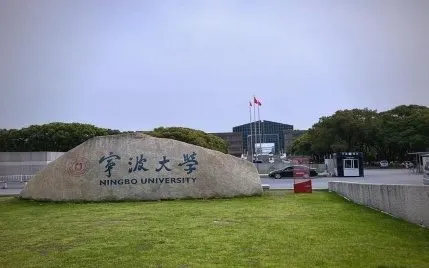
Ningbo University accepts international students on programmes in the following fields: engineering, medicine. Choose the level and programme that suit your goals.
Chinese language study at the university — from a few weeks to a year or longer. Suitable for those starting from scratch or preparing for the HSK before entering a main programme.
self-funded · language programme
The first level of higher education: usually four years of study, specialised subjects, internships and a graduation thesis. It opens the way to working in your field and to a master's degree.
self-funded
Advanced study after a bachelor's degree: research, applied projects and internships. It helps you become an expert in your chosen field and broaden your career opportunities.
self-funded
Ningbo University is located in Ningbo. Nihao Study consultants keep track of the deadlines and admission requirements of this university, and you can always check the most accurate and up-to-date information on its official website. In university rankings, it is ranked 414 in China and 10969 worldwide.
Come for a face-to-face meeting: together we will go through the requirements, deadlines, documents and study options that suit you.

At the meeting we will look at your situation, tell you which documents to prepare and by when, talk about possible programmes and help you decide on the next step.
Ningbo University (Chinese 宁波大学, pinyin Níngbō Dàxué) is a public research university in the city of Ningbo, Zhejiang Province. Reference works use the abbreviations NU and NBU; the university itself and international rankings generally use NBU. Russian-speaking applicants also use other variants of the name, such as 'Ningbo University' with a different word order or 'University of Ningbo City', as well as the short Chinese form 宁大 (read Níngdà).
The university's status is confirmed by primary sources. NBU is a participant in the second round of the national Double First-Class programme ('双一流'), and the official list assigns it one designated discipline: mechanics. It was not part of Projects 211 and 985: the Chinese Ministry of Education has explicitly referred to it as a university that entered Double First-Class without being a Project 211 member. There is also a caveat without which the comparison would be incomplete: in 2022 mechanics was kept on the second-round list, but on the results of the first cycle it received a public warning.
Below, Nihao Study sets out the essentials about Ningbo University for a 2026 applicant: status and rankings, programmes, dormitories, HSK, scholarships and how it differs from other universities in Ningbo.

| Item | Data |
|---|---|
| Year founded | 1986 |
| Status | Public university, Double First-Class member |
| Bachelor's students (full-time) | 21,944 (as of June 2026) |
| Master's students | 12,301 (as of June 2026) |
| Doctoral students | 996 (as of June 2026) |
| Staff | 3,379 staff, of whom 2,274 are teaching and research staff |
| Bachelor's fields | 58 (as of June 2026) |
| ESI | 15 fields in the top 1%, engineering in the top 0.1% |
| Main campus | 818 Fenghua Road, Jiangbei District, Ningbo, 315211 |
According to the university's own figures, at the end of 2023 it had 23 schools, 10 directly administered research institutes and 5 directly affiliated hospitals. These figures should not be mixed with the June 2026 data, as the university's structure may change over time.
NBU has an unusual history for a large public university. It all began in December 1984, when shipowner and businessman Sir Yue-Kong Pao decided to fund the founding of a new university. The university's Chinese name was personally written by Deng Xiaoping in September 1985, and in autumn 1986 the opening ceremony took place and the first intake of students enrolled.
Five major universities supported the new university's development: Peking University, Fudan University, the University of Science and Technology of China, Zhejiang University and the former Hangzhou University. In 1996 the original Ningbo University was joined by Ningbo Normal College and the Ningbo branch of Zhejiang Fisheries College. The merger produced a new comprehensive university combining the humanities, teacher education, engineering and marine studies.
Since 1998 NBU has been able to award master's degrees; among the first approved fields were engineering mechanics, international trade and aquaculture. In 2007 doctoral programmes opened in aquaculture, engineering mechanics, and communication and information systems. In 2017 NBU joined the first round of Double First-Class; in the second round, mechanics remains its designated discipline.
Each ranking assesses universities by its own criteria. ARWU and U.S. News focus on publications and citations; QS relies on reputation and internationalisation indicators; CWUR takes graduates' achievements into account; EduRank bases its assessment on its own bibliometric methodology. So it is wiser to look not at a single number but at a stable range of positions and strong subject areas.
| Ranking | Position | Year |
|---|---|---|
| ARWU | 401–500 in the world | 2025 |
| QS World University Rankings | 1001–1200 | 2027 |
| CWUR | 609th in the world, 106th in China | 2025 |
| EduRank | 1455th in the world, 103rd in China | 2026 |
| U.S. News | 1089th in the world | 2025 and 2026 |
| ShanghaiRanking (China) | 78th in the country | 2026 |
NBU also appears in the Times Higher Education ranking. The ShanghaiRanking subject tables are the most informative: in 2025 the university ranked 37th in the world for food science, 38th for remote sensing and 49th for marine engineering.
Let's start with mechanics: this is the discipline on NBU's Double First-Class list. At the university it overlaps with mechanical engineering, dynamics, materials science and transport problems. The 2022 warning should not be overlooked, but on its own it does not remove the university from the programme: the university's fact sheet as of June 2026 still names NBU as a 双一流 member.
The second field is marine sciences and aquaculture. It has its roots in the fisheries unit that was merged into the university, and today the subject is covered by the School of Marine Sciences, the College of Food Science and Engineering and the Faculty of Maritime and Transportation. The English-taught master's programme in aquaculture lasts 3 years; it covers aquatic genetics, aquatic animal health and aquaculture technology.
The third is applied engineering geared to the needs of a port city. The Logistics Management programme is built around the port of Ningbo: it includes port management, supply chain management, multimodal transport and transport economics. This combination suits those who plan to link their studies to manufacturing, logistics, international trade or the study of the maritime economy.
NBU is a comprehensive university, not a narrow maritime institute. Its official structure includes law and business, education, the humanities and communication, foreign languages, music, sport, design and architecture. The natural sciences and engineering include mathematics and statistics, physics, chemical engineering and materials, mechanics, computer science, electrical engineering, civil engineering, geography and environmental science.
The university also has a separate Health Science Center. The university's fact sheet at the end of 2023 listed 12 subject areas in the ESI top 1%, including chemistry, clinical medicine, physics, materials and computer science; the newer Chinese version of the fact sheet lists 15. If you are choosing a supervisor, the university's overall status matters less than the specific laboratory, its group's publications and the language used there day to day.
The university states that international students can enrol at three degree levels (bachelor's, master's and doctoral) as well as on non-degree programmes and Chinese language courses. In 2026, admission is open for both Chinese-taught and English-taught programmes.
| Level | Example fields | Duration and language |
|---|---|---|
| Bachelor's Degree | Logistics, business, finance, Computer Science | 4 years, English |
| Bachelor's Degree | Architecture | 5 years, English |
| Bachelor's Degree | MBBS | 6 years, English |
| Master's Degree | Aquaculture, materials, communications, port technology | 3 years, English |
| Doctoral (PhD) Programmes | Aquaculture, fishery resources | 3 years, English |
| Chinese language courses in Ningbo | Non-degree programme | 1 year, starting in March or September |
The university's international office is located at 818 Fenghua Road, Building 10, Room 317.
International students are offered several accommodation options: single and double rooms in the International Students Hostel, and double and four-person rooms in Yongjiang Dormitory. Bedding, water and electricity are paid separately from accommodation. It is best to check the current cost of each option on the university's official website.
| Room type | Building |
|---|---|
| Single room | International Students Hostel |
| Twin room | International Students Hostel |
| Twin room | Yongjiang Dormitory |
| Four-person room | Yongjiang Dormitory |
Dormitory fees are paid by semester. If you move out before the end of the paid period, the money may not be refunded. Living off campus is allowed only with the university's approval and after registration, and international students must register their place of residence within 24 hours of arrival.
According to the university, international students can apply for the Chinese Government Scholarship (Types A, B and C), the International Chinese Language Teachers Scholarship, and scholarships from Zhejiang Province, the city of Ningbo and NBU itself. The university is authorised to admit CSC scholarship holders as well as students on the scholarship for future Chinese language teachers.
For the 2022 and 2023 academic year intakes, the CSC approved NBU under the University Graduate Program, meaning the university has experience of admitting government scholarship holders.
The main campus is in Jiangbei District, and the second, Meishan Campus, is in Beilun District at 169 Qixing South Road. As of the end of 2023, the two campuses together covered 203.67 hectares. The library has a floor area of 51,000 square metres, and its collections comprised 3.24 million printed books and 2.58 million e-books.
The International College is responsible for admitting international students, supporting them, language training and short-term exchanges. It hosts the official Ningbo University HSK test centre. According to a university notice, the computer-based HSK at levels 3, 4, 5 and 6 and the HSKK at three levels were held here on 28 June 2026. Upcoming exam dates are best checked in the official HSK schedule.
NBU's partners include more than 120 foreign universities and research organisations. The university has one joint institute, four joint education programmes and two Confucius Institutes abroad.
International students may find it helpful to think of the campus as three practical zones. The living zone covers the dormitory, canteen, laundry and other everyday services. The study zone covers teaching buildings, laboratories and the library. The third zone is the city: transport, shops and healthcare. Before accepting an offer of admission, check with the International College which campus and dormitory students on your programme will study and live in. This is especially relevant for marine, engineering and medical programmes, as classes for them may take place in different locations.
When choosing a room, find out how many people share it, what kind of bathroom it has, whether you can use a shared kitchen, how utilities are paid and whether you can stay in the dormitory during the holidays. It is also worth finding out in advance when booking opens and whether a deposit is required. Anyone planning to rent off campus needs to agree this with the university before signing a contract: international students have mandatory registration requirements.
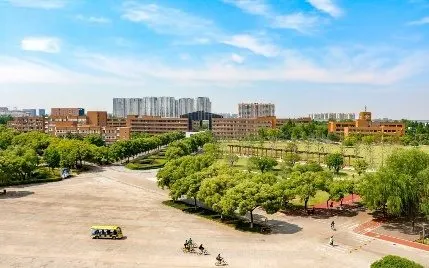
Finally, look not only at how attractive the grounds look but also at how everyday journeys work. Sketch out a typical week: the route from your room to your faculty, the library, the canteen and the exam centre. This makes it easier to assess the real workload and compare NBU with other universities in the city without relying on promotional photos.
To register at the university you will need your passport with visa, the JW201 or JW202, the original admission letter, proof of payment and a medical certificate, if you have one. International students must take out insurance before registration is completed.
| University | Type | Main focus |
|---|---|---|
| Ningbo University, NU or NBU, 宁波大学 | Public comprehensive university | Double First-Class; mechanics, marine sciences, medicine |
| University of Nottingham Ningbo China, UNNC, 宁波诺丁汉大学 | Sino-British joint university | British programmes taught in English |
| Ningbo University of Technology, NBUT, 宁波工程学院 | Public applied university | Engineering and applied technology programmes |
This page is specifically about 宁波大学, the university founded in 1986. It is not a branch of the British University of Nottingham, nor is it Ningbo University of Technology. In the official catalogue of Ningbo universities, these institutions are listed separately.
This page uses one main Russian form of the name. Another word order is also common, though the catalogue uses the spelling “Ningbo”, and a phonetic rendering of “Ningbo University” is a colloquial calque from English. The official English name is Ningbo University. NU is the abbreviation used on the catalogue page, while NBU is used by the university itself and by rankings. 宁大 is the short Chinese form; the full name 宁波大学 is pronounced Níngbō Dàxué.
On this page, both refer to Ningbo University. NBU is the university's own established official abbreviation, while NU is the abbreviation under which it is listed in the catalogue.
Yes. Mechanics is NBU's designated discipline in the second round of the programme. Note, however, that after the first cycle this discipline received a public warning — worth bearing in mind when assessing the university's status.
No. In the wording of China's Ministry of Education, NBU is a university that entered Double First-Class without being part of Project 211. Double First-Class status does not mean automatic participation in the historical Projects 211 or 985, which have already closed.
Yes. The public programme list includes English-taught options at all three levels — bachelor's, master's and doctoral; among them are MBBS, logistics, aquaculture and Computer Science.
The university specifies HSK 4 or higher for Chinese-taught programmes. A faculty may raise this threshold or set separate requirements for the exam components.
NBU is entitled to admit international students on the Chinese Government Scholarship. What exactly the scholarship covers and how many places there will be depends on the competition, the scholarship category and the programme, so start by studying the CSC terms.
Yes. There is an HSK test centre at the International College, and the university's official notice about the June 2026 session referred to the computer-based HSK and HSKK. Check the dates of future sessions against the official HSK calendar.
818 Fenghua Road, Jiangbei District, Ningbo, Zhejiang; postcode 315211. The international office is in Building 10.
The minimum set is an application form, a passport, a notarised school certificate, a school transcript and a certificate in the language you will study in. The university may additionally request a medical form, a police clearance certificate and other documents, so check against the list in your online account.
Ningbo (宁波) is the second-largest city in Zhejiang Province and the world's largest port by cargo throughput. Ancient temples stand alongside new technology zones. Hangzhou is an hour's drive away.
Students are drawn here by good education — for example, at the University of Nottingham Ningbo China. The city's export economy offers plenty of work placements and internships, the environment is good, the metro has 6 lines, and the sea is nearby. The standard of living is high, but prices are lower than in Shanghai. For parents, what matters is safety, modern infrastructure and healthcare, the international airport, the easy journey from Shanghai and well-organised campuses with security and support for international students.
You work with Nihao Study specialists. They will help you put together a portfolio and a set of documents, draw up a study plan and choose a university or college and a specialty that genuinely interest you.
We take care of every stage of admission, from choosing to enrolment
We will gather, prepare, certify and send your documents to the institution
We will show the admissions committee your strengths
We run training sessions and courses so you can prepare with more confidence
We will help you settle in at the start of your studies and keep moving forward
Nihao Study specialists select universities and colleges that match the applicant's goals and means. We make sure the teachers are practitioners and that the knowledge will be useful in your profession.
We examine curricula, talk to students and teachers and look at which specialties employers need, and use this information to select options for the applicant.
Advisers guide the applicant from the first consultation to enrolment, help build a plan and spot mistakes in time that could get in the way.
The cost of our support depends on the programme and the partner university; you'll get an exact quote after a free consultation.
Get a quoteA free 15-minute consultation: together we will choose a university or college and a programme that suit your goals and budget.
Apply with peace of mind: we handle the documents, deadlines and correspondence with admissions committees, and you save time and energy.
Don't want to wait for a call? Message us in the chat.
Message us in chat University · Hangzhou
Language courses · Bachelor's Degree · Master's Degree