- Language courses
- English, Chinese
- Bachelor's Degree
- English, Chinese
- Master's Degree
- English, Chinese
- Doctoral (PhD) Programmes
- English, Chinese
- Accommodation from 7 200 ¥/year
NJUST · 南京理工大学
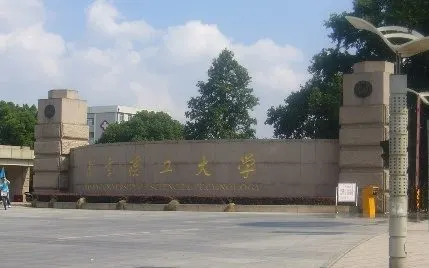
Nanjing University of Science and Technology accepts international students on programmes in the following fields: business, engineering, education, humanities, natural sciences. Choose the level and programme that suit your goals.
Chinese language study at the university — from a few weeks to a year or longer. Suitable for those starting from scratch or preparing for the HSK before entering a main programme.
self-funded · language programme
The first level of higher education: usually four years of study, specialised subjects, internships and a graduation thesis. It opens the way to working in your field and to a master's degree.
self-funded
Advanced study after a bachelor's degree: research, applied projects and internships. It helps you become an expert in your chosen field and broaden your career opportunities.
self-funded
Nanjing University of Science and Technology is located in Nanjing. Nihao Study consultants keep track of the deadlines and admission requirements of this university, and you can always check the most accurate and up-to-date information on its official website. In university rankings, it is ranked 37 in China and 587 worldwide.
Come for a face-to-face meeting: together we will go through the requirements, deadlines, documents and study options that suit you.

At the meeting we will look at your situation, tell you which documents to prepare and by when, talk about possible programmes and help you decide on the next step.
NJUST (Nanjing University of Science and Technology, 南京理工大学) is a public research university in Nanjing, the capital of Jiangsu Province. The standard Russian form of the name uses the plural, 'technologies'. Other variants also occur: the abbreviation NUST, a version meaning 'University of Science and Technology of Nanjing', and a form with the singular 'technology'. In official international communication it is safest to use Nanjing University of Science and Technology, NJUST.
The Chinese name is pronounced Nánjīng Lǐgōng Dàxué, and in China it is often shortened to 南理工 (Nánlǐgōng). Do not confuse NJUST with Nanjing University (NJU) or with Nanjing University of Information Science and Technology (NUIST). The university is under the Ministry of Industry and Information Technology of the PRC, belongs to Project 211 and takes part in Double First-Class.
This page brings together what a 2026 applicant needs to know: status, rankings, leading research areas, programmes taught in English and Chinese, accommodation, scholarships, documents and how the university differs from others with similar names. A Nihao Study consultation will help you choose a programme.

It is better to compare universities using the university's own up-to-date fact sheet rather than outdated aggregators. According to NJUST's 2025 figures, more than 35,000 students study full-time, over 500 of them international. The same document lists more than 3,700 staff and over 2,200 full-time teaching staff.
| Item | Value |
|---|---|
| Founded | 1953 |
| Number of schools | 21 |
| Statuses | Project 211, Double First-Class |
| Admissions office | 200 Xiaolingwei Street, Nanjing, 210094 |
| Research training | 19 postdoctoral research stations; first-level disciplines: 23 doctoral and 34 master's |
These figures give an idea of the university's size as a research centre. The language of instruction, campus and fees should be checked in the catalogue for the year you apply.
NJUST traces its roots to the artillery department of the PLA Military Engineering Institute in Harbin, founded in 1953. The institution later changed its name several times: Artillery Engineering Institute, then East China Engineering Institute and East China Institute of Technology. Its current name, 南京理工大学, was approved in 1993.
Milestones of the following years: 1995, inclusion in Project 211; 2000, opening of its own graduate school; 2011, joining the Project 985 innovation platform for priority disciplines. NJUST entered the first round of Double First-Class in 2017 and kept its status in the second. This path explains what the university looks like today: materials science, automation, optics, computational sciences, economics and management have grown out of a strong base in defence engineering.
Membership of Project 211 is a confirmed fact, not marketing: 南京理工大学 appears on the official list of project universities published by the Ministry of Education of China. NJUST was not on the original list of full Project 985 members. To be precise, the university took part in the Project 985 innovation platform for priority disciplines.
In the second Double First-Class list, NJUST has a single discipline: 兵器科学与技术 (Armament Science and Technology). It is correct to call it a "Double First-Class university", but the status covers only this field, and the standard and resources of its other programmes vary.
International rankings rely on different criteria, so their results differ noticeably. In the QS World University Rankings 2027, NJUST is joint 675th; in the Times Higher Education World University Rankings 2026 it is in the 601–800 band; and in ARWU 2025 it is in the 201–300 group.
| Ranking | Position | Criteria |
|---|---|---|
| QS 2027 | =675 | reputation, citations, international mix |
| THE 2026 | 601–800 | teaching, research, citations, industry links |
| ARWU 2025 | 201–300 | research output |
| CWUR 2025 | 342nd in the world | research, alumni, employability |
| EduRank 2026 | 850th in the world | publications, citations, visibility |
| SCImago 2026 | 541st in the world | research, innovation, societal impact |
In U.S. News, NJUST's individual engineering disciplines are generally rated higher than the university as a whole. According to a third-party aggregator, the university is 451st in the world in the 2026 edition, but until the profile on the U.S. News website can be openly checked, this figure should be treated as a rough guide. For master's and doctoral study, it is more useful to compare laboratories, supervisors and subject rankings than a single overall position.
The university's signature field has its origins in artillery engineering. Today it covers mechanics, control, complex systems, new materials and safety, and it is precisely armament science that is included in Double First-Class. Any export, civilian-use or language restrictions of a particular laboratory are worth finding out in advance.
In ESI, twelve NJUST disciplines are in the top one per cent, and engineering, materials science, chemistry and computer science are even in the top one per mille. This makes the university a good fit for applied research at the intersection of materials, energy, chemical engineering and manufacturing.
The university has separate schools in fields such as microelectronics, automation, cybersecurity, computer science and engineering, intelligent science, and mathematics and statistics. The catalogue for international master's and doctoral students explicitly includes the English-taught Computer Science and Technology programme.
NJUST has schools in engineering, the natural sciences and the social sciences. Its core includes computer science, mechanical engineering, electronic and optical engineering, automation, energy, materials, chemistry and chemical engineering, physics, environmental science and bioengineering, and economics and management. There are also schools of mathematics, microelectronics, design, foreign languages, intellectual property, public affairs and security.
Those heading into research need the master's and doctoral catalogue above all. The 2026 edition lists, among others, mechanical engineering, materials science and engineering, computer science and technology, applied economics, new energy science and engineering, and mathematics. Not every field is offered in English, so check the row for your programme.
Bachelor's programmes usually last four years. The English-taught programmes in the 2026 catalogue include mechanical engineering, software engineering, international economics and trade, and nanomaterials and nanotechnology. The Chinese-taught choice is wider and covers engineering and management programmes such as materials science and engineering, computer science and technology, and chemical engineering and technology.
| Level | Fields (examples) | Language of instruction |
|---|---|---|
| Bachelor's Degree | mechanical engineering, nanomaterials, software engineering, international economics | Chinese or English |
| Master's Degree | computer science, mechanical engineering, energy, materials, economics | depends on the programme in the catalogue |
| Doctoral (PhD) Programmes | mathematics, mechanical engineering, optics, materials, computational sciences, security | Chinese or English |
NJUST has an international institute and runs joint education projects. Its past foreign partners include a French engineering school in Metz, Karlsruhe and Bauman Moscow State Technical University (Russia). Not every intake offers a double degree, so the terms of your intake need to be confirmed separately.
Fees vary by level of study and language of the programme (Chinese or English), and may also depend on the specific programme and type of funding; a non-refundable application fee is charged when you apply. When planning your budget, also allow for the medical examination, visa, insurance, accommodation, food and study materials. Current amounts for the present intake are published on the university's official website.
The main campus, Zhongshan Campus, lies next to Purple Mountain (Zijin Shan) and the old city wall. It covers 2,421 mu, and the total floor area of its buildings exceeds 1.137 million square metres. The university also has Tangshan, Jiangyin and Xuyi campuses, each with its own teaching or research role.
The admissions office address in Nanjing is 200 Xiaolingwei Street, postcode 210094. Xiaolingwei can be reached by Metro Line 2 or by city buses. The campus has a library, canteens, laboratories and sports grounds; for summer school participants, the university separately provides access to the library, sports facilities and innovation laboratories.
The 2026 admission rules provide four-person rooms for bachelor's students. Electricity, textbooks and food should be budgeted for separately; total costs depend on the campus, room type and lifestyle. Current rates are published on the university's official website.
| Cost item | Notes |
|---|---|
| Room for four | for bachelor's students, 2026 intake |
| Meals | an approximate estimate, not a compulsory payment |
| Medical check-up | usually completed at registration |
The university accepts Chinese Government Scholarship holders. Under the Silk Road track, places are open in 2026 for master's and doctoral study in mechanical engineering, materials, chemical engineering, computer science and management. As a rule, the CSC scholarship waives tuition, provides accommodation or an accommodation allowance, pays a stipend and covers medical insurance; check the terms against the CSC list of host universities.
NJUST also has its own scholarship for international students, the Lanshan Scholarship, and a separate guide has been issued for the 2026 intake. It may be full or partial, and renewal usually depends on the results of the annual review. Don't count on an "average chance": the scholarship is awarded through a competition held every year.
Applications for 2026 bachelor's admission opened on 30 November 2025 and closed on 15 June 2026. Dates for the next round will be announced separately, so it makes sense to prepare your documents in advance.
NJUST lists long-term Chinese language courses, but the current intake and conditions should be confirmed with the School of International Education. For degree-level bachelor's study in Chinese, the benchmark is HSK 4; see the official HSK schedule for exam dates.
HSK and CSCA serve different purposes: the CSCA checks whether an international applicant is academically ready for bachelor's study, while HSK measures Chinese proficiency. NJUST's 2026 rules name the CSCA result as an important criterion in assessing applicants. Whether the university runs an HSK or BCT test centre for the session you need should be checked on the exam organiser's website.
| University | Type | Main specialism |
|---|---|---|
| NJUST, 南京理工大学 | national research university | engineering, materials, management; Double First-Class |
| NJU, 南京大学 | comprehensive | fundamental sciences, wide range of disciplines |
| SEU, 东南大学 | comprehensive, engineering-focused | architecture, engineering, electronics |
| Nanjing Tech University, 南京工业大学 | engineering | construction, materials, chemical engineering |
| NUIST, 南京信息工程大学 | specialised | meteorology, atmospheric sciences and information sciences |
| NUPT, 南京邮电大学 | specialised | telecommunications, communications, electronics |
| NNU, 南京师范大学 | teacher training | education, humanities and natural sciences |
In Chinese, the characters 理工 help to identify NJUST. NUIST's name contains 信息工程, NUPT's 邮电 and Nanjing Tech University's 工业. A mistake in even one element of the name means your application will go to a different university.
When choosing an engineering programme, also look at NJU, SEU and NUPT and compare the language of instruction, curriculum, laboratory, cost and chances of a scholarship.
Admission to research programmes works differently from bachelor's admission. Start with the catalogue of laboratories and the work of potential supervisors, and only then choose the formal name of the programme. The same field on NJUST's list may be available in Chinese, in English or in both, and the language options depend on the level. For example, Mechanical Engineering and Materials Science and Engineering are offered at both master's and doctoral level, while some specialised fields are open at only one level.
As a rule, master's programmes require a bachelor's degree and doctoral programmes a master's degree. The published guide also lists a research plan, recommendation letters from academics and documents showing academic background. The guide explicitly advises contacting a supervisor in advance, as this makes it easier to see whether the topic fits the laboratory's capabilities. But a letter from a supervisor is not yet the admissions office's final decision.
A strong research plan is not an autobiography. It links the applicant's previous project to a specific research problem, methods, expected results and NJUST's resources. Applicants in engineering fields should attach publications, patents, code, a thesis or proof of participation in competitions, provided such materials really exist. The documents must be consistent: the plan's topic, the chosen programme and the supervisor's research interests must not contradict one another.
A CSC scholarship application often has to be submitted in two systems: the national portal and the university's own portal. For NJUST, the Silk Road programme lists agency code 10288, and only some master's and doctoral fields are open. Before submitting, check that your passport details, programme name, language and version of the research plan match in both accounts: discrepancies between the forms can halt the review of even a strong application.
This university is a sensible choice for anyone interested in applied engineering, automation, materials, optics, energy or computer science who is prepared to choose not only a university but also a specific school within it. High status is useful, but how your years of study go depends on the language of instruction, the make-up of your group, your supervisor, the campus and housing. So base your decision on several independent criteria at once.
The main campus is in the Xiaolingwei area, close to the metro and the eastern part of the old centre. This is convenient for daily life, but the city is large, so it is worth estimating the journey to your laboratory or dormitory from the exact address. Confirm your building, room type and registration date in advance; this will also help you avoid confusing NJUST with NUIST and Nanjing Tech University.
The standard Russian form is the equivalent of “Nanjing University of Science and Technologies”. A variant with “technology” in the singular does occur, but it is not used on this page, and “University of Science and Technologies of Nanjing” is an understandable calque but not the main one. The official English name is Nanjing University of Science and Technology, and the main international abbreviation is NJUST. The abbreviation NUST appears in older sources and can be ambiguous. The full Chinese name 南京理工大学 (Nánjīng Lǐgōng Dàxué) is shortened to 南理工.
Yes, 南京理工大学 is on the official list of Project 211 universities published by the Ministry of Education of the PRC.
Yes: in the second round of Double First-Class, the university holds the discipline 兵器科学与技术 (armament science and technology).
Yes, though not for all programmes. English-taught bachelor's programmes in the 2026 intake included, for example, mechanical engineering, software engineering, international economics and trade, and nanomaterials and nanotechnology.
In 2026, Chinese-taught bachelor's programmes required HSK 4 or higher. Master's and doctoral requirements are given in the guide for each specific programme.
The cost depends on the level and language of instruction: English-taught and Chinese-taught programmes are charged at different rates. Check the amounts for the new intake on the university's official website.
For bachelor's students in the 2026 intake, the rules provide for four-person rooms; the current rate is published on the university's official website. For master's students and scholarship holders, the type of accommodation may differ.
Yes, the university accepts Chinese Government Scholarship holders, including through the Silk Road track for some master's and doctoral programmes. Receiving a scholarship depends on the outcome of the competition and on whether the candidate meets the rules of the chosen track.
Yes, in 2026 the CSCA was required of international applicants to bachelor's programmes, and its result served as an important selection criterion.
The admissions office address is 200 Xiaolingwei Street, Nanjing, Jiangsu, 210094. By public transport, the nearest stop is Xiaolingwei metro station on Line 2.
As a rule, you need a passport, a school certificate with grades, a CSCA result, a language certificate, a personal statement, two recommendations, a medical form, a police clearance certificate and a financial guarantee. Documents not in Chinese or English must be accompanied by a notarised translation.
Nanjing (南京), the 'Southern Capital', was ruled by six dynasties. The city preserves a rich historical heritage: the Sun Yat-sen Mausoleum and the Ming-dynasty city wall. Today it is one of China's leading centres of science and education.
Nanjing has strong universities, including Nanjing University, beautiful campuses and a lively student life. The streets are lush with avenues of plane trees, the metro has 11 lines, and Shanghai is just 1 hour away. Parents are drawn by the calm, intellectual atmosphere, the high level of safety, good healthcare and developed infrastructure — while prices are lower than in Shanghai.
You work with Nihao Study specialists. They will help you put together a portfolio and a set of documents, draw up a study plan and choose a university or college and a specialty that genuinely interest you.
We take care of every stage of admission, from choosing to enrolment
We will gather, prepare, certify and send your documents to the institution
We will show the admissions committee your strengths
We run training sessions and courses so you can prepare with more confidence
We will help you settle in at the start of your studies and keep moving forward
Nihao Study specialists select universities and colleges that match the applicant's goals and means. We make sure the teachers are practitioners and that the knowledge will be useful in your profession.
We examine curricula, talk to students and teachers and look at which specialties employers need, and use this information to select options for the applicant.
Advisers guide the applicant from the first consultation to enrolment, help build a plan and spot mistakes in time that could get in the way.
The cost of our support depends on the programme and the partner university; you'll get an exact quote after a free consultation.
Get a quoteA free 15-minute consultation: together we will choose a university or college and a programme that suit your goals and budget.
Apply with peace of mind: we handle the documents, deadlines and correspondence with admissions committees, and you save time and energy.
Don't want to wait for a call? Message us in the chat.
Message us in chat