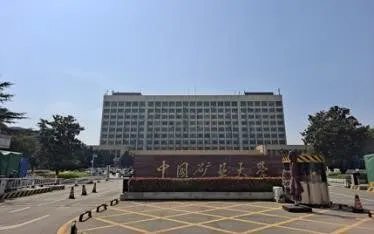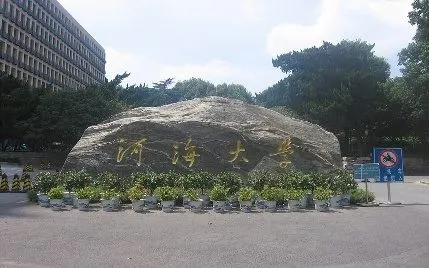
- Language courses
- English, Chinese
- Bachelor's Degree
- English, Chinese
- Master's Degree
- English, Chinese
- Doctoral (PhD) Programmes
- English, Chinese
- Accommodation from 7 200 ¥/year
NJUPT · 南京邮电大学
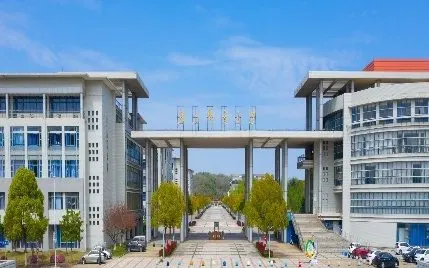
Nanjing University of Posts and Telecommunications accepts international students on programmes in the following fields: engineering, it. Choose the level and programme that suit your goals.
Chinese language study at the university — from a few weeks to a year or longer. Suitable for those starting from scratch or preparing for the HSK before entering a main programme.
self-funded · language programme
The first level of higher education: usually four years of study, specialised subjects, internships and a graduation thesis. It opens the way to working in your field and to a master's degree.
self-funded
Advanced study after a bachelor's degree: research, applied projects and internships. It helps you become an expert in your chosen field and broaden your career opportunities.
self-funded
Nanjing University of Posts and Telecommunications is located in Nanjing. Nihao Study consultants keep track of the deadlines and admission requirements of this university, and you can always check the most accurate and up-to-date information on its official website. In university rankings, it is ranked 87 in China and 767 worldwide.
Come for a face-to-face meeting: together we will go through the requirements, deadlines, documents and study options that suit you.

At the meeting we will look at your situation, tell you which documents to prepare and by when, talk about possible programmes and help you decide on the next step.
NJUPT (Nanjing University of Posts and Telecommunications, in Chinese 南京邮电大学, Nánjīng Yóudiàn Dàxué) is a public research university in Nanjing, the capital of Jiangsu Province. Within China it is usually referred to by the short form 南邮 (Nányóu).
Postal services are mentioned in the name, but NJUPT's profile goes well beyond them. Today the university works in telecommunications, electronic science, integrated circuits, computer technology, artificial intelligence, the Internet of Things and flexible electronics. For 2026, admissions have been announced for bachelor's, master's and doctoral programmes, with teaching in both Chinese and English. Classes take place on four campuses: Xianlin, Sanpailou, Suojincun and Jiangning.
It is important not to mix up statuses. NJUPT takes part in the national Double First-Class (双一流) programme, and its world-class discipline is Electronic Science and Technology (电子科学与技术). However, the university is not a Project 211 institution: it does not appear on the official list of the Ministry of Education of the PRC. So one status must not be substituted for the other.
Below is information that will be useful to a 2026 applicant: status and rankings, programmes, accommodation, HSK requirements, scholarships, documents and universities with similar names. You can discuss your choice of programme at a Nihao Study consultation.
| Item | Value | What this means |
|---|---|---|
| Year founded | 1942 | The university grew out of training communications specialists |
| Size | Over 30,000 students | Large research university |
| International students | About 1,000 students from around 70 countries | A dedicated College of Overseas Education |
| Faculty and staff | Over 3,000 staff, more than 1,300 of them supervisors | A strong base for master's and doctoral study |
| Academic degrees | 7 postdoctoral stations; first-level disciplines: 11 doctoral and 23 master's | All levels, from bachelor's to doctoral |
| Bachelor's Degree | 53 programmes in the 2026 intake | The choice is not limited to telecommunications |
| ESI | 6 disciplines in the world's top 1 per cent | High publication output |
| Campuses | 4 campuses in Nanjing | The main address for international students is Xianlin |
Staff figures depend on the date they were collected. Older summaries, for example, cite over 2,600 staff and 984 master's and doctoral supervisors, while the 2026 admissions materials contain updated figures. When planning your application and expenses, rely primarily on the terms of the current intake.
The university's history dates back to 1942, when a training class for postal service workers was opened in wartime conditions. In 1945 a postal school was established on its basis, which then changed its name several times while located in Shandong Province. In 1949 it was moved to Nanjing, and from 1950 it was called the Nanjing School of Posts and Telecommunications and reported directly to the sector ministry.
In 1958 the school became a higher education institution: the Nanjing Institute of Posts and Telecommunications. Its first intake comprised 194 students on five-year programmes in radio communications and in telephone and telegraph communications, plus 48 students at technician level. This specialism is why the School of Telecommunications remains NJUPT's central unit today.
Since 2000 the university has been under joint management, with Jiangsu Province playing the leading role. Its current name, Nanjing University of Posts and Telecommunications, was approved by the Ministry of Education in April 2005. The university entered the first round of Double First-Class in 2017 and confirmed its place in the second round in 2022.
NJUPT's strengths show more clearly in subject and research indicators than in any single overall ranking. The Ministry of Education classes its Electronic Science and Technology discipline as world-class, and 27 programmes, according to the university itself, have been granted national first-class status.
| Status or ranking | Result | Year, stage |
|---|---|---|
| Double First-Class | Electronic Science and Technology | second round, 2022 |
| Project 211 | Not on the official list | A project of past years |
| ARWU | 301–400 band worldwide | 2025 |
| CWUR | 516th in the world, 140th in Asia, 94th in China | 2026 |
| EduRank | 1,456th in the world, 104th in China | 2026 |
| EduRank, subject positions | computer networks – 133, telecommunications – 151 | 2026 |
The takeaway for applicants: NJUPT is worth choosing for its specialisation in electronics and information technology, not for a 211 label, which it does not have. When comparing it with Nanjing's multidisciplinary universities, look first at the specific programme, laboratory and supervisor, and only then at the overall ranking.
NJUPT was among the first group of academic members of the International Telecommunication Union; today the university helps develop standards for the internet and telecommunications. Since 1990 NJUPT has served as a Chinese training centre of the Asia-Pacific Telecommunity; according to the university, 30 groups of specialists from 31 countries and territories have trained here. For students, this means the chance to study subjects alongside current network protocols and industry standards.
The university has separate units for electronic and optical engineering, microelectronics, integrated circuits and flexible electronics. In January 2025 the State Key Laboratory of Flexible Electronics received official approval. NJUPT researchers publish work on flexible photovoltaic films, including in the journal Nature Communications.
The NJUPT IoT satellite, backed by the School of Communications and the Institute of the Internet of Things, was launched in January 2026. It became the 40th satellite in the Tianqi constellation and serves to demonstrate an integrated space–air–ground network. The project clearly shows how telecommunications, artificial intelligence, edge computing and applied IoT come together in a single research task.
The academic structure is made up of schools by field: communications and information engineering; computer science; artificial intelligence and automation; Internet of Things; materials science; natural sciences; management; economics; digital media; and international student education. Don't be misled by the words “posts and telecommunications” in the name: this is a multidisciplinary university with a strong engineering core.
Portland Institute, run together with Portland State University, offers programmes in communications and Electronic Science and Technology. In addition, according to the university, NJUPT cooperates with foreign universities and research organisations from 16 countries. A double degree is offered only in some joint programmes, so check the study format and the qualification awarded for the specific intake.
According to the 2026 prospectus, four English-taught bachelor's programmes are open: electronic information engineering, computer science and technology, business management and e-commerce. English-taught master's programmes cover artificial intelligence, integrated circuits, electronic information, computer technology, business management, social work and educational technology.
| Level and language | Programmes (examples) | Duration |
|---|---|---|
| Bachelor's, English | Electronic information engineering, computer science and technology, business management, e-commerce | 4 years |
| Master's, English | Electronic information, integrated circuit engineering, computer technology, artificial intelligence | 2 years |
| Doctorate, English | Information and Communication Engineering | 4 years |
| Master's, Chinese | Electronic science and technology, integrated circuit engineering, mathematics, physics, applied statistics | usually 3 years |
| Doctorate, Chinese | Electronic science and technology, integrated circuit science and engineering, mathematics, physics | 4 years |
Language requirements: HSK 5 or above for Chinese-taught programmes; IELTS 5.5, TOEFL 72 or Duolingo 100 for English-taught ones. There is no separate one-year Chinese language programme in the 2026 intake, so look for language courses in Nanjing at other universities in the city.
International students live in the International Students Apartment on the Xianlin campus. Bachelor's students are housed four to a room, master's and doctoral students two to a room. Check the current year's accommodation costs on the university's official website.
| Who | Room |
|---|---|
| Bachelor's students | for 4 people |
| Master's and doctoral students | for 2 people |
The address for international students is College of Overseas Education, 9 Wenyuan Road, Qixia District, Nanjing, Jiangsu, postcode 210023. Xianlin is a university district in the eastern part of Nanjing, while the historic Sanpailou campus is closer to the centre. It is best to find out about availability, furniture, utility payments and the check-in procedure before applying: the base rate does not guarantee a specific room.
International students have access to four sources of funding: the Chinese Government Scholarship, the Jiangsu Government Scholarship, the Nanjing Government Scholarship and the NJUPT International Students Scholarship.
The university accepts government scholarship holders, but awards are made on a competitive basis. You can check whether the programme you need is part of the current round in the CSC list of host universities.
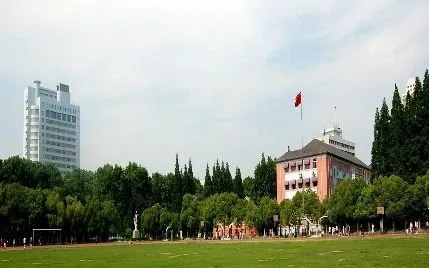
Xianlin Campus has teaching buildings, dormitories and canteens, as well as sports grounds and green spaces. The library provides access to Chinese and international databases and e-books, offers places for independent study and helps with finding research information. The university also has an engineering practice centre, the College of Overseas Education and a physical education department.
The international atmosphere is not created by international students alone. According to the international office, NJUPT has long-term links with almost 40 universities abroad, and over the reporting period it invited around 1,000 foreign experts and lecturers. For everyday life, bear distances in mind: international students study mainly at Xianlin, while Sanpailou is in the central part of the city.
Master's and doctoral applicants must also submit a study plan (under the admission rules, more than 3,000 Chinese characters or words) and two recommendation letters from professors or associate professors. Prospective doctoral students additionally need the prior consent of a supervisor.
| University | Status | Main specialism |
|---|---|---|
| Nanjing University of Posts and Telecommunications, NJUPT, 南京邮电大学 | public, Double First-Class | telecommunications, electronics, integrated circuits, IT |
| Nanjing University, NJU, 南京大学 | national comprehensive university, 211 and 985 | fundamental sciences, wide choice of disciplines |
| Nanjing University of Information Science and Technology, 南京信息工程大学 | public | meteorology and atmospheric sciences, IT |
| Nanjing University of Science and Technology, NJUST, 南京理工大学 | national, engineering focus | engineering, materials science, computer technology, weaponry |
The easiest way to identify NJUPT is by the word Posts in its English name and the characters 邮电 in its Chinese name. The abbreviation NJU does not apply to it, as that refers to a different university. The official abbreviation is NJUPT, although NUPT also often turns up in Russian-language searches.
There is one main Russian form of the name, a direct equivalent of “Nanjing University of Posts and Telecommunications”. The version “University of Posts and Communications” is understandable but a simplified translation, and “University of Posts and Telecommunications of Nanjing” copies the English word order. The official international name is Nanjing University of Posts and Telecommunications; the official English-language website uses the abbreviation NJUPT, while NUPT often appears in Russian-language search queries. 南邮 (Nányóu) is the Chinese abbreviation, and 南京邮电大学 is the full original name.
It is a public research-oriented university located in Nanjing. The main campus for international students is Xianlin: 9 Wenyuan Road, Qixia District, Nanjing, Jiangsu, 210023.
Double First-Class — yes, for the discipline of Electronic Science and Technology. The university is not on the official Project 211 list, and these statuses are not interchangeable.
Yes. The 2026 intake includes English-taught bachelor's and master's programmes, as well as one doctoral programme — Information and Communication Engineering.
Chinese-taught programmes require HSK 5. See the official HSK schedule for upcoming exam dates and cities.
No: the HSK is required for admission, but the campus is not an HSK or BCT test centre. Choose a test venue using the current exam calendar and do not count on taking the test at the university.
The price depends on the category: bachelor's students are housed in four-person rooms, master's and doctoral students in double rooms. The current year's rate is published on the university's official website.
The Chinese Government Scholarship is on the list of funding options named by NJUPT. However, whether a specific programme takes part and what the scholarship covers needs to be checked for each competition.
You will need an online application form, a notarised education certificate, a transcript, a passport, a CV, a CSCA result, a language certificate, a medical form, a police clearance certificate and a document showing your financial situation.
In the 2026 admissions campaign, online applications were accepted from early January to the end of May, and registration began in early September. Deadlines are announced anew for the next cycle, so it is worth double-checking them.
NJUPT specialises in telecommunications, electronic information and integrated circuits. NJU is a large comprehensive university, and NJUST has a broader engineering profile. When choosing, look not only at the name and ranking but also at the language of instruction, cost, laboratory, academic supervisor and CSCA requirements.
Nanjing (南京), the 'Southern Capital', was ruled by six dynasties. The city preserves a rich historical heritage: the Sun Yat-sen Mausoleum and the Ming-dynasty city wall. Today it is one of China's leading centres of science and education.
Nanjing has strong universities, including Nanjing University, beautiful campuses and a lively student life. The streets are lush with avenues of plane trees, the metro has 11 lines, and Shanghai is just 1 hour away. Parents are drawn by the calm, intellectual atmosphere, the high level of safety, good healthcare and developed infrastructure — while prices are lower than in Shanghai.
You work with Nihao Study specialists. They will help you put together a portfolio and a set of documents, draw up a study plan and choose a university or college and a specialty that genuinely interest you.
We take care of every stage of admission, from choosing to enrolment
We will gather, prepare, certify and send your documents to the institution
We will show the admissions committee your strengths
We run training sessions and courses so you can prepare with more confidence
We will help you settle in at the start of your studies and keep moving forward
Nihao Study specialists select universities and colleges that match the applicant's goals and means. We make sure the teachers are practitioners and that the knowledge will be useful in your profession.
We examine curricula, talk to students and teachers and look at which specialties employers need, and use this information to select options for the applicant.
Advisers guide the applicant from the first consultation to enrolment, help build a plan and spot mistakes in time that could get in the way.
The cost of our support depends on the programme and the partner university; you'll get an exact quote after a free consultation.
Get a quoteA free 15-minute consultation: together we will choose a university or college and a programme that suit your goals and budget.
Apply with peace of mind: we handle the documents, deadlines and correspondence with admissions committees, and you save time and energy.
Don't want to wait for a call? Message us in the chat.
Message us in chat