- Language courses
- English, Chinese
- Bachelor's Degree
- English, Chinese
- Master's Degree
- English, Chinese
- Doctoral (PhD) Programmes
- English, Chinese
- Accommodation from 7 200 ¥/year
NUFE · 南京财经大学
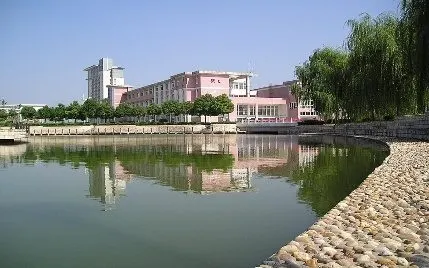
Nanjing University of Finance and Economics accepts international students on programmes in the following fields: business, engineering, education, economics, it. Choose the level and programme that suit your goals.
The first level of higher education: usually four years of study, specialised subjects, internships and a graduation thesis. It opens the way to working in your field and to a master's degree.
self-funded
Cost: 17 000 ¥/year
The first level of higher education: usually four years of study, specialised subjects, internships and a graduation thesis. It opens the way to working in your field and to a master's degree.
self-funded
Cost: 13 000 ¥/year
Advanced study after a bachelor's degree: research, applied projects and internships. It helps you become an expert in your chosen field and broaden your career opportunities.
self-funded
Cost: 23 000 ¥/year
Nanjing University of Finance and Economics is located in Nanjing. Nihao Study consultants keep track of the deadlines and admission requirements of this university, and you can always check the most accurate and up-to-date information on its official website. In university rankings, it is ranked 115 in China and 1670 worldwide.
Come for a face-to-face meeting: together we will go through the requirements, deadlines, documents and study options that suit you.

At the meeting we will look at your situation, tell you which documents to prepare and by when, talk about possible programmes and help you decide on the next step.
Nanjing University of Finance and Economics (NUFE, 南京财经大学, Nánjīng Cáijīng Dàxué) is a provincial public university in Nanjing, the capital of Jiangsu Province. In Russian-language searches its name appears in several forms, translating as 'Nanjing Finance and Economics University', 'Nanjing University of Economics and Finance' or 'University of Finance and Economics of Nanjing'. The English name is used in official international correspondence, while within China the university is widely known by its short name 南财 (Náncái).
The key point about status: NUFE was not part of Projects 211 and 985 and was not included in the second round of Double First-Class (双一流); it appears neither in the official 211 list nor in the second-round list. It is more accurate to describe the university by its place in Jiangsu's provincial system and by its profile: economics, management and food security research.
In this overview, Nihao Study has gathered information for 2026 applicants on the university's status, programmes and language of instruction, accommodation, scholarships, rankings and documents.

| Indicator | Data |
|---|---|
| Year founded | 1956 |
| Type and affiliation | Public, Jiangsu Province |
| Campuses | Xianlin, Fujian Road, Qiaotou |
| Area | 1.818 million sq m |
| Students | Over 17,000 bachelor's students, over 4,500 master's and doctoral students |
| Teaching staff | Over 1,300 |
| Bachelor's programmes | 50 standard and 4 joint |
| Xianlin campus address | No. 3 Wenyuan Road, Qixia District, Nanjing, 210023 |
In terms of scale, this is a full-fledged university, not a narrowly focused business school. International students mainly study at Xianlin or Fujian Road; the Qiaotou campus is located in Zhenjiang. Where exactly you will study is determined by your programme and the university's international school.
Membership of 211 and 985 often serves as a quick measure of prestige, but this criterion does not apply to NUFE. The Nanjing universities on the Ministry of Education's official Project 211 list include, for example, Nanjing University of Science and Technology, Southeast University and Nanjing University – NUFE is not among them. Nor was it in the first round of Project 985.
The university was not included in the second round of the current national Double First-Class programme either. This does not mean it lacks strong fields, but presenting NUFE as a 双一流 university and attributing to it the advantages of participants in that programme would be incorrect.
The university describes its status differently: it is a high-level university of Jiangsu Province, jointly supported by the provincial authorities and the National Food and Strategic Reserves Administration. In 2021, NUFE was included in the provincial plan for developing high-level universities (category B), and since 2022 it has had the right to award doctoral degrees. It is worth choosing not for a 211 label, but for how well the programme, language of instruction, budget and research profile suit you.
Its history begins in 1956, when the Ministry of Grain approved the creation of the institution. In 1957 it was named the Nanjing Grain Industry Cadre School, and in 1959 it was renamed the Nanjing Grain School. These roots gave rise to the food science and grain storage field that stands out in today's finance and economics university.
In 1981, the Nanjing Institute of Grain Economics was established on the basis of the school; in 1993 it was renamed the Nanjing Institute of Economics, and in 1999 the Nanjing College of Material Resources joined it. A new stage began in 2000, when three institutions merged: the Nanjing Institute of Economics, the Jiangsu College of Economic Management and the Jiangsu College of Finance and Economics.
The university has had its current name since 2003, when the Ministry of Education decided to establish Nanjing University of Finance and Economics on the basis of the Nanjing Institute of Economics. In 2025, NUFE gained the right to recommend its graduates for master's programmes without the national entrance exam – a new step in its academic development.
| Ranking | Position | What it shows |
|---|---|---|
| ShanghaiRanking,财经类, 2025 | 10th among 53 specialised universities | Comparison of finance and economics universities within China |
| ShanghaiRanking, main list, 2025 | 127th in China | Overall national picture |
| ARWU, 2025 | 901–1000 band | World ranking based on research indicators |
| EduRank, 2026 | 3,263rd in the world, 263rd in China | Composite score of publications and reputation |
| EduRank, Nanjing, 2026 | 15th out of 22 | How visible the university's research is compared with other Nanjing universities |
ShanghaiRanking's Best Chinese Subjects 2025 includes 11 NUFE disciplines. Applied economics is in the national top 7% and first in Jiangsu; business administration is in the top 12%; theoretical economics, public administration and food science are in the top 20%. In ShanghaiRanking's global subject rankings, food science and engineering is 48th.
ESI offers another perspective. In agricultural sciences, NUFE is in the world's top 1.59 per mille, and several fields are in the top 1%: economics and business, engineering, computer science, social sciences (general), and ecology and environment.
The university's core is finance and economics, taxation, accounting and auditing, international trade, marketing, logistics and management. First-level doctoral programmes are offered in applied economics and business administration; in addition, there are 14 academic master's fields and 22 professional master's categories. This means an applicant can go all the way from a bachelor's degree to a research or professional degree at one university.
Here economics is complemented by statistics, financial mathematics, computer science, software engineering, big data and artificial intelligence. At master's level, statistics, computer science, software engineering, artificial intelligence and data-driven management are also offered. This combination is useful for those planning to work in econometrics, business analytics, fintech or digital trade.
NUFE's third distinctive feature is rooted in its history. National-level laboratories and research facilities work on grain storage, the quality of oil and grain products, food safety and commodity logistics. So food science is not a random add-on to finance, but a strong field that developed historically.
NUFE has 22 academic units. The economics block includes the schools of economics, finance, public finance and taxation, accounting, international economics and trade, marketing and logistics, and business administration. There are also schools of law, public administration, mathematics, computer science and artificial intelligence, food science, journalism, design, foreign languages and international education, as well as Massey College.
International students are officially admitted to bachelor's programmes in many subjects. These include finance, economics, digital economy, economic statistics, international trade, e-commerce, auditing, accounting, logistics, business administration, financial mathematics, computer science, software engineering, food science, law, journalism and design.
International projects of note include Massey College, run jointly with Massey University in New Zealand, and a joint bachelor's programme in environmental business with the University of Waterloo. In total, NUFE has almost 100 overseas partners – universities and organisations.
| Pathway | Language and duration | Key requirements |
|---|---|---|
| Chinese foundation year, 1+4 | Chinese: 1 year, then a bachelor's degree | Intensive Chinese, 20 to 25 hours a week, finishing with HSK 4 or HSK 5 |
| Bachelor's Degree | Chinese, 4 years | HSK 4; in the 2026 cycle, aged 24 or under |
| BBA | English, 4 years | IELTS 6.0, TOEFL 80 or Duolingo 105 |
| Master's Degree | Chinese, usually 2 or 3 years | HSK 5, bachelor's degree |
| Doctoral (PhD) Programmes | Chinese, standard duration 3 years | HSK 5 with 180 points or more, master's degree |
The Chinese foundation programme is more than a conversation course. It includes integrated Chinese, reading, writing, listening and HSK preparation, and in the second semester introductory subjects are added: mathematics, computing and management. It suits those who do not yet have HSK 4 but want to continue their studies at NUFE specifically.
Graduates of the English-taught BBA programme receive a Bachelor of Business Administration degree. The programme normally takes 8 semesters; including leaves of absence, it can extend to a maximum of 6 years. The curriculum covers operations management, human resource and project management, management of multinational companies, and Chinese language and culture.
International students are housed on two campuses, Xianlin and Fujian Road. At Xianlin, accommodation is arranged as small apartments: furnished shared rooms, internet, air conditioning, a shower and a shared living room. Foundation programme students at Fujian Road are usually housed three to a room.
| Item | Known details | What to check |
|---|---|---|
| Room type | Two to a room at Xianlin, three to a room at Fujian Road | Which campus the place is on and what the layout is |
| Holidays | The dormitory may close for maintenance | Closure dates and where to stay off campus during that time |
| Registration | Within 24 hours of moving in | Instructions from the international school |
The Xianlin campus has 4 canteens, a library, a gym and outdoor sports grounds, laundries, printing services and other everyday services. International students can play football, basketball, badminton, tennis and table tennis. The nearest metro, shops and restaurants are in the Xianlin Zhongxin area. The cost of accommodation is shown in the final invoice in the admissions system; see the university's official website for current terms.
NUFE scholarships are awarded competitively on the basis of academic performance. The university's own academic scholarship is available to bachelor's, master's and doctoral students and is awarded for first and second place. Winners receive a lump-sum payment once a year – it does not automatically cover all expenses. The amount depends on the level of study and the place in the competition; the university itself publishes the current figures.
There are also the Jiangsu Provincial Government Scholarship (a one-off payment) and the Nanjing Municipal Government Scholarship – for non-degree students, bachelor's, master's and doctoral students. New students admitted from outside usually do not take part in these competitions in their first year, as they do not yet have any results achieved at NUFE. Exceptions and quotas are determined by the programme category.
NUFE's 2026 admissions materials focus on university and local scholarships; they contain no separate Chinese Government Scholarship scheme for new international applicants. The China Scholarship Council is mentioned on the page in connection with the CSCA exam, and that in itself is not a scholarship. Check the programme code and quota availability against the current CSC rules and on the university's official website.
The main language exam for most of NUFE's Chinese-taught programmes is HSK. The foundation year is designed to take students to HSK 4 or HSK 5. Many bachelor's programmes require at least HSK 4 with a score of 180 or more, while Chinese language, journalism and new media require HSK 4 with 210 or more. Master's programmes require HSK 5.
One of the confirmed HSK centres in Nanjing is at Nanjing University: it runs HSK levels 3 to 6 and 7 to 9, as well as the HSKK. Before registering, check the dates and format on the Chinese Test website. NUFE itself hosts IELTS – a different exam with its own registration.
| University | Type | What sets it apart |
|---|---|---|
| Nanjing University of Finance and Economics, 南京财经大学 | Public provincial-level university | Economics, management, data work, food science |
| Nanjing Audit University, 南京审计大学 | Public provincial-level university | Auditing, finance, control |
| Nanjing University, 南京大学 | National research university | 985, 211 and Double First-Class |
| Nanjing University of Science and Technology, 南京理工大学 | National-level technical university | Engineering and defence technology, Project 211 |
Compared with Nanjing Audit University, NUFE offers a broader range of fields: economics, management, food science and technology. Both its name and its level of national status distinguish it from Nanjing University. For comparison, it is also worth looking at other universities in the city, such as Nanjing Normal University and Nanjing Tech University.
The main Xianlin campus is in Qixia District, where many universities are concentrated. The library holds more than 5 million printed and electronic books; the campus also has over 200 multimedia classrooms and over 100 laboratories and computer rooms. The study infrastructure is comprehensive, but the condition of a particular classroom or room is best judged from recent photos and information received when you move in.
The official international name is Nanjing University of Finance and Economics, and the abbreviation is NUFE. The original Chinese name is 南京财经大学 (Nánjīng Cáijīng Dàxué), abbreviated to 南财 (Nancai). There is one main Russian form of the name, a direct equivalent of the English. A version meaning “University of Finance and Economics of Nanjing” is understandable but a calque, while ungrammatical spellings seen in search queries are mistakes.
A public university of Jiangsu province, located in Nanjing. Its main focus is economics and management, but the university is also developing law, data science, engineering, the humanities and food science.
No. It is neither on the 211 list nor on the second-round Double First-Class list; NUFE's status is linked to Jiangsu's provincial programme for high-level universities.
Yes: an English-taught BBA programme is confirmed, and admission requires IELTS 6.0, TOEFL 80 or Duolingo 105. Other programmes for international students are mostly taught in Chinese.
For a Chinese-taught bachelor's programme, HSK 4 is usually enough, although some language and media programmes set a higher bar. Master's and doctoral programmes accept HSK 5. Check the exact scores for your programme in the current admission rules.
For new international applicants in 2026, NUFE's admissions materials include no separate CSC programme. The university's own scholarships are confirmed, as are scholarships from Jiangsu province and the city of Nanjing.
There is no official confirmation that NUFE has an HSK or BCT centre. HSK preparation is part of the language programme, and a test centre is chosen through the current Chinese Test system. There is a confirmed HSK centre in Nanjing at Nanjing University, for example.
The main campus is Xianlin, at No. 3 Wenyuan Road, Xianlin College Town, Qixia District, Nanjing, 210023. The Fujian Road campus is at 128 Tielubeijie, Gulou District, Nanjing.
NUFE combines finance and economics with management, data analysis and food science. Nanjing Audit University focuses on auditing and oversight. Nanjing University is part of Projects 985 and 211 and Double First-Class and is regarded as a major national research university. These are three separate universities.
As a rule, you need a passport, a school certificate, a transcript, an HSK certificate, a photo, 2 recommendations, a CV, a police clearance certificate, a medical form and proof of finances. If a document is not in Chinese or English, a notarised translation must be attached.
Nanjing (南京), the 'Southern Capital', was ruled by six dynasties. The city preserves a rich historical heritage: the Sun Yat-sen Mausoleum and the Ming-dynasty city wall. Today it is one of China's leading centres of science and education.
Nanjing has strong universities, including Nanjing University, beautiful campuses and a lively student life. The streets are lush with avenues of plane trees, the metro has 11 lines, and Shanghai is just 1 hour away. Parents are drawn by the calm, intellectual atmosphere, the high level of safety, good healthcare and developed infrastructure — while prices are lower than in Shanghai.
You work with Nihao Study specialists. They will help you put together a portfolio and a set of documents, draw up a study plan and choose a university or college and a specialty that genuinely interest you.
We take care of every stage of admission, from choosing to enrolment
We will gather, prepare, certify and send your documents to the institution
We will show the admissions committee your strengths
We run training sessions and courses so you can prepare with more confidence
We will help you settle in at the start of your studies and keep moving forward
Nihao Study specialists select universities and colleges that match the applicant's goals and means. We make sure the teachers are practitioners and that the knowledge will be useful in your profession.
We examine curricula, talk to students and teachers and look at which specialties employers need, and use this information to select options for the applicant.
Advisers guide the applicant from the first consultation to enrolment, help build a plan and spot mistakes in time that could get in the way.
The cost of our support depends on the programme and the partner university; you'll get an exact quote after a free consultation.
Get a quoteA free 15-minute consultation: together we will choose a university or college and a programme that suit your goals and budget.
Apply with peace of mind: we handle the documents, deadlines and correspondence with admissions committees, and you save time and energy.
Don't want to wait for a call? Message us in the chat.
Message us in chat