- Language courses
- English, Chinese
- Bachelor's Degree
- English, Chinese
- Master's Degree
- English, Chinese
- Doctoral (PhD) Programmes
- English, Chinese
- Accommodation from 7 200 ¥/year
南京大学
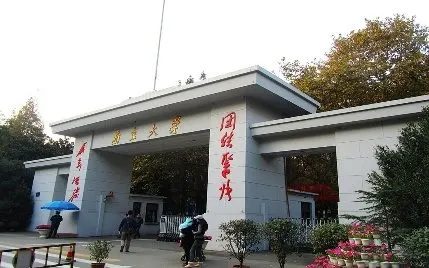
Nanjing University accepts international students on programmes in the following fields: business, engineering, medicine, education, economics. Choose the level and programme that suit your goals.
Chinese language study at the university — from a few weeks to a year or longer. Suitable for those starting from scratch or preparing for the HSK before entering a main programme.
self-funded · language programme
The first level of higher education: usually four years of study, specialised subjects, internships and a graduation thesis. It opens the way to working in your field and to a master's degree.
self-funded
Advanced study after a bachelor's degree: research, applied projects and internships. It helps you become an expert in your chosen field and broaden your career opportunities.
self-funded
Nanjing University is located in Nanjing. Nihao Study consultants keep track of the deadlines and admission requirements of this university, and you can always check the most accurate and up-to-date information on its official website. In university rankings, it is ranked 7 in China and 122 worldwide.
Come for a face-to-face meeting: together we will go through the requirements, deadlines, documents and study options that suit you.

At the meeting we will look at your situation, tell you which documents to prepare and by when, talk about possible programmes and help you decide on the next step.
Nanjing University (南京大学, Nánjīng Dàxué) is a public comprehensive research university under the Ministry of Education of the PRC. It is located in Nanjing, the capital of Jiangsu Province. The university's international abbreviation is NJU, and in China it is known for short as 南大 (Nándà).
NJU's standing among the country's leading universities rests on official markers rather than marketing language. The university was included in Projects 211 and 985, is a member of the C9 League and takes part in the current national Double First-Class (双一流) programme. Times Higher Education explicitly lists Nanjing University among China's leading public universities. It is important to understand the difference: 211 and 985 are designations of past projects, while Double First-Class sets the current framework for the development of higher education.
Below, Nihao Study has gathered what a 2026 applicant needs to know: status and rankings, strong disciplines, language of instruction, HSK and CSCA requirements, dormitories, scholarships and documents.

| Indicator | Data |
|---|---|
| Year founded | 1902 |
| Campuses | 4: Xianlin, Gulou, Pukou, Suzhou |
| Schools and institutes | 46 |
| Bachelor's students | 16 008 |
| Master's students | 19 266 |
| Doctoral students | 11 205 |
| International students | 1 432 |
| Bachelor's programmes | 91 |
| Double First-Class disciplines | 16 |
The figures on student numbers and structure are taken from NJU's current Chinese-language page. NJU's English-language pages may be updated on a different schedule, so older figures from there should not be mechanically mixed with the data in this table.
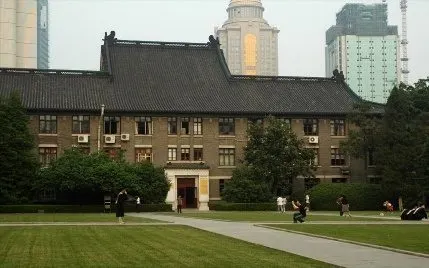
The university's official history traces its origins to Sanjiang Normal School, founded in 1902. Over the following decades the institution changed its name several times: Liangjiang Normal School, Nanjing Higher Normal School, National Southeastern University, the Fourth Sun Yat-sen University, National Central University and National Nanjing University. Its current name, Nanjing University, was settled in 1950.
In 1952, when the higher education system was being restructured across the country, the humanities and natural science departments of the University of Nanking (also known as Jinling University) were merged into NJU. The university kept its name and moved from Sipailou to the Gulou campus. The claim in an older text that Nanjing University “merged with itself” is wrong: two different historical institutions were combined.
In English, the university's motto reads “Sincerity with Aspiration, Perseverance with Integrity”. The official interpretation links it to honesty, perseverance, ambition and a sense of responsibility. For its 120th anniversary in 2022, NJU set out a new long-term development vision, emphasising openness, students' academic growth and the goal of becoming a world-renowned university.
NJU took part in Project 211: the university appears in official Ministry of Education materials on the institutions in this project, and it says itself that it was in the first group. Its 985 status is also confirmed: in July 1999 the Ministry of Education and Jiangsu Province signed an agreement to jointly support NJU.
The university regards C9 League membership as part of its identity. The league brings together nine strong Chinese research universities, but applicants still choose their programme, language of instruction and laboratory separately.
Following the second round of Double First-Class, 16 NJU disciplines were included in the list: physics, chemistry, astronomy, biology, geology, atmospheric science, environmental science, materials science, chemical engineering, mining, computer science, philosophy, Chinese language and literature, foreign languages and literature, theoretical economics, and library, information and archives management. The results of this round were published in 2022 by the Ministry of Education, the Ministry of Finance and the National Development and Reform Commission.
The verdict: 985, 211 and C9 are stable statuses that developed historically, while Double First-Class is a current national programme. It is fair to call NJU a leading university, but without unprovable claims that it is the only or unquestionably the best university.
| Ranking | Rank and edition |
|---|---|
| QS World University Rankings | 90th, 2027 |
| Times Higher Education | 62nd, 2026 |
| ARWU | 75th, 2025 |
| CWUR Global 2000 | 120th, 2026 |
| EduRank | 241st in the world, 10th in China (2026) |
| Nature Index, current period | 9th in the world by overall Share |
The gap between 62nd and 241st place does not mean the data contradict each other. THE, QS, ARWU, CWUR, EduRank, Nature Index and U.S. News rely on different datasets and weight indicators differently. For example, the Nature Index depends heavily on the number of articles in a particular group of scientific journals, while EduRank's model also takes into account research output, reputation and alumni influence.
When choosing a subject, subject rankings tell you more than the overall position. In ARWU 2025, NJU is 3rd in environmental science and engineering, 12th in Earth Sciences and in atmospheric science, 14th in nanoscience and nanotechnology and 15th in chemistry. These positions show where significant research is concentrated.
Geology, physics, chemistry, astronomy and atmospheric science are on NJU's official Double First-Class list. In the THE 2026 subject rankings, the university's physical sciences are 26th in the world. This combination suits those aiming for a thorough grounding in fundamental science, research publications and further doctoral study.
High positions in environmental science, Earth Sciences and atmospheric science point to a strong cluster where chemistry, geology, climatology and data analysis meet. International students can, for example, take the 2-year English-taught Smart Environment master's programme, which lists machine learning for environmental problems, pollution control and “healthy water” technologies.
Chinese language and literature, foreign languages and literature, philosophy, theoretical economics, and library, information and archives management are also on NJU's national list. The humanities tradition here holds its own alongside the strong natural sciences – a notable feature of the university. The Information Resources Management master's programme is taught in English: 2 years of study, with data analytics and digital humanities tracks.
NJU's official structure covers a wide range of fields. The exact and natural sciences include mathematics, physics, chemistry, biology, astronomy and space science, as well as Earth, atmospheric and environmental sciences. The applied block consists of computer science, artificial intelligence, electronics, architecture, medicine and engineering. There are also the humanities and social sciences, business and law. The words School, College and 学院 on the website refer to units within NJU, not separate universities.
In addition to many science and engineering programmes, the 2026 bachelor's catalogue includes philosophy, history, archaeology, law, international politics, journalism, information management, Chinese language and teaching Chinese as a foreign language, and English and Korean. A bachelor's degree usually lasts 4 years, but the exact duration and the list of CSCA subjects are given separately for each programme, so check them in the entry for the programme you choose.
Joint international formats also need to be checked programme by programme. THE cites the Johns Hopkins University Nanjing Center as a notable example of NJU's cooperation. Admission to double-degree programmes is run separately, even when a partnership with a foreign university is in place: such a programme needs its own admission rules, language, curriculum and a confirmed arrangement for awarding the degrees.
| Level | Language and duration | Main requirement |
|---|---|---|
| Bachelor's Degree | Chinese, usually 4 years | HSK 5, 180 points or more; CSCA as well from the 2026/2027 cycle |
| Master's Degree | Chinese or English, 2–3 years | HSK 4 or HSK 5 depending on the field; for English-taught programmes, IELTS 6.0 or equivalent |
| Doctoral (PhD) Programmes | Chinese or English, usually 4 years | Master's degree and the requirements of the specific school |
| Chinese Language | 20 hours a week, from 6 months to 2 years | Groups from beginner to advanced level |
For international applicants, all NJU bachelor's programmes are taught in Chinese. An HSK 5 certificate with a score of at least 180 is required. From the 2026/2027 cycle, the China Scholastic Competency Assessment (CSCA) is added; which subjects you sit depends on your chosen programme.
For master's programmes, the HSK requirement depends on the field: HSK 4 for natural sciences, engineering and medicine, HSK 5 for humanities, social sciences and business programmes. For the English-taught track, the benchmarks are IELTS 6.0, TOEFL iBT 85, TOEFL Essentials 9 or Duolingo 100, and you need to obtain HSK 3 by graduation. The BCT exam is not regarded as a standard substitute for HSK.
NJU's language courses in Nanjing take place on the Gulou campus. The programme covers reading, writing, listening and speaking practice, HSK preparation and cultural modules. Check official exam dates in the system of the test centre you choose.
| Option | Details |
|---|---|
| Xianlin, place in a double room | International Students Apartment, Building 21 |
| Gulou, place in a double room | Xiyuan International Student Building |
| Gulou, single room | Subject to availability |
| Off-campus housing | Terms depend on the area and type of flat |
A deposit is paid for the room furnishings, and insurance for the academic year is compulsory. Budget separately for electricity, water, food, books, transport and medical costs beyond the insurance. Until your booking is confirmed, you cannot count on a room – especially if your programme is based on another campus.
For Xianlin, NJU's English-language page currently gives a rate only for a place in a double room; a single option is not confirmed there. Check current accommodation rates, the deposit amount and the cost of insurance on the university's official website.
There is no single success rate common to all scholarships: decisions are made by a selection committee, so neither an average chance of success nor guaranteed free tuition can be promised. The outcome depends on the programme, the quota, your country, your academic profile and the quality of your documents. Before choosing a route, check the list of universities that accept CSC scholarship holders and the rules for the current cycle.
Gulou is in central Nanjing, at 22 Hankou Road. Xianlin is in Qixia District, at 163 Xianlin Road. The Pukou campus is at 8 Xuefu Road, and the Suzhou campus is at 1520 Taihu Road. Where you study is decided not by how attractive the place is to tourists, but by your school, degree level and curriculum.
Metro Line 2 links Xianlin to the city centre. At Nanjing University Xianlin Campus station, the university recommends using Exit 1 – from there it is about a 20-minute walk to the dormitory. Gulou and Xianlin are about 20 kilometres apart, and a university shuttle runs between them.
The Gulou and Xianlin libraries have spaces for individual and group work. The Duxia Library in Xianlin has 5 floors and 45 reading rooms; the main areas are open from 8:00 to 22:00. The university's cultural sites include the Pearl S. Buck House, the John Rabe Memorial Hall and the NJU History Museum.
| University and Chinese name | Profile | Distinguishing feature |
|---|---|---|
| Nanjing University, NJU, 南京大学 | Comprehensive research university, C9 member | The university this page is about; its short Chinese name gives no indication of a specialism |
| Southeast University, SEU, 东南大学 | Research university, Projects 985 and 211 | Focus on engineering, architecture, transport and electronics |
| Nanjing Normal University, NNU, 南京师范大学 | Multidisciplinary university with a teacher-training specialism | Its name contains 师范, “normal” or “teacher training” |
| Nanjing University of Posts and Telecommunications, NUPT, 南京邮电大学 | Specialised sector university | The characters 邮电 in the name; focus on communications and telecommunications |
| Nanjing University of Science and Technology, NJUST, 南京理工大学 | Engineering and technology university | Abbreviation NJUST; 理工 in the Chinese name |
NJU and SEU share early roots in Nanjing's educational institutions of the early 20th century. Today, however, they are two independent universities, and each admits students through its own system.
The official international name is Nanjing University, and the official abbreviation is NJU. In Chinese the university is called 南京大学 (Nánjīng Dàxué), and in everyday speech it is shortened to 南大 (Nándà). There is one main Russian form of the name. A variant with an extra capital letter is orthographically inaccurate, a shortened form comes from search queries rather than standard usage, and a version meaning “University of Nanjing” is an understandable calque of the English word order.
It is a public comprehensive research university under China's Ministry of Education. The university's main sites are in Nanjing, and its fourth campus is in Suzhou (Jiangsu province).
Yes. Its participation in 985 and 211 is confirmed, as is its C9 membership; in the second-round Double First-Class list NJU has 16 disciplines.
The published rules include no Russian-taught programmes. International students study bachelor's programmes in Chinese, while there are some English-taught master's and doctoral programmes.
For a bachelor's degree, HSK 5 with a score of at least 180. For Chinese-taught master's programmes, science, engineering and medical fields require HSK 4, while humanities, social science and business programmes require HSK 5.
The price depends on the campus and room type, and in addition to accommodation you need compulsory insurance for the year. Current rates are published on the university's official website — check them before you travel.
You can enter the competition. The full CSC Type B scholarship, designed for master's and doctoral students, covers tuition, dormitory accommodation and insurance and includes monthly payments. However, selection is competitive and is carried out by the university and the CSC.
The language programme uses its own Chinese Proficiency Test system, and HSK preparation is part of the course. Whether there are places for the external exam on the date you need becomes clear at registration — schedules and the number of places change.
Take metro Line 2 to Nanjing University Xianlin Campus station and leave via Exit 1. As the university warns, it is about a 20-minute walk from the station to the dormitory.
NJU is a comprehensive C9 university, 南京大学 in Chinese. SEU's Chinese name is 东南大学, and it has a strong engineering focus. NNU's name contains 师范, indicating a teacher-training specialisation; NUPT's contains 邮电 and it specialises in telecommunications, while NJUST's contains 理工 and it focuses on engineering and technology. These are five independent universities, each with its own applications and requirements.
You will need an online application form, a passport, a school certificate (or a letter confirming expected graduation), a full school transcript, an HSK certificate, a CSCA report, a personal statement and two recommendations. Architecture additionally requires a portfolio, and the English programme requires IELTS 5.5 or higher or TOEFL 70 or higher.
Nanjing (南京), the 'Southern Capital', was ruled by six dynasties. The city preserves a rich historical heritage: the Sun Yat-sen Mausoleum and the Ming-dynasty city wall. Today it is one of China's leading centres of science and education.
Nanjing has strong universities, including Nanjing University, beautiful campuses and a lively student life. The streets are lush with avenues of plane trees, the metro has 11 lines, and Shanghai is just 1 hour away. Parents are drawn by the calm, intellectual atmosphere, the high level of safety, good healthcare and developed infrastructure — while prices are lower than in Shanghai.
You work with Nihao Study specialists. They will help you put together a portfolio and a set of documents, draw up a study plan and choose a university or college and a specialty that genuinely interest you.
We take care of every stage of admission, from choosing to enrolment
We will gather, prepare, certify and send your documents to the institution
We will show the admissions committee your strengths
We run training sessions and courses so you can prepare with more confidence
We will help you settle in at the start of your studies and keep moving forward
Nihao Study specialists select universities and colleges that match the applicant's goals and means. We make sure the teachers are practitioners and that the knowledge will be useful in your profession.
We examine curricula, talk to students and teachers and look at which specialties employers need, and use this information to select options for the applicant.
Advisers guide the applicant from the first consultation to enrolment, help build a plan and spot mistakes in time that could get in the way.
The cost of our support depends on the programme and the partner university; you'll get an exact quote after a free consultation.
Get a quoteA free 15-minute consultation: together we will choose a university or college and a programme that suit your goals and budget.
Apply with peace of mind: we handle the documents, deadlines and correspondence with admissions committees, and you save time and energy.
Don't want to wait for a call? Message us in the chat.
Message us in chat