- Language courses
- English, Chinese
- Bachelor's Degree
- English, Chinese
- Master's Degree
- English, Chinese
- Doctoral (PhD) Programmes
- English, Chinese
- Accommodation from 7 200 ¥/year
NNU · 南京师范大学
Nanjing Normal University accepts international students on programmes in the following fields: engineering, education, humanities, natural sciences. Choose the level and programme that suit your goals.
Chinese language study at the university — from a few weeks to a year or longer. Suitable for those starting from scratch or preparing for the HSK before entering a main programme.
self-funded · language programme
The first level of higher education: usually four years of study, specialised subjects, internships and a graduation thesis. It opens the way to working in your field and to a master's degree.
self-funded
Advanced study after a bachelor's degree: research, applied projects and internships. It helps you become an expert in your chosen field and broaden your career opportunities.
self-funded
Nanjing Normal University is located in Nanjing. Nihao Study consultants keep track of the deadlines and admission requirements of this university, and you can always check the most accurate and up-to-date information on its official website. In university rankings, it is ranked 63 in China and 745 worldwide.
Come for a face-to-face meeting: together we will go through the requirements, deadlines, documents and study options that suit you.

At the meeting we will look at your situation, tell you which documents to prepare and by when, talk about possible programmes and help you decide on the next step.
Nanjing Normal University (NNU; Chinese: 南京师范大学, pronounced Nánjīng Shīfàn Dàxué) is a public comprehensive university located in Nanjing, the administrative centre of Jiangsu Province. In Russian it is usually called by a name meaning "Nanjing Pedagogical University". Searches also turn up other variants: "Pedagogical University of Nanjing", a version with a distorted spelling of the city's name, and a word-for-word rendering of "Nanjing Normal University". Within China the short forms 南师大 and 南师 are used, and in correspondence with foreign partners the abbreviation NNU.
The university is part of the 211 project — it appears on the official list maintained by the Ministry of Education of China. Its Double First-Class (双一流) status is also confirmed, but it needs to be interpreted correctly: under this programme, one NNU discipline — geography — is being raised to "world-class" level, not every field across the board. The university is jointly supervised by the Ministry of Education and the Jiangsu provincial government. This explains its profile: a long-standing teacher-training tradition sits alongside research in geography, ecology, chemistry, technology and the humanities.
In this overview Nihao Study has gathered what a 2026 applicant needs to know: NNU's statuses and rankings, programmes and HSK requirements, scholarships, dormitories, campuses, and similarly named universities with which it is easily confused.

The figures in the table come from publications from different years, so a source or date is given for each. This is more honest than combining figures from different periods in one table as if they had been obtained at the same time.
| Item | Data |
|---|---|
| Origins (normal school) | 1902 |
| Type and status | public, Project 211, Double First-Class |
| Campuses | Xianlin, Suiyuan, Zijin |
| Number of students (ShanghaiRanking profile) | 28,339 students |
| International students (same profile) | 762 people, 2.7 per cent |
| Library collection (2024 profile data) | about 3.81 million volumes |
| Location of the main campus | 1 Wenyuan Road, Qixia, Nanjing, 210023 |
Separate figures appear in a fact sheet published by the Nanjing city government: 18,369 bachelor's students, 11,039 master's students, 1,525 doctoral students and 3,247 staff. The fact sheet came out in 2024, so it conveys the university's scale well but does not reflect current numbers.
NNU traces its origins to 1902, when Sanjiang Normal School opened. The university itself describes it as one of the sources of higher teacher education in China. This tradition was later passed down through a series of institutions whose history is linked to Southeast University, National Central University and Nanjing University, as well as Nanjing Higher Normal School.
The university emerged as a separate institution, Nanjing Normal College, in 1952, formed from departments of Ginling University and Nanjing University. It was given its current name in 1984. It joined Project 211 in 1996. In 2000 Nanjing Power College was merged into it. NNU was included in the first round of Double First-Class in 2017, and in 2022 it also made the second round.
This history also shapes NNU's present character. The word 'normal' in the English name points to its teacher-training roots, but it does not mean the university trains only school teachers. Today it covers engineering, arts, environmental, social science, humanities and natural science fields.
| Ranking | Position | Year |
|---|---|---|
| ARWU | 401-500 band | 2025 |
| ShanghaiRanking China | 58th | 2026 |
| QS World University Rankings | 951-1000 band | 2026 |
| QS World University Rankings | 901–950 band | 2027 |
| THE World University Rankings | 801–1000 band | 2026 |
| U.S. News Best Global Universities | 492nd | 2026 |
| CWUR | 462nd out of 21,291 | 2026 |
| EduRank | 1032nd in the world, 72nd in China | 2026 |
Differences between rankings are to be expected. For ARWU and EduRank, publications and citations play the main role. QS and THE rely on their own methodologies, which take reputation and institutional indicators into account. CWUR looks at the quality of education, graduate careers, faculty and research. So a single overall position tells you less than the university's standing in the discipline you plan to study.
NNU's most visible strength is its group of geography disciplines. According to EduRank, the university is 147th in the world in remote sensing and 277th in urban and regional planning. At the same time, in China's national programme it is precisely geography that has been granted Double First-Class discipline status. When a ranking and official status point the same way, that means more than general talk of a 'strong university'.
Project 211 is a long-standing national list of universities that China prioritised. Thanks to it, NNU stands out easily among the many regional teacher-training universities, although the standard of teaching varies from school to school. For an applicant, the status signals that the university is large, has a well-developed research base and awards a degree that is recognised in China. But you should still make your choice by checking the curriculum, the teaching staff, the language of instruction and your own career plans.
Double First-Class is even more targeted. For NNU, the programme specifically recognises geography, so the university is especially worth considering for those interested in cartography, GIS, remote sensing, physical and human geography, natural resource management and related environmental research. Education and psychology also remain strong. However, a status granted to one discipline at national level cannot be mechanically extended to every programme in the catalogue.
The same logic applies to rankings. An overall position tells you how visible the university is worldwide, while a subject ranking shows how many publications there are in a particular field. For a bachelor's student, what matters more is how accessible the courses are, how language adaptation is organised and whether there are placements. A master's student should add the laboratory and supervisor to this. For a doctoral student, the decisive factors will be the research group's recent papers, how close the topic is, access to data and the supervisor's willingness to take on an international researcher. A figure in a table cannot replace all of this.
When comparing NNU with the country's leading universities, take its specialisation into account. It does not try to replicate Nanjing University. Its strength lies in the combination of a teacher-training tradition, geography, the humanities and a growing natural sciences side. This combination suits those who plan to combine their subject area with education, science communication, public administration or spatial data analysis.
The School of Geography covers cartography, geographic information systems, ecology, environmental studies, and physical and socio-economic geography. The university states that the school is based mainly on the Xianlin campus. In 2026 the Nanjing city government noted that NNU was ranked 58th in the national ShanghaiRanking, which reflects the university's prominent position in China.
Education remains the foundation of NNU's reputation. The university's units include schools of education, psychology, teacher education, foreign languages, literature, history, journalism, law and public administration. International applicants can choose from many paths, such as teaching Chinese as a foreign language, applied psychology or social policy.
The science and engineering group includes schools of mathematics, physics, chemistry and materials science, marine science, environment, life sciences and computer science, as well as electrical engineering, automation, energy and mechanical engineering. The Lishui District government reported that, as of January 2026, 15 NNU disciplines were in the ESI top 1 per cent, including chemistry, biology and biochemistry, and agricultural sciences. ESI is based on citations of research papers rather than the quality of an individual study programme, but it reflects the intensity of research at the university well.
At the first stage of choosing, it is easier to think in terms of four broad groups rather than the names of individual departments.
The university reports 27 specialist schools and institutes, including the International College of Cultural Education. Where the English name says School, it refers to a unit of NNU rather than an independent college. Whether a particular programme accepts international students and in which language it is taught must be checked separately for each track.
The 2026 admissions guide sets a single application deadline: 1 June 2026. Bachelor's applicants also need a CSCA entrance test result, so older instructions that leave this requirement out are no longer sufficient.
| Level | Required education | Chinese level |
|---|---|---|
| Bachelor's Degree | secondary school certificate and CSCA result | HSK 4, at least 210 points |
| Master's Degree | bachelor's degree | HSK 5, at least 180 points |
| Doctoral (PhD) Programmes | master's degree | HSK 6, at least 180 points |
For English-taught programmes, NNU accepts an IELTS or TOEFL certificate, or a document confirming that your entire previous stage of education was taught in English. Bear in mind that English-taught admissions are not opened in every intake.
Start with the catalogue for the intake year you are applying to and find the programme there. Then compare the programme's English and Chinese names: similar translations sometimes hide different curricula. Next, check which department runs the programme, which language all compulsory courses are taught in, which campus classes take place on and how the final assessment works. An English title on a description written only in Chinese does not mean the programme is taught in English.
Future bachelor's students most often go wrong by overestimating their spoken Chinese. The minimum HSK only makes you eligible to apply; lectures, written assignments, terminology and group projects require a much broader academic vocabulary. Try reading a first-semester textbook in your subject in advance and taking notes on an open lecture. If you cannot manage yet, a preparatory language year may be a more sensible choice than going straight into your degree subject.
For a future master's student, the programme title is not the only thing that matters: the research group you join is important too. It is worth requesting the list of courses in advance and finding out how the research seminar works and what the thesis requirements are. If you choose an English-taught programme, check whether all core courses and supervision are in English. Sometimes a programme is advertised as English-taught, but the administrative systems and some electives remain in Chinese.
Doctoral applicants should contact a potential supervisor well in advance. A good email briefly sets out your topic, methods, the work already done and how your project relates to the group's research. General statements about dreaming of studying at a famous university do little to show whether your research interests match. It is also important to get confirmation that the supervisor is taking international doctoral students in the year you need and is willing to work in the agreed language.
Finally, admission and a scholarship are separate decisions. The university may approve a candidate academically and still not award funding. So plan a main option and a back-up in advance – a full scholarship, a partial fee reduction or self-funded study – each of which has its own deadline and its own set of documents.
International students have studied at NNU since 1965, and the university has built up extensive experience in teaching Chinese as a foreign language. For degree programmes, the 2026 admissions guide specifically requires HSK. It does not mention the BCT certificate as an equivalent alternative, so you cannot use it in place of HSK. Check exam dates on the official testing website just before you register.
The 2026 fees are published in the admissions guide for Chinese-taught programmes and vary by degree level and subject group: humanities and management programmes form one group, natural sciences, engineering and agriculture another, and music, fine arts and sport a further category. In addition to tuition, you must take out compulsory medical insurance, and textbooks and personal expenses are paid separately. Check the current amounts on the university's official website or with its admissions office.
The largest and main campus is Xianlin in Qixia District (1 Wenyuan Road). It has been in use since 2001 and covers about 346.7 hectares. A large share of bachelor's students study here; the campus has a modern library, teaching buildings, sports grounds and all the infrastructure of a student town.
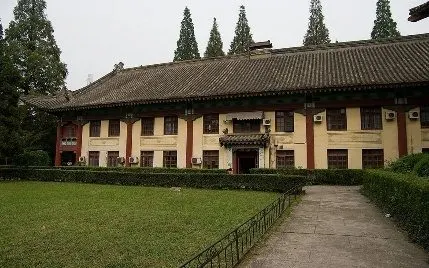
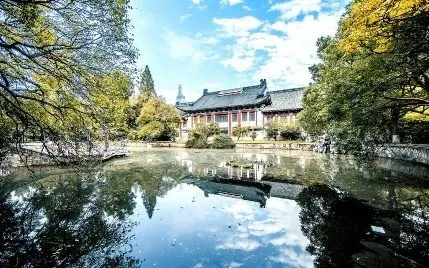
Suiyuan Campus is in Gulou District, at 122 Ninghai Road. It was once the site of Ginling Women's College, and today this historic site is on the list of monuments protected at national level. It stands out for its traditional architecture and its location in the central part of the city. The third campus, Zijin, is in Xuanwu District (78 Bancang Street). Its role has changed since the engineering departments moved to Xianlin, so check your admission letter to see exactly where your classes will be held.
According to a profile published by the Nanjing government in 2024, the NNU library held about 3.81 million printed volumes and provided access to 152 electronic databases. At that time the university also had exchange links with 232 institutions in 42 countries and regions and joint programmes with 16 overseas universities. These figures describe the international links at a particular point in time and do not guarantee that an exchange will be available to every student.
The 2026 admissions guide publishes a price range for dormitory accommodation; the exact amount depends on the building and room type. This range reflects the rates, not availability: whether the type of accommodation you want is free is only known after admission. See the university's official website for current prices.
When planning your budget, look beyond the rate itself. Find out whether it includes staying during the holidays, utilities, internet, bed linen and a deposit. When the dormitory contract period does not match the study period, you may need temporary accommodation before moving in or after exams. Also set money aside for the medical check, the residence permit, the trip from the airport, food in the first weeks and everyday household items.
Your daily routine depends on your campus. Xianlin is a large student town, but getting from there to central Nanjing takes time. Suiyuan blends naturally into the old city, although your programme may be taught at another site. Before arranging accommodation, compare the dormitory address with the address of your school and your timetable. An attractive building in a photo does not mean that is where you will be housed.
| Cost item | What to check |
|---|---|
| Dormitory, semester | campus, room type, deposit |
| Dormitory, academic year | what period the accommodation covers |
| Medical insurance | what the policy covers and how long it is valid |
The admissions guide names five main sources of financial support: the Chinese Government Scholarship (CSC), the International Chinese Language Teachers Scholarship, the Jiangsu Provincial Government and Nanjing Municipal Government scholarships, and the university's own scholarship.
NNU is one of the universities that accept international students, but the application procedure for a given year is best checked against the list of CSC universities and in the official system for the programme concerned. There is no guaranteed chance of approval – it all comes down to the competition.
| University | Status | Main specialism |
|---|---|---|
| Nanjing Normal University, NNU, 南京师范大学 | 211, Double First-Class | geography, education, natural sciences and humanities |
| Nanjing University, NJU | 985, 211, Double First-Class | broad range of research, fundamental sciences |
| Nanjing University of Science and Technology, NJUST | 211, Double First-Class | technology, engineering |
| Nanjing Agricultural University, NJAU | 211, Double First-Class | biology and agricultural sciences |
| Nanjing Normal University Zhongbei College | independent college | applied bachelor's degrees; this is not NNU itself |
The English name causes another mix-up. The word “normal” traditionally indicates a teacher-training profile, but that does not make NNU either Nanjing University or a branch of NJU. When applying, always check the Chinese name 南京师范大学 and the abbreviation NNU.
There is one accepted Russian form of the name, meaning “Nanjing Pedagogical University”. One variant misspells the name of the city. “Pedagogical University of Nanjing” is an understandable calque, but it is not considered the main form. The official English name is Nanjing Normal University, and the international abbreviation is NNU. In China the university is called 南师大 or 南师 for short, and the full Chinese name is 南京师范大学 (Nánjīng Shīfàn Dàxué).
NNU is short for Nanjing Normal University. Yes, the university is public: it belongs to Jiangsu province and is jointly supported by the province and the Ministry of Education of the PRC.
Yes, both. The university is on the official 211 list, and under Double First-Class its designated discipline is geography.
For 2026 admission, the requirements were: bachelor's — HSK 4 with at least 210 points; master's — HSK 5 with at least 180 points; doctoral — HSK 6 with at least 180 points. Check exam dates against the HSK calendar before registering.
Yes, some programmes are taught in English. To apply, IELTS, TOEFL or a document showing that your previous education was in English will do. Whether such an intake is open in your year needs to be checked separately.
The cost depends on the level and the subject group. Go by the latest invoice from the university and the information on its official website, not by overview articles.
The price depends on the building and room type; current terms are published on the university's official website.
You can enter the CSC competition — it is on the list of funding sources for NNU's international students. But the scholarship is awarded competitively, and the terms depend on the application category.
For the 2026 intake, yes: international bachelor's applicants had to submit a CSCA result. Check the requirements for next year in the new guidelines.
The main campus is Xianlin, at 1 Wenyuan Road, Qixia District, Nanjing, Jiangsu 210023. The two other campuses are Suiyuan, in Gulou District, and Zijin, in Xuanwu District.
They are two different universities. NNU (南京师范大学) developed historically as a teacher-training university and is strong in geography. Nanjing University (南京大学) is a separate institution with the abbreviation NJU. Do not mix them up in your application, payments or visa documents.
Nanjing (南京), the 'Southern Capital', was ruled by six dynasties. The city preserves a rich historical heritage: the Sun Yat-sen Mausoleum and the Ming-dynasty city wall. Today it is one of China's leading centres of science and education.
Nanjing has strong universities, including Nanjing University, beautiful campuses and a lively student life. The streets are lush with avenues of plane trees, the metro has 11 lines, and Shanghai is just 1 hour away. Parents are drawn by the calm, intellectual atmosphere, the high level of safety, good healthcare and developed infrastructure — while prices are lower than in Shanghai.
You work with Nihao Study specialists. They will help you put together a portfolio and a set of documents, draw up a study plan and choose a university or college and a specialty that genuinely interest you.
We take care of every stage of admission, from choosing to enrolment
We will gather, prepare, certify and send your documents to the institution
We will show the admissions committee your strengths
We run training sessions and courses so you can prepare with more confidence
We will help you settle in at the start of your studies and keep moving forward
Nihao Study specialists select universities and colleges that match the applicant's goals and means. We make sure the teachers are practitioners and that the knowledge will be useful in your profession.
We examine curricula, talk to students and teachers and look at which specialties employers need, and use this information to select options for the applicant.
Advisers guide the applicant from the first consultation to enrolment, help build a plan and spot mistakes in time that could get in the way.
The cost of our support depends on the programme and the partner university; you'll get an exact quote after a free consultation.
Get a quoteA free 15-minute consultation: together we will choose a university or college and a programme that suit your goals and budget.
Apply with peace of mind: we handle the documents, deadlines and correspondence with admissions committees, and you save time and energy.
Don't want to wait for a call? Message us in the chat.
Message us in chat