- Language courses
- English, Chinese
- Bachelor's Degree
- English, Chinese
- Master's Degree
- English, Chinese
- Doctoral (PhD) Programmes
- English, Chinese
- Accommodation from 7 200 ¥/year
NMU · 南京医科大学
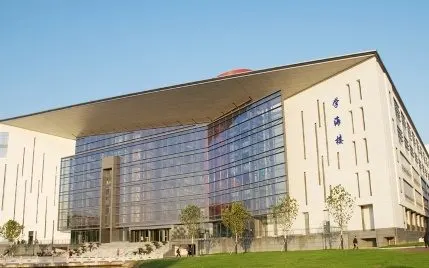
Nanjing Medical University accepts international students on programmes in the following fields: medicine. Choose the level and programme that suit your goals.
Chinese language study at the university — from a few weeks to a year or longer. Suitable for those starting from scratch or preparing for the HSK before entering a main programme.
self-funded · language programme
The first level of higher education: usually four years of study, specialised subjects, internships and a graduation thesis. It opens the way to working in your field and to a master's degree.
self-funded
Advanced study after a bachelor's degree: research, applied projects and internships. It helps you become an expert in your chosen field and broaden your career opportunities.
self-funded
Nanjing Medical University is located in Nanjing. Nihao Study consultants keep track of the deadlines and admission requirements of this university, and you can always check the most accurate and up-to-date information on its official website. In university rankings, it is ranked 55 in China and 870 worldwide.
Come for a face-to-face meeting: together we will go through the requirements, deadlines, documents and study options that suit you.

At the meeting we will look at your situation, tell you which documents to prepare and by when, talk about possible programmes and help you decide on the next step.
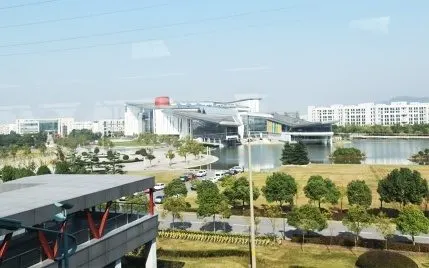
Nanjing Medical University (NMU, 南京医科大学, pinyin Nánjīng Yīkē Dàxué) is a public medical university in Jiangsu Province. Russian-language sources also call it by names meaning "Nanjing University of Medicine" or "Medical University of Nanjing", or by a Russian abbreviation equivalent to NMU, while Chinese students say 南医大 (Nányīdà). The main campus is officially located at 101 Longmian Avenue, Jiangning District, Nanjing 211166.
NMU takes part in the second round of the national Double First-Class programme, but with an important caveat: the 2022 list includes one specific discipline — Public Health and Preventive Medicine; medicine as a whole does not appear on it. The university was not part of the 211 and 985 projects: among Nanjing universities, the official 211 list names other institutions.
| Item | Data | Comment |
|---|---|---|
| Founded | 1934 | One of the country's long-established stand-alone medical universities |
| Campuses | 3: Jiangning, Wutai and Changzhou | Where classes take place depends on the programme and stage of study |
| Structure | 19 schools, 25 bachelor's programmes | Fields go beyond clinical medicine |
| Number of students | more than 23,000 students | Data updated in May 2026 |
| Main campus staff | more than 2,000 people | Staff of all the hospitals are not included |
| Double First-Class | public health and preventive medicine | The status is awarded to one specific discipline |
| ESI | 14 disciplines in the global top 1% | Clarivate data as of July 2026 |
| Main address | 101 Longmian Avenue, Jiangning, postcode 211166 | Home to the Jiangning campus and the admissions office |
Student numbers differ between ranking databases. For example, Times Higher Education lists 23,163 students in its 2026 edition, while the ShanghaiRanking dataset gives 15,840. This is not necessarily an error: the databases use different periods, cover units differently and count according to their own rules. The university's current size is described here using official NMU data.
Its history is traced back to 1934, when the Jiangsu Provincial Institute of Medical Administration opened. During the war years it was called National Jiangsu Medical College, and in 1957 it moved from Zhenjiang to Nanjing and was named Nanjing Medical College. This explains the different English name in older publications, and why its clinical network did not develop on a single campus.
In 1962 the college was among the first medical universities in China to introduce six-year programmes. It has been authorised to award master's and doctoral degrees since 1981, and has borne its current name, Nanjing Medical University, since 1993. The International School was founded in June 2005.
The next milestone came in 2022: NMU was included in the Double First-Class list for the first time, with Public Health and Preventive Medicine officially named as its discipline. According to the School of Public Health, this discipline received an A+ in the fourth and fifth rounds of the national assessment. The accurate way to put it is that, under Double First-Class, public health and preventive medicine is NMU's recognised target discipline.
A ranking position does not remove the need to check the programme itself and what rights the degree gives you in your home country. Future doctors should pay particular attention to the language of clinical practice, the placement site, professional accreditation requirements and whether they will be able to sit the national licensing exam after graduating.
| Ranking | Position | Edition |
|---|---|---|
| ARWU | 201–300 band | 2025 |
| CWUR | 326th in the world, 52nd in China | 2026 |
| THE World University Rankings | 801–1000 band | 2026 |
| THE Medical and Health | 401 to 500 band | 2026 |
| EduRank, overall | 1277th in the world, 89th in China | 2026 update |
| EduRank, medicine | 166th in the world, 14th in China | 2026 update |
Subject rankings show NMU's specialisation more clearly. In the 2025 ShanghaiRanking edition, pharmacy and pharmaceutical sciences are 40th in the world, biomedical engineering is in the 51–75 band, and clinical medicine and public health are in the 201–300 band. Among China's medical universities, NMU ranks 4th according to ShanghaiRanking 2026.
ESI offers a different view, as it is based on publications and citations. As of July 2026, NMU was 316th out of 10,428 institutions, and 14 of its fields were in the global top 1%. Within ESI's dataset, clinical medicine was 212th and pharmacology and toxicology 30th.
Many universities have clinical departments, but NMU stands out for something else. It develops toxicology, global health, epidemiology and biostatistics, nutrition, environmental health, and maternal and child health. The School of Public Health comprises 12 departments, 7 centres and 1 platform. It is precisely this field that received an A+ rating and a place in Double First-Class.
The university reports 15 affiliated hospitals, both general and specialist, where clinical residency training takes place. Older reference data may cite figures of 24 affiliated and more than 50 teaching hospitals, but these figures should not be mixed together mechanically: they may refer to different types of partnership and different years. When choosing a clinical programme, find out in advance where your placement will be and what language you will need to use with patients.
NMU has the international Environment and Human Health centre, a national key laboratory for reproductive medicine and offspring health, and more than 50 national or provincial laboratories, engineering centres and innovation centres. The university's positions in the subject rankings for pharmacy and biomedical engineering show that research here is not limited to clinical practice.
The university has 19 schools and 25 bachelor's programmes. Applicants will find it easier to navigate not by the formal School name but by the educational track a programme belongs to:
Do not assume the entire domestic catalogue is open to international students. Programmes for international students are listed by the School of International Education, and this list is shorter than the full list of fields.
For the 2026 intake the university announced two clinical medicine options. The Chinese-taught programme takes 5 years including a year of practical training and requires HSK 4 or higher. The English-taught MBBS lasts 6 years, which also include a year of internship.
| Programme | Language of instruction and duration | Main requirement |
|---|---|---|
| Clinical Medicine | Chinese, 5 years | HSK 4, relevant school subjects, CSCA |
| MBBS, Clinical Medicine | English, 6 years | IELTS 6 or equivalent, or proof of English-medium education |
| Master's programmes, except MPH | English or Chinese, 3 years | relevant bachelor's degree, CGPA of at least 2.5 out of 4 |
| Master of Public Health | English or Chinese, 2 years | HSK is not required for the MPH |
| Doctoral (PhD) Programmes | usually 4 years, can be completed in 3 years | relevant master's degree, CGPA of at least 3.0 out of 4 |
MBBS requirements for 2026: a school-leaving certificate, age under 25, biology, chemistry and physics or mathematics in the school curriculum, plus one of the accepted ways of proving English. Applications were accepted from 1 January to 30 June 2026; these dates do not automatically carry over to the next intake.
In 2026, applicants to the Chinese-taught clinical medicine programme needed a GPA of at least 3.0 out of 4, HSK 4, relevant school subjects and a passed CSCA in three parts: mathematics, chemistry and academic Chinese. For the English-taught MBBS, mathematics and chemistry were the compulsory CSCA subjects.
At master's level there are basic, research and professional medical fields. Professional programmes (except the MPH) require HSK 4 or higher; academic programmes and the MPH have no compulsory HSK level. It is advisable to submit, together with the application, a letter of intent from a supervisor, a research plan of at least 1,000 words and two recommendations.
The doctorate is offered as an academic PhD programme covering a wide range of medical and biomedical fields. In 2026 applicants had to be no older than 40, and documents were accepted from 26 January to 31 July. Before applying, check your topic against the available supervisors and the rules of your chosen school.
The university itself publishes the amounts for tuition, the registration fee, insurance and the deposit after pre-admission. Check the current terms on NMU's official website, and check in your pre-admission letter whether the deposit counts towards tuition. Besides payments to the university, your budget should allow for the visa, food, flights, internet, utilities, translation and legalisation of documents, and possible recognition of your medical degree.
| Room type | Accommodation terms |
|---|---|
| Single room | Jiangning or Wutai, subject to availability |
| Double room, Jiangning | basic furniture, bathroom and air conditioning |
| Double room, Wutai | on the central clinical campus |
| Triple room, Wutai | utilities charged separately |
| Quadruple room, Wutai | subject to availability |
In Jiangning, international students are offered furnished rooms with a fridge and entry by electronic campus card; there is a laundry room and a shared kitchen. According to the latest fees page, internet is paid separately, and water and electricity according to actual use; a deposit is also charged for the room. Until you have written confirmation, a place in your chosen room type is not guaranteed.
The 2026 rules for bachelor's programmes name three sources of scholarships: Jiangsu Province, the city of Nanjing and NMU itself. On the English-taught MBBS the university distributes support as follows: 5% of recipients are fully exempt from the annual fee, 10% get half off, 15% a quarter off, and 70% receive a starter scholarship. This is the scheme for one particular intake, and it does not guarantee an award to every applicant.
For the Chinese-taught clinical medicine programme the scheme is different: 50% of recipients have their fee fully covered, 40% half, and 10% a quarter. This programme also has a Nanjing city scholarship, and the number of places under government schemes is set by the authorities.
At master's level, under the university scheme 10% of scholarship holders receive full fee coverage and 90% half. For doctoral students a university scholarship has been announced: it covers tuition for those recipients who do not hold a government award.
The university is on the list of institutions that accept CSC scholarship holders, and the international school's website links to the Chinese Government Scholarship. The terms depend on the year, level of study and route, Type A or Type B. Selection for all forms of support is competitive.
Jiangning is a large student campus on Longmian Avenue, the Wutai campus is at 140 Hanzhong Road, and the university has another campus in Changzhou. If you plan to rent accommodation off campus, first find out where your year's classes take place.
Dining in Jiangning is organised in two main canteen complexes: the first has four halls, the second two for students and one for staff. There is also a halal canteen. For sport there is a multi-purpose hall for badminton, table tennis, basketball and gymnastics equipment; outdoors there are tennis, football, volleyball and basketball courts.
The library offers catalogues, electronic databases and medical study materials, and some of the collections can be accessed remotely. There are medical centres on both main campuses, and a university bus runs between them on weekdays.
The two exams serve different purposes: HSK shows your level of Chinese, while CSCA shows how academically ready an applicant is for a bachelor's degree. In 2026, NMU accepted applicants to Chinese-taught clinical medicine with HSK 4 or higher and three CSCA parts (mathematics, chemistry, academic Chinese). Applicants to the English-taught MBBS needed CSCA mathematics and chemistry, and proved their language proficiency with other documents.
The international school hosts an HSK and Medical Chinese test centre, run by the admissions office. You need to register for a specific session well in advance and check dates and venues on the exam's official website.
For learning Chinese, NMU offers long-term one-year courses. You cannot go by MBBS fees here: ask for a current offer that states the programme name, campus, study load and total amount payable.
| University | Status and type | Main specialism |
|---|---|---|
| Nanjing Medical University, NMU, 南京医科大学 | provincial medical university, Double First-Class | public health, clinical medicine, biomedicine |
| Nanjing University, NJU, 南京大学 | comprehensive university, Project 985 and 211 | basic sciences, medicine and research across a wide range |
| Nanjing University of Chinese Medicine, 南京中医药大学 | university of Chinese medicine | traditional Chinese medicine and integrative methods |
| China Pharmaceutical University, CPU, 中国药科大学 | specialised pharmaceutical university, Project 211 | pharmacology, pharmacy, drug development |
Students choose NMU primarily for clinical and preventive medicine and for population health research. Nanjing University is a much broader comprehensive university, Nanjing University of Chinese Medicine focuses on traditional Chinese medicine, and CPU on drugs and pharmaceutical sciences.
There is one main Russian form of the name, a direct equivalent of “Nanjing Medical University”. A common variant contains a spelling mistake in the word “medical”. “Nanjing Medical Institute” is inaccurate today: the institution has held university status since 1993. “University of Medicine of Nanjing” is an understandable calque but not the main form. The official English name is Nanjing Medical University, and the international abbreviation is NMU (NJMU is also used). The full Chinese name 南京医科大学 (Nánjīng Yīkē Dàxué) is shortened to 南医大 (Nányīdà).
NMU is a public medical university in Jiangsu province. Its main address (Jiangning campus) is 101 Longmian Avenue, Nanjing 211166; the international school also lists an address in Wutai — 140 Hanzhong Road.
Yes, since 2022, when the university first joined the second round of the programme. Its target discipline is public health and preventive medicine, so attributing Double First-Class status to its entire medical profile is incorrect.
No. The university is public, under provincial administration and part of Double First-Class, but it did not take part in the earlier Projects 211 and 985 — it is not on the official 211 list.
Yes. For the 2026 intake, an English-taught MBBS lasting 6 years, including a year of internship, has been announced. Master's and doctoral programmes are also possible in English, but the language of instruction must be agreed in advance with your chosen supervisor and for a specific study plan.
The 2026 rules for the Chinese-taught Clinical Medicine bachelor's programme require HSK 4 or higher. The same HSK 4 was also required for professional master's programmes, except the MPH.
Fees depend on the programme: Chinese-taught Clinical Medicine, MBBS, master's, MPH and doctoral programmes are charged differently. The invoice for a specific intake is issued by the university itself, so check its official website for current figures.
The price depends on the campus and on how many people share the room; utilities are paid separately, based on actual usage. The university publishes current terms on its official website.
NMU is on the list of universities that accept CSC scholarship holders; the Chinese Government Scholarship track is handled by the international school. Whether the track is open, for which level and with what coverage needs to be checked separately for each year.
Yes, the HSK and medical Chinese test site is overseen by the admissions office of the International Education School. You still need to register for a specific session, so keep an eye on the current HSK schedule.
For the 2026 intake, applicants had to submit a signed application form, a passport and photo, a school certificate with transcript, a medical form, a police clearance certificate, proof of English proficiency, a personal statement of at least 500 words and CSCA results no older than 12 months. The list may change for the next intake.
Nanjing (南京), the 'Southern Capital', was ruled by six dynasties. The city preserves a rich historical heritage: the Sun Yat-sen Mausoleum and the Ming-dynasty city wall. Today it is one of China's leading centres of science and education.
Nanjing has strong universities, including Nanjing University, beautiful campuses and a lively student life. The streets are lush with avenues of plane trees, the metro has 11 lines, and Shanghai is just 1 hour away. Parents are drawn by the calm, intellectual atmosphere, the high level of safety, good healthcare and developed infrastructure — while prices are lower than in Shanghai.
You work with Nihao Study specialists. They will help you put together a portfolio and a set of documents, draw up a study plan and choose a university or college and a specialty that genuinely interest you.
We take care of every stage of admission, from choosing to enrolment
We will gather, prepare, certify and send your documents to the institution
We will show the admissions committee your strengths
We run training sessions and courses so you can prepare with more confidence
We will help you settle in at the start of your studies and keep moving forward
Nihao Study specialists select universities and colleges that match the applicant's goals and means. We make sure the teachers are practitioners and that the knowledge will be useful in your profession.
We examine curricula, talk to students and teachers and look at which specialties employers need, and use this information to select options for the applicant.
Advisers guide the applicant from the first consultation to enrolment, help build a plan and spot mistakes in time that could get in the way.
The cost of our support depends on the programme and the partner university; you'll get an exact quote after a free consultation.
Get a quoteA free 15-minute consultation: together we will choose a university or college and a programme that suit your goals and budget.
Apply with peace of mind: we handle the documents, deadlines and correspondence with admissions committees, and you save time and energy.
Don't want to wait for a call? Message us in the chat.
Message us in chat