- Language courses
- English, Chinese
- Bachelor's Degree
- English, Chinese
- Master's Degree
- English, Chinese
- Doctoral (PhD) Programmes
- English, Chinese
- Accommodation from 7 200 ¥/year
NJAU · 南京农业大学
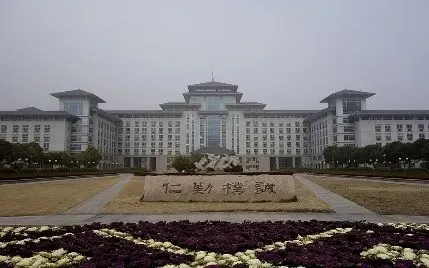
Nanjing Agricultural University accepts international students on programmes in the following fields: engineering, medicine, economics, humanities. Choose the level and programme that suit your goals.
Chinese language study at the university — from a few weeks to a year or longer. Suitable for those starting from scratch or preparing for the HSK before entering a main programme.
self-funded · language programme
The first level of higher education: usually four years of study, specialised subjects, internships and a graduation thesis. It opens the way to working in your field and to a master's degree.
self-funded
Advanced study after a bachelor's degree: research, applied projects and internships. It helps you become an expert in your chosen field and broaden your career opportunities.
self-funded
Nanjing Agricultural University is located in Nanjing. Nihao Study consultants keep track of the deadlines and admission requirements of this university, and you can always check the most accurate and up-to-date information on its official website. In university rankings, it is ranked 71 in China and 870 worldwide.
Come for a face-to-face meeting: together we will go through the requirements, deadlines, documents and study options that suit you.

At the meeting we will look at your situation, tell you which documents to prepare and by when, talk about possible programmes and help you decide on the next step.
Nanjing Agricultural University (abbreviated NJAU and NAU, Chinese: 南京农业大学, pinyin Nánjīng Nóngyè Dàxué) is a public research university in Nanjing, Jiangsu Province. Chinese students and teachers shorten its name to 南农, 南农大 or 南京农大. Russian-language texts also use other variants — meaning "Nanjing Agri-University", "Nanjing Agrarian University" or "Agricultural University of Nanjing" — but this page uses the full name. The university's charter sets out the English name, the abbreviations NJAU and NAU, and the Chinese short forms.
The university is directly under the Ministry of Education of China and officially belongs to the 211 project. NJAU also takes part in the Double First-Class (双一流) initiative. However, it is not part of the 985 project: according to the university itself, NJAU was included only in that project's priority disciplines platform, not in the project as such. In the second cycle of Double First-Class, NJAU has two disciplines: crop science, and agricultural resources and environment.
Below, Nihao Study has gathered the essentials about NJAU for applicants from Uzbekistan: programmes, rankings, admission rules, scholarships, dormitories and similar names that are easy to mix up.
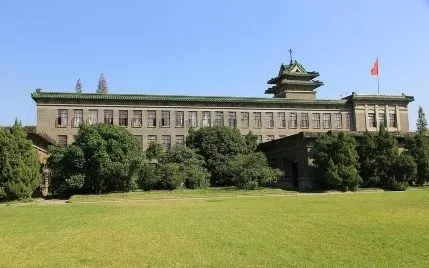
The university itself reports more than 25,500 full-time students: over 17,000 of them are undergraduates, and more than 8,500 are master's and doctoral students. It has more than 2,700 staff. The academic structure consists of 18 colleges plus one independent unit.
| Item | Value |
|---|---|
| Origins of the university | 1902 |
| Supervising authority | Ministry of Education of the PRC |
| Full-time students | more than 25,500 |
| Bachelor's majors | 62 majors |
| Status | 211, Double First-Class |
| Disciplines in the second round of Double First-Class | 2 |
| Campuses and facilities | Weigang, Binjiang, Pukou, Baima base |
The university has three teaching campuses and the separate Baima teaching and research base. Together they cover about 9 sq km, with a total floor area of around 740,000 sq m. The historic Weigang campus is at 1 Weigang, Xuanwu District, Nanjing; the Binjiang campus at 666 Binjiang Avenue, Jiangbei New Area; and the Pukou campus at 40 Dianjiangtai Road, Pukou District.
The university has roots in two academic traditions. The first is the agriculture department of Sanjiang Normal School, founded in 1902; the second is the College of Agriculture of the private University of Nanking, opened in 1914. Over time the two lines merged into the present structure, so 1902 marks the start of the tradition rather than the date the current legal entity was established.
Nanjing Agricultural College was created in 1952 by merging the agriculture faculties of National Central University and the University of Nanking, together with some departments of Zhejiang University's College of Agriculture. In 1963 the college was named one of the country's two key agricultural universities.
In 1972, during a period of reorganisation, the college was moved to Yangzhou and merged with Northern Jiangsu Agricultural College. It returned to Nanjing in 1979 along with its former name. The university has borne its current name, Nanjing Agricultural University, since 1984, and in 2000 it left the Ministry of Agriculture system and came under the direct administration of the Ministry of Education.
NJAU became a Project 211 university in 1998. Later its core research fields were included in two programmes: Double First-Class and the 985 platform for strong disciplines. The wording matters here: NJAU is not on the historical list of Project 985 universities, although the discipline platform linked to that project did include it.
Overall world rankings reflect the university as a whole, but subject tables say more about NJAU. In ARWU 2025 the university is in the 201–300 band. In the ShanghaiRanking subject rankings for the same year it is 3rd in the world for veterinary sciences, 4th for agricultural sciences and 10th for food science and technology.
| Ranking | Position | Edition |
|---|---|---|
| ARWU | 201–300 band | 2025 |
| QS World University Rankings | 901–950 band | 2027 |
| CWUR Global 2000 | 359th, 55th in China | 2025 |
| EduRank | 898th in the world, 58th in China | 2026 |
| Times Higher Education | 601–800 band | 2023 (latest data in the profile) |
The QS position changes noticeably from year to year: 711–720 in the 2025 edition, 951–1000 in the 2026 edition and 901–950 in the 2027 edition. So a single overall position should not be treated as a definitive verdict on the quality of an individual programme.
According to the university, at the end of 2025 14 of NJAU's subject areas were in the global top 1% of ESI. Agricultural sciences and plant and animal science are in the top 0.01%; environment and ecology are in the top 0.1%. ESI measures citations and the impact of publications rather than day-to-day teaching quality, but for a future researcher it helps to judge the strength of the laboratories.
In the March 2026 version of EduRank, NJAU is 5th in the world for horticulture, 12th for agricultural sciences and 18th for nutrition and food science. These figures are consistent with the ARWU subject rankings: the university's main strengths are agricultural biology, veterinary science, crop science and food technology.
The first field the university's reputation rests on is crop science and crop protection. Crop science is part of the second round of Double First-Class, and together with agricultural resources and plant protection it forms the core of NJAU's traditional research specialisation. Crop science, plant protection, agricultural resources and environment, and agricultural economics all received an A+ in the fourth national assessment.
The second is veterinary science and food technology. In the ARWU subject rankings for 2025, NJAU's veterinary sciences are 3rd in the world and food science and technology 10th. This opens up different paths for applicants: animal health and biosafety, food quality control, bioengineering.
The third is smart and sustainable agriculture. The international bachelor's programmes for 2026 include smart agriculture, artificial intelligence, computer science, automation, big data, and agricultural mechanisation and intelligent equipment. Here agronomy meets engineering and data analysis.
The international side is represented by the Michigan Institute at NJAU, a joint institution with Michigan State University set up with Ministry of Education approval in 2019. It runs two bachelor's and four master's dual-degree programmes in environmental engineering, food science, agricultural economics, plant pathology and agricultural informatics.
The university has 18 colleges and one separate unit. They cover agricultural, engineering, plant, environmental, horticultural, animal, veterinary, food, economics, management, humanities and information disciplines. Choosing a programme is easier if you divide them into a few subject groups.
The overall picture: 62 bachelor's majors, 31 first-level master's and 17 first-level doctoral disciplines, plus 15 professional degree fields and 15 postdoctoral programmes. These figures describe the university as a whole; the number of programmes open to international students in a particular intake may differ.
The latest official guide for international bachelor's students covers the September 2026 intake. Most of its programmes are taught in Chinese. An English option, alongside Chinese, is listed for veterinary medicine, food science, biotechnology and environmental engineering.
| Level | Language of instruction | Main requirement |
|---|---|---|
| Bachelor's Degree | mostly Chinese | school-leaving certificate, HSK 5, CSCA |
| Bachelor's in English | for selected majors | proof of language proficiency as required by the programme |
| Master's Degree | Chinese or English | bachelor's degree, programme language requirements, school requirements |
| Doctoral (PhD) Programmes | Chinese or English | master's degree, research proposal, matching research profile |
Chinese-taught bachelor's programmes require HSK 5, and applicants must be no older than 25. From the 2026/27 academic year a CSCA result has been added to the mandatory package and is taken into account when the application is reviewed. NJAU currently has no preparatory language programme of its own before the bachelor's degree, and the university says so plainly. So the idea of 'arriving without Chinese and then automatically moving on to a degree' does not match the published rules.
Applicants from countries where English is not the native language must prove their English for an English-taught graduate programme, either with a certificate or with a previous education document obtained in English. The university recommends IELTS or TOEFL. BCT is not accepted in place of HSK; moreover, a certificate requirement and the university having an exam centre are two different things. Check exam dates in the official HSK schedule.
Tuition fees vary by level, programme language and subject group. Besides tuition itself, your calculation should include the non-refundable application fee, textbooks, medical insurance, accommodation, food, visa processing and travel. Current fees are published on the university's official website, so check them before applying.
International students are offered double rooms on the Weigang and Binjiang campuses. According to published information, each room has its own bathroom, a washbasin area and a water heater.
| Campus | Occupancy and facilities |
|---|---|
| Binjiang | 2 people, private bathroom, water heater |
| Weigang | 2 people, private bathroom, water heater |
| Short-term accommodation | subject to availability |
These are the terms that have applied since September 2024. Your admission documents will state your campus and building. Room facilities vary, so it is worth checking the layout and the list of utilities in advance.
The university has accepted China Scholarship Council scholarship holders since 2007. NJAU's international office has posted CSC programmes for master's and doctoral students on its page, including the High Level Postgraduate Program and the Silk Road graduate scholarship for the 2026 intake.
A CSC applicant submits two applications at the same time: in NJAU's international admissions system and in the scholarship system. Paper documents do not need to be sent. Whether a candidate receives funding is decided competitively, based on academic assessment and document review, and taking the quota into account.
The Weigang campus is in eastern Nanjing, at the southern foot of Purple Mountain (Zijin Shan). Binjiang lies on the bank of the Yangtze in Jiangbei New Area; this new campus received its official name in April 2024. Since then teaching has taken place on three campuses at once: Binjiang, Weigang and Pukou.
The China Agricultural Civilisation Museum deserves special mention. According to NJAU and Nanjing Museum, it is the first university museum in China to systematically collect, study and exhibit the history of agriculture. The museum opened in 2004 and covers about 2,000 sq m. Its collection includes over 1,000 old farming tools, 346 early printed works on agriculture and more than 3,000 volumes.
The university also has a history museum: its exhibition covers about 800 sq m and displays manuscripts, instruments and other objects, more than 100 in total, and it receives over 5,000 visitors a year. For sport there are stadiums, basketball, volleyball and tennis courts, badminton halls and a swimming pool.
Deadlines at NJAU depend on the level and the scholarship programme. For example, the High Level Postgraduate Program usually opens in autumn and closes by the end of January. So the bachelor's deadline applies neither to master's programmes nor to CSC.
| University and Chinese name | Type | Main focus |
|---|---|---|
| Nanjing Agricultural University, NJAU, 南京农业大学 | 211, Double First-Class | food technology, veterinary science, agricultural sciences |
| Nanjing University, 南京大学 | research university | sciences and humanities, engineering |
| Nanjing Forestry University, 南京林业大学 | specialised university | ecology, materials, forestry |
| Nanjing Audit University, NAU, 南京审计大学 | finance and economics university | economics, finance, auditing |
| China Pharmaceutical University, CPU, 中国药科大学 | 211, Double First-Class | pharmacy, traditional Chinese medicine |
Confusion most often arises from the abbreviation NAU, which is used by both Nanjing Agricultural University and Nanjing Audit University. To avoid mistakes, it is best to refer to the agricultural university as NJAU and check the Chinese name 南京农业大学. Nanjing University is a separate major university, while Nanjing Forestry University focuses on forestry sciences.
This page uses one main Russian form of the name. Other Russian versions include an understandable but non-standard translation (“agrarian” instead of “agricultural”), a colloquial shortened form and one that copies the English word order. The official international name is Nanjing Agricultural University, and the English abbreviations are NJAU and NAU. The full Chinese name is 南京农业大学 (Nánjīng Nóngyè Dàxué), and 南农, 南农大 and 南京农大 are its Chinese abbreviations.
Yes, according to the university itself, it is part of both Project 211 and Double First-Class. In the second round it holds two disciplines — crop science, and agricultural resources and environment. NJAU is not part of Project 985.
The 2026 guide requires HSK 5 for Chinese-taught bachelor's programmes. The university does not currently run a preparatory language year before degree admission.
Yes, but not for all programmes. The international bachelor's guide provides an English option for veterinary medicine, food science, biotechnology and environmental engineering. For graduate programmes, whether English-taught study is available and which language document is needed should be checked against the faculty's announcement.
The tuition fee depends on the level, the language of the programme and the subject group; the dormitory cost depends on the campus. Check the final amounts against the university's official website and the new admission notice.
Yes, but the procedure depends on the level. Bachelor's applicants apply for CSC Type A through the Chinese embassy, while Type B at NJAU is for master's and doctoral programmes. The scholarship competition is separate from admission.
Yes. A CSCA result is mandatory for international bachelor's admission from the 2026/27 academic year. The list of subjects is shown in the application system.
The published guide requires HSK 5 and does not name the BCT as an equivalent substitute. The admissions materials do not confirm that NJAU has an operating HSK centre, so look for a test venue in the official exam registration system.
The official fee schedule lists international dormitories on the Binjiang and Weigang campuses. Where exactly you will live depends on your programme and allocation — this will be stated in your admission documents.
Application forms, a passport, a school certificate and transcript, a CSCA result, a study plan, two recommendation letters, a medical form, a language certificate and a police clearance certificate. Documents in other languages must be accompanied by a notarised translation into Chinese or English.
NJAU focuses on agricultural sciences, veterinary medicine, food technology and smart agriculture. Nanjing University is a separate comprehensive research university. Nanjing Audit University specialises in auditing and finance and is also abbreviated as NAU, so it is safer to refer to the agricultural university as NJAU.
Nanjing (南京), the 'Southern Capital', was ruled by six dynasties. The city preserves a rich historical heritage: the Sun Yat-sen Mausoleum and the Ming-dynasty city wall. Today it is one of China's leading centres of science and education.
Nanjing has strong universities, including Nanjing University, beautiful campuses and a lively student life. The streets are lush with avenues of plane trees, the metro has 11 lines, and Shanghai is just 1 hour away. Parents are drawn by the calm, intellectual atmosphere, the high level of safety, good healthcare and developed infrastructure — while prices are lower than in Shanghai.
You work with Nihao Study specialists. They will help you put together a portfolio and a set of documents, draw up a study plan and choose a university or college and a specialty that genuinely interest you.
We take care of every stage of admission, from choosing to enrolment
We will gather, prepare, certify and send your documents to the institution
We will show the admissions committee your strengths
We run training sessions and courses so you can prepare with more confidence
We will help you settle in at the start of your studies and keep moving forward
Nihao Study specialists select universities and colleges that match the applicant's goals and means. We make sure the teachers are practitioners and that the knowledge will be useful in your profession.
We examine curricula, talk to students and teachers and look at which specialties employers need, and use this information to select options for the applicant.
Advisers guide the applicant from the first consultation to enrolment, help build a plan and spot mistakes in time that could get in the way.
The cost of our support depends on the programme and the partner university; you'll get an exact quote after a free consultation.
Get a quoteA free 15-minute consultation: together we will choose a university or college and a programme that suit your goals and budget.
Apply with peace of mind: we handle the documents, deadlines and correspondence with admissions committees, and you save time and energy.
Don't want to wait for a call? Message us in the chat.
Message us in chat