- Language courses
- English, Chinese
- Bachelor's Degree
- English, Chinese
- Master's Degree
- English, Chinese
- Doctoral (PhD) Programmes
- English, Chinese
- Accommodation from 7 200 ¥/year
UJS · 江苏大学
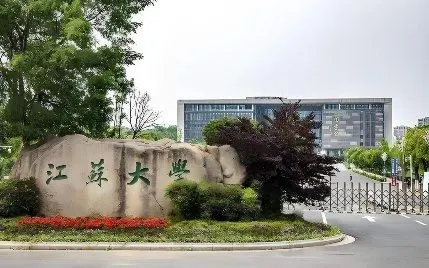
Jiangsu University accepts international students on programmes in the following fields: engineering, medicine. Choose the level and programme that suit your goals.
Chinese language study at the university — from a few weeks to a year or longer. Suitable for those starting from scratch or preparing for the HSK before entering a main programme.
self-funded · language programme
The first level of higher education: usually four years of study, specialised subjects, internships and a graduation thesis. It opens the way to working in your field and to a master's degree.
self-funded
Advanced study after a bachelor's degree: research, applied projects and internships. It helps you become an expert in your chosen field and broaden your career opportunities.
self-funded
Jiangsu University is located in Zhenjiang. Nihao Study consultants keep track of the deadlines and admission requirements of this university, and you can always check the most accurate and up-to-date information on its official website. In university rankings, it is ranked 63 in China and 674 worldwide.
Come for a face-to-face meeting: together we will go through the requirements, deadlines, documents and study options that suit you.

At the meeting we will look at your situation, tell you which documents to prepare and by when, talk about possible programmes and help you decide on the next step.
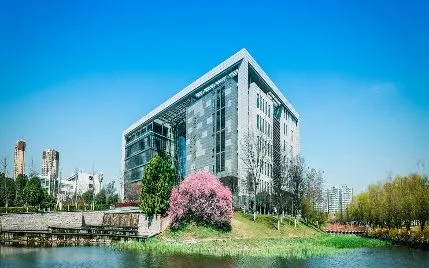
Jiangsu University (UJS, 江苏大学, pinyin Jiāngsū Dàxué) is a large comprehensive university in Jiangsu Province. It is located in Zhenjiang, on the south bank of the Yangtze, where the Grand Canal crosses the river. Russian-speaking applicants write the name in different ways: as a form meaning "University of Jiangsu" or as an adjectival form — the latter copies the English word order. International rankings and letters from the admissions office use the official abbreviation UJS. Chinese students sometimes say simply 江大 (Jiangda), but this abbreviation is ambiguous: students at several universities across the country use it.
Today's UJS traces a direct line back to the Zhenjiang Agricultural Machinery Institute, which existed from 1960. The university officially came into being in August 2001, when three institutions merged: the former Jiangsu University of Science and Technology, Zhenjiang Medical College and Zhenjiang Teachers College. The university is jointly governed by three bodies: the Ministry of Education of China, the Ministry of Agriculture and Rural Affairs of China and the Jiangsu provincial government. In the global ESI ranking, 16 of UJS's disciplines are in the top 1%, and four of them — agricultural sciences, engineering, chemistry and materials science — have risen to the top 1‰. The university is not part of the 211 and 985 projects or the official Double First Class (双一流) list, but it hopes to gain this status in the future: UJS is among the first universities in Jiangsu Province designated as high-level universities.
This Nihao Study overview brings together what matters to a 2026 applicant: data on students and teaching staff, positions in global and Chinese rankings, accommodation, scholarships and grants (including the Chinese Government Scholarship, CSC), a step-by-step admission procedure and a warning about a similarly named university in the same city — the one UJS is most often confused with.
| Item | Data |
|---|---|
| Year founded (Zhenjiang line) | 1960; university status since 2001 |
| Teaching staff and professors | more than 2700 |
| Total students | more than 45,000 |
| International degree students | 2,200 (55% are master's and doctoral students) |
| Studying at the independent Jingjiang College | about 11,000 |
| Teaching and research units | 34 |
| Bachelor's programmes | 98 |
| Partners abroad | 256 in 66 countries and regions |
ShanghaiRanking gives different figures: 32,899 full-time students at UJS, of whom 2,175 (6.6%) are international. Of these, 1,237 international students are on bachelor's programmes (5.1% of all undergraduates) and 938 are on master's and doctoral programmes (12.1%). The figures differ from the university's own because ShanghaiRanking does not count Jingjiang College students separately from the main campus.
The official history of UJS starts in 1902 with the Sanjiang Normal School (三江师范学堂) in Nanjing, giving the university a century-long pedigree. However, other Nanjing universities, including Nanjing University, also trace their origins to this school, so the 1902 date is better seen as symbolic rather than a direct link to today's campus in Zhenjiang. The campus's own history begins in 1960: on the direct instruction of Mao Zedong, who regarded mechanisation as the basis for modernising agriculture, the Nanjing Agricultural Machinery Institute was created from two departments of the Nanjing Institute of Technology, automotive and tractor engineering and agricultural machinery. A year later, in 1961, the institute moved to Zhenjiang and was renamed the Zhenjiang Agricultural Machinery Institute.
In 1978 the State Council of the PRC added the institution to the list of 88 national key universities. In 1981 it was among the first in China to gain the right to award master's and doctoral degrees. It was here that the country produced its first bachelor's and master's graduates in agricultural machinery engineering, and later its first doctors and postdocs in the field. The institution was renamed several times before it became Jiangsu University of Science and Technology. The Ministry of Education decided on the merger in August 2001: Zhenjiang Medical College (founded in 1951, bachelor's level since 1984) and Zhenjiang Teachers' College joined the university. This is how today's Jiangsu University came into being.
This is where applicants most often go wrong. One of the three institutions that merged into UJS in 2001 is sometimes called Jiangsu University of Science and Technology in English texts. Exactly the same English name belongs to another university that still operates in Zhenjiang today: in Chinese it is 江苏科技大学, abbreviated JUST. Their Chinese names are different. The UJS predecessor was written 江苏理工大学 and ceased to exist as a separate institution back in 2001. JUST (江苏科技大学), on the other hand, grew out of a shipbuilding school in Shanghai, has its own history and remains a separate university to this day. The two universities are compared in more detail in the section below.
| Ranking | Position | Year |
|---|---|---|
| ARWU (ShanghaiRanking) | 301–400 worldwide | 2025 |
| Best Chinese Universities Ranking | 81st in China | 2026 |
| Times Higher Education | 501–600 worldwide | 2026 |
| QS World University Rankings | 701–710 worldwide | 2027 |
| EduRank | 71st in China, 1025th worldwide | 2026 |
In ShanghaiRanking's subject ranking, the Global Ranking of Academic Subjects, 27 UJS disciplines are assessed. The university performs best in food science and technology (9th in the world), followed by instrument science (27th), chemical engineering (28th), textile engineering (42nd) and marine and ocean engineering (50th). In the global ESI database the university is in the top 1% in as many as 16 fields: chemistry, physics, mathematics, engineering, materials science, computer science, clinical medicine, immunology, microbiology, pharmacology and toxicology, agricultural sciences, plant and animal science, biology and biochemistry, molecular biology and genetics, environment and ecology, and social sciences in general. Research is supported by 13 national-level platforms and another 77 at ministerial and provincial level. UJS regularly appears among China's 50 most innovative universities and in the top 50 for technology commercialisation. Its awards include 3 Ho Leung Ho Lee Foundation prizes, 3 China Patent Gold Awards and 16 national science and technology awards.
Agricultural machinery engineering still defines the university: UJS was the first in China to launch bachelor's and master's programmes in this field, followed by doctoral and postdoctoral programmes. The university hosts the World Food Preservation Center, a UNIDO training and research centre that works on agricultural modernisation worldwide and on food security, and an international centre for energy-saving technologies for hydraulic equipment. UJS also leads the International Consortium of Universities for Agricultural Engineering. It is therefore no surprise that the university's agricultural sciences, engineering, chemistry and materials science are in the ESI global top 1‰, which is rare for a regional university outside the 211 and 985 lists.
Clinical medicine is one of the 16 UJS disciplines in the ESI top 1%. In the list of 12 broad fields of study the university covers, medicine has its own line, alongside engineering, agriculture, natural sciences, economics, management, law, education, philosophy, art, literature and interdisciplinary studies.
UJS is a regional university rather than a central one from the 211 or 985 lists, yet 2,200 international students are on degree programmes here, more than half of them at master's or doctoral level. The university itself names affordable tuition as one of its main selling points for applicants. It has a joint institute with the UK's Cranfield University, the Jiangsu University Cranfield Tech Futures Graduate Institute, 26 double-degree programmes with universities in Australia, the USA and other countries, and a Confucius Institute set up together with the University of Niš (Serbia).
UJS has 34 teaching and research units covering 12 broad fields: natural sciences, engineering, agriculture, medicine, economics, management, law, education, philosophy, literature, art and interdisciplinary studies. There are 98 bachelor's programmes. Doctoral programmes are offered in 16 first-level disciplines, there are 46 first-level master's programmes, and professional master's degrees are taught in 26 categories, including the MBA. The university also has 14 postdoctoral research stations. Besides the main campus, it has the independent Jingjiang College, where 11,000 undergraduates study: it runs its own admissions but shares the university's brand.
Graduates from the years when its predecessors bore earlier names include Li Lanqing, a former member of the Standing Committee of the CPC Politburo and Vice Premier of the State Council, former Minister of Transport Li Shenglin, and Wang Min, chairman of the board of XCMG (machinery manufacturing). Graduates at this level, in government and big business, are uncommon for a regional university.
English-taught bachelor's programmes at UJS cover 18 fields, from business administration, accounting and international trade to computer science, chemical engineering, mechanical engineering, automotive engineering, food safety, pharmacy and clinical medicine. In Chinese, you can study at bachelor's, master's and doctoral level in medical, pharmaceutical, engineering, natural science, humanities, social science and creative fields. Admission is also open to a two-year MBA programme and to non-degree programmes.
Recently, all international applicants to UJS bachelor's programmes have been required to take the China Scholastic Competency Assessment (CSCA), regardless of the language of instruction. It is a standardised test of pre-university preparation, recognised by the China Scholarship Council. Results must be submitted by the deadline set for the current admissions round. You can check the schedule and register on the official CSCA portal. English-taught programmes also require one of the following certificates: IELTS 6.0 or higher, TOEFL 80 or higher, or Duolingo 100 or higher. There is no general minimum HSK level for Chinese-taught study: it is set by each programme and confirmed when you apply.
Applicants to UJS master's and doctoral programmes will need a diploma from the previous level and references: two letters from professors or associate professors in the field; prospective doctoral students also attach a list of their publications. The general admissions rules set age limits: up to 25 for bachelor's programmes, up to 30 for master's and up to 40 for doctoral programmes.
UJS dormitory rooms are double rooms only; each has its own bathroom, water heater and air conditioning. International students may not live off campus without special permission from the university.
Besides tuition and dormitory fees, your budget should include the application fee, the registration fee, the medical examination for the visa, health insurance, the residence permit, textbooks and everyday personal expenses. It is best to check the current amounts for each item on the university's official website or with its admissions office.
As at most Chinese universities, the main route to free study for an international student at UJS is the Chinese Government Scholarship (CSC, China Scholarship Council). It is awarded by the China Scholarship Council through seven separate programmes, including the UNESCO Great Wall Scholarship, quotas under bilateral intergovernmental agreements and the Chinese University Program scholarship for directly selected universities. In total, 306 universities in China can accept CSC scholarship holders.
The CSC scholarship covers tuition, dormitory accommodation, a monthly living allowance and health insurance. The level of support depends on the subject category, of which there are three: the first includes economics, management, law, philosophy, history, education and literature; the second engineering, agriculture and natural sciences; and the third medicine and creative writing. The monthly allowance also varies by level: separate rates apply to bachelor's students, to master's students and general scholars, and to doctoral students and senior scholars. Check the current amounts on the official CSC and university websites.
In addition to CSC, UJS awards its own President's Scholarship to new international students. For doctoral students there are two categories: the first covers tuition and dormitory plus a one-off payment in the first year, the second covers tuition and dormitory only. For master's students, the first category receives a fixed stipend plus a one-off payment, the second only the fixed stipend. Bachelor's students admitted to the new English-taught programmes receive a scholarship in their first year, and students from target countries also get an annual tuition reduction. Renewal for the second year is only possible after a separate review of academic performance. Besides the President's Scholarship, the university offers a social contribution scholarship, the OEC excellence scholarship and a scholarship for teachers of Chinese as a foreign language.
Campus address: 301 Xuefu Road, Jingkou District, Zhenjiang, Jiangsu Province, postcode 212013. Zhenjiang is an old port at the confluence of the Yangtze and the Grand Canal, known for its three famous mountains and river views. The city's safety is rated 9 out of 10; summer temperatures stay at 24–32 degrees, and in winter they reach up to 8 degrees above zero. Life here is calm and inexpensive for students: Nanjing is half an hour away by high-speed train and Shanghai a couple of hours. Among its advantages the university lists affordable tuition, students from many countries, a course supervisor for every student, and help finding internships and jobs with Chinese companies.
| University and Chinese name | Type | Main focus |
|---|---|---|
| Jiangsu University (UJS), 江苏大学 | Comprehensive provincial university | Agricultural machinery, hydraulic machinery, engineering, medicine |
| Jiangsu University of Science and Technology (JUST), 江苏科技大学 | Specialised (industry-oriented) university | Marine engineering, shipbuilding, sericulture |
Both universities are in Zhenjiang and historically linked to engineering, and both English names can include the phrase science and technology, which is why applicants regularly mix them up. The fundamental difference is their origin. JUST grew out of a Shanghai shipbuilding school founded in 1933; in 1970 it moved to Zhenjiang, in 1993 it became the East China Shipbuilding Institute, and it only received its current name in 2004. JUST has campuses in Zhangjiagang and in Zhenjiang itself, and its strengths are shipbuilding, ocean engineering and sericulture. UJS, by contrast, was formed in 2001 through a merger centred on agricultural machinery and medicine, and has no shipbuilding profile at all. There is also a third university to tell apart from both: Jiangsu Normal University (JSNU, 江苏师范大学) in Xuzhou. It is in a completely different place and is confused with UJS only because of the shared province name. Nor should Jiangsu be confused with Jiangxi Province: the two names look very similar.
In Russian the name has several variants. The standard form translates as 'University of Jiangsu'. Common mistakes are spelling the name with a 'D' sound instead of the standard 'Ts' transliteration, and confusing it with Jiangxi Province: the names differ by just one letter, but they are two different regions of China. The adjectival form, literally 'Jiangsu University', is a calque of the English word order; strictly speaking it is not quite accurate, but it is widespread. The official international name is Jiangsu University, and the abbreviation UJS is used for rankings and letters to the admissions office. Chinese students shorten the name to 江大 (Jiangda), but other universities in the country are shortened the same way. The original Chinese name is 江苏大学, in pinyin Jiāngsū Dàxué.
UJS stands for University of Jiangsu Province. The abbreviation is not made up of the first letters of the Russian or English name in the usual order, which is why it looks unusual next to ordinary abbreviations.
No. Jiangsu University is not part of Project 211 or Project 985 and is not on the official Double First Class (双一流) list. At the same time, it was recognised as one of the first high-level universities in Jiangsu Province, and 16 of its disciplines are in the ESI top 1% — a notable result for a regional university.
Yes. At bachelor's level there are 18 programmes taught entirely in English: in economics and management, engineering, pharmacy and medicine. Instead of a Chinese test, they require IELTS 6.0 or above, TOEFL 80 or above, or Duolingo 100 or above.
The China Scholastic Competency Assessment (CSCA) is a standardised entrance test that checks pre-university preparation. It has recently become compulsory for all international applicants to UJS bachelor's programmes, whatever language they plan to study in. The schedule and registration are on the official CSCA portal; results must be submitted by the deadline the admissions office sets for the specific intake.
The tuition fee depends on the level and field, and current accommodation rates are best checked on the university's official website. Dormitories at UJS have double rooms; in the first year, one-off fees are added to the main costs: the application fee, registration and a medical check-up.
Yes. A holder of the Chinese Government Scholarship (CSC) has tuition, accommodation, medical insurance and a monthly living allowance fully covered. The total amount of support per year depends on the level of study — bachelor's, master's or doctoral — and on the category of the field.
The university pays its own President's Scholarship to new international students. Bachelor's students on the new English-taught programmes receive it for the first year, master's students receive a fixed amount, with a one-off payment added in the first category, and for doctoral students it covers tuition and accommodation and includes a one-off payment. There are also a scholarship for social contribution, a scholarship for outstanding students and a scholarship for Chinese language teachers.
The campus is at 301 Xuefu Road, Jingkou District, Zhenjiang, Jiangsu Province. High-speed rail connects Zhenjiang with the whole of eastern China: the journey to Nanjing takes about 20 minutes, and to Shanghai about two hours.
They are two independent universities in the same city with similar English names. Today's Jiangsu University (UJS) was formed in 2001 through a merger centred on agricultural machinery engineering and medicine. JUST, Jiangsu University of Science and Technology, began in 1933 as a shipbuilding school in Shanghai and has only had its current name since 2004; it focuses on marine technology, shipbuilding and sericulture. The confusion is made worse by the fact that the predecessor that became part of UJS in 2001 was also sometimes called Jiangsu University of Science and Technology in English, although its Chinese name and legal entity were different from those of today's JUST.
You will need: a passport, a secondary school certificate with a transcript of grades, a CSCA result, a language certificate for English-taught programmes (IELTS, TOEFL or Duolingo), a motivation essay of at least 800 words, a medical certificate, proof of financial means and a police clearance certificate.
Zhenjiang (镇江) is an ancient port where the Grand Canal meets the Yangtze. This is the home of the famous Chinese vinegar. The city is renowned for its 'Three Mountains' and beautiful river views.
Zhenjiang offers students a cosy life without big expenses next door to Nanjing, which is 20 minutes away by train. It is home to Jiangsu University, a popular choice among international students, there is a beautiful riverside promenade, and life flows at an unhurried pace. For parents, it matters that the environment is safe and compact — students won't get lost here — the major centres (Nanjing, Shanghai) are close, life is inexpensive, and the campuses are well organised and supportive.
You work with Nihao Study specialists. They will help you put together a portfolio and a set of documents, draw up a study plan and choose a university or college and a specialty that genuinely interest you.
We take care of every stage of admission, from choosing to enrolment
We will gather, prepare, certify and send your documents to the institution
We will show the admissions committee your strengths
We run training sessions and courses so you can prepare with more confidence
We will help you settle in at the start of your studies and keep moving forward
Nihao Study specialists select universities and colleges that match the applicant's goals and means. We make sure the teachers are practitioners and that the knowledge will be useful in your profession.
We examine curricula, talk to students and teachers and look at which specialties employers need, and use this information to select options for the applicant.
Advisers guide the applicant from the first consultation to enrolment, help build a plan and spot mistakes in time that could get in the way.
The cost of our support depends on the programme and the partner university; you'll get an exact quote after a free consultation.
Get a quoteA free 15-minute consultation: together we will choose a university or college and a programme that suit your goals and budget.
Apply with peace of mind: we handle the documents, deadlines and correspondence with admissions committees, and you save time and energy.
Don't want to wait for a call? Message us in the chat.
Message us in chat