- Language courses
- English, Chinese
- Bachelor's Degree
- English, Chinese
- Master's Degree
- English, Chinese
- Doctoral (PhD) Programmes
- English, Chinese
- Accommodation from 7 200 ¥/year
JSNU · 江苏师范大学
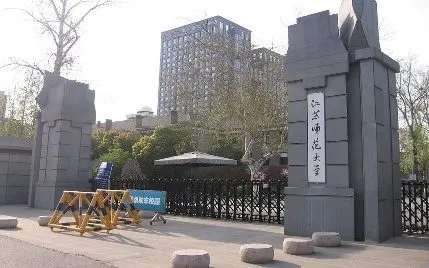
Jiangsu Normal University accepts international students on programmes in the following fields: business, engineering, medicine, education, it. Choose the level and programme that suit your goals.
Chinese language study at the university — from a few weeks to a year or longer. Suitable for those starting from scratch or preparing for the HSK before entering a main programme.
self-funded · language programme
Cost: 12 500 ¥/year
Foundation programme: language and core subjects before a bachelor's degree. It helps you strengthen your knowledge and get used to studying in China before the main programme begins.
self-funded
Cost: 15 000 ¥/year
The first level of higher education: usually four years of study, specialised subjects, internships and a graduation thesis. It opens the way to working in your field and to a master's degree.
scholarship-funded
Cost: 7 000–14 000 ¥/year
self-funded
Cost: 7 000–14 000 ¥/year
Advanced study after a bachelor's degree: research, applied projects and internships. It helps you become an expert in your chosen field and broaden your career opportunities.
scholarship-funded
Cost: 8 000–16 000 ¥/year
self-funded
Cost: 8 000–16 000 ¥/year
Jiangsu Normal University is located in Xuzhou. Nihao Study consultants keep track of the deadlines and admission requirements of this university, and you can always check the most accurate and up-to-date information on its official website. In university rankings, it is ranked 184 in China and 5417 worldwide.
Come for a face-to-face meeting: together we will go through the requirements, deadlines, documents and study options that suit you.

At the meeting we will look at your situation, tell you which documents to prepare and by when, talk about possible programmes and help you decide on the next step.
Jiangsu Normal University (JSNU; Chinese: 江苏师范大学, pinyin Jiāngsū Shīfàn Dàxué) is a public university in Xuzhou and one of the key universities of Jiangsu Province. The standard Russian form of the name means "Pedagogical University of Jiangsu", although searches also turn up variants with a different word order or an adjectival form. In China the name is shortened to 江苏师大, while Jiangsu Normal University and the abbreviation JSNU serve as the official international name and are used in correspondence.
Despite the word "Normal" (teacher-training) in its name, JSNU is not a teacher-training college but a fully fledged comprehensive university. It offers bachelor's, master's and doctoral programmes, and teacher education sits alongside the humanities, natural sciences and engineering. The description "provincial normal university" is accurate: it reflects the university's subordination to the province and its strong teacher-training tradition. However, this description does not imply that the university is part of the national 211, 985 or Double First-Class projects.
Below, Nihao Study has gathered what a 2026 applicant needs to know: status and rankings, programmes and language requirements, dormitories, CSC scholarships, documents and universities with similar names.
| Item | Data |
|---|---|
| Year founded | 1952 |
| Location | Xuzhou, Jiangsu Province |
| Schools (faculties) | 22 |
| Bachelor's majors | 60 |
| First-level disciplines authorised to award doctoral degrees | 2 |
| First-level disciplines at master's level | 31 |
| Professional master's degree categories | 20 |
| Full-time teaching staff | 1854 |
| Number of campuses | 4 |
According to recent Chinese data, the university has more than 23,300 bachelor's students, around 7000 master's and doctoral students and almost 400 international students on degree programmes. The THE ranking gives a different total — 29,443 students: the ranking questionnaire counts over its own period and with its own methodology. When applying, it is better not to mix these figures and to rely on the current profile of the programme you want.
The university traces its history back to 1952, when the institution was founded in Wuxi. It was first a school for accelerated cultural education, then a teachers' academy, and in 1958 it was moved to Xuzhou. A merger with the local teachers' institute gave rise to Xuzhou Normal College, one of the important centres of higher education in the north of the province.
Postgraduate education at the university began in 1979. In 1999 Xuzhou Industrial College joined it, strengthening the engineering and natural science fields. The university has borne its current name, Jiangsu Normal University, since 2011. The word Normal thus recalls the historical mission of training teachers, although the academic structure today is much broader.
The university is jointly supported by the Ministry of Education of the PRC and the Jiangsu Provincial Government. The university itself reports that it also takes part in the provincial programme for developing high-level universities. This is a significant regional status, but it should not be confused with the national Double First-Class designation.
JSNU is not part of Project 211. The 211 list published by the Ministry of Education includes Nanjing Normal University among the province's normal universities, but not Jiangsu Normal University. Nor was the university part of Project 985: in the province, 985 status went to Southeast University and Nanjing University.
The Double First-Class list published in the second round includes 147 universities, and Jiangsu Normal University is not among them. That does not make it a weak university. It is simply more useful for applicants to assess JSNU by the specific programme, cost, teaching staff and the opportunities Xuzhou offers, rather than to see it as a top-tier national university. The description "key provincial university" fits it more accurately than any promotional label.
| Ranking | Position | Comment |
|---|---|---|
| THE World University Rankings 2026 | 1501+ | Band in the overall world list |
| THE Engineering 2026 | 801 to 1000 | Band by subject |
| CWUR 2025 | 1082 in the world | Out of 21,462 institutions |
| CWUR 2025 | 196 in China | Overall score: 70.2 |
| EduRank 2026 | 2724 in the world, 213 in China | Bibliometrics-based methodology |
| EduRank Pharmacy 2026 | 225 in the world | A notable research field |
According to CWUR, JSNU is in the top 5.1 per cent of the global list and ranks 354th in Asia. EduRank places it lower overall, but this methodology notes tangible results in physics, chemistry, engineering, information technology and pharmacy. The discrepancy shows clearly that a single figure cannot serve as a universal measure of teaching quality.
Be especially careful with ESI. The list of JSNU disciplines in the ESI global top 1 per cent changes from one update to the next, so it is best to check the number of ESI fields at the time you apply. If this indicator matters for your prospective supervisor, request a current Clarivate extract showing the category name and the update date.
The university has schools of education, Chinese literature, linguistics, foreign languages, history and philosophy. This combination suits those considering education, teaching Chinese as a foreign language, translation or philology, or who want to start with a preparatory language year. The teacher-training majors in the Chinese intake include Chinese and English, primary education, history, mathematics, physics, chemistry, biology and geography.
It would be a mistake to regard JSNU as purely a humanities university. It has programmes in physics, mathematics, chemistry, geography and life sciences, as well as electrical engineering, mechatronics and EIT. In EduRank's subject tables, JSNU's physics ranks 1104th in the world, chemistry 1139th and computer science 1362nd. These positions are no substitute for examining the curriculum, but they confirm that there is a research base beyond education.
A distinctive feature of JSNU is its Russian dimension. In 2016 an engineering institute established jointly with Peter the Great St. Petersburg Polytechnic University was approved; it became China's first Sino-Russian joint educational institution of this kind without legal-entity status. The official intake describes two-year master's tracks on a 1+1 model: mechanical engineering is taught in Russian, and information and communication engineering in English. These are separate competitive projects, and their conditions cannot automatically be applied to JSNU's regular international admission.
Chinese language courses, foundation programmes, bachelor's and master's programmes are open to international students. Both self-funded places and scholarship options are available, and the university's International College publishes separate admission brochures.
| Level | Typical duration | What to check |
|---|---|---|
| Chinese language (long-term course) | 1 year | Group level and a certificate on completion |
| Foundation programme | 1 year | Chinese language and core subjects |
| Bachelor's Degree | 4 years | Language of instruction, HSK and chosen major |
| Master's Degree | Depends on the programme | Supervisor, language and research plan |
Chinese-taught bachelor's programmes usually require proof of language proficiency. For International Economics and Trade the benchmark is HSK 4 with a score of at least 180 points; on the English-taught track it is IELTS 5.5 or TOEFL 70. This rule does not apply to all majors, so check the final requirement in the line for your programme in the latest brochure.
Published fees are a guide for budget planning, not a final bill, so check the current tuition, application and insurance fees on the university's official website. According to the official list of publications, the brochure for the autumn 2025 intake was released on 23 April 2025. Costs for textbooks, a medical check-up, visa extension, a deposit and electricity may be charged separately from tuition.
The university has four campuses — Quanshan, Yunlong, Kuiyuan and Jiawang. The main one, Quanshan Campus, is located at No. 101, Shanghai Road, Tongshan District, Xuzhou, Jiangsu, 221116. The International College gives the same address and postcode, but it is best to confirm the address for sending documents by courier in advance.
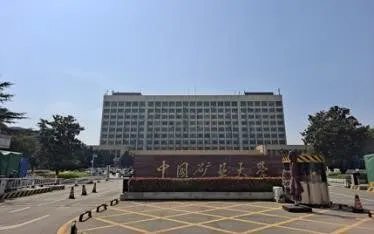
The official structure includes a library, the International College, and schools of fine arts, music, media and physical education. This means international students find themselves in a diverse university environment rather than being limited to classes in a language group. Xuzhou is itself a major educational centre: it is home to China University of Mining and Technology and other universities.
Studying Chinese in Xuzhou, you can combine classroom lessons with everyday language practice. Note that the International College's link to an IELTS test centre is not a substitute for an HSK or BCT centre. Check HSK exam dates and the nearest confirmed centre against the official schedule before buying tickets.
For international students, the standard option is a room for four. Other rooms are available, down to singles, but their availability and price depend on the building and the time of check-in. It is safest to get the room type, building and full amount payable confirmed in writing before you arrive.
| Item | Known details | What to check |
|---|---|---|
| Standard accommodation | 4 beds | Building and bathroom |
| Other room types | Rooms for 1, 2 or 3 are available | Whether any are free on your arrival date |
| Utilities | Some allowances may be included | Electricity and the holiday period |
Published photos of the dormitory show metal bunk beds, lockers, study desks, a corridor and a lift lobby — the building's basic furnishings. It is best to ask for the deposit refund rules and the current room allocation plan before moving in.
The university's international website has separate sections on the Chinese Government Scholarship, the Jiangsu Jasmine Scholarship and the International Students Scholarship of Jiangsu Normal University. Each of these channels has its own selection rules and its own quota.
Competition for scholarships is serious, so alongside your scholarship application it makes sense to work out a self-funded option too. It is also useful to study the list of CSC universities and channels in advance and not to confuse a tuition discount with a full scholarship.
The age limits at JSNU are as follows: 16 to 35 for language courses, up to 35 for bachelor's programmes and up to 45 for master's programmes. These limits are specific to this university, not general CSC rules: scholarships sometimes have stricter age requirements.
| University | City | What's the difference |
|---|---|---|
| Jiangsu Normal University, 江苏师范大学 | Xuzhou | The university covered in this review; a provincial teacher-training university |
| Jiangsu University, 江苏大学 | Zhenjiang | A separate comprehensive university; the word Normal does not appear in its name |
| Nanjing Normal University, 南京师范大学 | Nanjing | Part of 211 and Double First-Class |
| Jiangsu Second Normal University, 江苏第二师范学院 | Nanjing | A separate teacher-training institution |
| Jiangxi Normal University, 江西师范大学 | Nanchang | Located in a different province; its name says Jiangxi, not Jiangsu |
A particularly dangerous mistake in documents is writing Jiangsu University instead of Jiangsu Normal University. They are different universities, with different cities, Chinese names and admission systems.
Video and photo tours of the campus in Xuzhou help you get a feel for JSNU before you travel. Pay attention to the dormitory, buildings, routes and teaching areas shown, compare them with the published photos, and then ask the admissions office to confirm the building for your intake. This kind of viewing is especially useful if you are choosing between JSNU and China University of Mining and Technology: the two universities differ in profile, level of competition and cost.
The main Russian form translates as 'Pedagogical University of Jiangsu'. The adjectival 'Jiangsu Pedagogical University' is also understandable but is not used as the main form, while 'University Jiangsu Pedagogical' is an awkward calque. Jiangsu Normal University is the official international name, and JSNU is its English abbreviation. 江苏师大 is the short form used in China, and 江苏师范大学 (pinyin Jiāngsū Shīfàn Dàxué) is the original Chinese name.
It is Jiangsu Normal University, a provincial key public university in Jiangsu Province, located in Xuzhou. Its profile is teacher training, but its structure is multidisciplinary.
No. The university is not on the official national lists of 211 or the second round of Double First-Class. It is correct to call it a provincial key university jointly supported by the province and the Ministry of Education.
The cost depends on the programme level and whether you have a scholarship. The university itself publishes current rates for 2026 — check them on JSNU's official website before applying.
It all depends on the programme. For Chinese-taught bachelor's programmes, the benchmark is HSK 4 with a score of 180 or more. How recent your certificate is, as well as exam dates, can be checked against the official HSK calendar.
Whether there are English-taught programmes depends on the school. A separate joint master's programme in mechanical engineering is taught in Russian, while information and communication engineering within the same project is taught in English. Regular bachelor's programmes should not be considered Russian-taught.
The Chinese Government Scholarship has its own section on the International Institute's website. The competition, quota and coverage change depending on the year and the channel, so apply strictly according to the current instructions and draw up a financial plan in advance in case you do not get the scholarship.
The basic option is a place in a room for four; check the current cost on the university's official website. Other room types are also available sometimes, but their availability must be confirmed in writing before you move in.
The address of Quanshan Campus is No. 101, Shanghai Road, Tongshan District, Xuzhou, Jiangsu, 221116. The university has several campuses, so check separately where your school's building and your dormitory are located.
No, JSNU has no active HSK centre, and a link to an IELTS test centre should not be mistaken for one. Choose the exam venue and date on the official HSK registration platform.
As a rule, applicants prepare a passport, a photo, a school certificate with its supplement of grades, a language certificate, a medical form, a police clearance certificate and translations. Check the exact list for the JSNU intake against the official prospectus. Before uploading, make sure your name is spelt the same way in all files, your passport is valid, the stamps are legible and the translation matches the original. It is easier to name files in Latin characters and by content, so that the admissions office can immediately tell apart the medical form, language certificate, grades and diploma. If a document was issued electronically, keep the original file and the version prepared for submission separately. Until a confirmed status appears in the system or a letter arrives from the university, the application cannot be considered accepted. Respond to any requests for additional materials only through the official applicant portal or university e-mail, and check payment details against the admission offer. This precaution reduces the chance of your application being delayed because of a formal inaccuracy, and you will have a complete archive of documents by the visa stage.
Xuzhou (徐州) is nicknamed the 'City of a Thousand Years' and is one of China's transport crossroads. Liu Bang, the first emperor of the Han dynasty, was born here. The city is known for its tombs and terracotta warriors: they are smaller than those in Xi'an but just as impressive.
Xuzhou is convenient for students thanks to its transport links: both Beijing and Shanghai can be reached quickly from here. It is an industrial city, but it has lots of greenery and the picturesque Yunlong Lake. The leading local university is China University of Mining and Technology. Parents can count on safety and stability, developed infrastructure, moderate prices and a comfortable climate typical of central China.
You work with Nihao Study specialists. They will help you put together a portfolio and a set of documents, draw up a study plan and choose a university or college and a specialty that genuinely interest you.
We take care of every stage of admission, from choosing to enrolment
We will gather, prepare, certify and send your documents to the institution
We will show the admissions committee your strengths
We run training sessions and courses so you can prepare with more confidence
We will help you settle in at the start of your studies and keep moving forward
Nihao Study specialists select universities and colleges that match the applicant's goals and means. We make sure the teachers are practitioners and that the knowledge will be useful in your profession.
We examine curricula, talk to students and teachers and look at which specialties employers need, and use this information to select options for the applicant.
Advisers guide the applicant from the first consultation to enrolment, help build a plan and spot mistakes in time that could get in the way.
The cost of our support depends on the programme and the partner university; you'll get an exact quote after a free consultation.
Get a quoteA free 15-minute consultation: together we will choose a university or college and a programme that suit your goals and budget.
Apply with peace of mind: we handle the documents, deadlines and correspondence with admissions committees, and you save time and energy.
Don't want to wait for a call? Message us in the chat.
Message us in chat