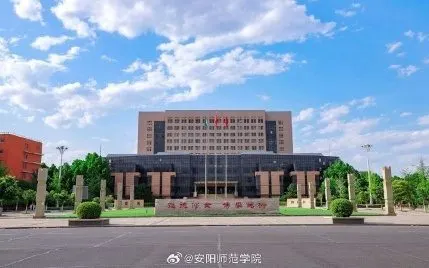
Anyang Normal University
University · Anyang
Language courses · Bachelor's Degree · Master's Degree
ZZU · 郑州大学
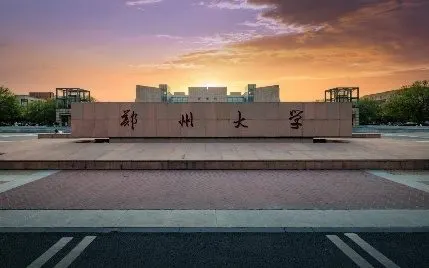
Zhengzhou University accepts international students on programmes in the following fields: business, engineering, medicine, arts, natural sciences. Choose the level and programme that suit your goals.
Chinese language study at the university — from a few weeks to a year or longer. Suitable for those starting from scratch or preparing for the HSK before entering a main programme.
self-funded · language programme
The first level of higher education: usually four years of study, specialised subjects, internships and a graduation thesis. It opens the way to working in your field and to a master's degree.
self-funded
Advanced study after a bachelor's degree: research, applied projects and internships. It helps you become an expert in your chosen field and broaden your career opportunities.
self-funded
Zhengzhou University is located in Zhengzhou. Nihao Study consultants keep track of the deadlines and admission requirements of this university, and you can always check the most accurate and up-to-date information on its official website. In university rankings, it is ranked 147 in China and 1079 worldwide.
Come for a face-to-face meeting: together we will go through the requirements, deadlines, documents and study options that suit you.

At the meeting we will look at your situation, tell you which documents to prepare and by when, talk about possible programmes and help you decide on the next step.
Zhengzhou University (ZZU, 郑州大学) is a public research university in Zhengzhou, the capital of Henan Province. The university's charter establishes three official forms: the Chinese short name 郑大 (Zhèngdà), the English name Zhengzhou University and the abbreviation ZZU. In Russian the variants "University of Zhengzhou" and "Zhengzhou University" are used; other spellings also turn up in searches, but they render the name of the city inaccurately.
ZZU takes part in the national Project 211 and the national Double First-Class programme; the university is also included in the programme's second official list. What matters more to international students is that the 2026 intake includes programmes taught in Chinese and English, among them medicine, pharmacy, engineering, architecture, economics and tourism.
Below, Nihao Study has gathered what matters to a 2026 applicant: statuses and rankings, programmes, HSK requirements, scholarships and the application procedure. The rules of individual schools may change, so current programmes and deadlines should be checked on the university's official website.
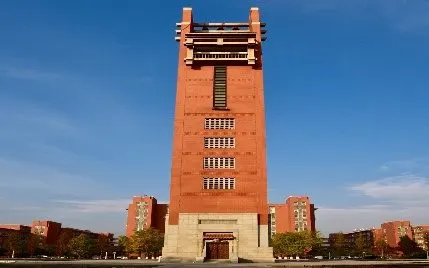
| Indicator | Value |
|---|---|
| University status | Public, Project 211, Double First-Class |
| Number of students | Bachelor's: more than 43,000; master's and doctoral: more than 30,000 |
| International students | Over 2,400 from 88 countries |
| Campuses and grounds | Several campuses; total area over 8,500 mu |
| Structure | 47 schools, 125 bachelor's programmes |
| Main campus address | 100 Science Avenue, postcode 450001 |
According to the official summary, more than 43,000 people are studying for bachelor's degrees, more than 30,000 for master's and doctoral degrees, and there are more than 2,400 international students from 88 countries. The university's grounds exceed 8,500 mu, roughly 567 hectares. It is wiser to check rankings on the ranking systems' own pages: aggregators and outdated promotional materials are often one edition behind.
The medical branch dates back to 1928, when Henan Zhongshan University began training doctors. In 1952 the independent Henan Medical College was established on this basis. So 1928 marks the start of the medical history, not the founding date of the former Zhengzhou University.
The former Zhengzhou University itself was founded in 1956; it was the first comprehensive university founded in New China. It was included in Project 211 in 1996. The third branch, Zhengzhou Institute of Technology, was established in 1963 and later renamed Zhengzhou University of Technology.
Today's ZZU took shape in July 2000 after the merger of three universities: the former Zhengzhou University, Zhengzhou University of Technology and Henan Medical University. Hence the breadth of its profile: law, economics, history, art, chemistry, materials, engineering and clinical medicine are all developed within one university. ZZU's goal is to become a world-class comprehensive research university by 2035.
| Ranking | Position | Edition |
|---|---|---|
| QS World University Rankings | 618th | 2026 |
| ARWU | 151–200 band | 2025 |
| CWUR | 188th worldwide, 27th in China | 2026 |
| THE | 601–800 band | 2024 |
| EduRank | 699th worldwide, 44th in China | 2026 |
In the QS World University Rankings 2026 Zhengzhou University is 618th, and in the already published 2027 edition it has risen to 581st. In CWUR 2026 ZZU is 188th in the world, 43rd in Asia and 27th in China. In ARWU 2025 the university is in the 151–200 band.
In the Times Higher Education World University Rankings 2024 the university is placed in the 601–800 band. In its March 2026 update EduRank ranks ZZU 699th in the world, 116th in Asia, 44th in China and first among universities in Zhengzhou. The rankings use different methodologies, so these figures do not add up to a single assessment: they reflect different aspects of reputation and research output.
Double First-Class status is awarded not to a university as a whole but to individual disciplines. ZZU's entries on the official list are chemistry, materials science and engineering, and clinical medicine; these should be seen as the university's main pillars.
Medical education here rests on two pillars: a whole network of clinical bases and a tradition going back to 1928. The 2026 English-taught intake includes MBBS, dentistry, anaesthesiology and medical imaging; each programme lasts 6 years. The final stage of the MBBS is a clinical internship. Where you will do it and whether the degree is recognised where you plan to work are best checked in advance.
The university reports 10 national key laboratories and jointly built platforms, among them the National Supercomputing Center in Zhengzhou and the National Engineering Research Center for Rubber and Plastic Moulds. In EduRank 2026 ZZU stands out in chemical engineering (94th in the world) and radiochemistry (86th). This is a useful additional pointer, but it is better to choose a department based on the laboratory and your future supervisor.
According to ZZU, 19 of its disciplines are in the top one per cent of ESI, and 5 are in the top one per mille. There are 36 first-level doctoral programmes and 60 first-level master's programmes, as well as 31 postdoctoral stations. For a future postgraduate this means a wide choice of topics at the intersection of chemistry, pharmaceutics, medicine, environmental science and materials science.
ZZU has 125 bachelor's programmes spanning 13 broad fields of knowledge. Rather than a long list of schools, it is easier to think of them as four groups.
International admission currently runs through several schools: medicine, pharmacy, architecture, business, civil engineering, computer science and artificial intelligence, as well as the School of International Education. The words School or College in their names denote a unit of ZZU, not an independent university.
| Level | Sample programmes | Language and duration |
|---|---|---|
| Language course | General Chinese course, HSK preparation | Chinese; one semester or one year |
| Bachelor's Degree | MBBS, pharmacy, Software Engineering, International Trade | English; 4–6 years |
| Master's Degree | Architecture, environmental engineering, tourism, civil engineering | English or Chinese |
| Doctoral (PhD) Programmes | Programmes in various schools, by agreement with a supervisor | English or Chinese; usually 4 years |
In 2026 there is intake for 11 English-taught bachelor's programmes: MBBS, BDS, anaesthesiology, medical imaging, pharmacy, civil engineering, software engineering, international trade and economics, tourism, architecture, and urban and rural planning. Non-medical programmes mostly last 4 years, architecture 5 years and medical programmes 6 years.
According to the university, there are more than 250 master's programmes. The 2026 English-taught list highlights pharmaceutics, chemical engineering, civil engineering, international trade, tourism, architecture, and environmental science and engineering. The language of instruction and the availability of a particular research topic are confirmed together with your future supervisor.
The general Chinese course is organised by level: it includes language practice, culture classes and HSK preparation. If you plan to apply for a Chinese-taught degree after the course, compare in advance the level you will reach by the end of the course with the requirement of the programme you want.
The fee depends on the level, the language of instruction and the subject category: in ZZU's general fee scale, fields are divided into medicine and arts, science and engineering, and humanities and management. In addition to tuition, the application registration, study materials, insurance, medical check-up and residence permit are paid for separately. Check the current amounts for your intake year on the university's official website.
There are two annual rates for on-campus accommodation. Places are limited and the cost of renting off campus depends on the specific housing, so a dormitory place is assigned to a student with written confirmation.
Besides accommodation, the university advises budgeting for food, as well as clothing, transport, phone and other everyday expenses. Tuition for degree programmes is paid per academic year, while language course students can pay per semester. Current amounts are on ZZU's official website.
ZZU accepts funding applications through several independent channels. The scholarship decision is made separately from the admission decision, and the rules and quotas are set for each intake.
For English-taught master's programmes in the 2026 intake, CSC covers tuition, dormitory, medical insurance and a monthly living allowance. Chinese-taught master's programmes require HSK 5 with a score above 210, and English-taught ones require IELTS above 6.5 or proof that your previous studies were in English. It is best to prepare your documents in advance and not to confuse the conditions of different scholarships.
The main campus address is 100 Science Avenue, Zhengzhou, Henan, 450001. The South, North, Medical and West campuses have their own addresses. This matters for getting around: where classes take place depends on the programme and school, not on the university's overall name.
The library system consists of the central library and 3 branches with a total area of 85,700 sq m. The holdings include 7.31 million print books and 3.38 million e-books, 169 databases are available and there are more than 7,000 reading seats. The university also lists a museum, a fitness centre, sports grounds, shops, medical stations and Wi-Fi among its facilities.
The main campus is so large that it has internal transport: in 2025, 5 routes were launched linking the teaching areas, dormitories, canteens, the library, laboratories and the gates. You can reach the campus by Metro Line 1: the official map shows Zhengzhou University Sci-Tech Park and Zhengzhou University stations, from which you enter through the east or south gates.
The School of International Education is an official HSK and HSKK test centre. For example, in May 2026 it hosted computer-based HSK levels 2–6, as well as the HSKK from beginner to advanced level. This confirms the centre's status, but future dates should be checked in the current schedule on the exam's official website.
| University | Type | Main focus |
|---|---|---|
| Zhengzhou University, 郑州大学, ZZU | Public research university | Medicine, chemistry, materials; comprehensive |
| Zhengzhou University of Light Industry, 郑州轻工业大学 | Public university | Light and food industry, design, engineering |
| Zhengzhou University of Aeronautics, 郑州航空工业管理学院 | Public specialised university | Aviation management, applied technologies |
| Zhengzhou University of Technology, 郑州工程技术学院 | Public applied-sciences university | Bachelor's programmes in engineering and technology |
Zhengzhou University of Light Industry has its own official abbreviation, ZZULI. Zhengzhou University of Aeronautics uses the abbreviation ZUA and the historical Chinese name 郑州航空工业管理学院. Zhengzhou University of Technology is called 郑州工程技术学院 in Chinese; this university grew out of Zhongzhou University and became an applied bachelor's-level university. Against this background ZZU stands out for its 211 and Double First-Class status, its large medical field and its research profile.
In Russian there are two widely used standard forms of the name, while some other spellings found in search queries render the city name inaccurately. Zhengzhou University is the official English name, and ZZU is the official English abbreviation. Zhengda corresponds to the Chinese abbreviation 郑大, and the full Chinese name 郑州大学 is read as Zhèngzhōu Dàxué. The university's charter explicitly establishes both the English and the Chinese abbreviation.
It is the abbreviation of the English name Zhengzhou University. ZZU appears on the university's English-language website, in international correspondence and in programme names.
Yes. According to the university, ZZU takes part in both Project 211 and the Double First-Class programme, and its status was retained after the second round of the programme. Its key disciplines are chemistry, materials science and engineering, and clinical medicine.
Yes: the 2026 intake includes English-taught programmes in medicine, pharmacy, civil engineering, software engineering, business, tourism, architecture and planning. There are no Russian-taught programmes on this list.
For bachelor's programmes the general requirements are: humanities programmes, HSK 5; science and engineering, HSK 4. Chinese-taught master's programmes in 2026 require HSK 5 with a score above 210. The requirements of a specific school should be checked separately.
It depends on the level, language and category of the programme, and there are two annual rates for on-campus accommodation. The university suggests calculating food costs on a monthly basis. Current amounts for your intake year are published on ZZU's official website.
Yes, ZZU accepts CSC applications, but the number of places under the university programme is limited. The university code is 10459; applying may require registration in two systems at once, ZZU's and Campus China.
Yes, the School of International Education is an official HSK and HSKK centre. Dates and available levels change from session to session, so register according to the latest announcement.
The main campus is at 100 Science Avenue, Zhengzhou, Henan, 450001. A convenient route is Metro Line 1: Zhengzhou University Sci-Tech Park station is by the east gate, and Zhengzhou University station is on the south side of the campus.
The main set: passport, school certificate or a letter confirming upcoming graduation, transcript, medical examination results, police clearance certificate, language certificate, and the results of a compulsory entrance test if the intake requires one. The 2026 application specifically mentions a CSCA report.
ZZU is a large comprehensive research university that takes part in Project 211 and Double First-Class. ZZULI specialises in light industry and applied engineering, and ZUA in aviation management and technology. The word Zhengzhou in their English names does not mean they are branches of one university.
Zhengzhou (郑州) is the capital of Henan Province and the largest transport hub in central China: the country's main railway lines converge here. The city is growing fast and attracts young people with low prices and new opportunities.
Here applicants get a good education at a reasonable price in a fast-growing city: infrastructure is developing (the metro has 7 lines), there are large industrial zones where, among other things, iPhones are made, and there are support programmes for international students. For parents, it matters that Zhengzhou is safe and has modern infrastructure, good healthcare and an international airport; the university campuses are well organised, dormitories are guarded, and life here is much cheaper than in the coastal megacities.
You work with Nihao Study specialists. They will help you put together a portfolio and a set of documents, draw up a study plan and choose a university or college and a specialty that genuinely interest you.
We take care of every stage of admission, from choosing to enrolment
We will gather, prepare, certify and send your documents to the institution
We will show the admissions committee your strengths
We run training sessions and courses so you can prepare with more confidence
We will help you settle in at the start of your studies and keep moving forward
Nihao Study specialists select universities and colleges that match the applicant's goals and means. We make sure the teachers are practitioners and that the knowledge will be useful in your profession.
We examine curricula, talk to students and teachers and look at which specialties employers need, and use this information to select options for the applicant.
Advisers guide the applicant from the first consultation to enrolment, help build a plan and spot mistakes in time that could get in the way.
The cost of our support depends on the programme and the partner university; you'll get an exact quote after a free consultation.
Get a quoteA free 15-minute consultation: together we will choose a university or college and a programme that suit your goals and budget.
Apply with peace of mind: we handle the documents, deadlines and correspondence with admissions committees, and you save time and energy.
Don't want to wait for a call? Message us in the chat.
Message us in chat University · Anyang
Language courses · Bachelor's Degree · Master's Degree