Anyang Normal University
University · Anyang
Language courses · Bachelor's Degree · Master's Degree
HENU · 河南大学
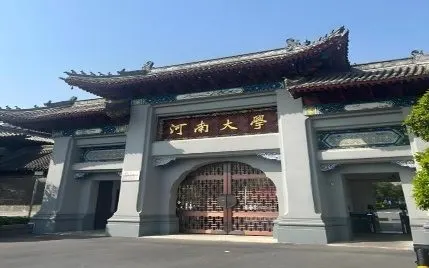
Henan University accepts international students on programmes in the following fields: engineering, education, agriculture. Choose the level and programme that suit your goals.
Chinese language study at the university — from a few weeks to a year or longer. Suitable for those starting from scratch or preparing for the HSK before entering a main programme.
self-funded · language programme
The first level of higher education: usually four years of study, specialised subjects, internships and a graduation thesis. It opens the way to working in your field and to a master's degree.
self-funded
Advanced study after a bachelor's degree: research, applied projects and internships. It helps you become an expert in your chosen field and broaden your career opportunities.
self-funded
Henan University is located in Kaifeng. Nihao Study consultants keep track of the deadlines and admission requirements of this university, and you can always check the most accurate and up-to-date information on its official website. In university rankings, it is ranked 173 in China and 1628 worldwide.
Come for a face-to-face meeting: together we will go through the requirements, deadlines, documents and study options that suit you.

At the meeting we will look at your situation, tell you which documents to prepare and by when, talk about possible programmes and help you decide on the next step.
Henan University (HENU, 河南大学) is one of the largest comprehensive universities in Henan Province. Its campuses are in two cities: the historic city of Kaifeng and the modern city of Zhengzhou. Within China, students call the university simply Heda (河大, Hé Dà), while international rankings use the abbreviation HENU. In official Russian-language documents the standard form is the Russian equivalent of "Henan University".
The university traces its history back to 1912. It was opened on the site of the former Henan provincial examination hall — the very place where the last imperial examinations of old China were held. Today HENU takes part in the national Double First-Class (双一流) programme, more than 50 000 people study here full-time, and research is carried out across 21 doctoral fields.
In this overview, Nihao Study covers the history of HENU, its rankings and strongest fields, programmes for international students, scholarships, the admission procedure and the universities in Henan it is easily confused with.
| Item | Data |
|---|---|
| Founded | 1912 |
| Full-time students | over 50,000 |
| International students | over 800 |
| Faculty and staff | over 4,700, including 6 academicians of the Chinese Academy of Sciences |
| Bachelor's programmes | 93 |
| Master's Degree | 45 first-level disciplines and 80 individual programmes |
| Doctoral fields | 21 |
| Campuses | 3: Minglun and Jinming (Kaifeng), Longzihu (Zhengzhou) |
| Total campus area | more than 5,500 mu |
| International partners | 200 universities from 40 countries |
| Library holdings | 5.2 million print and more than 7 million electronic items |
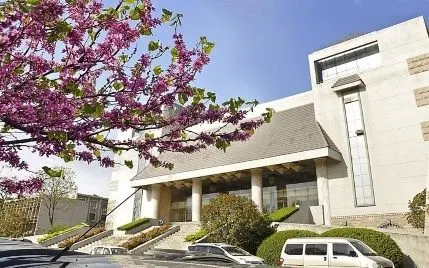
The university's roots lie in the Henan Preparatory School for Studying in Europe and America (河南留学欧美预备学校). It was founded in 1912 by a group of Henan educators led by Lin Boxiang. The school occupied the grounds of the former provincial examination hall (河南贡院), where the last imperial keju examinations in the country's history were held in 1903 and 1904. At the time it was one of China's three largest centres preparing young people for study abroad. That is why the historic building on the Minglun campus, where Republican-era architecture has survived, is now protected by the state as a cultural heritage site.
In March 1923 Zhongzhou University was established on the basis of the school, with faculties of humanities and natural sciences. In 1927 it was joined by two Henan colleges — the (public) College of Law and Politics and the (provincial) College of Agriculture — and a year later a medical faculty opened. From 1930 the university became provincial and was called Henan Provincial University. During the Second Sino-Japanese War (1937–1945) its faculties and departments had to be dispersed to Luoyang, Xinyang, Nanyang, Xi'an, Baoji and several other cities; much of the equipment and teaching materials was lost, but classes never stopped. In 1942 the university gained national status (National Henan University) and became a comprehensive university of six colleges — humanities, natural sciences, engineering, agriculture, medicine and law.
The nationwide higher education reform of 1952 changed the university's shape: the College of Agriculture became the separate Henan Agricultural University, a number of faculties were transferred to other Chinese universities, and the remaining part was named Henan Normal University. A year later, in 1953, Pingyuan Teachers' College was merged into it, and teaching took place on two sites — in Kaifeng and Xinxiang. In 1956 these campuses became two independent teacher-training universities. The Xinxiang site grew into today's Henan Normal University, while the Kaifeng site changed its name several times until 1984, and only then regained its historical name, Henan University. Two decades of shared history and a shared name are the main reason HENU is still confused with the teacher-training university in Xinxiang (more on this in the section on similar names below).
In June 2000 Kaifeng Medical College and Kaifeng Teachers' College were merged into Henan University, forming today's comprehensive university. In 2008 the provincial authorities and the Ministry of Education agreed to develop the university jointly. In 2016 HENU was included in the national 111 Project, aimed at attracting foreign scientists, and in September 2017 it joined the first round of the Double First-Class programme, with biology as its featured discipline. The Longzihu campus in Zhengzhou opened in September 2021, and in 2022 the university's registered address was moved from Kaifeng to Zhengzhou; in the same year the university was again included in the Double First-Class list, this time in the second round. Over the years HENU's alumni have included the philosopher Feng Youlan, the historian Fan Wenlan, the oracle bone inscription scholar Dong Zuobin, Zhao Jiuzhang, one of the founders of China's space programme, and Liang Guanglie, a former Minister of National Defence of the PRC.
| Ranking | Position |
|---|---|
| ARWU (ShanghaiRanking) 2025 | 301–400 worldwide |
| CWTS Leiden Ranking | 391 worldwide |
| U.S. News Best Global Universities 2025–2026 | 763 worldwide |
| QS World University Rankings 2027 | 1201–1400 worldwide |
| EduRank 2026 | 74 in China, 1046 worldwide |
In global tables HENU ranks fairly low, but behind these positions lies real strength in specific subjects. Seven of the university's disciplines are in the ESI top 1%: clinical medicine, chemistry, engineering, materials science, pharmacology and toxicology, plant and animal science, and environment and ecology. In the Double First-Class programme the university is represented by biology, and in EduRank's subject lists it is in the top 50% in 143 research fields. For a provincial regional university without Project 211 status, this is a notable achievement.
Cotton genetics and crop resilience. HENU runs the State Key Laboratory of Cotton Biology and the State Key Laboratory of Crop Stress Adaptation and Improvement, which the university established together with the provincial government. Henan is one of China's main grain- and cotton-producing provinces, so these are not just nameplates: the laboratories carry out applied breeding directly linked to the country's food security.
Yellow River civilisation and humanities heritage. The university is home to the Research Centre for Yellow River Civilisation and Sustainable Development, recognised as one of the key national-level research bases in the humanities. The Minglun campus has the university's own museum: its 3,000 square metres hold more than 4,000 exhibits. The museum serves as a teaching base for future historians, archaeologists and museum specialists, and anyone can visit it free of charge.
Nanozymes and next-generation antiviral drugs. A more modern line of research is pursued by the Zhongyuan Nanozyme Laboratory and the State Key Laboratory of Antiviral Drugs (innovative drugs against viral infectious diseases). The combination of a century-old humanities tradition and modern biochemistry gives HENU a profile that is unusual for a regional university in Central China.
Teaching at HENU covers thirteen broad disciplines: literature, history, philosophy, economics, management, law, science, engineering, medicine, agriculture, education, art and interdisciplinary programmes, spread across 40 schools and faculties. Among the humanities and social sciences, journalism, Chinese language and literature, law, history and archaeology, and tourism economics and management stand out. In the science and engineering group, computer science and artificial intelligence, chemistry and chemical engineering, data science, biology and bioengineering, materials science, and geography and ecology are prominent. The medical group comprises clinical medicine, traditional Chinese medicine, pharmacy, dentistry and nursing, while the arts and sports group includes music, dance, fine arts, martial arts and physical education.
| Level | Type of education |
|---|---|
| Chinese language course | 1 or 2 semesters, intensive HSK preparation |
| Bachelor's Degree | 4 or 5 years, taught mainly in Chinese |
| Master's Degree | 2 or 3 years, some fields taught in English |
| Doctoral (PhD) Programmes | 3 or 4 years, a supervisor is required |
International admissions and language courses at HENU are handled by the International Silk Road Academy, founded in 2008. The School of International Education appeared earlier, in 2002, as the International Education Centre, and took on its current structure a year later. HENU is an official HSK test centre. Admission to a bachelor's programme taught in Chinese usually requires HSK 4 or higher; for English-taught programmes, an international IELTS or TOEFL certificate is required instead of the HSK. HENU's international ties go beyond language courses: the university has agreements with Victoria University and Monash University in Australia, Anhalt University of Applied Sciences in Germany, and a number of universities in the USA and the UK. The partners of HENU's Eurasia International College include the University of Turku, Belarusian State University, Southern Federal University and RUDN University; the college also runs student exchanges with Lomonosov Moscow State University.
Besides the tuition fee, students have to pay a registration fee, medical insurance and meals, and those coming long-term on an X1 visa also pay for a medical check-up after arrival and a residence permit. It is best to check the exact amounts for the current year on the university's official website, henu.edu.cn.
| Room type |
|---|
| Room for four |
| Room for two |
| Single room |
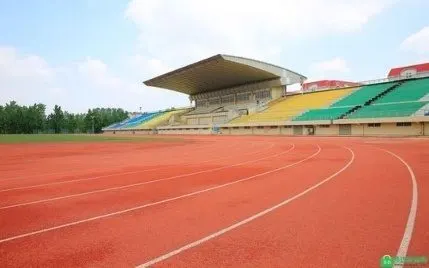
International students spend most of their daily life on the two Kaifeng campuses, Minglun and Jinming. Minglun has preserved its historic buildings and houses the university museum, while the Jinming campus was built in 2000–2005 for a modern student lifestyle. Longzihu is the newest and largest campus: it covers 2,042 mu in Zhengzhou and has been taking students since September 2021. All campuses have gyms, stadiums and swimming pools, and the HENU library holds more than 5.2 million printed volumes.
The main route to free study at HENU is the Chinese Government Scholarship (CSC, China Scholarship Council), which covers tuition, a place in a double dormitory room and medical insurance, and also provides a monthly stipend for bachelor's, master's and doctoral students. Henan University is on the official list of 306 Chinese universities that accept CSC scholarship holders; applications for each cycle are usually accepted until mid-January.
Besides the CSC, Henan Province offers international students its own government scholarship, and applications for it at HENU follow a special procedure through the School of International Education. The university also rewards its best self-funded students with its own scholarship, which covers tuition and dormitory accommodation. At Chinese universities of this level, a noticeable share of international applicants can count on a scholarship or a discount in some form, but the conditions and competition are reviewed every year, so it is worth checking the current requirements before applying.
Over the centuries, Kaifeng served as the capital of seven Chinese dynasties. The city is famous for its night markets and the Millennium City Park, which recreates the atmosphere of the Song dynasty, as well as for one of the oldest Jewish communities in the country. Kaifeng is calm and safe, and in terms of living costs it is one of the most affordable major education centres in China, while the proximity of Zhengzhou gives HENU students convenient transport. A high-speed train takes about 25–30 minutes from Kaifeng to Zhengzhou East station and continues to Zhengzhou Xinzheng International Airport, making it easy to travel between the three campuses and fly home for the holidays.
| University (Chinese name) | Type and city | Main focus |
|---|---|---|
| Henan University (HENU), 河南大学 | University, Kaifeng and Zhengzhou | Comprehensive, Double First-Class |
| Henan Normal University, 河南师范大学 | University, Xinxiang | Teacher training |
| Henan University of Technology, 河南工业大学 | University, Zhengzhou | Engineering and food technology |
| Henan Agricultural University, 河南农业大学 | University, Zhengzhou | Agricultural biotechnology and agriculture |
| Henan University of Science and Technology, 河南科技大学 | University, Luoyang | Engineering and mechanical engineering |
| Kaifeng University, 开封大学 | Applied college, Kaifeng | Vocational and applied programmes |
Of the six universities in the table, only HENU has Double First-Class status and doctoral programmes in 21 disciplines. It is most often confused with Henan Normal University in Xinxiang, and understandably so: until 1984 the Kaifeng university officially bore the same name. Henan Agricultural University was once even part of HENU and became independent only in 1952. As for Kaifeng University (开封大学), although it is in the same city and sounds similar, it has no connection with HENU: it awards vocational-level diplomas, not university degrees.
The standard Russian form translates as 'Henan University' — this is what the Chinese embassy and reference books call the university. Spelling the province's name with a different vowel is a common mistake. 'University of Henan' is a calque of the English Henan University; strictly speaking it is incorrect, although it often appears in advertising and in conversation. Henan University is the official international name, and the abbreviation HENU is used in correspondence with the admissions office, in rankings and in payment documents. Heda (河大, Hé Dà) is an informal short form used by students in China. The original Chinese name is 河南大学, in pinyin Hénán Dàxué.
HENU is short for Henan University: it is based on the name of the province, not the city. The university was originally conceived as an institution for the whole of Henan Province rather than a single city, and today it officially has campuses in two cities — Kaifeng and Zhengzhou.
Both are correct. Kaifeng is home to the historic Minglun campus and the newer Jinming campus, while Zhengzhou has had the Longzihu campus — the largest and newest — since 2021. Since 2022 the Zhengzhou address has been the legal address of the whole university, but most international students still study and live in Kaifeng.
Yes, HENU has been part of the Double First-Class programme since 2017, with biology chosen as its featured discipline. For an applicant this means additional state funding for that field, a stronger research base and laboratories, and a more valuable degree when applying for a master's programme or a job in China. However, the university does not have Project 211 or Project 985 status.
The price depends on the room type — for four, for two or a single. Besides accommodation, you should budget for the registration fee, insurance and meals. Current amounts are published on the university's official website.
Yes: HENU is officially on the list of 306 Chinese universities that accept international students on the CSC scholarship. The scholarship pays for tuition, accommodation and insurance and includes a monthly stipend; applications are usually accepted until mid-January.
Chinese-taught programmes usually require HSK 4 or higher; some humanities schools require HSK 5. For English-taught programmes, HSK is replaced by international IELTS or TOEFL certificates.
Some master's programmes are taught in English — mainly in medicine, business and international relations. Most bachelor's programmes and humanities master's programmes are taught in Chinese, so it is best to check the language of a specific programme before applying.
Through its International Silk Road Academy, the university itself operates as an official HSK test centre, so HENU students do not need to travel to another city for the exam. Check the dates of upcoming sessions in advance.
They are two separate universities, although until 1956 they were a single institution with two campuses. Today HENU is a comprehensive Double First-Class university with campuses in Kaifeng and Zhengzhou. Henan Normal University, on the other hand, is an independent teacher-training university in Xinxiang that is not part of Double First-Class.
Applicants usually submit a passport, a secondary school certificate showing grades, a medical certificate and photos, plus an HSK certificate for Chinese-taught programmes.
Kaifeng (开封) was once the capital of seven dynasties. Today the city is known for its night markets and the Millennium City Park, which recreates the setting of the Song dynasty. Kaifeng is also home to a surviving Jewish community, one of the oldest in China.
In Kaifeng, students get to know traditional Chinese culture — calligraphy, opera, chrysanthemum festivals — and life here is very inexpensive. Zhengzhou is next door, so the city is easy to reach. For parents, it matters that this is a quiet and safe place: there are fewer big-city temptations, nothing gets in the way of studying, and yet all the necessary infrastructure is in place.
You work with Nihao Study specialists. They will help you put together a portfolio and a set of documents, draw up a study plan and choose a university or college and a specialty that genuinely interest you.
We take care of every stage of admission, from choosing to enrolment
We will gather, prepare, certify and send your documents to the institution
We will show the admissions committee your strengths
We run training sessions and courses so you can prepare with more confidence
We will help you settle in at the start of your studies and keep moving forward
Nihao Study specialists select universities and colleges that match the applicant's goals and means. We make sure the teachers are practitioners and that the knowledge will be useful in your profession.
We examine curricula, talk to students and teachers and look at which specialties employers need, and use this information to select options for the applicant.
Advisers guide the applicant from the first consultation to enrolment, help build a plan and spot mistakes in time that could get in the way.
The cost of our support depends on the programme and the partner university; you'll get an exact quote after a free consultation.
Get a quoteA free 15-minute consultation: together we will choose a university or college and a programme that suit your goals and budget.
Apply with peace of mind: we handle the documents, deadlines and correspondence with admissions committees, and you save time and energy.
Don't want to wait for a call? Message us in the chat.
Message us in chat University · Anyang
Language courses · Bachelor's Degree · Master's Degree