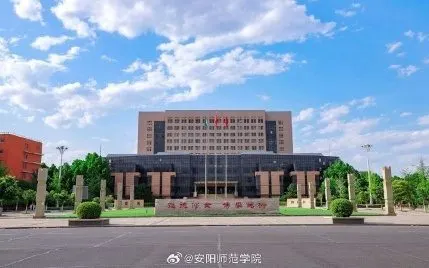
Anyang Normal University
University · Anyang
Language courses · Bachelor's Degree · Master's Degree
XYNU · 信阳师范大学
Xinyang Normal University accepts international students on programmes in the following fields: education, agriculture, natural sciences. Choose the level and programme that suit your goals.
Chinese language study at the university — from a few weeks to a year or longer. Suitable for those starting from scratch or preparing for the HSK before entering a main programme.
Check upcoming application deadlines for this level with your Nihao Study adviser.
All programmes at this level →Xinyang Normal University is located in Xinyang. Nihao Study consultants keep track of the deadlines and admission requirements of this university, and you can always check the most accurate and up-to-date information on its official website.
Come for a face-to-face meeting: together we will go through the requirements, deadlines, documents and study options that suit you.

At the meeting we will look at your situation, tell you which documents to prepare and by when, talk about possible programmes and help you decide on the next step.
Xinyang Normal University (信阳师范大学, Xìnyáng Shīfàn Dàxué), abbreviated XYNU, is a public university in Henan Province. It is located in the south of the province, in the city of Xinyang, by South Lake. Until summer 2023 it had the status of a college and was called Xinyang Normal College (信阳师范学院), so on forums and in older reference books it still often appears under that name. Misspellings such as "Sinyang" or "Ksinyan" also occur, as does a Russian transliteration of the English "Xinyang Normal University"; Chinese students call it by the short name 信师大 (Xìnshīdà). The official abbreviation XYNU is used in rankings and international correspondence, while in Russian-language documents the standard name is the one meaning "Xinyang Pedagogical University".
The university is under provincial administration and is one of the two key teacher-training universities in Henan; the sociologist Fei Xiaotong once called it "the cradle of teachers". XYNU is not on the Double First-Class list or in Projects 985 and 211, but it is strong in the natural sciences, especially physics. Another of its strengths is training teachers of Chinese for schools abroad.
On this page Nihao Study has gathered the key facts about XYNU for a 2026 applicant: its position in Chinese and world rankings, languages and fields of study, HSK requirements, how it differs from similar universities in Xinyang and Henan, and the documents required for bachelor's and master's programmes.
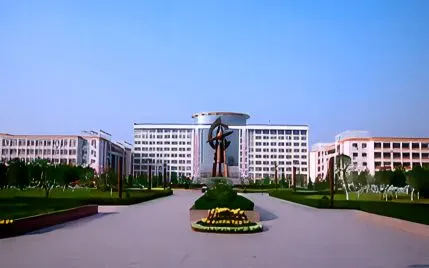
Below are the university's key figures according to its official website and its admissions office for international students. Figures sometimes differ slightly between official documents: the university has been growing fast since its change of status. The most recent edition of the admissions prospectus is used here.
| Item | Data |
|---|---|
| Year founded | 1975 |
| University status | since June 2023, previously a college |
| Location | Henan province, Xinyang city, Shihe district |
| Number of campuses | three |
| Full-time students | more than 30,000 |
| Teaching and other staff | over 1,900 |
| Schools within the university | 24 |
| Bachelor's programmes | 80 |
| Master's fields | 16 academic and 16 professional |
| Admission of international students | since 2008 |
| Campus postcode | 464000 |
The main campus covers more than 3,100 mu, roughly 207 hectares; the total floor area of the buildings exceeds 910 thousand square metres. The library holds about 2.98 million printed items and over 4 million electronic resources. Among Henan's universities, it has been recognised as a model digital campus. The buildings by the South Lake are considered among the most picturesque in the province, and local reviews often call XYNU the most beautiful campus in Henan.
The university began as a branch of Kaifeng Teachers College, opened in Xinyang in 1975. In 1978 the branch became an independent college entitled to run bachelor's programmes and received the name it would then bear for almost half a century: Xinyang Normal College. The right to award bachelor's degrees was confirmed in 1979, and in August 1998 master's training began. In this way a local teacher-training school gradually grew into a multidisciplinary research and education centre for southern Henan.
University status did not come at once. In 2013 the Ministry of Education rejected the application for renaming, and in 2016 the non-state Huarui College split off from the university; it is now the private Xinyang University (信阳学院). The matter was resolved in June 2023: in an official letter, the Ministry of Education of the PRC approved the institution's transition from college to university status. Thus Xinyang Normal College became Xinyang Normal University, a public bachelor's-level university under Henan province.
In China the move from 学院 (college) to 大学 (university) is not a formality: it requires a broader research base, postgraduate fields and a substantial volume of research. That is why XYNU today has both bachelor's programmes and full master's programmes: 16 academic and 16 professional fields. In 2025 the university was included in Henan's list of key institutions preparing to gain the right to award doctoral degrees. In other words, the level of education available here is rising, although the university does not yet have its own doctoral programmes.
To answer a common question straight away: XYNU is a provincial university in Henan; it is not part of Project 985 or 211 and is not on the national Double First-Class list. Within the province, however, its position is strong: it is one of Henan's two key normal universities, and in 2020 it was given the status of a university developing distinctive key disciplines. This profile suits those for whom subject strength and reasonable cost matter more than a place in the top 100.
By overall research weight, XYNU sits roughly in the middle of the Chinese list, lifted above all by the natural sciences. In the 2026 edition of EduRank the university ranks 355th in China and 4283rd in the world; the assessment is based on over 8,300 publications and more than 108 thousand citations. In the 2026 edition of the ShanghaiRanking (软科) ranking of the country's best universities, it holds 337th place.
| Ranking | Position | Scope |
|---|---|---|
| EduRank, 2026 | 4283 worldwide, 355 in China | global |
| ShanghaiRanking, 2026 | 337 among Chinese universities | national |
| EduRank: strong fields | physics, engineering, biology | by subject |
The picture is clearer subject by subject. According to EduRank, XYNU's strongest research profile is formed by physics, engineering and biology, with most citations coming from physics, which is rare for a normal university. Among the universities in its city, XYNU confidently holds first place, ahead of neighbouring institutions in Xinyang.
Education and psychology. Teacher training is the university's historical core, so education, psychology and preschool education remain its best-known fields; international students can apply for them too. The university's reputation as a cradle of teachers was once given to it by the sociologist Fei Xiaotong.
Physics and natural sciences. This is the second key field; it took shape after the university became multidisciplinary. The School of Physics and Electronic Engineering produces most of the university's research publications and the bulk of its citations. International students can study physics at both bachelor's and master's level. Engineering, computer science and biology are developing alongside it.
International Chinese language teaching. For a normal university, this third field is quite natural. The university has sent more than 200 volunteer Chinese teachers to Thailand, Indonesia and over ten other countries. Back in 2020 it opened the overseas Jingming Institute in Mongolia. In 2023 XYNU and Ganesha University of Education jointly founded a Confucius Institute in Indonesia. International students get a strong department of international Chinese education here and constant language practice.
The university comprises 24 schools and 80 bachelor's programmes spread across 11 fields of study, from medicine, physics and computer science to education and philology. Not all of this range is open to international students, only a separate set of majors taught in Chinese. The table below shows the fields for which the university admits international applicants to degree programmes.
| School | Bachelor's Degree | Master's Degree |
|---|---|---|
| Liberal Arts | international Chinese language education | international Chinese language education |
| Educational Sciences | education, psychology, preschool education | education, psychology |
| Physics and Electronic Engineering | physics | physics |
| Computer and Information Technology | Internet of Things | Internet of Things |
| Foreign Languages | English language and literature | English language and literature |
| Physical Education | sport, social sports | sports training |
| Law and Sociology | sociology, social work | social work |
| Art and Design | interior design, landscape design | by agreement with the university |
| Medical | nursing | by agreement with the university |
In addition, the university runs language programmes: Chinese courses are available to students of any level, short (one semester) and long (an academic year), after which students can move on to a degree major. There are no English-taught degree programmes in the intake for international students: teaching is in Chinese only, so you cannot get into the classroom without the language.
The required language level depends on the programme. Bachelor's applicants must be no older than 30; they need a secondary school certificate and at least HSK 3, and must reach HSK 4 by graduation. Master's programmes accept candidates no older than 35 who hold a bachelor's degree and HSK 4 or higher; HSK 5 and proven knowledge of English are required for the thesis defence. Those whose Chinese is still weaker can first take preparatory language courses and only then enrol in the main programme. The standard document package includes the international student application form, a copy of the passport, the school certificate or diploma, the HSK certificate, a study plan, a police clearance certificate and a medical certificate on the form for foreign nationals. For master's programmes, two letters of recommendation from teachers holding the rank of associate professor or higher are added.
International students live on campus in double rooms. Dormitory fees, like tuition, are paid in advance, per semester or per year.
| Student category | Payment terms |
|---|---|
| Language courses | per semester or per year |
| Bachelor's Degree | per year |
| Master's Degree | per year |
The residence permit, insurance and medical examination are paid separately at actual rates, as are materials for electives such as calligraphy and wushu. It is best to check the current cost of accommodation and tuition on the university's official website.
The main government programme for studying in China for free is the CSC government scholarship, so it makes sense to start any discussion of scholarships with it. It is worth applying for CSC through universities officially listed as hosting it. XYNU is a young provincial university, and its main advantages are affordable tuition and partnership channels rather than CSC; these are what you should look at first.
XYNU has three working channels of support. The first is the Confucius Institute scholarship for students of international Chinese language education: since 2023 the university has had its own Confucius Institute in Indonesia, and it actively trains Chinese teachers. The second is dual degree and exchange programmes with partner universities in Korea, the USA and Japan, where the university sends students for advanced study. The third is Henan's provincial support programmes and internal awards for academic achievement; their conditions change from year to year. It is best to find out the exact list of scholarships for the year you need in advance, so you can prepare your documents for the relevant deadline.
The main campus stands at the foot of Xianshan Mountain, on South Lake Road (Shihe district). Green slopes and water give the university its recognisable look, and local residents consider it the most beautiful in Henan. Xinyang lies at the foothills of the Dabie Mountains on the Huai River, in the southern part of the province; the metropolitan area has a population of about six million. The city is known for its mild climate and its reputation as a green gateway between northern and southern China. It owes its nationwide fame to Xinyang Maojian tea, one of China's ten famous green teas. The Jigongshan mountain resort is nearby.
For comparison, the province's leading university is Zhengzhou University, which has Double First-Class status.
The name XYNU is easy to confuse with several other institutions, some of them in Xinyang itself. To make sure your documents do not go to the wrong place, the main differences are summarised in the table.
| University (Chinese name) | City and type | Specialisation |
|---|---|---|
| Xinyang Normal University, XYNU (信阳师范大学): the subject of this page | Xinyang, public university | education, physics, Chinese language |
| Xinyang Agriculture and Forestry University (信阳农林学院) | Xinyang, public college | agronomy, forestry |
| Xinyang University (信阳学院) | Xinyang, private university | applied focus, formerly Huarui College |
| Henan Normal University (河南师范大学) | Xinxiang, public university | education, multidisciplinary university |
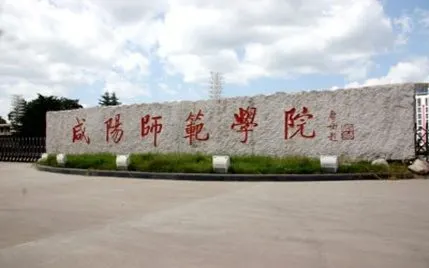
| Xianyang Normal University (咸阳师范学院) | Xianyang, Shaanxi | education, located in another city |
The key difference: XYNU is a public normal university located in Xinyang itself, built on education and physics. In the same city, Xinyang Agriculture and Forestry University focuses on agriculture and forestry. The private Xinyang University is the former Huarui College, which split off in 2016. Do not forget Henan Normal University in Xinxiang either: it is a separate and larger university in the province. Another similar-sounding name is Xianyang Normal University; it is in Shaanxi province and has no connection with Henan.
There are seven forms in all, so let us go through them one by one. The standard Russian name translates as Xinyang Pedagogical University: reference works use it, including after the change of status in 2023. The name the university bore until June 2023 translates as Xinyang Pedagogical Institute. Variant Russian spellings of Xinyang are transliteration errors, not other institutions. A Russian phonetic rendering of Xinyang Normal University is a calque from English: formally incorrect, but it turns up in chats. Xinyang Normal University is the official international name, XYNU is the abbreviation used in rankings and correspondence, 信师大 (Xìnshīdà) is the short form used by Chinese students, and 信阳师范大学 (Xìnyáng Shīfàn Dàxué) is the original Chinese name. All seven variants refer to the same university in Xinyang.
It is short for Xinyang Normal University, the university's English name. This public university is located in the city of Xinyang in Henan province; it received university status in June 2023.
No. All degree programmes for international students are taught in Chinese; there are no English- or Russian-taught majors in the intake. That is why an HSK certificate is required for admission, and if your language is not yet good enough, the university offers to start with preparatory Chinese courses.
Bachelor's programmes: HSK 3 on admission and HSK 4 by graduation. Master's programmes: HSK 4 on admission and HSK 5 by the thesis defence. Language courses have no HSK requirements.
No: Xinyang Normal University is a provincial university in Henan, and it is not on the Double First-Class list or part of Project 985 or 211. However, it is one of the province's two key normal universities, and in 2025 it was included among the institutions preparing to gain the right to award doctoral degrees.
International students are housed in double rooms. Language course students can pay for the dormitory by semester, while degree students pay for the year. It is best to check current rates on the university's official website.
CSC is a national programme, and you should apply for it through a university officially listed as hosting it. XYNU itself emphasises low tuition fees, as well as Confucius Institute scholarships and partnership programmes. It is best to find out well in advance which scholarships will be available in the year you need.
The university prepares students for the HSK as part of its language courses, but the test itself is held at accredited centres according to a set schedule. Upcoming dates and registration rules are published in the official HSK schedule.
The main campus address is 237 South Lake Road, Shihe district, Xinyang, Henan province, postcode 464000. Xinyang is in the south of Henan, on the Huai River. The Zhengzhou–Wuhan railway line runs through the city, so it is easy to reach from either direction.
XYNU is a public normal university in Xinyang, strong in education and physics. Xinyang Agriculture and Forestry University is also in Xinyang but specialises in agronomy and forestry. Henan Normal University is a separate large university in the city of Xinxiang and should not be confused with XYNU.
You will need: the international student application form, a copy of your passport, your secondary school certificate and transcript (both translated and notarised), an HSK certificate, a study plan, a police clearance certificate, a medical certificate on the form for foreign nationals and colour photographs.
Xinyang (信阳) is the tea capital of Henan, lying on the boundary between northern and southern China. It is the home of the famous Xinyang Maojian green tea; near the city are the Dabie Mountains and the picturesque Nanwan Reservoir.
Xinyang offers students a calm setting for study and low expenses; the city regularly appears in rankings of China's most liveable places. For parents, it matters that it is a safe, green city on the Beijing–Guangzhou high-speed line: a trip to Zhengzhou or Wuhan takes about an hour.
You work with Nihao Study specialists. They will help you put together a portfolio and a set of documents, draw up a study plan and choose a university or college and a specialty that genuinely interest you.
We take care of every stage of admission, from choosing to enrolment
We will gather, prepare, certify and send your documents to the institution
We will show the admissions committee your strengths
We run training sessions and courses so you can prepare with more confidence
We will help you settle in at the start of your studies and keep moving forward
Nihao Study specialists select universities and colleges that match the applicant's goals and means. We make sure the teachers are practitioners and that the knowledge will be useful in your profession.
We examine curricula, talk to students and teachers and look at which specialties employers need, and use this information to select options for the applicant.
Advisers guide the applicant from the first consultation to enrolment, help build a plan and spot mistakes in time that could get in the way.
The cost of our support depends on the programme and the partner university; you'll get an exact quote after a free consultation.
Get a quoteA free 15-minute consultation: together we will choose a university or college and a programme that suit your goals and budget.
Apply with peace of mind: we handle the documents, deadlines and correspondence with admissions committees, and you save time and energy.
Don't want to wait for a call? Message us in the chat.
Message us in chat University · Anyang
Language courses · Bachelor's Degree · Master's Degree