- Language courses
- English, Chinese
- Bachelor's Degree
- English, Chinese
- Master's Degree
- English, Chinese
- Accommodation from 4 000 ¥/year
XDU · 西安电子科技大学
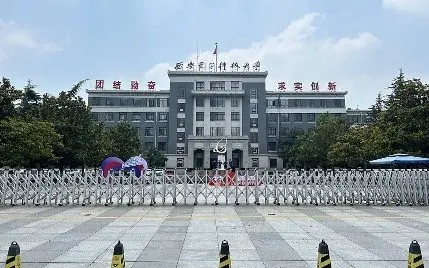
Xidian University accepts international students on programmes in the following fields: business, engineering, medicine, it, natural sciences. Choose the level and programme that suit your goals.
Chinese language study at the university — from a few weeks to a year or longer. Suitable for those starting from scratch or preparing for the HSK before entering a main programme.
self-funded · language programme
The first level of higher education: usually four years of study, specialised subjects, internships and a graduation thesis. It opens the way to working in your field and to a master's degree.
self-funded
Advanced study after a bachelor's degree: research, applied projects and internships. It helps you become an expert in your chosen field and broaden your career opportunities.
self-funded
Xidian University is located in Xi'an. Nihao Study consultants keep track of the deadlines and admission requirements of this university, and you can always check the most accurate and up-to-date information on its official website. In university rankings, it is ranked 54 in China and 366 worldwide.
Come for a face-to-face meeting: together we will go through the requirements, deadlines, documents and study options that suit you.

At the meeting we will look at your situation, tell you which documents to prepare and by when, talk about possible programmes and help you decide on the next step.
Xidian University (XDU, 西安电子科技大学, pinyin Xī'ān Diànzǐ Kējì Dàxué) is a university in Xi'an usually called "Xidian University" in Russian; its full name can be rendered as "Xi'an University of Electronic Science and Technology". The abbreviation XDU is used in correspondence and rankings. The short Chinese name 西电 (Xidian) literally combines the words "Xi'an" and "electronics". Russian-language searches also turn up a calque meaning "the Xidianian University", but this overview uses Xidian University as the main form.
It is a public university under the Ministry of Education of the PRC and a participant in Project 211 and the Double First-Class programme. To be precise: in the official list for the second round of Double First-Class, XDU is listed only for Information and Communication Engineering and Computer Science and Technology. Electronic science, microelectronics and cybersecurity are indeed considered the university's strengths, but they do not appear in the list as separate entries.
This Nihao Study overview brings together what matters to a 2026 applicant: statuses, programmes taught in Chinese and English, accommodation, scholarships, HSK requirements, the new CSCA requirement and how XDU differs from similar universities in Xi'an.
| Item | Data |
|---|---|
| Founded | 1931 |
| Supervising body and status | Ministry of Education of the PRC, Project 211, Double First-Class |
| Full-time students | 39 440 |
| Undergraduates and postgraduates | 22,750 and 16,690 |
| Teaching staff | over 2,800 full-time teaching staff |
| Campus area | floor area 1.5906 million sq m; grounds 3,944.8 mu |
| South campus, address | 266 Xinglong Section, Xifeng Road, Xi'an, Shaanxi 710126 |
| North campus, address | No. 2 South Taibai Road, Xi'an, Shaanxi 710071 |
The current home page of the university's website gives 270 hectares of grounds, 3,900 staff and over 41,800 students. The discrepancy with the detailed fact sheet is due to different dates and counting methods, so in your application it is better to rely on figures from one up-to-date source and not mix data.
XDU traces its history back to 1931, when the radio school of the Central Military Commission opened in Ruijin. The university calls it the first engineering and technical school founded by the leadership of the Communist Party of China and the Red Army. This origin explains why schools of research in information theory, cryptography, radar, radio communications, microwave antennas and electronic warfare appeared here early on.
The institution moved to Xi'an in 1958, transferred from the military to the civilian system in 1966, and received its current name, Xidian University, in 1988. In China the abbreviation 西电 has taken hold, so searches for Xidian and its various Russian spellings all refer to the same university.
Today XDU is not a narrowly specialised communications college. The university has engineering, natural science, humanities and social science fields, but electronics and information technology remain its strategic centre. This combination of a broad university structure and a deep IT profile is what sets it apart from an ordinary multidisciplinary university.
| Ranking | Position | What it reflects |
|---|---|---|
| THE World University Rankings 2026 | 601–800 band | Overall world university ranking |
| QS World University Rankings 2027 | 851–900 band | Overall world university ranking |
| ARWU 2025 | 301–400 band | Assessment of research performance |
| CWUR 2025 | 386 worldwide | In the top 1.8 per cent of the list |
| EduRank 2026 | 747 worldwide, 47 in China | Publication-based methodology |
| U.S. News 2025 and 2026 | 445 worldwide | The profile data are worth checking directly |
For XDU, subject positions are more informative than the overall place. In the 2025 ShanghaiRanking, Remote Sensing ranked 2nd in the world, Telecommunication Engineering 4th, Electrical and Electronic Engineering 10th, Computer Science and Engineering 28th and Artificial Intelligence 31st. In THE 2026, Computer Science is in the 176–200 band and Engineering in the 251–300 band.
ESI data confirm the specialisation. According to XDU's official announcement for 2025, computer science and engineering is in the top 0.1 per cent of ESI, while earth sciences, materials science, clinical medicine, chemistry, physics, mathematics and social sciences are in the top 1 per cent. So it is worth choosing XDU with a specific laboratory and department in mind, rather than a single line in a world ranking.
XDU's first strong field is telecommunications and signal processing. The Ministry of Education of the PRC counts the university among its bases for research and training in electronic information, and lists microwave antennas, radar, electronic countermeasures and information theory among its historical fields. For applicants, this means access to a long-standing research tradition, not just a fashionable 5G or 6G label.
The second field is computer science, artificial intelligence and cybersecurity. According to the university, in 2024 more than 80 per cent of students were enrolled in electronics, computing and automation majors, and 35 programmes hold the status of national first-class bachelor's programmes. Cryptography and the security of wireless networks, data and systems are handled by a dedicated School of Cyber Engineering.
The third is microelectronics and integrated circuits. The relevant faculty comprises the schools of Microelectronics and Integrated Circuits; it also houses national platforms dedicated to wide-bandgap semiconductors and runs two bachelor's programmes rated national first class. Master's and doctoral applicants should look at Electronic Science and Technology, Integrated Circuit Engineering and Integrated Circuit Science and Engineering.
The core is formed by the schools of telecommunications engineering, electronic engineering, computer science and technology, cyber engineering and artificial intelligence, and the faculty of integrated circuits. The university also has national research platforms for integrated service networks, intelligent perception, civil radar and international cooperation in electronic information systems.
The next circle includes mathematics and statistics, physics, optoelectronics, space science, materials, instrument engineering, mechatronics, management and biomedical engineering. It is typical of XDU that even management, materials and biomedical engineering often gain a digital or electronic component.
Among its joint projects, the university lists programmes with Polytech Nantes (Electronics Engineering), Heriot-Watt University (Telecommunications Engineering) and Virginia Tech (Big Data Management and Application). There is no joint programme with a Russian university for international bachelor's students in the current list. At the same time, XDU hosts academic events with Russian and Chinese participants, such as a 2025 seminar on probability theory. A research seminar and a dual degree programme are different formats.
In 2026, 20 fields are open to international bachelor's students. Computer Science and Technology, Information and Computational Science and Applied Physics are explicitly listed as English-taught; the other programmes are listed as Chinese-taught. CSCA subjects have also been introduced for bachelor's programmes: English-taught technical programmes require Mathematics and Physics, while Chinese-taught ones add Chinese for Science or Chinese for Arts, depending on the field.
| Level | Example fields | Language of instruction |
|---|---|---|
| Bachelor's Degree | Computer science, information and computational science, applied physics | English |
| Bachelor's Degree | Software engineering, AI, automation, robotics, business, Chinese language | Chinese |
| Master's Degree | Communications, electronics, computer science, control systems, physics, MBA | Chinese or English, depending on the programme |
| Doctoral (PhD) Programmes | Communication, Electronics, Cybersecurity, AI, Integrated Circuits, Remote Sensing | Chinese or English, depending on the programme |
For master's programmes, 20 fields have been published for 2026. Information and communication engineering, electronic science and technology, and computer science and technology are available in two languages, Chinese or English; business administration, philosophy, biomedical engineering, and biological and pharmaceutical engineering are listed as English-taught. For doctoral programmes the list has 21 entries, including cyberspace security, intelligence science and technology, and remote sensing science and technology.
In its non-degree education section, XDU lists Chinese Language Programs, i.e. Chinese language courses in Xi'an. The timetable and intensity of classes, the campus and the document issued at the end of the semester should be checked directly with the university.
Tuition and accommodation fees at XDU change from intake to intake and differ by programme level, so rely on the invoice and admission notice for your own intake. Check current amounts on the university's official website or with its admissions office.
According to the university, the dormitories are arranged as apartment units: three bedrooms, a shared bathroom, a balcony, furniture and basic appliances; the buildings have rooms for duty staff and surveillance. This information dates from 2015, so it gives a general idea of the layout, and the condition of a particular room should be checked when you move in.
When a place is allocated, find out five things: the campus, the number of roommates, whether there is a private bathroom, which utilities are included and when you can move in. The South campus is in Chang'an at 266 Xinglong Section, the North campus is in Yanta, on South Taibai Road. Some Russian-language templates mention Nangang district, but it is in Harbin and has nothing to do with XDU.
If you plan to live off campus, do not transfer a deposit until you have checked the contract and the owner of the property. According to the university, near the North campus there are a hospital, banks, supermarkets, shopping centres, gyms and places to eat. At the north-west corner of the South campus grounds is a Line 6 station called Xidiankeda Nanxiaoqu, Weilai Zhitong.
A scholarship counts as awarded only after an official scholarship notice. A strong application stands out for good grades, a language certificate, a well-thought-out study plan, recommendations and a match between the research topic and the supervisor's interests. Promises of a guaranteed scholarship should be treated as advertising.
The library system includes the Yifu Library on the North campus and the South campus library. According to the university, at the end of 2022 the libraries covered 52,200 sq m; they had over 5,600 reader seats, and the collection numbered about 5.40 million items, with 17.3 million electronic documents. The south library has more than 4,500 seats, meeting rooms, group work areas and an electronic reading room.
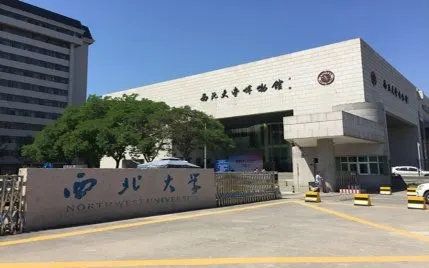
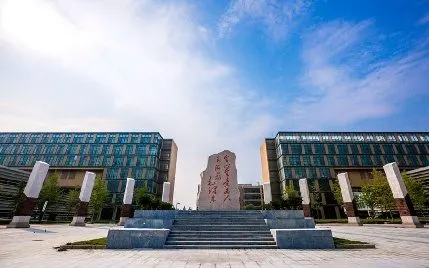
The official campus map shows a museum, a university history museum, a stadium, the Yuanwanggu sports complex, canteens, service centres and a cultural centre. This is more concrete than general talk of well-developed infrastructure: even before you arrive, you can plan routes between the dormitory, canteen, faculty and metro.
Do not confuse HSK and BCT. An XDU Chinese-taught programme requires an HSK certificate, but the certificate requirement and whether the university has an HSK or BCT test centre are separate questions. Look for a test venue on the official Chinese Test website, and check dates against the official schedule.
| University | Status | Main focus |
|---|---|---|
| Xidian University, XDU, 西安电子科技大学 | national university; Project 211; Double First-Class | electronics, telecommunications, computer science |
| Xi'an Jiaotong University, 西安交通大学 | comprehensive national research university | engineering, medicine, natural sciences, management |
| Xi'an University of Posts and Telecommunications, 西安邮电大学 | provincially administered university | postal systems, communications, IT |
| Xi'an University of Science and Technology, 西安科技大学 | provincially administered university | engineering, mining, safety |
XDU and Xi'an Jiaotong University have different Chinese and English names, profiles and status histories. Xi'an University of Posts and Telecommunications is closer to XDU in its telecommunications focus, but it is a different university. In an official interview by the Shaanxi Provincial Department of Education, XDU, Xi'an University of Technology and Xi'an University of Posts and Telecommunications appear as separate institutions.
This review uses a Russian transliteration meaning University of Xidian as its main form. A longer Russian rendering conveys the full meaning of the name: Xi'an University of Electronic Science and Technology. An adjectival Russian calque of Xidian is common, but it is less precise as a catalogue form. The official English name is Xidian University, and the international abbreviation is XDU. The short Chinese name is 西电 (Xidian), and the full original name is 西安电子科技大学, in pinyin Xī'ān Diànzǐ Kējì Dàxué.
XDU is a public university of electronic information in Xi'an (Shaanxi province). Classes take place on two campuses, South and North; their official postcodes are 710126 and 710071.
Yes. The university is on the official Project 211 list, and in the second round of Double First-Class it has Information and Communication Engineering and Computer Science and Technology on the list.
Yes, but the choice depends on the level. In the 2026 bachelor's list, Computer Science and Technology, Information and Computational Science and Applied Physics are listed as English-taught. At master's and doctoral (graduate) level there are more English-taught options.
According to the published procedure, HSK 4 or higher is required. Check the score, the certificate's validity period and any additional conditions in the rules of the current intake: the faculty may raise the bar.
For the 2026 international bachelor's intake, XDU's official list already specifies CSCA subjects. For technical programmes these are usually Mathematics and Physics; Chinese-taught programmes add Chinese for Science or Chinese for Arts.
Fees differ for bachelor's, master's and doctoral programmes and may change from intake to intake. The final amount is the one stated in the invoice and admission notice for your intake; see the university's official website for current fees.
Yes. To do so you need to win a full Chinese Government Scholarship for a suitable programme; such a scholarship can cover tuition, accommodation, insurance and regular payments, but it requires a separate application, and the status is confirmed annually through a review.
There are dormitories on both campuses. The price depends on the campus and the room type; the room type and availability are confirmed only when booking, and current fees are published in the intake materials.
The basic package includes a passport, an education document, a transcript, a language certificate, a medical certificate, a police clearance certificate and a CV. Master's and doctoral applicants also need two recommendations, a study plan and a letter of consent from a supervisor.
Xi'an (西安) is the ancient capital of 13 dynasties, the city of the Terracotta Army and the starting point of the Great Silk Road. Today it is a major centre of education, with more than 60 universities, and it also has a developed aerospace industry.
Xi'an attracts students with its combination of rich history, moderate prices and good education. The city has strong universities (Xi'an Jiaotong University), a metro with 9 lines, support programmes for international students and countless historical sites for leisure. For parents, it matters that Xi'an is safe and has developed infrastructure, an international airport and good healthcare; the campuses are well organised, dormitories are guarded, and life here is cheaper than in first-tier cities — with no loss in the quality of education.
You work with Nihao Study specialists. They will help you put together a portfolio and a set of documents, draw up a study plan and choose a university or college and a specialty that genuinely interest you.
We take care of every stage of admission, from choosing to enrolment
We will gather, prepare, certify and send your documents to the institution
We will show the admissions committee your strengths
We run training sessions and courses so you can prepare with more confidence
We will help you settle in at the start of your studies and keep moving forward
Nihao Study specialists select universities and colleges that match the applicant's goals and means. We make sure the teachers are practitioners and that the knowledge will be useful in your profession.
We examine curricula, talk to students and teachers and look at which specialties employers need, and use this information to select options for the applicant.
Advisers guide the applicant from the first consultation to enrolment, help build a plan and spot mistakes in time that could get in the way.
The cost of our support depends on the programme and the partner university; you'll get an exact quote after a free consultation.
Get a quoteA free 15-minute consultation: together we will choose a university or college and a programme that suit your goals and budget.
Apply with peace of mind: we handle the documents, deadlines and correspondence with admissions committees, and you save time and energy.
Don't want to wait for a call? Message us in the chat.
Message us in chat 
University · Xi'an
Language courses · Bachelor's Degree · Master's Degree