- Language courses
- English, Chinese
- Bachelor's Degree
- English, Chinese
- Master's Degree
- English, Chinese
- Accommodation from 4 000 ¥/year
NWPU · 西北工业大学
Northwestern Polytechnical University accepts international students on programmes in the following fields: business, engineering, economics, arts, humanities. Choose the level and programme that suit your goals.
Chinese language study at the university — from a few weeks to a year or longer. Suitable for those starting from scratch or preparing for the HSK before entering a main programme.
self-funded · language programme
The first level of higher education: usually four years of study, specialised subjects, internships and a graduation thesis. It opens the way to working in your field and to a master's degree.
self-funded
Advanced study after a bachelor's degree: research, applied projects and internships. It helps you become an expert in your chosen field and broaden your career opportunities.
self-funded
Northwestern Polytechnical University is located in Xi'an. Nihao Study consultants keep track of the deadlines and admission requirements of this university, and you can always check the most accurate and up-to-date information on its official website. In university rankings, it is ranked 31 in China and 428 worldwide.
Come for a face-to-face meeting: together we will go through the requirements, deadlines, documents and study options that suit you.

At the meeting we will look at your situation, tell you which documents to prepare and by when, talk about possible programmes and help you decide on the next step.
Northwestern Polytechnical University (NWPU, 西北工业大学) is one of China's leading technical universities and specialises in three fields at once: aeronautical, space and marine engineering. The university is located in Xi'an, the capital of Shaanxi Province, and has held national-level status since 1960. Russian-speaking applicants sometimes call it by a name meaning 'Polytechnic University of North-West China', while Chinese students call it 西工大 ('Xigongda') for short. The official abbreviation NWPU is used in international correspondence and ranking databases, while the university itself more often uses the short form NPU in its English-language publications. The standard Russian name corresponds to 'Northwestern Polytechnical University'.
NWPU is one of the so-called 'Seven Sons of National Defence' (国防七子), seven Chinese universities historically overseen by the PRC's defence authorities. The university has been part of Project 211 since 1995 and Project 985 since 2001, and is represented in the Double First-Class (双一流) programme by three disciplines. Aeronautical, space and marine engineering are developed here within a single academic school, which the university calls 三航, the 'three domains' of flight and navigation; few universities in the world are like this.
The main facts about the university are summarised in the table.
| Indicator | Data |
|---|---|
| Founded | Predecessors founded in 1938 and 1952, merged in 1957 |
| Status | Project 985, Project 211, Double First-Class in 3 disciplines |
| Students | Over 34,000 |
| Teaching staff | Over 4,300, including 33 CAS and CAE academicians |
| Faculties and schools | 27, including a joint school with Queen Mary University of London |
| Degree programmes | Bachelor's — 74, master's — 37, doctoral — 23 |
| State key laboratories | 8, including China's only torpedo guidance laboratory |
| City and province | Xi’an, Shaanxi Province |
| Campuses | A branch in Kazakhstan and 3 in China: Youyi, Chang’an, Taicang |
Today's university traces its lineage to three independent institutions. The first emerged in 1938, at the height of the Japanese invasion: the engineering faculties of Northeastern University, the private Jiaozuo Institute of Technology, Peiping University and the Beiyang Institute of Technology were evacuated to Hanzhong (Shaanxi Province) and then merged into a single National Northwest Institute of Technology. The second appeared in 1952 in Nanjing: the East China Aeronautical Institute was formed from the aviation faculties of three universities — Zhejiang University, Jiao Tong University and National Central University. In 1956 it moved to Xi’an and was renamed the Xi’an Aeronautical Institute.
The merger took place in 1957: the Xi’an Aeronautical Institute and the Northwest Institute of Technology formed Northwestern Polytechnical University, focused on defence technologies in aeronautics, astronautics and marine engineering. The third wave came in 1970. As relations with the USSR cooled, the aeronautical engineering faculty of the PLA Military Engineering Institute in Harbin was disbanded, and its staff and students moved to Xi’an and joined NWPU. The university has held national key university status since 1960; in 1995 it became one of the first members of Project 211, and in 2001 it joined the first wave of Project 985. Over several decades the university has produced more than 200,000 graduates, including 65 PLA generals, 48 CAS and CAE academicians and 6 winners of the Top Ten Outstanding Young Chinese award. In 2011 researchers at the Chinese Academy of Sciences coined a special term for the achievements of its graduates in the defence sector — the ‘Xigongda phenomenon’.
NWPU rarely makes the top hundred of global rankings, but among China's engineering universities it consistently ranks among the strongest and leads in a narrow set of disciplines.
| Ranking | Position | Year |
|---|---|---|
| EduRank, world and China | 562 worldwide, 35 in China | 2026 |
| Times Higher Education, world | About 251 | 2026 |
| U.S. News Best Global Universities | 182 worldwide | 2026 |
| ShanghaiRanking ARWU | In the global top 200 | 2026 |
| ShanghaiRanking BCUR (China) | 25th place | 2022 |
Results in individual disciplines are considerably higher. At least 9 NWPU research fields are in the top 1% of Essential Science Indicators: physics, chemistry, engineering, materials science, ecology, computer science, social sciences, geosciences, and biology and biochemistry; in September 2025 pharmacology and toxicology were added. Materials science stands apart — it is in the top 1‰ (i.e. the top 0.1%) of the global ESI ranking. Together with mechanical engineering and aerospace science and technology, materials science makes up the university's trio of second-round Double First-Class disciplines.
First, NWPU is the only university in China that officially develops aeronautical, astronautical and marine engineering as a single academic school, known as 三航. Universities usually choose one — aviation or naval engineering — but here all three fields are represented. As a result, NWPU is one of the two universities in the country whose research was used in preparing China's first crewed space flight.
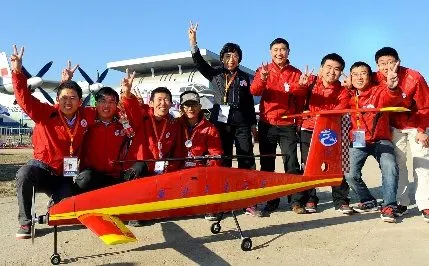
Second, the university is regarded as the birthplace of Chinese unmanned aviation. It was here that China's first serial production line for drones was built, later going into exports, and today it hosts the state key laboratory of special UAV technologies — the only one in the country. The drones that rolled past in columns at the military parades for the 60th and 90th anniversaries of the PLA and the 70th anniversary of the PRC were designed and assembled at this university.
Third, the State Key Laboratory of Solidification Processing, headed by Professor Huang Weidong, develops laser additive manufacturing of metal parts — it printed three-metre wing spars for the COMAC C919 passenger airliner. The same research school restores aero-engine blades using 3D printing. The university's marine field, in turn, relies on the state laboratory of torpedo guidance technologies — the only one in China.
The university's structure is built on three defence fields (aeronautics, astronautics and marine technology) and two supporting clusters: 3C (computer science, communications, automation) and 3M (mechanics, mechanical engineering, materials science), as the university itself calls them. In total NWPU has 27 schools and institutes, including:
The university also has schools of management and foreign languages, a School of Humanities, Economics and Law, and several natural science schools. Students with the highest academic results are trained at the experimental Honors College.
Bachelor's studies last 4 years, and there is one intake a year, for the autumn semester. Programmes taught in English include, for example, computer science and technology, electrical engineering and automation, mechanical engineering, aerospace engineering, biotechnology and business administration; those taught in Chinese include international trade, software engineering and materials science. To apply you will need a secondary school certificate with an average grade of at least 75%, a CSCA result or another recognised exam, and a language certificate: HSK 5 (180 points or more), IELTS 6.0+ or TOEFL 80+.
Master's studies last 2.5 years; full-time only, with an autumn intake only. Applicants need a bachelor's degree with an average grade of at least 75% (80% for CSC scholarship applicants), two recommendation letters from teachers and, at most engineering schools, a letter of consent from a supervisor. Doctoral programmes take 4 years. Applicants must be no older than 35 on 1 September of the year of admission; a master's degree, patents or research publications are required, as well as the mandatory consent of a supervisor.
| Level | Language and duration |
|---|---|
| Language courses | Chinese; from 1 year |
| Bachelor's Degree | English or Chinese; 4 years |
| Master's Degree | English or Chinese; 2.5 years |
| Doctoral (PhD) Programmes | English or Chinese; 4 years |
Before applying, check the 2026 HSK test schedule: an insufficient HSK level is the most common thing that holds up an application.
The application fee is paid when submitting documents and is non-refundable, whatever the admissions decision. Medical insurance is paid annually. After provisional admission a deposit is paid: for bachelor's students its amount depends on the scholarship level, while for master's and doctoral students it is fixed and counted towards fees at in-person registration. Everyday living costs in Xi’an are noticeably lower than in Beijing or Shanghai. Check the current amounts of all payments on the official NWPU website or with the university's International College.
International students live in the international student village on the Chang’an campus, where all their dormitories are located.
| Room type |
|---|
| Triple |
| Double |
| Single — mainly for doctoral students |
The accommodation fee depends on the room type; the university publishes current prices, so check them on the official website before moving in.
NWPU is on the official list of 306 universities that accept Chinese Government Scholarship holders through the China Scholarship Council. For the CSC Type A scholarship the university has its own institutional code — 10699; in addition, the CSC Type B track is open to master's and doctoral students, with an application deadline of 28 February 2026. Full CSC coverage includes tuition, on-campus accommodation and a monthly stipend.
The university also has its own scholarships. The NPU Presidential Scholarship has three categories: the most modest covers 50% of tuition, the most generous covers tuition, accommodation and a monthly stipend. Another is the Xi’an city scholarship linked to the Belt and Road Initiative, paid only in the first year of study. Current students can apply for the Shaanxi Provincial Scholarship and a named scholarship honouring the university's alumna Wu Yajun, founder of the property developer Longfor. Eligibility for any scholarship is reviewed every year based on academic performance.
NWPU has three campuses in China. The historic Youyi campus in Beilin District is compact, with academic buildings, staff housing and an affiliated school. Chang’an is more than three times larger; it is the main site for bachelor's studies, where most international students study. The third campus, Taicang, opened in 2021 on the border between Suzhou and Shanghai; it is designed for 10 schools and about 10,000 students, and its main fields are artificial intelligence, flexible electronics and business.
A distinctive feature of NWPU is its overseas branch: since October 2023 it has been operating in Almaty at Al-Farabi Kazakh National University. The agreement to open it was signed in May 2023 at the China–Central Asia Summit. The branch trains master's students in three fields — materials science, computer science, and information and communication engineering; the first intake comprised 14 students. Largely thanks to the branch and strong ties with the region, the international students on the main campus in Xi’an traditionally include many from Uzbekistan, Kazakhstan and Russia.
Xi’an, where the university is located, was the capital of thirteen Chinese dynasties and is also known as the city of the Terracotta Army. Today it has more than 13 million residents, over 60 universities and nine metro lines.
| University and Chinese name | Type | Main focus |
|---|---|---|
| Northwestern Polytechnical University (NWPU), 西北工业大学 | University, 985/211 | Aeronautics, astronautics and marine technology |
| Northwest University, 西北大学 | University, 211 | Geology, economics and humanities |
| Xi’an Jiaotong University, 西安交通大学 | University, 985/211 | Energy, electrical engineering and management |
| Xi’an Polytechnic University, 西安工程大学 | University | Textiles and fashion design; the only such university in western China |
The main trap: Northwest University and Northwestern Polytechnical University have very similar names, yet they are two separate universities with different profiles and separate admissions offices. NWPU is confused with Xi’an Jiaotong University (西安交通大学) because of their similar status — both are regarded as the city's leading technical universities. With Xi’an Polytechnic University it is the other way round: in English its name differs from Northwestern Polytechnical University by just one word, but the two universities' profiles do not overlap at all.
All these names refer to the same university, but they are correct to different degrees. The standard Russian form, meaning ‘North-Western Polytechnical University’, is used in embassy documents and is also the one adopted by Russian Wikipedia. A version written as one word and a colloquial short ‘North-Western Poly’ are unofficial variants that are best avoided in documents. A Russian version meaning ‘Polytechnical University of North-West China’ copies the English word order; formally it is not quite correct, although it does occur sometimes. The official international name is Northwestern Polytechnical University, as given on en.nwpu.edu.cn. The abbreviation NWPU is used by the THE, CWUR and EduRank rankings, while the university itself more often writes the short NPU in correspondence. 西工大 (Xigongda) is a student nickname made up of the first characters of the full Chinese name. The original Chinese name is 西北工业大学 (Xīběi Gōngyè Dàxué).
It is one of China's ‘Seven Sons of National Defence’, with a focus on aviation, astronautics and marine technology. The abbreviation NWPU became established in international rankings so that the university would not be confused with Northwestern Polytechnic University in California. In the International College's own documents, however, the university uses the short form NPU.
Yes. Some programmes at all three levels (bachelor's, master's and doctoral) are taught entirely in English, including aerospace engineering, mechanical engineering and computer science. Other fields, such as software engineering and materials science, are available only in Chinese.
Chinese-taught bachelor's programmes require HSK 5 with a score of 180 points or more; master's and doctoral programmes taught in Chinese require 200 points or more. For English-taught programmes a Chinese certificate is not compulsory, although it will be useful in everyday life on campus.
Yes, all three statuses are officially confirmed. The university joined Project 211 in 1995 and Project 985 in 2001, and it is represented in Double First-Class by three disciplines: materials science, mechanical engineering, and aeronautical and astronautical science and technology.
The price depends on the room type: triple, double or single. Current rates are published by the university and are worth checking on NWPU's official website.
Yes. The university is officially on the list of host institutions for the China Scholarship Council scholarship: its code for the Type A track is 10699, and Type B applications are accepted for master's and doctoral programmes. A full scholarship covers tuition and accommodation and includes a monthly allowance.
The International College prepares students for the HSK as part of its language courses and requires a confirmed level for admission to Chinese-taught programmes. It is best to check this year's HSK session dates in the official exam schedule.
The historic Youyi campus is at 127 Youyi West Road, Beilin District, Xi'an, Shaanxi Province (postcode 710072). Most international bachelor's students study at the Chang'an campus, located in Xi'an's Chang'an District. The city has its own international airport with direct flights to China's major cities.
Their Russian names are almost identical, but the universities are not connected. NWPU specialises in aviation, astronautics and marine technology and is part of Project 985. Northwest University is a classical comprehensive Project 211 university whose strengths are geology, economics and the humanities.
Both universities are in Xi'an and part of Project 985. However, Xi'an Jiaotong University has historically been strongest in energy, electrical engineering and management and belongs to the family of Jiaotong universities, whereas NWPU concentrates on three defence fields and is one of the ‘Seven Sons of National Defence’.
You will need a secondary school certificate together with a transcript of grades, a CSCA result or the result of another recognised exam, a language certificate (if the programme requires one), a police clearance certificate, a bank statement confirming sufficient funds and a medical certificate on the university's form; check the minimum account balance in NWPU's requirements.
Xi'an (西安) is the ancient capital of 13 dynasties, the city of the Terracotta Army and the starting point of the Great Silk Road. Today it is a major centre of education, with more than 60 universities, and it also has a developed aerospace industry.
Xi'an attracts students with its combination of rich history, moderate prices and good education. The city has strong universities (Xi'an Jiaotong University), a metro with 9 lines, support programmes for international students and countless historical sites for leisure. For parents, it matters that Xi'an is safe and has developed infrastructure, an international airport and good healthcare; the campuses are well organised, dormitories are guarded, and life here is cheaper than in first-tier cities — with no loss in the quality of education.
You work with Nihao Study specialists. They will help you put together a portfolio and a set of documents, draw up a study plan and choose a university or college and a specialty that genuinely interest you.
We take care of every stage of admission, from choosing to enrolment
We will gather, prepare, certify and send your documents to the institution
We will show the admissions committee your strengths
We run training sessions and courses so you can prepare with more confidence
We will help you settle in at the start of your studies and keep moving forward
Nihao Study specialists select universities and colleges that match the applicant's goals and means. We make sure the teachers are practitioners and that the knowledge will be useful in your profession.
We examine curricula, talk to students and teachers and look at which specialties employers need, and use this information to select options for the applicant.
Advisers guide the applicant from the first consultation to enrolment, help build a plan and spot mistakes in time that could get in the way.
The cost of our support depends on the programme and the partner university; you'll get an exact quote after a free consultation.
Get a quoteA free 15-minute consultation: together we will choose a university or college and a programme that suit your goals and budget.
Apply with peace of mind: we handle the documents, deadlines and correspondence with admissions committees, and you save time and energy.
Don't want to wait for a call? Message us in the chat.
Message us in chat 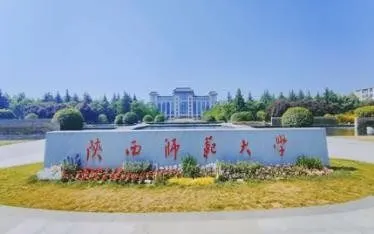
University · Xi'an
Language courses · Bachelor's Degree · Master's Degree