- Language courses
- English, Chinese
- Bachelor's Degree
- English, Chinese
- Master's Degree
- English, Chinese
- Accommodation from 4 000 ¥/year
西安外事学院
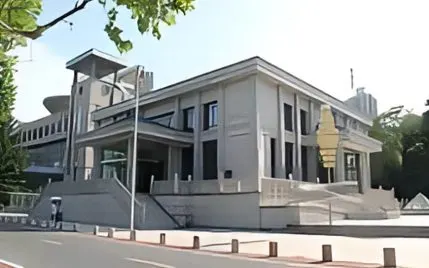
Xi'an International University accepts international students on programmes in the following fields: education, humanities. Choose the level and programme that suit your goals.
Chinese language study at the university — from a few weeks to a year or longer. Suitable for those starting from scratch or preparing for the HSK before entering a main programme.
self-funded · language programme
The first level of higher education: usually four years of study, specialised subjects, internships and a graduation thesis. It opens the way to working in your field and to a master's degree.
self-funded
Advanced study after a bachelor's degree: research, applied projects and internships. It helps you become an expert in your chosen field and broaden your career opportunities.
self-funded
Xi'an International University is located in Xi'an. Nihao Study consultants keep track of the deadlines and admission requirements of this university, and you can always check the most accurate and up-to-date information on its official website. In university rankings, it is ranked 583 in China and 6158 worldwide.
Come for a face-to-face meeting: together we will go through the requirements, deadlines, documents and study options that suit you.

At the meeting we will look at your situation, tell you which documents to prepare and by when, talk about possible programmes and help you decide on the next step.
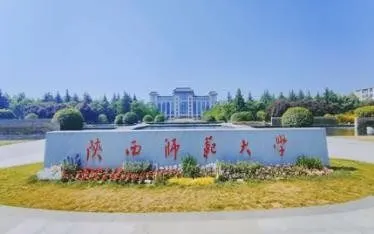
Xi'an International University (XAIU, 西安外事学院) is a private comprehensive university in Xi'an, the capital of Shaanxi Province; its campus is in Yanta District.
This is important to understand from the outset: unlike a number of neighbouring Xi'an universities with similar names, XAIU is not a public but a private non-profit institution, and it only gained the right to award bachelor's degrees independently in 2009. In English it is easily mistaken for the public Xi'an International Studies University (XISU).
Below are the university's real status, its rankings and strong fields, the situation with the CSC scholarship, and tips on how not to confuse XAIU with its public namesake when applying.
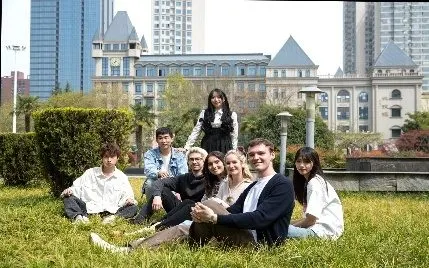
To start with, the overall picture according to the university's official statistics.
| Item | Data |
|---|---|
| Founded | 1992 |
| Bachelor's-level university status (本科) | since 2005; authorised to award bachelor's degrees since 2009 |
| Ownership | private non-profit (民办非营利) |
| Number of students | 28,605 full-time students, including 20,003 bachelor's students (as of September 2024) |
| Faculty and staff | 1700 |
| Students per teacher | 12 to 1 |
| Colleges (二级学院) | 8 |
| Fields of study | 67 |
| Campus area | 1.26 sq km (about 126 ha) |
The story begins in 1992, when a small school was set up in Xi'an to train service staff for foreign affairs (西安外事服务培训学院). In 1996 the Shaanxi Provincial Department of Education authorised it to award diplomas on the basis of examinations — one of the first private educational institutions in the region to receive this right. In May 2000, by decision of the Shaanxi Provincial Government, the school became a regular vocational college. In March 2005 the Ministry of Education of the PRC approved its new name — 西安外事学院, Xi'an International University — and its status as a bachelor's-level institution. Four years after it admitted its first bachelor's students, in June 2009, it began awarding bachelor's degrees itself.
The next ten years were spent building its own specialised institutes. In May 2009 the Institute of Entrepreneurship (创业学院) opened — the first such unit in the history of China's private universities — and since 2010 the university has been preparing students for a master's programme in entrepreneurship and business administration. In 2014 the Qifang Academy (七方书院) was opened: it combines student development work, preparation for master's admission and general liberal arts education. In 2017 a sports centre of over 50,000 sq m was built on campus; it is one of the largest multi-purpose sports complexes in Northwest China. Since January 2020 the Laozi Institute of Traditional Chinese Culture has been operating, with seven departments: calligraphy, wushu, Chinese painting and music, tea art, chess and Chinese studies.
The university has been recognised by both academic institutions and the media. In 2009 Harvard Business School made XAIU's story part of its teaching case on how China's private universities grow. In 2013 the Xinhua news agency gave the university an award for creativity in management, and in 2015 XAIU took first place in the ranking of private universities compiled by the Chinese Universities Alumni Association (CUAA). In 2016 the Ministry of Education named it among the 50 universities in China with the best entrepreneurship education. In 2018 XAIU became one of three universities in Shaanxi that the provincial Department of Education included in its programme for building first-class colleges. In 2019 a university programme preserving the tradition of guqin playing was included in the national list of the best programmes for preserving China's cultural heritage.
This question causes constant confusion, so let us look at it in detail. The official Chinese name uses not 大学 ("university") but 学院 ("institute" or "college"), so formally XAIU is closer to an institute than to a classic university. However, since 2005 it has been officially recognised as a higher education institution with bachelor's programmes, and since 2009, by decision of the Ministry of Education of the PRC, it has awarded bachelor's degrees itself — which is why the standard English name (and its Russian equivalent) quite reasonably includes the word "university".
Much more important is the form of ownership. XAIU is an independent private institution (民办): it is funded by tuition fees and private donations, not from the state budget. Russian-language texts sometimes wrongly call it a public university, but the Shaanxi Provincial Department of Education only recognises and accredits it, without funding it directly. Everything else follows from this. Projects 985 and 211, like the Double First-Class programme (双一流), are open only to public research universities, so XAIU is not part of them. For the same reason it is not on the official list of 306 universities that admit international students on the government CSC scholarship — unlike its near-namesake in English, the public Xi'an International Studies University, which is number 268 on that list. This is no reason to rule out XAIU, but you should plan your budget on the basis of paying your own tuition rather than receiving a scholarship.
According to the global aggregator EduRank for 2026, Xi'an International University ranks 9819th in the world (out of 14,131 institutions on the list), 3881st in Asia and 706th among 960 Chinese universities. In Xi'an itself, home to dozens of universities, it is 21st of 31. uniRank gives similar figures: 531st in China and 6777th in the world.
| Ranking | Position |
|---|---|
| EduRank, world | 9819th of 14,131 |
| EduRank, China | 706th of 960 |
| EduRank, Xi'an | 21st of 31 |
| uniRank, China | 531st |
| 软科 (ShanghaiRanking), private universities in China, 2025 | 40th (54th in 2022) |
These figures need to be understood correctly. Global aggregators such as EduRank largely count research publications and citations, and on these measures a young private applied university inevitably lags behind the large public research universities nearby. On the other hand, the specialised ranking of China's private universities by 软科 (ShanghaiRanking) shows a steady positive trend: 54th in 2022, 41st in 2023, 46th in 2024 and 40th in 2025. In the same 软科 system, two XAIU programmes were placed in national subject rankings: acting (39th place, grade B+) and radio and television directing (78th place, grade B). This confirms that creative programmes are the university's strong point.
First, among the country's private universities, XAIU is a pioneer in entrepreneurship education. The Institute of Entrepreneurship, founded in 2009, was the first unit of its kind in the history of private higher education in China, and in 2016 the Ministry of Education placed XAIU among the top 50 universities in the country with the best practice in innovation and entrepreneurship education.
Second, despite its private status, the university places a strong emphasis on international activity. XAIU was one of the first private universities in Shaanxi to gain the right to run joint educational programmes and teach international students. The university cooperates with more than 100 universities worldwide and runs joint programmes with partners from the UK, the USA, Canada, France, Japan, Korea, Thailand and Russia. Over the years more than 2000 international students have studied here, mainly on Chinese language courses; XAIU is also a founding member of the Association for Global Development of Universities and Colleges (AGAUC). Today the recruitment and support of international students is handled by the Institute of International Cooperation, whose students have included young people from Australia, the USA, the UK, Spain, France, the Netherlands, Belgium, Hungary, Russia, Japan and Korea.
Third, the university has a recognisable cultural niche. The Qifang (2014) and Laozi (2020) institutes focus on traditional Chinese education — from calligraphy and the guqin to wushu and the tea ceremony. A university programme devoted to the guqin and preserving the tradition of playing it was included in 2019 in the national list of the best university programmes safeguarding China's cultural heritage. The picture is completed by a large sports centre, built in 2017 and among the largest multi-purpose sports complexes in Northwest China.
XAIU's academic structure comprises 8 colleges (二级学院) and 67 majors in management, economics, the humanities, medicine, engineering, agriculture and the arts.
At the College of Business you can study accounting, finance, marketing, business administration, e-commerce, human resource management, insurance, hotel management, tourism, transport management, and international business and international economics. The College of Engineering offers electronic engineering and automation, computer science and computer engineering, construction technology, telecommunications engineering, engineering management and technical maintenance. Future pharmacists, nurses, healthcare and medical technology specialists are trained at a separate College of Medical Sciences.
The College of Humanities covers journalism, radio and television journalism, Chinese philology, literature, law, communication, advertising and public relations, design, architectural and environmental design, landscape architecture, film production and fine arts. The College of Foreign Languages teaches English, French and Japanese. The Teaching Chinese as a Foreign Language programme (汉语国际教育) and the teaching of Chinese language and culture to international students are run by the Institute of International Cooperation, which also runs the language majors — Japanese, French, Russian and Korean. The university's most notable national results have come in its creative programmes: according to 软科, acting ranked 39th in the national subject ranking with a grade of B+, and radio and television directing ranked 78th with a grade of B.
International students at XAIU have historically studied mainly on language programmes: most of the university's more than 2000 international students were learning Chinese. Their recruitment and support are handled by the Institute of International Cooperation, which works in small groups and supports each student individually. There is usually no formal HSK requirement for admission to language courses; specific admission terms should be checked with the university, and HSK session dates against the current exam schedule.
Degree study at XAIU takes place at two levels. The first is a full 4-year bachelor's degree (本科); the university gained this right in 2009. The second is shorter vocational programmes at 专科 level lasting 2 or 3 years. The general admission rules require applicants to be at least 18 years old and to have a secondary school certificate and a medical certificate; selection follows the requirements of the specific programme. These programmes are taught in Chinese, and HSK requirements and document packages differ between majors, so it is best to check the minimum threshold and the exact list of documents directly with the Institute of International Cooperation.
For applicants admitted through the Chinese admission system, fees are set according to standards agreed with the Shaanxi Provincial Department of Education and the provincial Development and Reform Commission, and are divided into nine categories. For self-funded international students, the cost of a specific programme is set by the Institute of International Cooperation, and in joint international programmes the overseas stage is paid at the host university's rates. Check the current amounts on the university's official website or directly with the Institute of International Cooperation before applying.
The XAIU campus covers 1.26 sq km (about 126 hectares). Since 2017 it has had its own sports centre of more than 50,000 sq m, one of the largest multi-purpose sports complexes in North-West China. There is also a university library. In the 2025 student satisfaction survey conducted by 软科 (ShanghaiRanking), several aspects of the campus were placed in the top 5% of universities nationwide: sports facilities, campus grounds, library resources and the availability of study spaces. The university sets dormitory fees for international students according to the building and room type, so it is best to check them in advance with the Institute of International Cooperation.
Xi'an is the ancient capital of thirteen dynasties and the city where the Terracotta Army was discovered. Among China's major student cities it remains one of the most affordable places to live; it has an extensive metro system and dozens of other universities.
The Chinese Government Scholarship (CSC), the main route to studying in China for free, is not available at XAIU. The university is not on the official list of 306 universities that receive this scholarship, whereas Xi'an's public universities are, for example Xi'an International Studies University (number 268) or Xi'an Jiaotong University (number 70). The reason lies in how the system works: CSC places are allocated through public universities, and XAIU is private.
If you have already decided on XAIU, the realistic option is to budget for self-funded study. That said, the university is developing its own support schemes for high-achieving students and for winners of industry awards in entrepreneurship and the creative fields; the exact terms and amounts of these internal scholarships are confirmed at the time of application.
The words "Xi'an" and "international" appear far too often in the names of local universities, and this is exactly where Russian-speaking applicants most often get confused.
| University and Chinese name | Abbreviation | Status and profile |
|---|---|---|
| Xi'an International University (the subject of this page), 西安外事学院 | XAIU | private, multidisciplinary, not in Project 211 or on the CSC list |
| Xi'an International Studies University, 西安外国语大学 | XISU | public, languages focus, offers doctoral programmes, on the CSC list |
| Xi'an Fanyi University, 西安翻译学院 | none | private, languages and translation |
| Xi'an University, 西安文理学院 | XAU | public, municipal, humanities and teacher-training focus |
| Xi’an Jiaotong University, 西安交通大学 | XJTU | public, Projects 985 and 211, C9 League |
| Northwest University, 西北大学 | NWU | public, comprehensive, Project 211 |
The quickest way to tell these universities apart is by two features: whether the university is private or public, and whether it is on the list of CSC scholarship recipients. Only two in the table are private: XAIU and Xi'an Fanyi University. The greatest confusion in English arises with the public Xi'an International Studies University, as the two names sound almost identical. The large research universities (Xi'an Jiaotong University, Northwest University and Northwestern Polytechnical University) belong to an entirely different category in terms of budget and breadth of research.
There are seven forms in all. The main standard Russian rendering is the one that most closely matches the official English name. A more literal Russian translation and one meaning "Institute of Foreign Affairs" (which is incorrect) are close to the original in meaning but are not considered standard. A Russian version that copies the English word order is formally wrong, although it does sometimes appear in texts. Xi'an International University is the university's official international name, and XAIU is the abbreviation used in correspondence, rankings and applications. 外事 (Wàishì) is the students' Chinese abbreviation, literally "foreign affairs". The full original Chinese name is 西安外事学院 (Xī'ān Wàishì Xuéyuàn).
The abbreviation XAIU stands for Xi'an International University (西安外事学院). It is a private university in Xi'an, the capital of Shaanxi province, with its campus in Yanta District. It was founded in 1992, and today its campus covers 1.26 sq km.
No, they are two completely different institutions whose English names sound almost the same. XAIU (西安外事学院) is a private multidisciplinary university without any of the statuses held by public universities. XISU, Xi'an International Studies University (西安外国语大学), is a public languages university with doctoral programmes and is on the CSC list. When choosing a university, always check the name in Chinese characters, not just the Russian or English translation.
Private. The university is funded by tuition fees and private donations; the Shaanxi Provincial Department of Education accredits it but does not fund it directly from the budget. Calling XAIU a public university is a common mistake in Russian-language sources.
No. Only public research universities receive these statuses, and XAIU is a private, applied-focus university. However, since 2015 it has consistently stayed near the top of alternative rankings of China's private universities.
No: the university is not on the official list of 306 universities that award the Chinese Government Scholarship (CSC). To compare XAIU with Xi'an's public universities, it is worth studying the CSC rules and the list of participating public universities separately.
There is usually no formal HSK threshold for the Chinese language courses. Bachelor's programmes are taught in Chinese, so you should check the minimum HSK level for your subject with the university, and the dates of upcoming test sessions in the current HSK schedule.
Judging by the 软科 (ShanghaiRanking) subject ranking, the creative programmes look best: Acting received a B+ grade and 39th place nationally, and Radio and Television Directing a B grade and 78th place. The university also has a long-standing reputation for entrepreneurship education: back in 2009 it opened an Institute of Entrepreneurship, the first such unit among China's private universities.
Their names look similar in Russian, but their ownership is different. XAIU (西安外事学院) is a private university without the statuses of a public university. XAU (西安文理学院), Xi'an University, is a municipal public university with a humanities and teacher-training focus; it is not part of Projects 985 or 211 either, but it is funded by the city and the province.
The basic set: a medical certificate, police clearance certificate, international passport and school leaving certificate (or diploma with transcript); for applicants under 18, notarised parental consent as well. It is best to confirm the exact list for your programme in advance with the Institute of International Cooperation.
Xi'an (西安) is the ancient capital of 13 dynasties, the city of the Terracotta Army and the starting point of the Great Silk Road. Today it is a major centre of education, with more than 60 universities, and it also has a developed aerospace industry.
Xi'an attracts students with its combination of rich history, moderate prices and good education. The city has strong universities (Xi'an Jiaotong University), a metro with 9 lines, support programmes for international students and countless historical sites for leisure. For parents, it matters that Xi'an is safe and has developed infrastructure, an international airport and good healthcare; the campuses are well organised, dormitories are guarded, and life here is cheaper than in first-tier cities — with no loss in the quality of education.
You work with Nihao Study specialists. They will help you put together a portfolio and a set of documents, draw up a study plan and choose a university or college and a specialty that genuinely interest you.
We take care of every stage of admission, from choosing to enrolment
We will gather, prepare, certify and send your documents to the institution
We will show the admissions committee your strengths
We run training sessions and courses so you can prepare with more confidence
We will help you settle in at the start of your studies and keep moving forward
Nihao Study specialists select universities and colleges that match the applicant's goals and means. We make sure the teachers are practitioners and that the knowledge will be useful in your profession.
We examine curricula, talk to students and teachers and look at which specialties employers need, and use this information to select options for the applicant.
Advisers guide the applicant from the first consultation to enrolment, help build a plan and spot mistakes in time that could get in the way.
The cost of our support depends on the programme and the partner university; you'll get an exact quote after a free consultation.
Get a quoteA free 15-minute consultation: together we will choose a university or college and a programme that suit your goals and budget.
Apply with peace of mind: we handle the documents, deadlines and correspondence with admissions committees, and you save time and energy.
Don't want to wait for a call? Message us in the chat.
Message us in chat 
University · Xi'an
Language courses · Bachelor's Degree · Master's Degree