- Language courses
- English, Chinese
- Bachelor's Degree
- English, Chinese
- Master's Degree
- English, Chinese
- Accommodation from 4 000 ¥/year
西安科技大学
Xi'an University of Science and Technology accepts international students on programmes in the following fields: engineering, arts. Choose the level and programme that suit your goals.
Chinese language study at the university — from a few weeks to a year or longer. Suitable for those starting from scratch or preparing for the HSK before entering a main programme.
Check upcoming application deadlines for this level with your Nihao Study adviser.
All programmes at this level →Xi'an University of Science and Technology is located in Xi'an. Nihao Study consultants keep track of the deadlines and admission requirements of this university, and you can always check the most accurate and up-to-date information on its official website.
Come for a face-to-face meeting: together we will go through the requirements, deadlines, documents and study options that suit you.

At the meeting we will look at your situation, tell you which documents to prepare and by when, talk about possible programmes and help you decide on the next step.
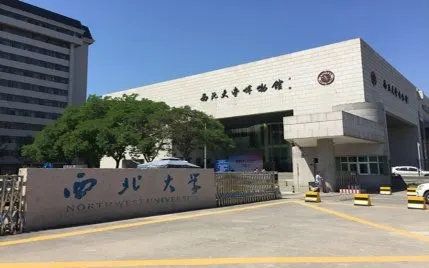
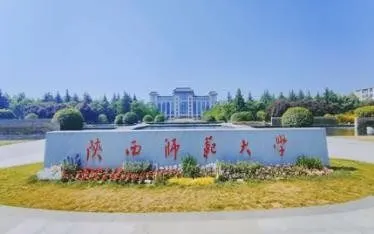
Xi'an University of Science and Technology (XUST, 西安科技大学, Xī'ān Kējì Dàxué) is a public university of Shaanxi Province, located in its capital, Xi'an. Russian-language sources render the name in several ways, although one form is considered standard. Chinese students use the short form 西科大 (Xīkēdà), and in international rankings the university appears as XUST.
XUST cannot be called an ordinary regional university. Its roots lie in one of China's oldest mining engineering schools, and its history dates back to 1895. Today the university is jointly administered by the Shaanxi provincial government and the Ministry of Emergency Management of China. In addition, XUST is recognised as a candidate for the national Double First-Class (双一流) project and takes part in the national programme to strengthen the basic capacity of universities in central and western China.
Below are the essentials for a 2026 applicant: language of instruction, scholarships, XUST's strengths in world rankings, how it differs from half a dozen Xi'an universities with similar names, and the application procedure.
First, a brief summary of the key figures. The data come from the university's official sources and the independent EduRank ranking.
| Item | Data |
|---|---|
| Year founded | 1958 (roots going back to 1895) |
| Current name | since 2003, Chinese: 西安科技大学 |
| Status | public, jointly administered by the ministry and the province |
| Campuses | Lintong and Yanta, about 1.21 million sq m |
| Full-time students | about 27,000 |
| International students | more than 400 from about 29 countries |
| Teaching staff | more than 1600 (about 2300 staff in total) |
| Schools and faculties | 21 |
| Bachelor's programmes | about 60 |
| Doctoral programmes in level 1 disciplines | 8, plus 7 postdoctoral research centres |
| Disciplines in the ESI top 1% | 6 |
| Position in China (EduRank) | 217th of 960 |
XUST traces its history back to 1895, when a department of metallurgy and mining was set up at Peiyang University, one of the first engineering units of its kind in China. In 1938 the mining school became part of the Northwest Institute of Engineering. From 1957 it was part of Xi'an Jiaotong University.
The university has existed as an independent institution since 1958, when the mining programme was spun off as the separate Xi'an Mining Institute (西安矿业学院). In 1999 the institute was renamed Xi'an Institute of Science and Technology. It has held its current status and name, Xi'an University of Science and Technology, since 2003. This explains the XUST profile that it retains to this day: mining, the coal industry and safety.
Today XUST is jointly administered by the Shaanxi provincial government and the Ministry of Emergency Management of the PRC. The university positions itself as a base for training personnel and conducting research in energy and industrial safety, a role that matters for western China. It takes part in the national programme for training outstanding engineers and in a project aimed at strengthening the basic capacity of universities in the central and western regions of the country.
In overall international rankings XUST comes across as a solid technical university, and in its core field it is among the world's best. As of March 2026, the independent aggregator EduRank places it 2754th in the world among more than 14,000 universities, 217th among almost a thousand universities in China and 8th among 31 universities in Xi'an.
The most telling indicator relates to its specialisation. In Mining Engineering, XUST is 8th in the world among 1031 universities in the EduRank ranking, an example of how a narrow specialisation can raise a regional university to world level. Its reputation is confirmed by the national assessment too: in the fourth round of China's subject evaluation, Safety Science and Engineering received category A, the highest in its group.
| Ranking / assessment | Position |
|---|---|
| EduRank, world | 2754th of 14,131 |
| EduRank, China | 217th of 960 |
| EduRank, Xi'an | 8th of 31 |
| Mining engineering, world | 8th of 1031 |
| National assessment, safety | category A |
| Disciplines in the ESI top 1% | 6 |
According to the university, six XUST subject areas are in the top 1% of the global ESI citation ranking: chemistry, materials science, engineering, ecology and environmental science, earth sciences and agricultural sciences.
The university's reputation rests on three closely interconnected fields.
The first field is mining and energy. Historically, XUST has been linked to the coal industry. Its research base includes 38 research platforms at provincial and ministerial-sector level, including the coal industry's key laboratory for mining. It is this field that took the university to 8th place in the world ranking for Mining Engineering.
The second is industrial safety. Its proximity to the Ministry of Emergency Management of the PRC is naturally reflected in its academic results: the Safety discipline received category A in the national assessment. For applicants, this means that an XUST degree in this field is highly valued on the job market.
The third is earth sciences and environmental engineering. Thanks to geology, geodesy, ecology and materials science, the university is in the ESI top 1% in several subject areas at once. Since 2011 more than 7900 research projects have been carried out here, and the university has received five State Science and Technology Progress Awards.
In its structure, XUST is a classic polytechnic university. It has 21 schools and faculties plus a separate graduate school; together they offer about 60 bachelor's programmes. Doctoral degrees are awarded in 8 broad disciplines and master's degrees in 27; there are also 7 postdoctoral research centres.
The fields can conveniently be divided into several groups. The core of the university's profile is mining, mineral resource development and technosphere safety. The second group includes civil engineering, geology, geodesy and environmental protection. The third group is energy, electrical engineering, mechanical engineering and automation. Computer science, computer engineering and telecommunications stand somewhat apart, as do chemistry and materials science. Economics, management, law and Chinese philology form a humanities and economics block designed for both Chinese and international students.
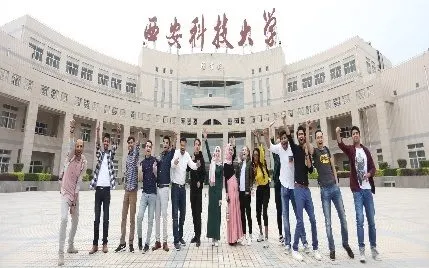
Among international applicants, the most popular subjects have traditionally been computer science and engineering, civil engineering, mining, ecology, technosphere safety, and Chinese language and literature. XUST has long accepted international students: there have already been over 400 from about 29 countries. The university's partners include almost 60 universities from more than 20 countries.
The university provides international students with dormitory places right on campus. According to the XUST international student admissions office, there are en-suite single rooms and double rooms. The price depends on the room type, and in addition a refundable deposit is paid once. It is best to check the current cost of accommodation on the university's official website.
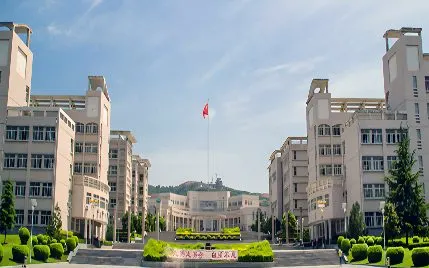
Each of the university's two campuses has its own atmosphere. Yanta is in the Xi'an district of the same name, near the Big Wild Goose Pagoda, one of the city's main symbols. The Lintong campus is about ten minutes from the world-famous Terracotta Army and the Huaqing Hot Springs. Xi'an, once the capital of several Chinese dynasties, was the eastern end of the Great Silk Road; today it has a population of about 13 million, so student life here combines a historic setting with the scale of a metropolis.
International students entering XUST have several realistic ways to reduce their tuition fees or be exempted from them altogether.
XUST's own scholarship for international students is awarded competitively and provides a tuition fee waiver. There are three full waivers at bachelor's level, two at master's level and two at doctoral level; each comes with an annual cash allowance. Those with a good command of Chinese are entitled to an additional bonus, awarded to holders of HSK 5 and HSK 6 certificates.
The second option is the Xi'an City scholarship for international students linked to the Belt and Road Initiative. For bachelor's students it covers tuition and dormitory fees and also provides a monthly allowance. Master's and doctoral students are exempted from tuition fees and receive an annual payment, while language programme students are entitled to a one-off payment. There are age limits: up to 25 for bachelor's students, up to 30 for master's students and up to 35 for doctoral students.
Finally, the main government route is the Chinese Government Scholarship (CSC). Full coverage means a tuition fee waiver, free dormitory accommodation and monthly payments. It is best to find out in advance whether XUST has a CSC quota for the academic year you need.
For international students, the path to XUST follows a clear sequence of steps. It is easiest to apply online through the official admissions system on the university's website.
Xi'an is home to a whole group of technical universities whose Russian and English names are almost identical, and XUST is confused with the others more often than any of them. The easiest mix-up is between 西安科技大学 (XUST) and Shaanxi University of Science and Technology (陕西科技大学): in Russian the names sound almost the same, but they are different universities.
| University (Chinese name) | Abbreviation | Main focus |
|---|---|---|
| Xi'an University of Science and Technology, 西安科技大学 (the subject of this page) | XUST | safety, mining, energy |
| Xi'an University of Technology, 西安理工大学 | XUT | water resources, hydropower, mechanical engineering |
| Xi'an Technological University, 西安工业大学 | XATU | instrument engineering and defence technology |
| Xi’an Polytechnic University, 西安工程大学 | XPU | design, textiles, light industry |
| Xidian University, 西安电子科技大学 | XDU | IT, telecommunications, electronics (Project 211) |
| Xi'an University of Architecture and Technology, 西安建筑科技大学 | XAUAT | construction, architecture, metallurgy |
| Shaanxi University of Science and Technology, 陕西科技大学 | SUST | pulp and paper and light industry |
The main difference is simple: the specialist university for mining and industrial safety that grew out of a mining institute is XUST, Xi'an University of Science and Technology (西安科技大学). If you want electronics and telecommunications, go to Xidian University (XDU); if you want aircraft engineering and defence technology, consider Northwestern Polytechnical University.
There are seven forms in all. The standard Russian rendering is a direct equivalent of "Xi'an University of Science and Technology": it is used by Russian-language reference works and matches the university's official website. Variant Russian translations (along the lines of "University of Science and Engineering" or "Scientific and Technical University") and a misspelling of "Xi'an" are common variants and typos: they are understandable but not standard. A Russian version that copies the English word order also occurs but is formally less correct. Xi'an University of Science and Technology is the official international name. The abbreviation XUST is used in rankings and business correspondence; it is often mixed up with XUT, XATU and XAUAT, the abbreviations of neighbouring universities. 西科大 (Xīkēdà) is how Chinese students abbreviate the name. 西安科技大学 (Xī'ān Kējì Dàxué) is the original Chinese name.
The abbreviation XUST stands for a public technical university, Xi'an University of Science and Technology. It is in Xi'an, the capital of Shaanxi province. The Yanta campus is within the city near the Big Wild Goose Pagoda, and the Lintong campus is close to the Terracotta Army. The main address of the admissions office: 58 Yanta Road, postcode 710054.
Degree programmes at XUST are taught in Chinese, so English alone is not enough for admission. You can start with the language programme, which accepts students without an HSK certificate, and then move on to a bachelor's or master's programme.
Bachelor's programmes require HSK 4 or above, and master's and doctoral programmes HSK 5 or above. No HSK certificate is required for the language and foundation programmes.
Strictly speaking, no. XUST is not part of Projects 985 and 211 and is not a full participant in the "Double First-Class" programme. Officially it is listed as a candidate for the programme (双一流培育), and it is also included in the national programme that develops the capacity of universities in the west of the country. At the same time, its core Safety discipline has received the highest national category, A.
The price depends on the room type; in addition to the accommodation fee, a refundable deposit is paid and insurance is arranged. It is best to check the current terms on the university's official website.
Yes, there are several options. Winners of the competition for the university's own scholarship are fully exempted from tuition fees and receive a cash payment. The Xi'an City Belt and Road scholarship covers tuition and dormitory fees for bachelor's students, plus a monthly allowance. Another option is the Chinese Government Scholarship (CSC).
No. They are two independent universities whose Russian names sound almost identical. Xi'an University of Science and Technology (西安科技大学, XUST), the subject of this page, specialises in mining and safety. SUST, Shaanxi University of Science and Technology (陕西科技大学), is a separate university that is strong in light industry and in the pulp and paper sector. When choosing a university, always check its name in Chinese characters and its abbreviation.
XUST specialises in mining, safety and energy. Xi'an University of Technology (西安理工大学, XUT) is known for hydropower, water resources and mechanical engineering. Xidian University (XDU) is a Project 211 university focused on electronics, telecommunications and information technology. In other words, the names are similar but the profiles are completely different.
The basic set includes an international passport, school certificate or diploma with transcript, medical certificate, police clearance certificate, an HSK certificate for degree programmes, and notarised parental consent for applicants under 18. Enrolment is for September. The language programme accepts applications until 20 April, bachelor's programmes until 15 April, and master's and doctoral programmes approximately from 1 March to 1 April.
XUST's greatest strengths are mining (8th in the world according to EduRank), industrial safety (national category A) and earth sciences. As many as six of the university's subject areas are in the ESI top 1%. This makes an XUST degree particularly useful for those building a career in energy and the extractive industries.
Xi'an (西安) is the ancient capital of 13 dynasties, the city of the Terracotta Army and the starting point of the Great Silk Road. Today it is a major centre of education, with more than 60 universities, and it also has a developed aerospace industry.
Xi'an attracts students with its combination of rich history, moderate prices and good education. The city has strong universities (Xi'an Jiaotong University), a metro with 9 lines, support programmes for international students and countless historical sites for leisure. For parents, it matters that Xi'an is safe and has developed infrastructure, an international airport and good healthcare; the campuses are well organised, dormitories are guarded, and life here is cheaper than in first-tier cities — with no loss in the quality of education.
You work with Nihao Study specialists. They will help you put together a portfolio and a set of documents, draw up a study plan and choose a university or college and a specialty that genuinely interest you.
We take care of every stage of admission, from choosing to enrolment
We will gather, prepare, certify and send your documents to the institution
We will show the admissions committee your strengths
We run training sessions and courses so you can prepare with more confidence
We will help you settle in at the start of your studies and keep moving forward
Nihao Study specialists select universities and colleges that match the applicant's goals and means. We make sure the teachers are practitioners and that the knowledge will be useful in your profession.
We examine curricula, talk to students and teachers and look at which specialties employers need, and use this information to select options for the applicant.
Advisers guide the applicant from the first consultation to enrolment, help build a plan and spot mistakes in time that could get in the way.
The cost of our support depends on the programme and the partner university; you'll get an exact quote after a free consultation.
Get a quoteA free 15-minute consultation: together we will choose a university or college and a programme that suit your goals and budget.
Apply with peace of mind: we handle the documents, deadlines and correspondence with admissions committees, and you save time and energy.
Don't want to wait for a call? Message us in the chat.
Message us in chat 
University · Xi'an
Language courses · Bachelor's Degree · Master's Degree