- Language courses
- English, Chinese
- Bachelor's Degree
- English, Chinese
- Master's Degree
- English, Chinese
- Doctoral (PhD) Programmes
- English, Chinese
- Accommodation from 1 000 ¥/month
TJU · 天津大学
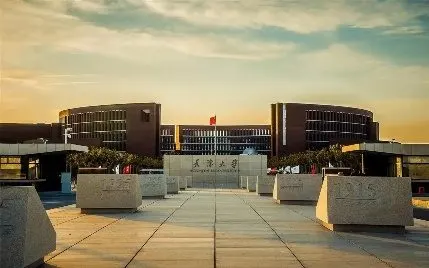
Tianjin University accepts international students on programmes in the following fields: business, engineering, medicine, education, law, economics. Choose the level and programme that suit your goals.
Chinese language study at the university — from a few weeks to a year or longer. Suitable for those starting from scratch or preparing for the HSK before entering a main programme.
self-funded · language programme
Cost: 13 800 ¥/year
Foundation programme: language and core subjects before a bachelor's degree. It helps you strengthen your knowledge and get used to studying in China before the main programme begins.
self-funded · language programme
The first level of higher education: usually four years of study, specialised subjects, internships and a graduation thesis. It opens the way to working in your field and to a master's degree.
self-funded
Advanced study after a bachelor's degree: research, applied projects and internships. It helps you become an expert in your chosen field and broaden your career opportunities.
self-funded
Tianjin University is located in Tianjin. Nihao Study consultants keep track of the deadlines and admission requirements of this university, and you can always check the most accurate and up-to-date information on its official website. In university rankings, it is ranked 18 in China and 352 worldwide.
Come for a face-to-face meeting: together we will go through the requirements, deadlines, documents and study options that suit you.

At the meeting we will look at your situation, tell you which documents to prepare and by when, talk about possible programmes and help you decide on the next step.
Tianjin University (TJU, 天津大学, Tiānjīn Dàxué) is considered the oldest modern university in China. Its history began on 2 October 1895 with Peiyang University (北洋大学堂), regarded as the country's first educational institution where higher education was structured as a sequential four-year programme on the European and North American model. In 2025 the university celebrated its 130th anniversary, a milestone few Chinese universities can claim. Today TJU is a public research university in Tianjin, a municipality directly under the central government; it holds Project 985, Project 211 and Double First-Class (双一流) status.
In Russian the name has several variants besides the standard one, including some common misspellings. Chinese students call it 天大 (Tiānda) for short, while rankings, official letterheads and international correspondence almost always use TJU. The university received its current name in 1951, after merging with Hebei Institute of Technology. Before that it was renamed several times: in 1895 it opened as 北洋大学堂, and in 1946 it was called 国立北洋大学; this period also included the war years from 1938 to 1946, when the campus was evacuated to the north-west of the country.
This Nihao Study overview covers TJU's ranking positions, HSK requirements, CSC scholarship conditions, accommodation and a step-by-step admission procedure. A separate section is devoted to six Tianjin universities and one Shanghai university that are most often confused with TJU because of a similar name or abbreviation.

| Indicator | Value | Notes |
|---|---|---|
| Year founded | 1895 | The university celebrated its 130th anniversary in 2025 |
| Adoption of the current name | 1951 | Result of the merger with Hebei Institute of Technology |
| Campuses | 2 | The historic Weijin Road campus and Peiyang Park, in use since 2015 |
| Bachelor's students | 19 103 | The largest level of study |
| Master's students | 14 692 | Slightly fewer than at bachelor's level |
| Doctoral students | 6 482 | A large research-based doctoral school |
| International students | 2 062 | Served by the School of International Education |
| Schools and colleges | 23 | Architecture, mechanical engineering, pharmaceutics, law and other fields |
| Teaching and other staff | about 4,870 | Including professors and research staff |
| ESI, top 1 per cent disciplines | 15 | Of which 5 are in the top 1 per mille worldwide |
Peiyang University (北洋大学堂) opened on 2 October 1895 as one of China's first modern universities. It was modelled on American universities, with faculties of mechanical engineering, civil engineering, mining and law. It was here that a sequential four-year higher education programme was introduced for the first time in Chinese history. Over the following fifty years the university's name and status changed several times: in 1912 it became 北洋大学校, in 1913 国立北洋大学; in 1928 it was temporarily incorporated into National Peiping University as its Second Institute of Engineering, and in 1929 it regained its independence under the name 国立北洋工学院.
The Sino-Japanese War forced the university to move to the north-west of the country in 1938: until 1946 it was temporarily part of the National Northwest Institute of Technology together with several other universities. In 1946, after the war, it regained its independence and its historic name 国立北洋大学. The turning point came in 1951: by decree of the new government of the PRC, the university was merged with Hebei Institute of Technology and named Tianjin University. In 1959 TJU was included in the first list of China's key national universities, which consisted of 16 institutions; in 2000 it joined the first wave of Project 985. In 2010 the Ministry of Education of the PRC held the founding meeting of its engineering education programme at TJU; this initiative gave rise to the Excellence League, an alliance of nine engineering universities. The new Peiyang Park campus in Jinnan District opened in 2015, and in 2025 the university celebrated its 130th anniversary.
TJU's positions in different rankings vary considerably, which is typical of China's large polytechnic universities. The reason is methodology: some rankings give more weight to citations of publications, while others focus on reputation among employers and in academia.
| Ranking | Position and year | What it means |
|---|---|---|
| QS World University Rankings | 257th place, 2026 | Firmly in the world's top 260 |
| THE World University Rankings | 201–250, 2026 | A band is given rather than a specific position |
| CWUR, world | 133rd place, 2026 | This is the top 0.7 per cent of 21,291 universities worldwide |
| CWUR, China | 13th, 2026 | Among the country's 15 leading universities |
| ESI, top 1 per cent disciplines | 15 disciplines, 2025 | Engineering and chemistry in the top 0.01 per cent |
The university takes part in all three. It joined Project 985 in 2000, in the first wave, and is also part of Project 211. TJU officially holds Double First-Class status, with chemical engineering and technology, chemistry, power engineering and engineering thermophysics, materials science and engineering, and management science and engineering designated as its world-class disciplines. However, TJU is not formally a member of the C9 League, which includes only nine universities: Tsinghua University, Peking University, Zhejiang University, Fudan University, Nanjing University, Shanghai Jiao Tong University, Xi'an Jiaotong University, Harbin Institute of Technology and the University of Science and Technology of China. On the other hand, TJU is one of the founders of the Excellence League, an alliance of nine of the country's engineering universities created in 2010 at TJU itself.
TJU is known as one of China's leading technical universities. This reputation rests on at least three different pillars.
It was here that modern China's first qualified engineers graduated, and this tradition is visible in the university's structure. More than half of TJU's 23 schools and colleges are engineering-oriented, covering mechanical engineering, precision instruments, chemical engineering, civil engineering and other fields. In addition, in 2010 the university was one of the initiators of the national engineering education programme that led to the Excellence League.
The U.S. News ranking places TJU's Polymer Science 9th in the world. In ESI, 15 of the university's disciplines are in the top 1 per cent by citations. Of these 15 disciplines, 5 are in the top 1 per mille, and engineering and chemistry score even higher, in the top 0.01 per cent. Under Double First-Class, chemistry and materials science are officially designated as world-class disciplines for TJU.
The College of Management and Economics (one of TJU's 23 schools and colleges) develops management science and engineering, another of TJU's world-class disciplines under Double First-Class. As for the School of International Education, it has been operating since 2000, supports more than 2,000 international students and runs its own language programme.
TJU comprises 23 schools and colleges, a much wider range of fields than you might expect from a purely technical university.
The engineering cluster includes the following units: the School of Architecture, the School of Chemical Engineering and Technology, the School of Civil Engineering, the School of Electrical and Information Engineering, the School of Environmental Science and Engineering, the College of Intelligence and Computing, the School of Materials Science and Engineering, the School of Mechanical Engineering, the School of Microelectronics, the School of Precision Instruments and Optoelectronics Engineering, the School of Marine Science and Technology and the School of Earth System Science.
This group includes the School of Science, the School of Mathematics, the School of Life Sciences, the School of Pharmaceutical Science and Technology, the College of Management and Economics, the Law School, the School of Foreign Languages, the School of Humanities and Arts, the School of Education, the School of International Education and Tianjin International Engineering Institute. International applicants are handled by the School of International Education (SIE): it manages admissions and language training and supports students. International students are admitted to bachelor's programmes taught in English and Chinese, in fields such as finance, computer science and technology, business administration, international economics and trade, and Chinese language.
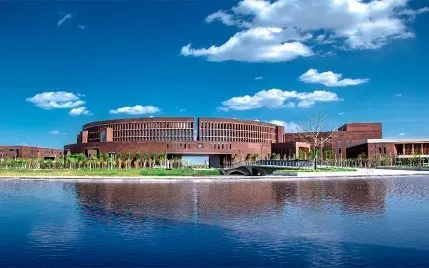
The university operates on two campuses. The historic one is on Weijin Road (No. 92 Weijin Road, Tianjin 300072, Nankai District) and covers 1,288,500 square metres. In the same Nankai District is TJU's main university neighbour, Nankai University, which takes its name from the district. The second campus, Peiyang Park, opened in 2015 in the Haihe Education Park in Jinnan District (No. 135 Yaguan Road, Tianjin 300350). According to the university, the campuses have teaching buildings with multimedia equipment, research laboratories, a central library holding several million volumes, sports complexes with a swimming pool and a stadium, and student canteens.
| Room type | In the room |
|---|---|
| Single | Private bathroom, TV, air conditioning and a safe |
| Double | Private bathroom; shared kitchen and laundry on each floor |
All dormitory buildings have been renovated and fitted with modern security and climate-control systems. Electricity and internet are paid for separately in both room types. Other accommodation options are sometimes available for long-term degree programmes, so it is best to check the arrangements for a specific academic year on enrolment. You can also live off campus, but in that case you must register with the local police station within 24 hours of moving in. Note that fees and payments made are non-refundable.
On top of tuition fees, you need to budget for compulsory health insurance and the registration fee, which is paid once your application is approved. Monthly living costs — food, transport and everyday purchases — should be planned separately. It is best to check current amounts on the university's official website.
TJU takes part in the China Scholarship Council government scholarship programme; its institution number is 10056. In the official list of 306 Chinese universities that admit international students on CSC scholarships, the university is number 26. The Type B scholarship is a high-level programme for master's and doctoral students. As well as a full tuition fee waiver, it provides a monthly stipend (the amount depends on the level of study), comprehensive health insurance, and either a place in a campus dormitory or a housing allowance. Applications are usually accepted until mid-January, so it is best to start preparing your documents several months in advance. The procedure is as follows: on the China Scholarship Council website, choose Type B and the University Program category, enter TJU's institution number, complete the application form and print it out, and then also apply through the university's own online admission system.
It makes sense to apply in parallel — for both a self-funded place and the CSC scholarship competition.
| University, Chinese name | Type | Main focus |
|---|---|---|
| Tianjin University, TJU, 天津大学 | University, 985, 211, 双一流 (Double First-Class) | Chemistry, engineering, management, materials science |
| Nankai University, NKU, 南开大学 | University, 985, 211, 双一流 (Double First-Class) | Natural sciences and humanities, economics, law |
| Tianjin Normal University, TNU, 天津师范大学 | Teacher-training university | Education, psychology, humanities |
| Tianjin University of Science and Technology, TUST, 天津科技大学 | University | Biotechnology, food technology, light industry |
| Tiangong University, TGU, 天津工业大学 | University, formerly a polytechnic | Materials and textile technology |
| Tianjin Medical University, TMU, 天津医科大学 | Medical university | Medicine, pharmacy |
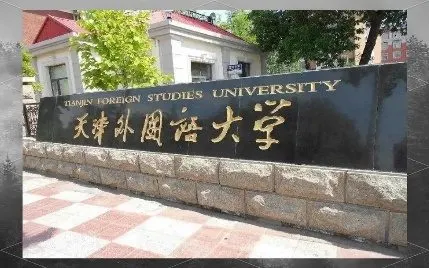
| Tianjin Foreign Studies University, TFSU, 天津外国语大学 | University | Foreign languages, translation studies |
All of these universities are in Tianjin, and their names are sometimes confused by ear, even though their profiles and status are completely different. Only TJU and Nankai University belong to 985, 211 and Double First-Class at the same time; the other five universities in the table are regional institutions without these statuses. There is also a trickier mix-up: informal sources sometimes link the abbreviation TJU with Shanghai's Tongji University (同济大学), although its official short name is simply Tongji, not TJU. Tongji is located in another city, specialises in architecture, automotive engineering and urban planning, and has nothing to do with Tianjin. If in doubt in correspondence or documents, check the full name and the Chinese characters rather than the Latin abbreviation alone.
The standard Russian form is the adjectival "Tianjin University", used on Wikipedia and in most official translations. Spellings with a missing or misplaced letter are common typos, and "University of Tianjin" simply copies the English word order — formally incorrect, but people do search for it. The official international name is Tianjin University, and TJU is the official abbreviation used in rankings and correspondence. "Tianda" (天大) is the short form used by Chinese students. The original name is 天津大学, Tiānjīn Dàxué in pinyin.
None of these forms should be confused with Tianjin Normal University or with Shanghai's Tongji University, for which a similar abbreviation is sometimes seen.
It is the short name for Tianjin University, a public research university in Tianjin founded in 1895. It holds Project 985 and Project 211 status, as well as Double First-Class status.
There are no programmes in Russian. Some bachelor's and master's programmes are available in English, but most majors are taught in Chinese, and for these you will need HSK.
Bachelor's programmes in engineering and the natural sciences require HSK 4 with at least 195 points, while business and humanities majors require HSK 5 with at least 180 points. For English-taught programmes, you submit IELTS 6.0 or higher or TOEFL 80 or higher instead of HSK.
Yes, officially. The university's first-class disciplines are management science and engineering, chemical engineering and technology, chemistry, materials science and engineering, and power engineering and engineering thermophysics.
The price depends on the room type — single or double. It is best to check the current terms for this academic year on the university's official website.
Yes. TJU's institution number in the CSC programme is 10056, and in the official list of 306 universities that admit international students on this scholarship, the university is listed as number 26. The Type B scholarship covers tuition and accommodation and includes a monthly stipend, the amount of which depends on the level of the programme.
The School of International Education prepares students for the HSK exam on its language courses. It is worth checking the dates of upcoming sessions in advance.
Historic campus: No. 92 Weijin Road, Tianjin 300072, Nankai District. New Peiyang Park campus: Tianjin 300350, Jinnan District, Haihe Education Park. Both districts are within Tianjin city limits, and public transport runs between them.
TNU, i.e. Tianjin Normal University, is a regional teacher-training university that is not part of Projects 985 and 211. Tongji University is located not in Tianjin but in Shanghai and specialises in architecture and automotive engineering; it is sometimes confused with TJU because of the similar-sounding abbreviations. Of the three universities, only TJU combines 985, 211 and Double First-Class status and has a pronounced engineering and chemistry profile.
You will need a notarised and translated school-leaving certificate or diploma, an academic transcript, a copy of your passport, a photo, medical examination results on the prescribed form, and a language certificate — HSK, or TOEFL or IELTS, depending on the language of instruction of the programme.
Tianjin (天津) is the largest port in northern China; it is 30 minutes from Beijing by high-speed train. The cityscape combines European buildings from the former nineteenth-century concessions with modern technology zones.
A good education here costs less than in the capital, while the opportunities of the Beijing job market remain within reach. The city has a well-developed metro (7 lines), the Haihe River embankment for walks, and a mild climate with four distinct seasons. For parents, it matters that the atmosphere here is calm even though the capital is very close; there is good healthcare and an international airport, student areas are safe, dormitories are guarded, support services for international students are in place, and living in Tianjin is cheaper than in Beijing.
You work with Nihao Study specialists. They will help you put together a portfolio and a set of documents, draw up a study plan and choose a university or college and a specialty that genuinely interest you.
We take care of every stage of admission, from choosing to enrolment
We will gather, prepare, certify and send your documents to the institution
We will show the admissions committee your strengths
We run training sessions and courses so you can prepare with more confidence
We will help you settle in at the start of your studies and keep moving forward
Nihao Study specialists select universities and colleges that match the applicant's goals and means. We make sure the teachers are practitioners and that the knowledge will be useful in your profession.
We examine curricula, talk to students and teachers and look at which specialties employers need, and use this information to select options for the applicant.
Advisers guide the applicant from the first consultation to enrolment, help build a plan and spot mistakes in time that could get in the way.
The cost of our support depends on the programme and the partner university; you'll get an exact quote after a free consultation.
Get a quoteA free 15-minute consultation: together we will choose a university or college and a programme that suit your goals and budget.
Apply with peace of mind: we handle the documents, deadlines and correspondence with admissions committees, and you save time and energy.
Don't want to wait for a call? Message us in the chat.
Message us in chat 
University · Tianjin
Language courses · Bachelor's Degree · Master's Degree
University · Tianjin