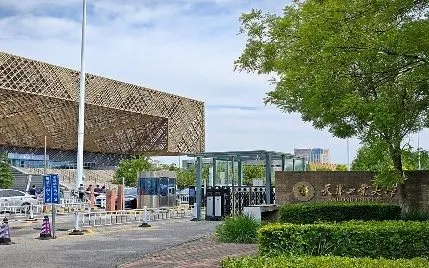
Tiangong University
University · Tianjin
Language courses · Bachelor's Degree · Master's Degree
南开大学
Nankai University accepts international students on programmes in the following fields: business, engineering, medicine, education, economics. Choose the level and programme that suit your goals.
Chinese language study at the university — from a few weeks to a year or longer. Suitable for those starting from scratch or preparing for the HSK before entering a main programme.
self-funded · language programme
The first level of higher education: usually four years of study, specialised subjects, internships and a graduation thesis. It opens the way to working in your field and to a master's degree.
self-funded
Advanced study after a bachelor's degree: research, applied projects and internships. It helps you become an expert in your chosen field and broaden your career opportunities.
self-funded
Nankai University is located in Tianjin. Nihao Study consultants keep track of the deadlines and admission requirements of this university, and you can always check the most accurate and up-to-date information on its official website. In university rankings, it is ranked 16 in China and 338 worldwide.
Come for a face-to-face meeting: together we will go through the requirements, deadlines, documents and study options that suit you.

At the meeting we will look at your situation, tell you which documents to prepare and by when, talk about possible programmes and help you decide on the next step.
Nankai University (南开大学, NKU for short) is a public research university in Tianjin under the Ministry of Education of the PRC. The Chinese reading of the name is Nánkāi Dàxué. Russian-language sources use several renderings, meaning 'Nankai University', 'University of Nankai' or simply 'Nankai'; this page uses the official international name, Nankai University. In admission documents it is best to give NKU and 南开大学 rather than translating the name yourself.
The university belongs to Projects 985 and 211, and in 2017 it was included in the first round of the Double First Class (双一流) initiative in Category A. In the second round, NKU's designated disciplines are mathematics, chemistry, statistics, applied economics, world history, and materials science and engineering. However, the university is not a member of the C9 League: the official list of its nine members names other universities, even though Nankai also has Project 985 status.
Below is information that will be useful to a 2026 applicant: rankings, language requirements, accommodation, CSC scholarships and the application procedure. If you have questions about admission, you can book a Nihao Study consultation.
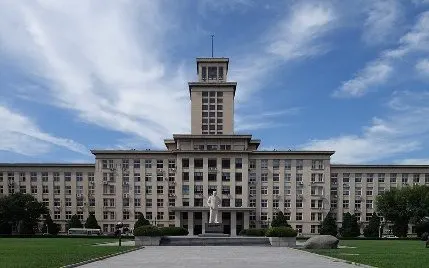
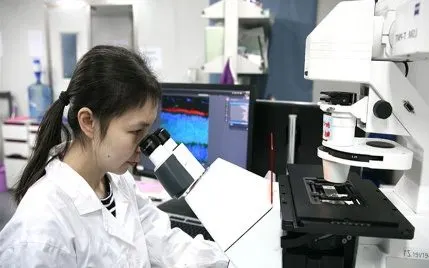
The easiest way to gauge NKU's size is by the university's own summary figures. Bear in mind that these figures are not always updated at the same time as the admission rules, so they are more a portrait of the university than a forecast of the number of places.
| Item | Data |
|---|---|
| Founded | 1919 |
| Number of campuses | 3 |
| Colleges and schools | 29 |
| Total students | 36 324 |
| Bachelor's students | 17 493 |
| Master's and doctoral students | 18 831 |
| International students | more than 2,000 |
| Full-time teaching staff | 2 460 |
| Bachelor's programmes | 84 |
The historic main campus, Balitai, is located at 94 Weijin Road, Nankai District, Tianjin 300071. The Jinnan Campus address is 38 Tongyan Road, Jinnan District, Tianjin 300350. This matters when choosing a programme: faculties and dormitories are spread across different campuses, so go by the address in your admission letter rather than the university's general pin on the map.
The university was founded in 1919 by two educators, Zhang Boling and Yan Xiu. Its creation was linked to the movement to reform the education system. The university places emphasis on its motto: serve the public good, develop all-round abilities and renew yourself every day. As early as 1923 it moved to Balitai, which is still regarded as its historic heart.
In 1937, during the war, the campus was destroyed. Together with Peking University and Tsinghua University, NKU moved to the south-west of the country, and in 1938 in Kunming the three universities merged to form National Southwestern Associated University. The return to Tianjin came in 1946, when Nankai was restored as a national university.
The university acquired its current status gradually. In 1995 NKU was among the first group of Project 211 universities, in 2000 it received Project 985 support, and in 2015, with the opening of Jinnan Campus, a three-site system took shape: Balitai, Jinnan and TEDA. It is important to understand that 985 status means participation in a government support programme, not membership of the C9. These are two different groups of universities, and presenting them as the same thing in an application form or personal statement is a mistake.
In the first round of Double First Class, the Ministry of Education of China included NKU among the thirty-six Category A universities. Projects 985 and 211 are also explicitly mentioned in the university's current academic profile. These labels give an idea of government support and the scale of research, but the specific programme, language of instruction and supervisor still need to be checked separately.
The C9 includes only nine universities: Peking University, Tsinghua University, Fudan University, Shanghai Jiao Tong University, Nanjing University, Zhejiang University, the University of Science and Technology of China, Harbin Institute of Technology and Xi'an Jiaotong University. Nankai is not among them. For a CV, this precise wording works: "Double First Class (Category A in the first round), Projects 985 and 211, not a C9 member".
World rankings produce different results because they weigh reputation, citations, university size and international openness differently. To choose a faculty, it makes more sense to compare the overall position with subject indicators.
| Ranking | Position | Edition |
|---|---|---|
| QS World University Rankings | 329th | 2027 |
| Times Higher Education | 251st to 300th | 2026 |
| ARWU | 151st to 200th | 2025 |
| CWUR Global 2000 | 176th, top 0.9 per cent | 2026 |
| EduRank | 429th in the world, 25th in China | 2026 |
In THE, NKU's subject positions are higher than its overall band: in the physical sciences the university is in the 101–125 group, and in engineering in the 151–175 group. EduRank highlights pharmacy, inorganic chemistry and physical chemistry, but it relies on its own bibliometric model, and its data is not a government ranking.
NKU's main research specialism is chemistry and materials. In 2025 the university reported that nineteen of its fields were now in the ESI top one per cent. Chemistry entered the ESI top 0.01 per cent. For materials science, engineering and ecology/environment, the figure is the top 0.1 per cent. In the 2025 ShanghaiRanking subject ranking, NKU's chemistry placed in the world top 10.
In the second round of Double First Class, mathematics, statistics and applied economics were included in NKU's list of disciplines. In these fields, fundamental training is combined with econometrics, finance and management. Applicants have a wide choice, but check the requirements in the specific faculty's catalogue: even within the same academic field, the language of instruction and competition can differ.
World history is also one of NKU's strong disciplines on the national list. The university's international profile is developing not only through English-taught programmes: in May 2026, for example, Nankai signed an agreement with Lomonosov Moscow State University on joint research, staff and student exchanges and training of specialists.
The university comprises twenty-nine colleges and schools. Its disciplines span the humanities, social sciences, natural sciences, engineering and medicine. Fields typical for international students include international politics, world history, Chinese language and literature, economics and finance, management, mathematics, chemistry, materials science, computer science and medicine.
The words School or College in a unit's name do not mean it is a separate university. For example, the School of International Education, the College of Chemistry and the Zhou Enlai School of Government are parts of Nankai University. Admission rules, the programme catalogue, HSK requirements and contacts for international applicants are published by the international office.
Under the 2026 rules, bachelor's study follows a 1 plus 3 model. In the first academic year, students take foundation training at the School of International Education, then spend three years studying their major. Chinese-taught programmes require HSK 4 with a score of at least 180, and by graduation HSK 6, also with at least 180.
| Level | Language and format | Duration |
|---|---|---|
| Bachelor's Degree | Chinese, with some separate mixed-language tracks | 4 years |
| Master's Degree | 171 programmes, 9 of them in English | 2 to 3 years |
| Doctoral (PhD) Programmes | Chinese or English, depending on the catalogue | usually 4 years |
| Chinese language courses | Summer course, semester or academic year | 4 weeks, 1 semester or 1 year |
Chinese-taught master's programmes require HSK 5 with a score of at least 180. Applicants who are not exempt from proving their English level need IELTS 6.0, TOEFL 80 or Duolingo 105 for English-taught programmes.
International students are offered single and double rooms. Each has a private bathroom, bed, desk, wardrobe, air conditioning, internet and hot water around the clock; laundry services are paid separately. At Balitai, international students are housed in the Yiyuan and Jingyuan buildings, while Jinnan's international dormitories occupy several buildings.
| Housing option | What you need to know |
|---|---|
| On-campus dormitory | Terms depend on room type and campus |
| Language programme | Double room in the Yiyuan building, Balitai |
| Rented off-campus housing | Police registration required |
First-year students should confirm their building before arrival: classes may take place at Jinnan, while language programme participants are housed at Balitai.
The university accepts Chinese Government Scholarship applications through two channels: Type A and Type B. For the university's Type B competition, the 2026 rules provide a tuition waiver, a free place in a campus dormitory or a housing allowance, a monthly stipend at the rate set by the programme, and medical insurance. NKU's agency code in the CSC system is 10055.
There are few places in these competitions. A realistic plan means preparing in parallel: both a budget for self-funded study and several scholarship applications.
The total area of NKU's three campuses exceeds 4.4 million square metres. Balitai is in the city's Nankai District and retains the university's historic atmosphere. Jinnan is a large new campus in the Haihe Education Park. TEDA Campus is linked to the education and research infrastructure of the economic zone.
The NKU library's collections cover the natural, applied, humanities and social sciences; it has separate services for rare books, multimedia and research searches. The central library offers spaces for individual and group work, including thirty-six self-study rooms. The university museum is at Balitai: its current exhibition halls occupy around 1,000 square metres. More than 7,000 square metres have been planned for the new museum building at Jinnan.
The campuses have canteens, including halal food outlets, and host sports events and activities for international students. The language programme has its own activities: cultural workshops, sports meets, and Chinese language and singing competitions.
| University | Type | How it differs |
|---|---|---|
| Nankai University, 南开大学 | University, NKU | Tianjin, 985, 211, Double First Class |
| Tianjin University, 天津大学 | University, TJU | Neighbouring engineering university, also in Tianjin |
| Nan Kai University of Technology, 南開科技大學 | University of technology | Located in Taiwan, unrelated to NKU |
In practice, the most common mistake is not a translation issue but confusing NKU with TJU, as the historic campuses of the two universities are next to each other. Check the characters: Nankai is written 南开大学, and Tianjin University 天津大学.
These forms have different status. The official international name is Nankai University, and the established English abbreviation is NKU. The Chinese original is 南开大学 (Nánkāi Dàxué); in speech, Chinese people often just say 南开.
This page uses one Russian form of the name; another common spelling drops the soft sign; an adjectival form is an understandable Russian calque; and a fourth variant reflects the word order of search queries rather than a standard name.
No. NKU has 985, 211 and Double First-Class status, but the official C9 list includes nine other universities.
The admission rules for international students list no degree programmes taught in Russian. In 2026, nine master's programmes were taught in English, and most of the rest in Chinese.
Chinese-taught bachelor's programmes require HSK 4 with a score of at least 180, and Chinese-taught master's programmes require HSK 5 with at least 180. Some humanities programmes set a higher bar.
The cost depends on the campus and room type, and medical insurance is paid separately. See the university's official website for current rates.
Yes. A winner of the CSC Type B competition may receive a tuition fee waiver, a dormitory place or housing allowance, a monthly allowance and medical insurance. However, the decision is made on the basis of the competition and is not guaranteed in advance.
Yes. In 2026, three formats were available: a four-week summer course, a one-semester programme and a one-academic-year programme. Check the prices of these courses on the university's official website.
Yes, NKU has an HSK centre; it can also act as a recommending institution when applying for a language scholarship. Check the date of the next exam and seat availability in the official HSK schedule.
The historic Balitai campus is in Nankai District, on Weijin Road; the new Jinnan campus is in Haihe Education Park, on Tongyan Road; and there is a third campus, TEDA. Plan your route using the faculty address given in your Admission Notice, not just the university's name.
Both universities are in Tianjin, and both have 985, 211 and Double First-Class status. The difference is in their profile: NKU is best known for chemistry, economics, mathematics and world history, while TJU has a more pronounced engineering focus.
You will need a passport, a school certificate, academic records, proof of your HSK level and any documents the rules require for your nationality; medical and visa documents are added after admission. The list may change, so check against the current version of the university's admission rules.
Tianjin (天津) is the largest port in northern China; it is 30 minutes from Beijing by high-speed train. The cityscape combines European buildings from the former nineteenth-century concessions with modern technology zones.
A good education here costs less than in the capital, while the opportunities of the Beijing job market remain within reach. The city has a well-developed metro (7 lines), the Haihe River embankment for walks, and a mild climate with four distinct seasons. For parents, it matters that the atmosphere here is calm even though the capital is very close; there is good healthcare and an international airport, student areas are safe, dormitories are guarded, support services for international students are in place, and living in Tianjin is cheaper than in Beijing.
You work with Nihao Study specialists. They will help you put together a portfolio and a set of documents, draw up a study plan and choose a university or college and a specialty that genuinely interest you.
We take care of every stage of admission, from choosing to enrolment
We will gather, prepare, certify and send your documents to the institution
We will show the admissions committee your strengths
We run training sessions and courses so you can prepare with more confidence
We will help you settle in at the start of your studies and keep moving forward
Nihao Study specialists select universities and colleges that match the applicant's goals and means. We make sure the teachers are practitioners and that the knowledge will be useful in your profession.
We examine curricula, talk to students and teachers and look at which specialties employers need, and use this information to select options for the applicant.
Advisers guide the applicant from the first consultation to enrolment, help build a plan and spot mistakes in time that could get in the way.
The cost of our support depends on the programme and the partner university; you'll get an exact quote after a free consultation.
Get a quoteA free 15-minute consultation: together we will choose a university or college and a programme that suit your goals and budget.
Apply with peace of mind: we handle the documents, deadlines and correspondence with admissions committees, and you save time and energy.
Don't want to wait for a call? Message us in the chat.
Message us in chat University · Tianjin
Language courses · Bachelor's Degree · Master's Degree
University · Tianjin
University · Tianjin