Guangdong Medical University
University · Zhanjiang
Language courses · Bachelor's Degree · Master's Degree
中山大学
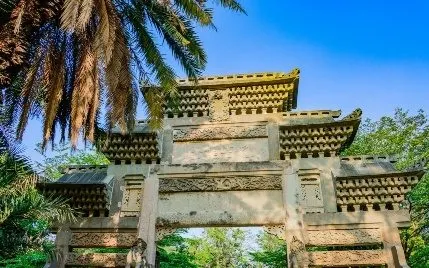
Sun Yat-sen University accepts international students on programmes in the following fields: business, engineering, medicine, education, economics. Choose the level and programme that suit your goals.
Chinese language study at the university — from a few weeks to a year or longer. Suitable for those starting from scratch or preparing for the HSK before entering a main programme.
self-funded · language programme
The first level of higher education: usually four years of study, specialised subjects, internships and a graduation thesis. It opens the way to working in your field and to a master's degree.
self-funded
Advanced study after a bachelor's degree: research, applied projects and internships. It helps you become an expert in your chosen field and broaden your career opportunities.
self-funded
Sun Yat-sen University is located in Guangzhou. Nihao Study consultants keep track of the deadlines and admission requirements of this university, and you can always check the most accurate and up-to-date information on its official website. In university rankings, it is ranked 8 in China and 237 worldwide.
Come for a face-to-face meeting: together we will go through the requirements, deadlines, documents and study options that suit you.

At the meeting we will look at your situation, tell you which documents to prepare and by when, talk about possible programmes and help you decide on the next step.
Sun Yat-sen University (SYSU, 中山大学) is a public university in Guangdong Province. In various international rankings it consistently appears among the top ten universities in China. SYSU has five campuses in three cities: the South, North and East campuses are in Guangzhou, while Zhuhai and Shenzhen have one campus each.
Russian-speaking applicants often rearrange the words of the name or shorten it. Chinese students call the university 中大 (Zhōngdà), and international rankings use the official abbreviation SYSU. The name 中山大学 is pronounced Zhōngshān Dàxué and literally means ‘Zhongshan University’; Zhongshan is another name of Sun Yat-sen, the philosopher and revolutionary who founded the Republic of China and became its first provisional president.
SYSU's main, historic campus is the South Campus in Haizhu District, at 135 Xingang West Road, Guangzhou 510275. Medical disciplines are concentrated on the North Campus in Yuexiu District. The East Campus is in Xiaoguwei, within Guangzhou Higher Education Mega Center. The newest is the Shenzhen Campus in Guangming District: it took two years to build and opened in September 2018. Another site operates in Zhuhai. Language courses and most international bachelor's programmes take place on the South Campus, so for your visa and airport transfer you need the South Campus address, not one in the historic city centre.
Below are the key figures on SYSU, its history, rankings and statuses, strong fields, accommodation, scholarships and the application procedure for the 2026 intake.
| Item | Data | Notes |
|---|---|---|
| Year founded | 1924 | One of the oldest comprehensive universities in southern China |
| Number of campuses | 5 in three cities | Guangzhou, Zhuhai and Shenzhen |
| Total area | 6.17 sq km | All five campuses combined |
| Number of students | more than 71,000 | Total number of students |
| International students | 634, of which 416 are bachelor's | Most are bachelor's students |
| Teaching staff | 4 972 | Excludes hospital clinical staff |
| Academicians of the Chinese academies of sciences | 21 | Reflects the university's research standing |
| Schools and departments | 69 | The range runs from medicine and law to archaeology |
On 21 June 1924, Sun Yat-sen — revolutionary and thinker — founded the university, naming it Guangdong University. The founder wrote the university motto himself; it contains five calls: study extensively, inquire thoroughly, reflect carefully, discern clearly and put knowledge into practice with persistence. Sun Yat-sen died in 1925, and in 1926 the university was named after him. The form of the name without the word “National” became established after the founding of the PRC in 1949.
In 1952–1953 a nationwide reform of higher education was under way, and the universities of southern China were reorganised: the humanities and science faculties of Lingnan University (whose history began in 1888) moved to Sun Yat-sen University, while the medical faculties of both institutions became a separate South China Medical College. The former Lingnan campus in Haizhu District is still SYSU's main site — the South Campus — today. Over these years the medical school changed its name several times: in 1956 to Guangzhou Medical College, in 1957 to Zhongshan Medical College, and in 1985 to Sun Yat-sen University of Medical Sciences. On 26 October 2001 their paths converged again: the medical university merged into SYSU and became the Zhongshan School of Medicine.
In the 2000s the university began to grow rapidly. The East Campus opened in the Guangzhou Higher Education Mega Center. In September 2018, after two years of construction, the fifth campus — Shenzhen, in Guangming District — opened. Another milestone came in February 2022: 11 of SYSU's disciplines were included in the second round of the national Double First-Class (双一流) programme, while the university retains its historical status as a member of Project 985 and Project 211. SYSU now has 69 schools, institutes and departments and runs ten affiliated hospitals. Three of them — the First Affiliated Hospital, the Cancer Center and the Zhongshan Ophthalmic Center — are regarded as the country's leading hospitals in their fields.
SYSU's position depends heavily on how a particular ranking works: some compilers focus on research publications, others on the views of employers and academics. So it makes more sense to compare several rankings at once than to rely on any single figure.
| Ranking | Position and year | What to bear in mind |
|---|---|---|
| ARWU, Shanghai Ranking | 65th worldwide, 2025 | SYSU's highest position among research-focused rankings |
| THE World University Rankings | 201, 2026 | An exact position rather than a range — unusual for universities outside the top 200 |
| QS World University Rankings | 276, 2026 | A year earlier it was 331st |
| CWUR | 81st worldwide, 7th in China, 2026 | By CWUR's methodology — in the top 0.4% of universities worldwide |
| EduRank | 271st worldwide, 13th in China, 2026 | Strongest in oncology and medicine |
| Nature Index | 8th worldwide and 7th in the Asia-Pacific region, 2024 | Assesses articles in the most highly cited scientific journals |
SYSU holds all three statuses — a combination that is uncommon among Chinese universities. The university joined Project 985 and Project 211 back in the 1990s, and in 2022, in the second round of Double First-Class, 11 of its disciplines had their status confirmed. For an applicant this brings several advantages: the state allocates more funding to the university, the path to a CSC scholarship is easier, and the degree is recognised in databases that carry weight outside China too.
Medicine and clinical facilities. Students of the Zhongshan School of Medicine do their clinical placements in SYSU's ten affiliated hospitals. The First Affiliated Hospital, the Cancer Center and the Zhongshan Ophthalmic Center are among China's leading specialist hospitals, and the First Affiliated Hospital ranks second among the country's general hospitals. EduRank places SYSU's oncology and radiotherapy first in China and Asia and tenth in the world.
Fundamental science. As of May 2026, SYSU and Peking University jointly lead China in the number of disciplines in the global ESI top 1‰ — each has 16 research fields. Nature Index, which counts articles in the most highly cited scientific journals, places SYSU 8th in the world and 7th in the Asia-Pacific region.
Business school and humanities traditions. Lingnan College is the business school within SYSU that inherited the name and traditions of Lingnan University (founded in 1888). Today its programmes cover finance, international economics and business administration, and international students can study on them too. The profile is rounded out by the law school and by Chinese and Business Chinese programmes that are popular with international students.
SYSU's 69 schools, institutes and departments are grouped into several large blocks: humanities and social sciences, economics and management, natural sciences, engineering and IT, and medicine. Below are the groups of fields that international students apply to most often.
The engineering block includes materials science, environmental sciences, computer technology and information engineering. In the 2026 intake, international bachelor's applicants are offered Computer Science and Technology and related IT majors taught in Chinese.
The medical block is built on the 2001 merger. Today it is the Zhongshan School of Medicine, where clinical training runs the full cycle at ten affiliated hospitals. Medical programmes cost more than humanities and engineering ones; check the current fees on the university's official website.
The humanities side of the university is made up of Lingnan College, the law school and the departments of international relations and Russian. International students can enrol on bachelor's programmes in Finance, Business Chinese, Chinese Language, Business Administration and International Economics and Trade; some of them are taught in English or in Russian.
There are few dormitories on campus, so places are guaranteed only to scholarship holders, while self-funded students usually find accommodation on their own. Even so, there are separate buildings for international students, and the accommodation options in them are clear in advance.
| Campus and room | Note |
|---|---|
| South Campus, single | East block building, air-conditioned rooms |
| South Campus, double | Almost half the price of a single |
| East Campus, single | Paid per year, not per semester |
| East Campus, double | Paid per year |
How much you spend on housing and food on campus depends on the room you choose and your lifestyle. It is worth checking move-in conditions, availability and the booking procedure with the university's international office before you apply.
The university works with several scholarship programmes.
Chinese Government Scholarship (CSC). In the application on the China Scholarship Council portal you enter SYSU's agency number — 10558. You can apply under bilateral quotas or through the Belt and Road track.
Guangdong Provincial Government Scholarship. This is a separate regional programme for high-achieving international students; candidates are selected according to the university's own criteria.
SYSU Scholarship for International Students. It is awarded competitively to new students and usually covers tuition partly or in full.
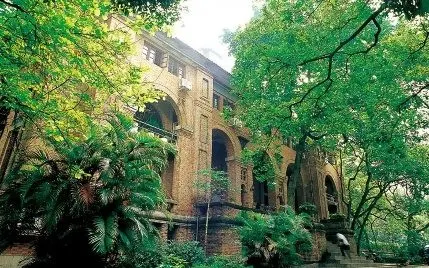
SYSU's campuses have been built up over more than a hundred years, and today buildings from the Republic of China era stand alongside new ones. The university's School of International Chinese Language Education has run the HSK since 1991 — it was the first test centre for this exam in southern China. Sessions are held twice a year; it is best to check exact dates and venues in the official HSK schedule rather than in old publications.
Also worth mentioning is the Russian department, part of SYSU's School of International Studies. Since 2006 it has received and sent 11 groups of students on exchanges with five universities in Russia, Ukraine and Kazakhstan, including Russian New University and Lomonosov Moscow State University. For Russian-speaking applicants from CIS countries, this means there are always Russian-speaking students and teachers on campus, not just an English-language international programme.
| University and Chinese name | City and status | How it differs |
|---|---|---|
| Sun Yat-sen University, SYSU, 中山大学 | Guangzhou, national university, Project 985 and 211 | The university this page is about: five campuses in three cities in mainland China |
| National Sun Yat-sen University, NSYSU, 國立中山大學 | Kaohsiung, Taiwan, founded in 1980 | A different jurisdiction with its own admissions system; focus on master's programmes, finance and semiconductors |
| Jinan University, JNU, 暨南大学 | Guangzhou, a university for overseas ethnic Chinese | Stronger in language programmes and the humanities |
| South China University of Technology, SCUT, 华南理工大学 | Guangzhou, national university, Project 985 and 211 | Engineering profile: SCUT is stronger than SYSU in architecture and mechanical engineering |
Most confusion arises from Taiwan rather than from other Guangzhou universities. The English name of National Sun Yat-sen University in Kaohsiung is almost identical to SYSU, but that university was only founded in 1980 and has no direct lineage from the mainland SYSU — all they share is being named after the same man. Less often, SYSU is mixed up with another namesake, the Sun Yat-sen University of the Toilers of China; it operated in Moscow from 1925 to 1930 and trained Chinese revolutionaries. It is a purely historical institution, closed long ago and unrelated to today's SYSU. Within Guangzhou itself, SYSU is most often paired with South China University of Technology and Jinan University.
1. The standard Russian name translates literally as “Zhongshan University named after Sun Yat-sen” and is used in most specialist materials. 2. Two other common Russian spellings are simply errors in transliterating “Yat-sen”. 3. Shorter Russian forms with the words in a different order are less precise but are used all the time in conversation and by education agencies. 4. Sun Yat-sen University is the official international name. 5. SYSU is the official English abbreviation, used in rankings and in correspondence with the admissions office. 6. 中大 (Zhōngdà) is the short name Chinese students use. 7. 中山大学 (Zhōngshān Dàxué) is the original name; literally “Zhongshan University”, after Sun Yat-sen's other name.
In your application, use the English or Chinese name and do not translate it yourself.
It is the official short form of Sun Yat-sen University, a public university in Guangzhou (Guangdong province) founded in 1924. It is part of Project 985, Project 211 and the Double First-Class programme.
Yes. Some bachelor's and master's programmes are taught in English, and a number of bachelor's programmes, such as International Economics and Trade, also admit students for Russian-medium study. However, there is no fully Russian-language teaching across the university as a whole, and you will still need Chinese or English for everyday life on campus.
For most programmes the basic requirement is HSK 5 with at least 180 points. Some Chinese-taught programmes accept HSK 4 (also from 180 points) or a certificate of completion of a Chinese language course at SYSU. In addition, a CSCA result is almost always required, in Chinese or English depending on the programme.
Yes, and this combination is fairly rare. The university has been part of both historical projects since the 1990s, and in February 2022 11 of its disciplines had their status confirmed in the second round of Double First-Class.
Self-funded applicants are not guaranteed a place in a dormitory. Where places are available, the price depends on the campus and the room type, so check the current terms on the university's official website.
In principle, yes: in the application on the CSC portal you enter 10558, the agency number under which SYSU is listed in the China Scholarship Council system. But the scholarship is awarded competitively rather than automatically, so you should find out the scholarship category and whether it covers tuition, accommodation and a stipend before you submit your documents.
Yes. Since 1991 the HSK has been administered by the university's Institute of International Chinese Language Education, the first centre in southern China to host this exam. It is easiest to check the dates of upcoming sessions in the official HSK schedule.
Documents give the address of the South Campus: 135 Xingang West Road, Guangzhou 510275. Besides this, the university has four more sites: the North and East campuses in Guangzhou, and one campus each in Zhuhai and Shenzhen. So before you travel, check which of them your programme is based on.
Jinan University (JNU) is also in Guangzhou; historically it was intended for ethnic Chinese living abroad, and SYSU outranks it in competitiveness and rankings. National Sun Yat-sen University in Kaohsiung is a separate Taiwanese university founded in 1980: it has its own admissions system and no direct link to the mainland university, even though their English names are almost identical.
You will need: a valid passport, a school certificate or diploma with a translation, a CSCA result, an HSK certificate (if the programme is taught in Chinese), a medical certificate issued no more than six months earlier and a police clearance certificate issued no more than three months earlier. If the applicant is not yet 18 on 1 September 2026, a guardianship letter from an adult guardian based in Guangdong province is added to the package. Documents are uploaded through the applicant's online account, which also gives the full list.
Guangzhou (广州) is the capital of Guangdong Province and the trade gateway of southern China. The large-scale Canton Fair is held here twice a year. Cantonese cuisine originates here, and the city remains a centre of international business.
Here it is easy to combine study with work experience: thousands of export companies operate in the city. The metro has 16 lines, the environment is multinational, and the subtropical climate allows you to play sport all year round. Parents will care about other things: the city is safe, Hong Kong is 1 hour away by high-speed train, there are international hospitals and schools and direct international flights, and the campuses are well run, with security on duty around the clock and dedicated services to help international students.
You work with Nihao Study specialists. They will help you put together a portfolio and a set of documents, draw up a study plan and choose a university or college and a specialty that genuinely interest you.
We take care of every stage of admission, from choosing to enrolment
We will gather, prepare, certify and send your documents to the institution
We will show the admissions committee your strengths
We run training sessions and courses so you can prepare with more confidence
We will help you settle in at the start of your studies and keep moving forward
Nihao Study specialists select universities and colleges that match the applicant's goals and means. We make sure the teachers are practitioners and that the knowledge will be useful in your profession.
We examine curricula, talk to students and teachers and look at which specialties employers need, and use this information to select options for the applicant.
Advisers guide the applicant from the first consultation to enrolment, help build a plan and spot mistakes in time that could get in the way.
The cost of our support depends on the programme and the partner university; you'll get an exact quote after a free consultation.
Get a quoteA free 15-minute consultation: together we will choose a university or college and a programme that suit your goals and budget.
Apply with peace of mind: we handle the documents, deadlines and correspondence with admissions committees, and you save time and energy.
Don't want to wait for a call? Message us in the chat.
Message us in chat University · Zhanjiang
Language courses · Bachelor's Degree · Master's Degree
University · Guangzhou
Language courses · Bachelor's Degree · Master's Degree