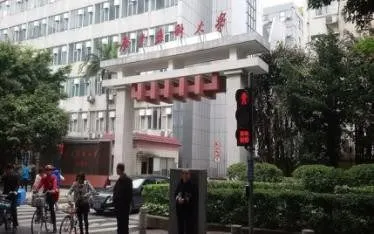
Guangdong Medical University
University · Zhanjiang
Language courses · Bachelor's Degree · Master's Degree
GDUFS · 广东外语外贸大学
Guangdong University of Foreign Studies accepts international students on programmes in the following fields: business, law, economics. Choose the level and programme that suit your goals.
Chinese language study at the university — from a few weeks to a year or longer. Suitable for those starting from scratch or preparing for the HSK before entering a main programme.
self-funded · language programme
The first level of higher education: usually four years of study, specialised subjects, internships and a graduation thesis. It opens the way to working in your field and to a master's degree.
self-funded
Advanced study after a bachelor's degree: research, applied projects and internships. It helps you become an expert in your chosen field and broaden your career opportunities.
self-funded
Guangdong University of Foreign Studies is located in Guangzhou. Nihao Study consultants keep track of the deadlines and admission requirements of this university, and you can always check the most accurate and up-to-date information on its official website. In university rankings, it is ranked 109 in China and 1287 worldwide.
Come for a face-to-face meeting: together we will go through the requirements, deadlines, documents and study options that suit you.

At the meeting we will look at your situation, tell you which documents to prepare and by when, talk about possible programmes and help you decide on the next step.
Guangdong University of Foreign Studies (GDUFS; Chinese 广东外语外贸大学, pinyin Guǎngdōng Wàiyǔ Wàimào Dàxué) is a public provincial university located in Guangzhou. In Russian it is usually called the Guangdong University of Foreign Studies. There is also a longer translation in which 'foreign languages and foreign trade' are added to 'foreign studies'. Search queries also turn up 'University of Foreign Studies of Guangdong' and a misspelt version of the name, while the Chinese abbreviation 广外 is rendered as 'Guangwai'. All these names refer to the same university. It specialises in foreign languages, translation and interpreting, international trade and global governance.
It is important to understand its status from the outset: GDUFS is not part of the 211 or 985 projects and is not on the national Double First-Class list. Today it is a public provincial university and one of the key participants in Guangdong's programme for developing high-level universities. That does not make it weak: in its strongest areas, language study is combined with law, economics, communication and international relations.
This Nihao Study overview for 2026 applicants brings together the key information: the university's status, programmes, HSK and CSCA requirements, dormitories, scholarships, campuses and the application procedure. Admission conditions and the number of available places change faster than overviews are updated, so check the university's latest announcements before applying.
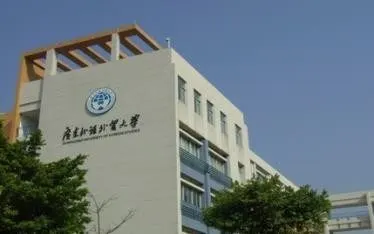
The university's scale is shown below using GDUFS's own data, updated in June 2026, rather than outdated ranking-aggregator profiles.
| Item | Current data | What it means |
|---|---|---|
| Number of students | 21,047 bachelor's students; master's and doctoral students combined — 6,715 | A large university with a wide range of fields |
| Staff | 2,145 people | A large in-house academic staff |
| Structure | campuses — 3; academic divisions — 4; teaching units — 28 | Fields are spread across different sites |
| Bachelor's Degree | 77 programmes and 33 foreign languages | According to the university, the widest choice of languages in South China |
| International cooperation | 536 partners (universities and organisations) from 71 countries and regions | Wide opportunities for exchanges and joint programmes |
| Research | First-level doctoral fields: 3 academic and 2 professional | The university awards degrees at all main levels |
| Experience with international students | Almost 40,000 international students trained in total | International student admissions are steady |
| IIE address (main) | Baiyun Avenue North 2, Baiyun, Guangzhou 510420 | The international admissions office is here |
These figures show that GDUFS has long outgrown the language-school format: it is a full university with bachelor's, master's and doctoral programmes and research centres. When choosing a programme, be sure to check the campus. Most language schools are in the Baiyunshan area, while law, finance, economics, business and information sciences are based in University Town.
The university's origins lie in the Guangzhou Institute of Foreign Languages, founded in November 1964, which admitted its first students in July 1965. It was one of the institutions directly linked to the State Education Commission of the time. The other predecessor was the Guangzhou Institute of Foreign Trade, which opened in December 1980 and was run by the foreign economic trade authority.
The two institutes merged into Guangdong University of Foreign Studies in 1995. This explains GDUFS's current approach: languages are not studied in isolation but together with translation, law, area studies, trade and international business. In 2008 Guangdong Finance and Economics College became part of the university, strengthening its economics and finance offering.
Today the university presents itself as a South China base for training internationally minded specialists, working in several areas: international law, international communication, global economic governance, and foreign languages and literatures. For an applicant this matters more than the university's age: the curricula are built around interdisciplinary work.
In the Chinese classification GDUFS is often placed in the 双非 category — universities in neither 211 nor 985. In the second round of Double First-Class the university is not on the official list. However, Guangdong Province has included it in its programme for the comprehensive development of high-level universities, with an emphasis on foreign languages and literature, applied economics, business and law.
Rankings show that GDUFS's strength lies in specific specialist areas rather than across the whole range of disciplines. So comparing it with large engineering or medical universities on a single overall position tells you little.
| Ranking | Position | What it means |
|---|---|---|
| ShanghaiRanking China 2026 | 6th among China's language universities | Comparison with universities of the same profile |
| ShanghaiRanking GRAS 2025 | Finance: 151-200, education: 301-400, economics: 401-500 | Results for individual subjects are clearer |
| QS by Subject 2026 | Highest published band for its profile: 151-200 | Look at the specific subject, not the brand as a whole |
| EduRank 2026 | World — 1,933rd, China — 145th, Guangzhou — 8th | Overall bibliometric snapshot |
| EduRank 2026 | computational linguistics — 503rd, broadcast journalism — 556th | A clear link between languages, media and technology |
| SCImago 2026 | 319th in the world for economics, econometrics and finance (overall sector snapshot) | A measure based on research publications |
| U.S. News 2024-2025 | First appearance in the ranking; 110th by share of papers in the top 1 per cent most cited | A narrow metric reflecting publication quality |
Times Higher Education also has a GDUFS profile, but no confirmed numerical band is given there. Nor should a CWUR position be attributed to the university without a current entry. In an application it is wiser to cite subject results that can be verified than to collect the best positions from different years.
The university teaches 33 foreign languages, which, according to the university, is the widest choice of language programmes in southern China. Its language schools cover Japanese, Western languages, English language and culture, international business English, Southeast Asian languages, and Asian and African languages; there are also separate schools of Chinese and of advanced translation.
GDUFS is linked to international professional networks of translators and interpreters, including CIUTI and FIT. The university also takes part in a university programme that trains high-level translators and interpreters for the UN. In practice this environment gives students access to the work of international organisations, interpreting, terminology work and intercultural communication.
The university's second pillar goes back to its roots in the institute of foreign trade. Its structure includes schools of accounting, finance, business, and economics and trade. International students can choose the MIB, academic master's programmes, an English-taught MBA and global economic governance programmes.
This option suits those looking for more than just general business: here Chinese and international trade are combined with knowledge of the Guangdong–Hong Kong–Macao Greater Bay Area. Proximity to an industrial and export region helps with case studies, practical training and industry vocabulary.
The third area brings together law, international relations, media and language technology. The university develops programmes for internationally oriented lawyers and international arbitration specialists, and runs pilot training in export control. It includes institutes of area studies, international relations, journalism and information sciences, as well as laboratories researching language and artificial intelligence.
For a future translator, this environment provides specialisation in a specific subject area. An economist or lawyer, on the other hand, gets intensive language training and intercultural communication skills. It is this interdisciplinary profile that sets GDUFS apart from a typical language faculty within a large university.
Most of the language schools, as well as the Institute of International Education and the Graduate School of Translation and Interpretation, are on the Baiyunshan campus. University Town hosts schools in the following fields: law, finance, accounting, business, economics and trade, international relations, journalism, information sciences, public administration, English education, statistics and mathematics, and art.
For a first look, the fields can be grouped as follows:
According to the university, admissions cover 77 bachelor's programmes, and 37 majors have national first-class undergraduate major status. The full degree ladder looks like this: doctoral level — 3 academic and 2 professional first-level fields; master's level — 13 first-level fields and 21 professional degrees.
The international dimension is more than just a name. GDUFS has 536 partner organisations from 71 countries and regions, and joint projects with Macao Polytechnic University and the universities of Leeds and Reading. The university also has 7 Confucius Institutes abroad, and students from more than 100 countries and regions have studied there.
The autumn 2026 intake covered bachelor's, master's and doctoral programmes. Applications were accepted in 2026 from 1 March and closed on 20 June, and the university planned to announce results from late June to early August. These dates apply to a specific cycle: for the next intake you need to wait for a new announcement.
| Level | Format and duration | Minimum language requirement |
|---|---|---|
| Bachelor's Degree | 4 years, in Chinese or English | HSK 5 from 180 or TOEFL 70 / IELTS 5.5 |
| Chinese Language BA | 4 years; direct entry to a later year is possible | No HSK required for year 1; HSK 4 from 180 for year 2 |
| Academic master's | Usually 3 years | HSK 5 from 180 |
| MTCSOL and translation | Professional master's degree | For these programmes — HSK 5 from 210 |
| MBA | In English: 2 years full-time, 3 years part-time | GMAT, GRE, TOEFL, IELTS or equivalent, plus work experience |
| Doctoral (PhD) Programmes | 4 years, in Chinese | HSK 5 from 180 plus an entrance exam |
From the 2026/2027 academic year, a CSCA report is required for bachelor's admission. Maths is compulsory for all fields, while the subject part in Chinese depends on the programme profile and language of instruction. Those choosing English-taught programmes do not need to take subject Chinese, but the other CSCA requirements remain. BCT is not mentioned in every letter: GDUFS's general admission rules specify HSK, so these certificates cannot be considered interchangeable. The exact requirement is confirmed separately for each programme.
Fees depend on the programme, language of instruction and campus and may change from year to year, so check the current cost on the university's official website or during a consultation. Besides tuition, budget for flights, a visa, insurance, a medical check-up, notarised translations, food and local transport.
The official fee sheet offers international students several accommodation options. On the north campus, in the Yunshan 16 building, there are rooms for four and for two people. In University Town, building C19B offers double and single rooms.
| Building and room | Features |
|---|---|
| Yunshan 16, 4 beds | Air conditioning; basic utilities included |
| Yunshan 16, 2 beds | More personal space |
| C19B, 1 or 2 beds | Electricity and water paid separately |
In the 2026 intake there were fewer on-campus places for the foundation programme than applications, so they were allocated in order of confirmation. Do not sign a non-refundable rental contract until your dormitory place is officially confirmed. It is best to check the room type, move-in dates, deposit, water and electricity limits, internet, bedding and the rules for staying over the holidays in advance.
GDUFS is authorised to admit holders of the Chinese Government Scholarship and the International Chinese Language Teachers Scholarship, and is also an official HSK centre. Which programmes and intakes are open for each type of scholarship is decided every year.
New students applying for the 2026 university scholarship had to submit an application form and 2 letters of recommendation by 5 July, with results expected by the end of August. The number of scholarships is limited and they are awarded competitively. Only build the scholarship into your financial plan once you have received written confirmation.
Baiyunshan Campus is located at 2 Baiyun Avenue North, Baiyun District, Guangzhou 510420. University Town Campus is in Xiaoguwei, Panyu District, Guangzhou 510006. The third site is Dalang Campus. The IIE admissions office for international students is on the North Campus: Building 7, Office 102.
The campuses have teaching buildings, libraries, sports grounds, canteens and shops, as well as support services for international students. The grounds also include a sports complex and green spaces. Facilities vary from campus to campus, so it is best to choose accommodation only once you know where your faculty is based.
GDUFS has an official HSK centre. Exams are held on the North Campus, and according to the centre, testing takes place in Teaching Building 6. In September 2025 it hosted computer-based HSK 4, HSK 5, HSKK Intermediate and HSKK Advanced exams, taken by 82 candidates. Dates change, so check the official website chinesetest.cn.
It is worth looking into the requirements for translating and legalising documents in advance. After admission you will need a student visa, so find out early how X1 and X2 differ.
| University | Status | Main focus |
|---|---|---|
| Guangdong University of Foreign Studies, GDUFS, 广东外语外贸大学 | Public provincial university | Languages, translation, law, foreign trade |
| Guangdong University of Finance and Economics, 广东财经大学 | Public university of Guangdong Province | Management, economics, law |
| Guangdong University of Finance, 广东金融学院 | Public finance-focused institution, abbreviated GDUF | Banking and finance |
| South China Business College, 广东外语外贸大学南国商学院 | Independent private college at bachelor's level | Business and applied languages |
You can identify the right university by its English abbreviation GDUFS and its full Chinese name 广东外语外贸大学. The words Guangdong, Foreign Studies or Finance in a name do not by themselves prove that a website belongs to this university. Check the campus address and the website domain — it should be gdufs.edu.cn.
The main Russian form translates as 'Guangdong University of Foreign Studies'. A fuller translation that conveys the meaning also mentions foreign languages and foreign trade. Spelling the Russian word for 'studies' with a single 's' is a mistake: the word needs a double 's'. The form 'University of Foreign Studies of Guangdong' is a calque from English: it turns up in searches but fits normal Russian word order less well.
The official international name is Guangdong University of Foreign Studies, and the abbreviation GDUFS appears in rankings and business correspondence. 广外 (Guangwai) is the Chinese abbreviation, and the full original name is 广东外语外贸大学 (Guǎngdōng Wàiyǔ Wàimào Dàxué).
It is a public university of Guangdong Province, with its main international office in Guangzhou. The address of the North Campus is Baiyun Avenue North 2, postcode 510420. Before travelling, check which campus your faculty is on.
No. The university is not part of Project 211 or Project 985, and it is not on the official list for the second round of Double First-Class. Its status comes from its participation in Guangdong's programme for developing high-level universities.
Yes: the 2026 intake included English-taught bachelor's programmes and an MBA. Bachelor's programmes required TOEFL 70 or IELTS 5.5; instead of a certificate, applicants could take an internal written exam and interview. The full list of programmes for your application year needs to be checked separately.
HSK 5 with at least 180 points is required for most Chinese-taught programmes. For MTCSOL and the master's in translation the bar is higher: HSK 5 with at least 210. For the BA in Chinese language, a certificate may not be needed when entering year 1, while entry to year 2 requires HSK 4 with at least 180.
It depends on the programme, language of instruction, campus and dormitory room type. The university publishes current rates, so check them on the official website before applying.
GDUFS confirms that it accepts Chinese Government Scholarship holders. The programme, quota and extent of coverage depend on that year's competition. Decisions on admission and on awarding the scholarship are made separately.
Yes, there is an official HSK centre on the GDUFS North Campus. Registration procedures and available levels vary by session, so check the calendar before buying tickets.
The basic set includes a school certificate, a transcript of grades, a CSCA result, a language certificate, a passport, a photo and a valid medical certificate. The university may also ask for letters of recommendation, a police clearance certificate and citizenship documents.
GDUFS is a public provincial university specialising in languages and foreign trade. Guangdong University of Finance and Economics focuses mainly on economics, management and law. South China Business College is a separate private independent college at bachelor's level. The names and websites of these institutions must not be treated as interchangeable.
Guangzhou (广州) is the capital of Guangdong Province and the trade gateway of southern China. The large-scale Canton Fair is held here twice a year. Cantonese cuisine originates here, and the city remains a centre of international business.
Here it is easy to combine study with work experience: thousands of export companies operate in the city. The metro has 16 lines, the environment is multinational, and the subtropical climate allows you to play sport all year round. Parents will care about other things: the city is safe, Hong Kong is 1 hour away by high-speed train, there are international hospitals and schools and direct international flights, and the campuses are well run, with security on duty around the clock and dedicated services to help international students.
You work with Nihao Study specialists. They will help you put together a portfolio and a set of documents, draw up a study plan and choose a university or college and a specialty that genuinely interest you.
We take care of every stage of admission, from choosing to enrolment
We will gather, prepare, certify and send your documents to the institution
We will show the admissions committee your strengths
We run training sessions and courses so you can prepare with more confidence
We will help you settle in at the start of your studies and keep moving forward
Nihao Study specialists select universities and colleges that match the applicant's goals and means. We make sure the teachers are practitioners and that the knowledge will be useful in your profession.
We examine curricula, talk to students and teachers and look at which specialties employers need, and use this information to select options for the applicant.
Advisers guide the applicant from the first consultation to enrolment, help build a plan and spot mistakes in time that could get in the way.
The cost of our support depends on the programme and the partner university; you'll get an exact quote after a free consultation.
Get a quoteA free 15-minute consultation: together we will choose a university or college and a programme that suit your goals and budget.
Apply with peace of mind: we handle the documents, deadlines and correspondence with admissions committees, and you save time and energy.
Don't want to wait for a call? Message us in the chat.
Message us in chat University · Zhanjiang
Language courses · Bachelor's Degree · Master's Degree
University · Guangzhou
Language courses · Bachelor's Degree · Master's Degree