Guangdong Medical University
University · Zhanjiang
Language courses · Bachelor's Degree · Master's Degree
GDUT · 广东工业大学
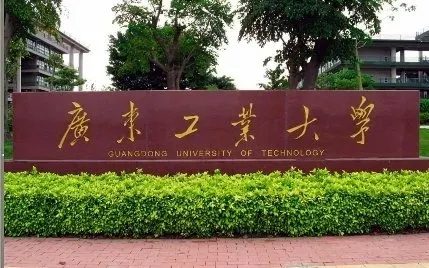
Guangdong University of Technology accepts international students on programmes in the following fields: engineering, education, arts, natural sciences. Choose the level and programme that suit your goals.
Chinese language study at the university — from a few weeks to a year or longer. Suitable for those starting from scratch or preparing for the HSK before entering a main programme.
self-funded · language programme
The first level of higher education: usually four years of study, specialised subjects, internships and a graduation thesis. It opens the way to working in your field and to a master's degree.
self-funded
Cost: 18 000–23 000 ¥/year
self-funded
Advanced study after a bachelor's degree: research, applied projects and internships. It helps you become an expert in your chosen field and broaden your career opportunities.
self-funded
Guangdong University of Technology is located in Guangzhou. Nihao Study consultants keep track of the deadlines and admission requirements of this university, and you can always check the most accurate and up-to-date information on its official website. In university rankings, it is ranked 76 in China and 811 worldwide.
Come for a face-to-face meeting: together we will go through the requirements, deadlines, documents and study options that suit you.

At the meeting we will look at your situation, tell you which documents to prepare and by when, talk about possible programmes and help you decide on the next step.
Guangdong University of Technology, abbreviated GDUT (in Chinese 广东工业大学, pinyin Guǎngdōng Gōngyè Dàxué), is a public provincial university in Guangzhou. Russian-language sources use variants such as 'Technological University of Guangdong' and 'Guangdong University of Technology', while Chinese students call it 广工 or 广工大, Guanggong and Guanggongda. Our Russian text uses the standard form of the name. The university describes itself as a key provincial university taking part in Guangdong's programme for developing high-level universities.
The university's status needs to be described with care. GDUT does not appear in the official lists of the Ministry of Education of China: it did not take part in the national 211 and 985 projects, nor is it on the second national Double First-Class (双一流) list. Confusion sometimes arises from the "provincial 211" label for certain disciplines and from Guangdong's 冲一流 programme, but these are regional development tools and do not make the university part of the national 211 project. In June 2026 the university announced its aim of eventually joining the national Double First-Class list.
This Nihao Study overview brings together what matters to a 2026 applicant: programmes, HSK requirements, dormitories, rankings, the provincial scholarship, documents and how GDUT differs from similar universities in Guangzhou.
| Item | Data |
|---|---|
| Higher education | Bachelor's students taught since 1958; the present GDUT was formed in 1995 |
| Campuses and area | 6 campuses, 5,300 mu (about 353 hectares) |
| Number of students | Over 55,000: about 40,000 undergraduates and more than 15,000 master's and doctoral students |
| Structure | Schools — 26; bachelor's programmes — 94; master's disciplines — 46, doctoral — 16 |
| Staff | Over 4,400 staff |
| International students | 780 students from 82 countries and regions |
| Main address | 100 Waihuan West Road, Guangzhou Higher Education Mega Center, Panyu, Guangzhou 510006 |
The figures show the scale of a large research university, but its sites differ markedly from one another: your programme determines the teaching building, the dormitory and even the district where you will live. Admission conditions for international students for a given year are published in the annual notice of the GDUT International Exchange Institute — re-read them before you apply.
The university's roots go back further than the official start date of its bachelor's programmes. Among its early predecessors, the GDUT archive mentions the Guangzhou School of Water Conservancy and Civil Engineering, founded in 1952. Then in 1958, the Guangzhou Engineering Institute, later linked to Guangdong Institute of Engineering, began admitting bachelor's students. Hence the two dates in sources: 1952 refers to the institutional origins, 1958 to the start of university-level bachelor's teaching.
The university received its current name in June 1995, after the merger of three institutions: Guangdong Institute of Engineering, Guangdong Institute of Machinery and the eastern branch of South China Institute of Construction. That is why its range of subjects is so broad: besides mechanical engineering and automation, it covers architecture, management, economics, law, the humanities and design.
Today each site has its own specialisation. Engineering is concentrated on the Guangzhou Higher Education Mega Center campus, international design and the creative industries at Dongfeng Road, management, natural and social sciences at Longdong, and joint programmes with overseas partners at Panyu. In 2019 GDUT entered the THE World University Rankings for the first time, as well as the top thousand of ARWU. Its rapid research growth does not retroactively make it a Project 211 or 985 university, but it does make it a prominent provincial engineering university in the Greater Bay Area.
| Ranking | Position |
|---|---|
| THE World University Rankings 2026 | 601–800 band worldwide |
| THE by Subject 2026 | Engineering — 401–500, Computer Science — 501–600 |
| ARWU 2025 | 301–400 band worldwide |
| ShanghaiRanking GRAS 2025 | Environmental Science and Engineering — 41, Chemical Engineering — 45, Automation and Control — 50 |
| CWUR 2025 | 421st in the world, 101st in Asia, 66th in China |
| EduRank 2026 | 1359th in the world, 93rd in China, 6th in Guangzhou |
| SCImago 2026 | 569th in the global institutional ranking |
According to the university itself, 11 of its disciplines are in the ESI top 1 per cent, and 4 of them have reached the top one per mille. As of June 2026, Engineering was roughly in the top 0.24 per mille. This points to a strong research base, but ESI measures citations by discipline, not the quality of each individual degree programme. THE, CWUR, EduRank and ARWU figures cannot be compared directly: these rankings use different methodologies and samples.
The first pillar is closely tied to Guangdong Province's industrial profile. It covers mechanical engineering, automation, robotics, telecommunications, integrated circuits, computer engineering and industrial software. The engineering schools are backed by two national key laboratories and several dozen joint research platforms. In 2025 Computer Science entered the ESI top one per mille; its research areas include high-performance computing, artificial intelligence, cyber-physical systems and industrial software.
The second pillar stands out in the 2025 ShanghaiRanking subject rankings: Environmental Science and Engineering — 41st, Chemical Engineering — 45th, Materials Science and Engineering — 76–100 band. The university links its research to industry: new metals, green chemistry, energy, environmental monitoring and biomedicine. GDUT has more than 80 provincial and ministerial-level research platforms, plus 15 innovation centres set up jointly with cities and companies.
The third hallmark of GDUT is its combination of engineering with design and international education programmes. Bachelor's programmes include industrial, product, environmental, visual and digital design, as well as architecture and urban planning. The International Education Institute in Panyu runs 2+2, 3+1 and 1+2+1 schemes with overseas partners. In total the university works with more than 180 foreign universities and organisations, runs 24 international joint training programmes and one officially approved joint education project.
The schools listed on GDUT's English-language website include engineering (electromechanical engineering, automation, information engineering, computer science, chemical engineering, materials and energy, civil and transport engineering, environmental engineering), natural sciences (physics, applied mathematics, biomedicine), economics and humanities (economics, management, law, foreign languages) and creative fields (architecture, art and design), as well as a school of international education. The full list is longer than the selection on the page for international students, so check your chosen programme against the appendix to that year's notice.
Among the technical majors, the standouts are mechanical design, manufacturing and automation; automation; computer science and technology; software engineering; artificial intelligence; integrated circuit design; civil engineering; chemical engineering and technology; environmental engineering; and materials science. The business cluster includes management, e-commerce, international economics and trade, accounting and marketing. The creative cluster covers industrial design, architecture, urban planning, visual communication, animation and digital media art.
The wide catalogue is both an advantage and a source of risk. Whether a major is open to international students, and in which language it is taught, is set out in the appendix to the international notice for that specific intake. The order of steps is: first the degree level and language of instruction, then checking the major against the latest appendix, and only then preparing a portfolio or research plan.
| Level | Language and duration | Available programmes |
|---|---|---|
| Bachelor's Degree | Usually 4 years; architecture and some other programmes — 5 years | English-taught: e-commerce, computer science and technology, international economics and trade |
| Chinese-taught bachelor's programmes | Usually 4 years | Programmes from the annual appendix, including Civil Engineering for an international group |
| Master's Degree | 2–3 years; under the 2026 notice — taught in Chinese | Fields according to the Graduate Programs appendix |
| Doctoral (PhD) Programmes | 4 years; under the 2026 notice — taught in Chinese | Research fields; prior consent of a supervisor required |
| Chinese language courses (Guangzhou) | 1 or 2 months, a semester or a year; no longer than 2 years | Standard and tailored programmes |
Chinese-taught engineering programmes require HSK 4 with at least 180 points, while humanities, social science and arts programmes require HSK 5 with the same minimum of 180 points. Applicants who previously studied entirely in Chinese may be exempted from the certificate after the university checks supporting documents. For English-taught programmes, non-native English speakers need TOEFL 80 or above or IELTS 5.5 or above; without a standardised test score, an internal test is held.
GDUT has no Russian-taught programmes for international students. A BCT certificate is not accepted in place of HSK for admission. If your language level is not yet sufficient, the official route is to take language training at GDUT and then apply again for an academic programme; there is no automatic transfer.
A dormitory place must be requested in advance: rooms are allocated on a first-come, first-served basis while available. In 2026 the fee did not include wireless internet, bedding, water or electricity, and a deposit was paid on check-in. Current accommodation rates are best confirmed on the university's official website.
| Room type | Campus and building |
|---|---|
| Single | University Town, East Building 11 |
| Double | University Town, East Building 11 |
| Quadruple | University Town, East Building 11 |
| Single | Dongfeng Road, Building 8 |
| Double | Dongfeng Road, Building 8 |
| Double | Longdong, Building G |
Students on academic programmes pay the dormitory fee for 12 months; those on non-degree courses usually pay for 3 or 6 months, depending on the length of study. If an international student lives off campus and not in a hotel, this must be approved, and the address must be registered at the police station within 24 hours of arrival. It is therefore sensible to sign a flat rental agreement only once your teaching campus and visa procedures have been confirmed.
The main confirmed option for international students is the Guangdong Provincial Government Scholarship. Bachelor's, master's and doctoral students can apply; the amount depends on the level of study, and current conditions are published in the competition notice. It is competitive support and does not mean an automatic full waiver of tuition and dormitory fees.
In 2026 new applicants were subject to age limits: under 30 for bachelor's, under 35 for master's and under 40 for doctoral programmes. The application package included recommendations, a diploma with grades, a personal statement and a study and research plan of over 1000 words. Current students needed at least 70 points in compulsory subjects for the academic year and no outstanding academic failures. Applications under the 2026 notice closed on 17 July 2026.
Treat the Chinese Government Scholarship (CSC) with caution. GDUT's international notice specifically lists the provincial scholarship, and the university's CSC channel is not available for every programme. For the university to see your application in the CampusChina system, you must choose the correct category and enter the correct host institution number. In any case, rely on the notice for the current cycle, and check before applying whether GDUT is open for your chosen CSC programme.
GDUT has six campuses: University Town, Dongfeng Road, Longdong, Panyu, Shahe and Jieyang. Most engineering programmes are based at University Town in Panyu District, while international services and some dormitories are also located at Dongfeng Road and Longdong. Your exact place of study is stated in the admission letter, so do not choose accommodation by looking only at the general university map.
The library system consists of five libraries on different campuses. At the end of 2025 its print collection stood at 4.606 million items, with 2.478 million e-books and 86 electronic resources. The libraries have a combined area of over 100,000 square metres and more than 7,000 reading seats, and they are open up to 105 hours a week. The University Town library building also houses the university museum: 1,140 square metres with five themed sections.
Sport at GDUT is more than a box-ticking exercise. The university's men's basketball team won the 25th season of CUBAL, and the student football team has won national titles.
| University | Type and status | Main focus |
|---|---|---|
| Guangdong University of Technology, GDUT, 广东工业大学 | Public provincial university; not part of the national 211, 985 or Double First-Class schemes | Engineering for industry, automation, materials science, chemistry, environmental science, design |
| South China University of Technology, SCUT, 华南理工大学 | National-level university, part of 211, 985 and Double First-Class | Engineering research, architecture, materials, chemistry |
| Guangdong Polytechnic Normal University, GPNU, 广东技术师范大学 | Provincial university focused on teacher education and applied subjects | Education, applied technologies, training teachers for vocational education |
| Guangzhou University, GZHU, 广州大学 | Comprehensive university under the city of Guangzhou and the province | Wide range of disciplines; also education, construction, cyberspace |
The most common mistake is confusing GDUT with SCUT. The national 211, 985 and Double First-Class statuses belong to South China University of Technology (SCUT), whereas GDUT is a strong provincial-level university without these statuses.
The correct Russian form translates as 'Guangdong Technological University'. The form rendered here as 'Guangdong University' is inaccurate: it drops a letter and the word 'technological', so it is unclear which university is meant. 'Technological University of Guangdong' is an understandable calque, but not the main name. The official English name is Guangdong University of Technology and the international abbreviation is GDUT. In Chinese the university is called 广东工业大学 (Guǎngdōng Gōngyè Dàxué), and students shorten it to 广工 or 广工大, Guanggong and Guanggongda.
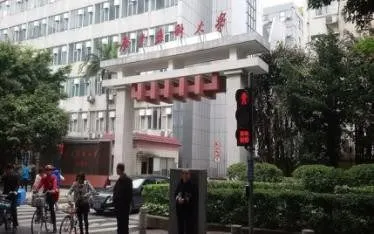
It is a provincial public university. The main campus is at 100 Waihuan West Road, Guangzhou Higher Education Mega Center, Panyu District, Guangzhou 510006. The university has several sites, so check the exact address of your faculty and dormitory in your Admission Notice.
No. The university is not on the official national lists for Project 211, Project 985 or the second round of Double First-Class. When people speak of a 'provincial 211' or the 冲一流 programme, they mean regional funding for selected disciplines. In June 2026 GDUT itself announced that it aims to join Double First-Class in the future.
Three English-taught programmes were announced for the 2026 intake: E-Commerce, Computer Science and Technology, and International Economics and Trade. There are no programmes in Russian. Most academic programmes are taught in Chinese.
Chinese-taught engineering and science programmes require HSK 4 with at least 180 points. Humanities, social sciences and arts programmes require HSK 5, also with at least 180 points.
The cost depends on the campus, building and room type, from four-person to single rooms. The university publishes current rates, so check the official website before booking.
This is not available automatically. For the current intake the university separately confirms the Guangdong Government Scholarship; whether a specific CSC channel is open must be checked in the CampusChina system and with the dispatching authority. You must not enter an arbitrary agency number: if the number is wrong, the host university will not see your application.
The university accepted applications for the Guangdong Provincial Government Scholarship for bachelor's, master's and doctoral students; the amount depended on the level of study. Applying for the scholarship does not exempt you from registering on time and paying the compulsory fees while your application is being reviewed.
The HSK requirements are given in the admissions notice, but the university is not a permanent HSK or BCT test centre. You will need to take the exam at one of the available centres in Guangzhou, registering through the official registration system and checking the dates against the current schedule.
GDUT is a provincial engineering university. SCUT is a national research university that is part of Project 211, Project 985 and Double First-Class. GPNU is a provincial university focused on vocational teacher training and applied education.
The basic package includes a school certificate or a letter confirming that you are due to graduate, a passport with sufficient validity, a full transcript of grades, a medical form valid for 6 months and a language certificate. Additional rules on citizenship and actual residence abroad may apply to candidates of Chinese origin.
Guangzhou (广州) is the capital of Guangdong Province and the trade gateway of southern China. The large-scale Canton Fair is held here twice a year. Cantonese cuisine originates here, and the city remains a centre of international business.
Here it is easy to combine study with work experience: thousands of export companies operate in the city. The metro has 16 lines, the environment is multinational, and the subtropical climate allows you to play sport all year round. Parents will care about other things: the city is safe, Hong Kong is 1 hour away by high-speed train, there are international hospitals and schools and direct international flights, and the campuses are well run, with security on duty around the clock and dedicated services to help international students.
You work with Nihao Study specialists. They will help you put together a portfolio and a set of documents, draw up a study plan and choose a university or college and a specialty that genuinely interest you.
We take care of every stage of admission, from choosing to enrolment
We will gather, prepare, certify and send your documents to the institution
We will show the admissions committee your strengths
We run training sessions and courses so you can prepare with more confidence
We will help you settle in at the start of your studies and keep moving forward
Nihao Study specialists select universities and colleges that match the applicant's goals and means. We make sure the teachers are practitioners and that the knowledge will be useful in your profession.
We examine curricula, talk to students and teachers and look at which specialties employers need, and use this information to select options for the applicant.
Advisers guide the applicant from the first consultation to enrolment, help build a plan and spot mistakes in time that could get in the way.
The cost of our support depends on the programme and the partner university; you'll get an exact quote after a free consultation.
Get a quoteA free 15-minute consultation: together we will choose a university or college and a programme that suit your goals and budget.
Apply with peace of mind: we handle the documents, deadlines and correspondence with admissions committees, and you save time and energy.
Don't want to wait for a call? Message us in the chat.
Message us in chat University · Zhanjiang
Language courses · Bachelor's Degree · Master's Degree
University · Guangzhou
Language courses · Bachelor's Degree · Master's Degree